Article
Why We Must Not Lose Guard About The Potential Risks Of AI – Part 1
By Abdulrahman Obaje
The most globally talked about scientific discipline at present is AI, short form of Artificial Intelligence, garnering attentions from main stream media organisations such as CNN, BBC, Forbes, New York Times, Daily Trust newspaper and the kinds of them. adsbygoogle || []).push({});

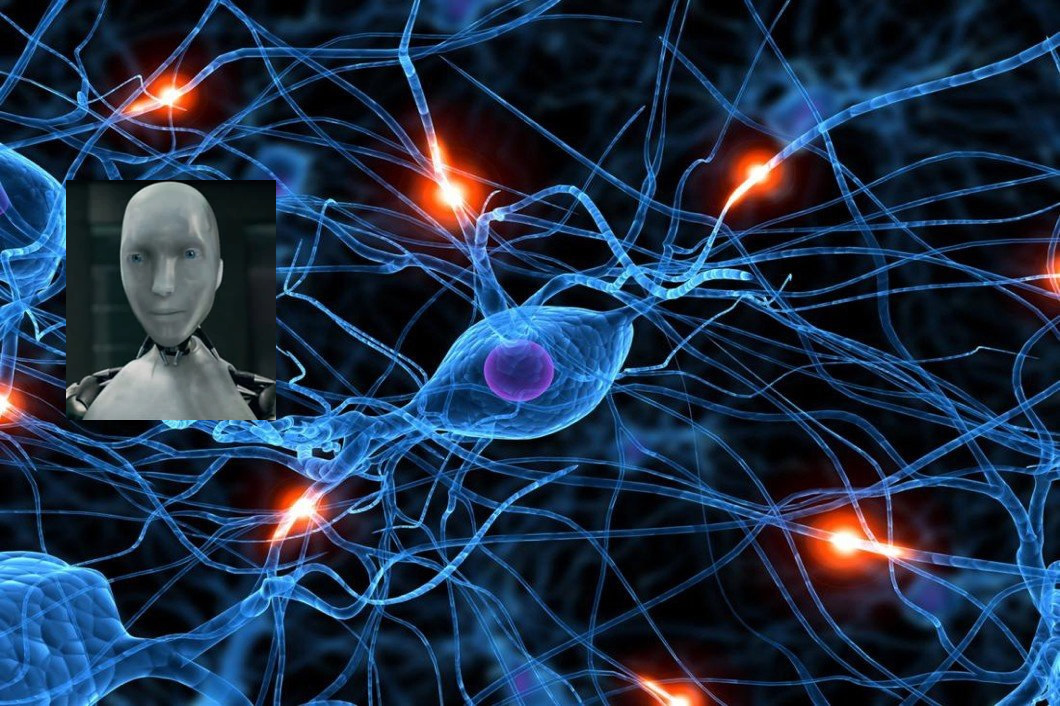
Unfortunately this technology also poses the most threats to society and humanity at present.AI is a scenario whereby a piece of an electronic device or software behaves as though it is digital human assistant. Some can make and take decisions that ordinarily may take time for human being to accomplish. AI-based device may be trained to even perform responsibilities that usually requires human intelligence to accomplish. Such tasks include solving complex mathematical problem, complex medical diagnosis, language translation, etc.
Example include Language translators, Facial recognition capabilities on mobile phones and other devices, Facebook’s language translation feature, Google Assistant on Android, Siri on iPhones, friend suggestions on Facebook to mention but few. An AI-based system can actually act like a smart helpful digital friend.
AI serves as the foundation for transformative technologies like the much talked about ChatGPT with more than 18 million active users daily. Now, the GPTs store has been launched for business. Also, AI non-invasive device to read what a human is thinking in his mind, convert it to text and display the text on a screen. The research that has been conducted and pilot tested in the University of Sydney has a multifaceted benefit to the human. Anyone with speech impairment can use the device to communicate his or her thoughts and wants with people without talking.
As modern Artificial Intelligent-based systems are now being trained to learn from past experience; in the form of gathered information, making it able to adjust to new information that enable it to be independent in some areas to some extents, the voice of warning against the potential risks of AI is growing louder.
The tech community has long debated the threats posed by artificial intelligence. Automation of jobs, the spread of fake news and a dangerous arms race of AI-powered weaponry have been mentioned as some of the biggest threats posed by AI.
There is also growing concerns that these things could get more intelligent than the humans and that they could one day decide to take over, and that there is why we need to worry about how we prevent that from happening.
A Computer Scientist, Geofrey Hinton also dubbed as the Godfather of Artificial Intelligence, a name he got from his foundational work on machine learning and neural network algorithm, in 2023 left his position at Google to talk about the risk of Artificial Intelligence, insinuating that a part of him even regrets his life’s work.
Hinton is not alone in this concerns. More than 20,000 tech leaders had in March 2023 persuaded in an open letter to put a pause on large AI experiments, citing that the technology can pose profound risk to society and humanity.
According to Wikipaedia, Pause Giant AI Experiments: An Open Letter is the title of a letter published by the Future of Life Institute in March 2023. The letter calls “all AI labs to immediately pause for at least 6 months the training of AI systems more powerful than GPT-4”, citing risks such as AI-generated propaganda, extreme automation of jobs, human obsolescence, and a society-wide loss of control. It received more than 20,000 signatures, including academic AI researchers and industry CEOs such as Yoshua Bengio, Stuart Russell, Elon Musk, Steve Wozniak and Yuval Noah Harari.
One of the risks posed by AI system is the lack of AI transparency and explainability. This is as AI and deep learning models can be difficult to understand, even for those that are working directly with the technology. This leads to a lack of transparency for why and how Artificial Intelligence comes to its conclusions. This conclusion cannot be trusted one hundred percent of times because of lack of explanation for what data AI algorithms use, or why AI may make biased or unsafe decisions. These concerns explain the rise to the use of explainable AI, but there’s still a long way before transparent AI systems can become common practice.
The second area of concern is job loss due to job automation. As AI-powered job automation is adopted in industries like marketing, manufacturing and healthcare. By 2030, tasks that account for up to 30 percent of hours currently being worked in the U.S. economy could be automated. According to McKinsey. Black and Hispanic employees especially is more vulnerable to the change while Goldman Sachs even states 300 million full-time jobs could be lost to AI automation.
“The reason we have a low unemployment rate, which doesn’t actually capture people that aren’t looking for work, is largely that lower-wage service sector jobs have been pretty robustly created by this economy,” futurist Martin Ford told Built In. With AI on the rise, though, “I don’t think that’s going to continue.”
As AI robots become smarter and more dexterous, the same tasks will require fewer humans. And while AI is estimated to create 97 million new jobs by 2025, many employees won’t have the skills needed for these technical roles and could get left behind if companies don’t upskill their workforces.
The third area of risks poses by AI is Social manipulation. This fear has become a reality as politicians rely on platforms to promote their viewpoints. For example Ferdinand Marcos, Jr., wielded a TikTok troll army to capture the votes of younger Filipinos during the Philippines’ 2022 election.
TikTok, which is one example of a social media platform that relies on AI algorithms, fills a user’s feed with content related to previous media they’ve viewed on the platform. Criticism of the app targets this process and the algorithm’s failure to filter out harmful and inaccurate content, raising concerns over TikTok’s ability to protect its users from misleading information.
Online media and news have become even murkier in the wake of AI-generated content such as images and videos, AI voice changers as well as deepfakes infiltrating political and social spheres. These technologies make it easy to create realistic photos, videos, audio clips or replace the image of one figure with another in an existing picture or video. As a result, bad actors have another avenue for sharing misinformation and war propaganda, creating a nightmare scenario where it can be nearly impossible to distinguish between creditable and faulty news.
“No one knows what’s real and what’s not,” Ford said. “So it really leads to a situation where you literally cannot believe your own eyes and ears; you can’t rely on what, historically, we’ve considered to be the best possible evidence… That’s going to be a huge issue.”
Abdulrahman Obaje is a Journalist, Mathematician and Computer Scientist based in Abuja, Nigeria.
Author Profile

Latest entries
NewsNovember 11, 2025I will not be intimidated by any military – Wike
ICTNovember 11, 2025Digital Economy and eGovernance: Stakeholders Endorse Bill, Demand Institutional Role Definition
NewsNovember 11, 2025Igala Nation Backs Ododo/Tinubu 8 Years Mandate
NewsNovember 11, 2025Dan Amanan Fune Celebrates Emir of Ilorin on 30 Years of Remarkable Reign
Article
As FCC Under Omidiran Sets to Restore Fairness, Balance and National Unity
————From dormancy to destiny, the Renewed Hope Agenda finds its moral compass in fairness, inclusion, and credible leadership under Hon. Ayo Hulayat Omidiran.
When President Bola Ahmed Tinubu appointed Hon.
adsbygoogle || []).push({});
For years, the FCC wrestled with bureaucratic inertia and dwindling public trust. It existed in structure but struggled in spirit. Nigerians watched with delight yesterday October 14 as the Senate President, Godswill Akpabio read a letter from President Bola Tinubu requesting the senate to confirm Omidiran and 38 other commissioners. The needed confirmation serves as part of statutory requirements of the commission. With Omidiran’s pragmatic, purpose-driven leadership — and guided by President Tinubu’s Renewed Hope Agenda — the Commission will once again find its voice and vision.
With service driven 37 Commissioners drawn from every state and the FCT, the FCC will no longer be a dormant establishment; it will become a living conscience of equity, balance, and opportunity — a true reflection of Nigeria’s diversity and promise.
THE WOMAN REDEFINING FEDERAL CHARACTER
Hon. Ayo Hulayat Omidiran stands at the intersection of integrity, intelligence, and inclusivity — a rare blend of competence and compassion. Twice elected to the House of Representatives (2011–2019), she earned national acclaim for her people-centered approach: delivering potable water, quality healthcare, scholarships, and empowerment programs that restored dignity to countless families.
Her politics is not one of noise, but of nurture; not of entitlement, but of empathy. Guided by the enduring principles of Chief Obafemi Awolowo, Omidiran sees leadership as a moral obligation — “to feel the people’s pain and respond with purpose.”
Her story extends beyond politics. She made history as the first Nigerian woman to serve on the FIFA Women’s World Cup Organizing Committee, and as founder of Omidiran Babes FC, she built a generation of women who rose from obscurity to global recognition through sports. That same spirit of mentorship, teamwork, and excellence now defines her stewardship of the FCC.
Omidiran will lead not as a ruler, but as a reformer — building a team bound by trust, discipline, and shared vision. Under her watch, the FCC will no longer be an idle bureaucracy but a coalition of conscience — a collective mindset committed to making equity not an exception, but a standard.
RENEWED HOPE IN ACTION: OMIDIRAN’S BLUEPRINT FOR EQUITY
Under Omidiran’s visionary direction, the FCC is expected to transform into a model of transparency, digital efficiency, and moral accountability. With her commissioners she will introduce systems that prioritize merit, inclusion, and measurable impact, making the Commission a true guardian of justice in public service distribution.
Her guiding philosophy is clear and compelling:
“Fairness is not favoritism; it is balance.”
Every appointment, employment, and resource allocation must reflect both Nigeria’s federal diversity and her meritocratic spirit. In Omidiran’s FCC, representation will not be about tokenism — it is about trust. And every decision carries the weight of national responsibility.
This is the living embodiment of President Tinubu’s Renewed Hope Agenda — a Nigeria rebuilt on fairness, inclusion, and credible leaders.
THE TEAM THAT MIRRORS NIGERIA’S UNITY IN DIVERSITY
Behind Omidiran stands a remarkable assembly of leaders — 37 Commissioners, each bringing integrity, intellect, and innovation from their respective states. They represent Nigeria’s mosaic of culture, competence, and conviction.
Together, they form a “coalition of conscience and competence”, a team designed not to preserve the old order, but to pioneer a new era of equitable governance.
From policy thinkers to administrators, human rights advocates to professionals, the Omidiran-led Commission embodies the Renewed Hope dream in motion — transforming ideals into institutions.
NORTHWEST: EXPERIENCE, STATESMANSHIP, AND STRUCTURAL DEPTH
Hon. Lawan Ya’u Roni (Jigawa State) stands as a pillar of institutional memory. With over 30 years of governance experience — from serving as Commissioner to Secretary to the State Government and Acting Governor — Roni brings tested wisdom to policy formulation and intergovernmental relations.
His mandate in Policy Coordination and Intergovernmental Synergy ensures that federal appointments and initiatives align seamlessly with state realities. His insight and steadiness anchor the FCC’s evolving reform structure, driving unity through understanding.
SOUTHWEST: PROFESSIONALISM, DISCIPLINE, AND ADMINISTRATIVE EXCELLENCE
Hon. AbdulWasiu Kayode Bawa-Allah (Lagos State) is the archetype of administrative discipline. Having served as Chief of Staff to a Senator and Minister, and as a corporate executive in the U.S., he brings global precision to national service.
As head of Operational Efficiency and Ethics Oversight, Bawa-Allah is setting a new standard for institutional accountability. His leadership ensures that the FCC’s internal mechanisms reflect transparency, order, and ethical governance — making the Commission a model for other federal agencies.
SOUTHEAST: STRATEGIC THINKING, COORDINATION AND DIGITAL REFORM
Hon. Peter Eze (Enugu State) brings a refreshing blend of strategic intellect, youthful energy and innovation. An economist and policy strategist with international exposure, and a key contributor to the Tinubu/Shettima Presidential Campaign Council, Eze understands both leadership dynamics and national governance architecture.
Tasked with Research, Strategy, and Public Communication, he will spearhead the digital modernization of the FCC — ensuring transparency, data integrity, and accessible public information . His nomination signals a new generation of technocratic leadership, where ideas and integrity merge to serve the nation. Eze’s experience in public and private sector and commitment to FCC’s principles and objectives bodes well for the success of the commission
NORTHEAST: RESILIENCE, ADVOCACY, AND THE POWER OF INCLUSION
Mrs. Bema Olvadi Madayi (Adamawa State) embodies the courage and tenacity of the Northeast. A seasoned banker, policy advocate, and community mobilizer, she has spent decades empowering women and youth in post-conflict communities.
She oversees Community Engagement and Gender Equity Initiatives, ensuring fairness transcends paper policy to touch real lives. Her approach is practical — equity that educates, empowers, and elevates. She represents the Renewed Hope spirit of rebuilding people, not just systems.
SOUTH-SOUTH: SERVICE, LEGISLATION, AND HUMANITARIAN IMPACT
Hon. Chief ( Barr) Lovette Ederin Idisi
exemplifies selfless service. A lawyer by profession and legislator with years of community impact, he has championed rural healthcare, education, and youth empowerment.
He leads Humanitarian Affairs and Social Impact, ensuring that fairness extends beyond employment into wellbeing. His model is fairness with a human face — a governance of compassion consistent with the Renewed Hope philosophy.
NORTH CENTRAL: BALANCE, VISION, AND SOCIAL COHESION
Hon. Halima Ahmadu Jabiru (Nasarawa State) combines administrative rigor with social empathy. Her extensive background in land administration, welfare coordination, and governance reform makes her a dependable voice for balanced development.
As head of Institutional Development and Social Cohesion Programs, she is driving equitable access to federal opportunities across the North Central region — ensuring that fairness is not abstract, but tangible. Her leadership bridges the gap between policy and people.
ONE COMMISSION, ONE NATION, ONE DESTINY
Under Hon. Ayo Hulayat Omidiran, the Federal Character Commission will no longer be bureaucratic relic; it will become the nation’s moral compass. Each Commissioner is not merely a representative of a state, but a custodian of the Nigerian dream — a dream where justice and opportunity are evenly shared.
Together, they personify the spirit of Renewed Hope — the belief that governance must mirror the nation’s diversity while uniting it under a common purpose. From Abuja to the remotest local council, their collective mandate is to ensure that no citizen is invisible, and no community is forgotten.
OUR VERDICT: THE FCC REBORN, NIGERIA REAWAKENED
The Federal Character Commission, once seen as dormant, has found its pulse again — firm, fair, and forward-looking.
Under Omidiran, it will no longer be an institution of routine; it is a movement of renewal — restoring confidence, credibility, and national cohesion.
With this credible and competent team of Commissioners, fairness is no longer a promise — it is policy; inclusion is no longer aspiration — it is action.
In the rebirth of the FCC, Nigeria rediscovers her essence — a nation bound not by tribe or tongue, but by trust, transparency, and shared destiny.
Written by Dr George Allwell , a Public Affairs Analyst and Promoter of good governance in Nigeria
October 15,2025
Author Profile

Latest entries
NewsNovember 11, 2025I will not be intimidated by any military – Wike
ICTNovember 11, 2025Digital Economy and eGovernance: Stakeholders Endorse Bill, Demand Institutional Role Definition
NewsNovember 11, 2025Igala Nation Backs Ododo/Tinubu 8 Years Mandate
NewsNovember 11, 2025Dan Amanan Fune Celebrates Emir of Ilorin on 30 Years of Remarkable Reign
Article
The Craft of Creative Writing: From Shoot to Branches
By Emman Usman Shehu
“Always resist the urge to start with too many characters; even a plant begins as a shoot before developing its peculiar branches.” This insightful observation, seemingly simple, offers a profound metaphor for the craft of creative writing.
adsbygoogle || []).push({});
googlesyndication.com/pagead/js/adsbygoogle.js">
The initial “shoot” in creative writing represents the foundational element of a story. This could be a single character with a clear desire, a specific setting that sparks imagination, or a central premise that demands exploration. Rushing to introduce a multitude of characters, elaborate backstories, or convoluted plotlines at the outset can overwhelm both the writer and the reader. It’s akin to planting a sapling with too many branches already attached; the roots haven’t had time to establish, and the structure lacks inherent strength. A strong beginning, therefore, often focuses on establishing one or two key elements, allowing them to take root in the reader’s mind.
As the narrative progresses, the “shoot” begins to develop its “peculiar branches.” These branches are the secondary characters, the subplots, the thematic explorations, and the intricate details that enrich the story. Just as a plant’s branches grow in unique patterns, shaped by its environment and genetic code, a story’s elements should emerge naturally from its core. A new character might be introduced because their presence is necessary to challenge the protagonist or reveal a new facet of the central conflict. A subplot might sprout to deepen the thematic resonance or provide a moment of respite before a major turning point. This organic development ensures that every element serves a purpose, contributing to the overall strength and coherence of the narrative.
Moreover, the metaphor extends to the concept of revision and growth. A gardener doesn’t simply plant a seed and leave it; they nurture it, prune it, and guide its growth. Similarly, a writer’s first draft is rarely the final product. It’s the initial shoot, often raw and unrefined. Through subsequent revisions, the writer prunes away unnecessary elements, strengthens weak connections, and encourages the healthy development of the story’s branches. This iterative process allows the narrative to mature, its complexities to deepen, and its peculiar beauty to fully emerge.
In essence, the wisdom of starting small is about embracing the power of organic growth. It’s about trusting the narrative to reveal itself, character by character, plot point by plot point, rather than forcing a predetermined, overstuffed structure. By allowing the story to develop its branches naturally from a strong, central shoot, writers can cultivate narratives that are not only intricate and engaging but also deeply rooted and enduring.
*Shehu is the author of four poetry collections, Questions for Big Brother, Open Sesame, Icarus Rising and The River Never Returns. He is currently working on a poetry collection, a collection of short stories, and a collection of plays. He is also co-founder of the Abuja Writers Forum (AWF).
Author Profile

Latest entries
NewsNovember 11, 2025I will not be intimidated by any military – Wike
ICTNovember 11, 2025Digital Economy and eGovernance: Stakeholders Endorse Bill, Demand Institutional Role Definition
NewsNovember 11, 2025Igala Nation Backs Ododo/Tinubu 8 Years Mandate
NewsNovember 11, 2025Dan Amanan Fune Celebrates Emir of Ilorin on 30 Years of Remarkable Reign
Article
Ajia: The Bridge-Builder Turbaned as Dan Amanar Fune Emirate
By Abdulrahman Aliagan, reporting from Damagum, Yobe State
In a rare blend of honour, tradition, and national recognition, Alhaji Ibrahim Mohammed Ajia, a distinguished son of Ilorin in Kwara State, was turbaned as Dan Amanar (Custodian of Trust) of Fune Emirate in a grand ceremony held at the Emir’s Palace in Damagum, headquarters of Fune Local Government Area, Yobe State, on Saturday, June 28, 2025.
The colourful occasion, which also marked the 25th coronation anniversary of His Royal Highness, Alhaji Dr. Saleh Ibn Uthman, Emir of Fune, was attended by royal fathers from across Northern Nigeria, political leaders, captains of industry, and hundreds of admirers from Ilorin, Abuja, and Damagum.
Alhaji Ibrahim Ajia is not just a politician or businessman—he is a patriotic Nigerian whose footprints in public service, security, philanthropy, and community development have made significant impacts nationwide. Born in Magaji Ngeri ward, Ilorin West Local Government Area of Kwara State, Ajia’s life journey is that of relentless pursuit of excellence and unwavering commitment to the Nigerian project.
From humble beginnings at ECWA Primary School in Ilorin and later Government Secondary School Kawo, Kaduna, Ajia pursued academic excellence with deep passion. Though he initially gained admission to study Economics at Ahmadu Bello University, Zaria, his desire to serve Nigeria led him to the Nigeria Police Academy, Wudil, where he was commissioned as an Inspector of Police in 2004.
Ajia later earned a B.Sc. in Sociology from the University of Abuja and a Master’s Degree in Peace Studies and Conflict Resolution from the National Open University of Nigeria. He also obtained a Certificate in Public Leadership and Policy from the School of Politics, Policy and Governance (SPPG), Abuja.
As a young, vibrant, and intelligent officer, Ajia served in various sensitive capacities in the Nigeria Police Force, including as:
ADC to the Secretary to the Government of the Federation (SGF), Senator Anyim Pius Anyim, GCON, Security Aide to the late Governor of Yobe State, Senator Mamman B. Ali, Chief Security Officer to Governor Hassan Dankwambo of Gombe State, Police Public Relations Officer, FCT Command and 2IC, Yenagoa Area Command, Bayelsa State.
He also trained in several advanced security and leadership courses across Egypt, Italy, the UK, and Nigeria, including combating organised crime and high-risk operations. These experiences sharpened his understanding of national security and human management, building his reputation as a trusted, tested, and efficient.
Upon retiring from active service in 2017, Ajia transitioned into politics and entrepreneurship, but his core passion remained human development. Through his MAI Foundation, he has provided succour to thousands of Nigerians—orphans, widows, students, farmers, and small-scale business owners—across Kwara State and other parts of the country.
The foundation has carried out impactful interventions in education, health, youth and women empowerment, rural infrastructure, and skills acquisition. Whether it is donating medical equipment to rural hospitals, providing scholarships to indigent students, drilling boreholes, or equipping young people with vocational tools, Ajia has consistently used his resources to uplift the underserved and vulnerable.
This was one of the key reasons behind his recent honour by the Fune Emirate, which described him as “a trustworthy, honest, reliable, and dependable personality who has written his name in gold.”
To be turbaned as Dan Amanar Fune is not merely ceremonial; it signifies a deep trust and a sacred responsibility. For the Emir of Fune, Ajia represents those rare Nigerians who transcend tribal and religious lines, working selflessly for unity and progress.
Speaking after his turbaning, Ajia expressed gratitude to the Emir and the people of Fune for the honour. He promised not to relent:
*This is not just a title; it is a sacred trust. I will continue to work for the good of the Emirate, Yobe State, and our great country, Nigeria. This recognition has rekindled my commitment to serve humanity even more.”
Indeed, for nearly two decades, Ajia has maintained a close relationship with the Fune Emirate, dating back to his days as the Security Aide to the late Governor Mamman B. Ali. That relationship, built on mutual respect, trust, and shared goals, has now matured into formal recognition by the traditional institution.
Aside from his security background and philanthropic work, Ajia is also a farmer, businessman, and President/CEO of FUNAB Group of Companies, a conglomerate involved in construction, retail, hospitality, and cleaning services.
In 2019, he contested for the PDP gubernatorial ticket in Kwara State. In 2023, he ran for the House of Representatives seat for Asa/Ilorin West Federal Constituency. Beyond the ballot, Ajia has remained a passionate voice for inclusive governance, social equity, and national cohesion.
His track record, humility, and passion for development make him one of the shining stars of the younger generation of Nigerian leaders.
That a man from Ilorin, Kwara State, would be so recognised and turbaned with a traditional title in faraway Fune Emirate, Yobe State, is both a celebration. It is a celebration of how character, service, and loyalty can gain national recognition.
Ajia has done much, not only for Kwara but for Nigeria. From Ilorin to Abuja, Damagum to Bayelsa, his legacy continues to expand. His recent turbaning should serve as a call to action for his native Emirate to also recognise his efforts, and further encourage other indigenes to serve with integrity, humility, and purpose.
In the words of one observer at the event, “Ajia may have received the title of Dan Amana in the North-East, but his loyalty and service began from home. Ilorin must not be the last to honour him.”
With his head held high and heart full of gratitude, Alhaji Ibrahim Mohammed Ajia has shown that true service transcends geography—and those who serve selflessly will always be seen, celebrated, and remembered.
Author Profile

Latest entries
NewsNovember 11, 2025I will not be intimidated by any military – Wike
ICTNovember 11, 2025Digital Economy and eGovernance: Stakeholders Endorse Bill, Demand Institutional Role Definition
NewsNovember 11, 2025Igala Nation Backs Ododo/Tinubu 8 Years Mandate
NewsNovember 11, 2025Dan Amanan Fune Celebrates Emir of Ilorin on 30 Years of Remarkable Reign