Like the two women, laying […]" /> Like the two women, laying […]"> WHEN WIND BLOWS: Who are and will be the true and sincere stakeholder in Nigeria? | Informavores an online publication of Informavores Nigeria Communication Enterprises is a Nigeria News Reporter in Science & Technology,Sports, Politics, Education, Lifestyle, Agriculture, Business, Health, Economy, Crime, Opinions, Entertainment, Oil and Gas, Energy and Power, Food, in both foreign and local news
Connect with us

Opinion

WHEN WIND BLOWS: Who are and will be the true and sincere stakeholder in Nigeria?

Published

on

Micah Ugala
Share this Story

Nigerians, politicians and political party’s manifestoes has not, and will not work here in Nigeria in the nearest future, going by the current status quo.

All our current crop of Public servants (elected and appointed) does not have any stake in our Public sectors. adsbygoogle || []).push({}); googlesyndication.com/pagead/js/adsbygoogle.js">

Like the two women, laying claim to one child during King Solomon’s reign, as recorded in the Scriptures, the woman who truly owns the child, having a stake on the child’s welfare and well-being, refused for the child to be shared into two. While the other woman who don’t have any stake on the child, agreed for it to be shared.

ALSO READ  The Nigerian Youths and The Challenges Of Generation Gap; A Call To Action

Until and unless we shop for those who are willing to have their stake in our Public sectors, those occupying our Public space will always agree for our own child to be shared.

How do we get those that will have a stake in our Public sectors? It’s when we insist that whoever will occupy our Public space, MUST patronize all our Public Institutions, Facilities, Systems and Infrastructures.

ALSO READ  Nigeria's National Assembly under security siege

And the starting point is, for them to have their own children and wards in our Public Schools. What they are doing now is, like some cook who are not willing or ready to savour the taste of the meal they prepare and serve. Who among us will be willing to eat such meal, and continue to engage the services of such cook?

Anything short of this, will amounts to business as usual.
Author Profile

Micah Ugala
Continue Reading
Click to comment

Leave a Reply

Your email address will not be published. Required fields are marked *

Opinion

#Ebinpawa: Nigerians Decry Tinubu’s Anti-social Policies, Ask — Can Awolowo Ever Do This?

Published

on

By

Share this Story

By Gbenga Shaba

When Nigerians coined the hashtag #Ebinpawa, it wasn’t just a joke. It was a cry of exhaustion, a desperate lament from citizens stretched beyond survival. President Bola Ahmed Tinubu’s 15% fuel import duty has now become another wound on a people already bleeding from endless reforms that punish instead of protection.


js">


One must ask, as many have bitterly done: Could Awolowo ever do this to us?

Between Reform and Ruin: A People Betrayed

Tinubu’s administration calls it reform, a path to fiscal recovery. But for millions of Nigerians, these policies feel more like a betrayal than a rebirth. Every new “economic adjustment” digs deeper into the pockets of those who have nothing left to give.

Since the removal of fuel subsidy and the floating of the naira, prices have spiralled. Now, this 15% duty on imported fuel adds insult to injury. The government promises a stronger economy, but all Nigerians see is a weaker household.

The Human Cost: Ordinary Nigerians Paying the Price

For the average Nigerian, economics isn’t theory, it’s ’s breakfast, transport, and rent. A man who once spent ₦2,000 on daily transport now spends ₦3,000. The food vendor pays double for cooking gas. The barber struggles to afford petrol for his generator.

Farmers face rising costs for diesel, while small business owners can barely keep the lights on. Survival has become a privilege. Behind every statistic of “growth” lies a story of human deprivation, children pulled from school, meals skipped, dreams deferred.

ALSO READ  What Really Transpired The Day Comrade Alex Ogbu Died?

Taxing Misery in the Name of Reform

The tragedy of Tinubu’s economic policy lies not just in its impact but in its intent. Governance has become a numbers and  citizens reduced to economic data points.

Fuel, a basic necessity, is treated like a luxury item to be taxed. The government calls it “fiscal prudence,” but it’s closer to moral blindness. A system that balances books by breaking backs is not reforming. It’s exploiting.

When you tax misery, you create resentment. When you justify it as reform, you lose empathy.

The Politics of Pain

Let’s not pretend this 15% duty is merely economic, it’s deeply political. It reflects a government that preaches sacrifice but practices inequality.

Powerful elites shield themselves from the consequences of policies they impose. Meanwhile, the masses are told to “tighten their belts,” as if hunger were an act of patriotism.

Tinubu’s rhetoric of “sacrifice for a better tomorrow” has lost meaning. When sacrifice becomes perpetual, it stops being patriotic, and it becomes institutionalized suffering.

Trump’s Stand on Genocide in Nigeria

Even across the Atlantic, voices are rising. U.S. President Donald Trump recently condemned the escalating violence in Nigeria, calling attention to what he described as “a slow-motion genocide” against Christians. His remarks have reignited international debate on Nigeria’s worsening insecurity and the government’s selective silence.

While Nigerians battle economic hardship, they also live in fear of kidnappers, bandits, and religious extremists. Tinubu’s government can not claim reform while failing to protect its people. There’s no economic revival in a climate of fear and bloodshed.

ALSO READ  Nigeria's National Assembly under security siege

A Nation at the Crossroads

The 15% fuel import duty is more than a fiscal measure — it’s a moral test of leadership. How much more can Nigerians endure in the name of reform? How long before survival replaces faith in governance?

Awolowo once said that “the worst crime is poverty in the midst of plenty.” Today, Nigerians live that reality — plenty promises, but empty plates.

The cries of #Ebinpawa are not just trending words; they are history being written in the language of pain. If leadership does not listen, the reform they call progress will become the ruin the people call betrayal.

What A True Progressive Would Have Done…

Progressives are known by their actions. They are not swayed by rhetorics. They don’t pass blames. They simply act!

Unlike what we are currently experiencing in Nigeria, true Progressives like Obafemi Awolowo’s emphasises on polices that focused on welfarism and modernization, most notably introducing free primary education and free healthcare for children under 18 in the Western Region. His administration also launched infrastructure projects like the first television station in Africa (WNTV) and established industrial initiatives, such as the Ikeja Industrial Estate and a cooperative to support cocoa farmers. He was a proponent of federalism, fiscal discipline, and using state resources for social and economic development.

He implemented universal free primary education in the Western Region, boosted literacy rates, and established new schools and teacher training colleges.

ALSO READ  The Making of Heroes, Saints and Martyres; The Point of Departure in Deconstructing the Inikpi Legend of Igala Land

Introduced free healthcare for all children under the age of 18 and established a hospital in every administrative division.

He advocated for federalism, regional autonomy, and fiscal discipline, believing that education was crucial for national progress and that the government should invest resources in social services and development.

Awolowo would have put the people first and would have created some sort of soft landing to prevent the kind of deep hardship that has ruined so many businesses and livelihoods.

Today, the man leading us is claiming to be progressive but not in his actions and policies. Nigerians can no longer feed themselves. Out of school children are on the rise, insecurity is now the new national anthem, and the cost of living is now sending people to their graves. Nigerians are crying #Ebinpawa.

Gbenga Shaba, is a renowned journalist.


Author Profile

Editor
Continue Reading

Article

As FCC Under Omidiran Sets to Restore Fairness, Balance and National Unity

Published

on

Share this Story


————From dormancy to destiny, the Renewed Hope Agenda finds its moral compass in fairness, inclusion, and credible leadership under Hon. Ayo Hulayat Omidiran.

When President Bola Ahmed Tinubu appointed Hon.


adsbygoogle || []).push({});

Ayo Hulayat Omidiran as the Executive Chairman of the Federal Character Commission (FCC), it was more than a change in leadership — it was the rebirth of an institution long yearning for rediscovery. The appointment represents a national recalibration, a deliberate effort to restore fairness, inclusion, and justice to the very architecture of Nigeria’s governance.

For years, the FCC wrestled with bureaucratic inertia and dwindling public trust. It existed in structure but struggled in spirit. Nigerians watched with delight yesterday October 14 as the Senate President, Godswill Akpabio read a letter from President Bola Tinubu requesting the senate to confirm Omidiran and 38 other commissioners. The needed confirmation serves as part of statutory requirements of the commission. With Omidiran’s pragmatic, purpose-driven leadership — and guided by President Tinubu’s Renewed Hope Agenda — the Commission will once again find its voice and vision.

With service driven 37 Commissioners drawn from every state and the FCT, the FCC will no longer be a dormant establishment; it will become a living conscience of equity, balance, and opportunity — a true reflection of Nigeria’s diversity and promise.

THE WOMAN REDEFINING FEDERAL CHARACTER

Hon. Ayo Hulayat Omidiran stands at the intersection of integrity, intelligence, and inclusivity — a rare blend of competence and compassion. Twice elected to the House of Representatives (2011–2019), she earned national acclaim for her people-centered approach: delivering potable water, quality healthcare, scholarships, and empowerment programs that restored dignity to countless families.

Her politics is not one of noise, but of nurture; not of entitlement, but of empathy. Guided by the enduring principles of Chief Obafemi Awolowo, Omidiran sees leadership as a moral obligation — “to feel the people’s pain and respond with purpose.”

Her story extends beyond politics. She made history as the first Nigerian woman to serve on the FIFA Women’s World Cup Organizing Committee, and as founder of Omidiran Babes FC, she built a generation of women who rose from obscurity to global recognition through sports. That same spirit of mentorship, teamwork, and excellence now defines her stewardship of the FCC.

ALSO READ  The Making of Heroes, Saints and Martyres; The Point of Departure in Deconstructing the Inikpi Legend of Igala Land

Omidiran will lead not as a ruler, but as a reformer — building a team bound by trust, discipline, and shared vision. Under her watch, the FCC will no longer be an idle bureaucracy but a coalition of conscience — a collective mindset committed to making equity not an exception, but a standard.

RENEWED HOPE IN ACTION: OMIDIRAN’S BLUEPRINT FOR EQUITY

Under Omidiran’s visionary direction, the FCC is expected to transform into a model of transparency, digital efficiency, and moral accountability. With her commissioners she will introduce systems that prioritize merit, inclusion, and measurable impact, making the Commission a true guardian of justice in public service distribution.

Her guiding philosophy is clear and compelling:

“Fairness is not favoritism; it is balance.”

Every appointment, employment, and resource allocation must reflect both Nigeria’s federal diversity and her meritocratic spirit. In Omidiran’s FCC, representation will not be about tokenism — it is about trust. And every decision carries the weight of national responsibility.

This is the living embodiment of President Tinubu’s Renewed Hope Agenda — a Nigeria rebuilt on fairness, inclusion, and credible leaders.

THE TEAM THAT MIRRORS NIGERIA’S UNITY IN DIVERSITY

Behind Omidiran stands a remarkable assembly of leaders — 37 Commissioners, each bringing integrity, intellect, and innovation from their respective states. They represent Nigeria’s mosaic of culture, competence, and conviction.

Together, they form a “coalition of conscience and competence”, a team designed not to preserve the old order, but to pioneer a new era of equitable governance.

From policy thinkers to administrators, human rights advocates to professionals, the Omidiran-led Commission embodies the Renewed Hope dream in motion — transforming ideals into institutions.

NORTHWEST: EXPERIENCE, STATESMANSHIP, AND STRUCTURAL DEPTH

Hon. Lawan Ya’u Roni (Jigawa State) stands as a pillar of institutional memory. With over 30 years of governance experience — from serving as Commissioner to Secretary to the State Government and Acting Governor — Roni brings tested wisdom to policy formulation and intergovernmental relations.

His mandate in Policy Coordination and Intergovernmental Synergy ensures that federal appointments and initiatives align seamlessly with state realities. His insight and steadiness anchor the FCC’s evolving reform structure, driving unity through understanding.

SOUTHWEST: PROFESSIONALISM, DISCIPLINE, AND ADMINISTRATIVE EXCELLENCE

Hon. AbdulWasiu Kayode Bawa-Allah (Lagos State) is the archetype of administrative discipline. Having served as Chief of Staff to a Senator and Minister, and as a corporate executive in the U.S., he brings global precision to national service.

ALSO READ  Nigeria's National Assembly under security siege

As head of Operational Efficiency and Ethics Oversight, Bawa-Allah is setting a new standard for institutional accountability. His leadership ensures that the FCC’s internal mechanisms reflect transparency, order, and ethical governance — making the Commission a model for other federal agencies.

SOUTHEAST: STRATEGIC THINKING, COORDINATION AND DIGITAL REFORM

Hon. Peter Eze (Enugu State) brings a refreshing blend of strategic intellect, youthful energy and innovation. An economist and policy strategist with international exposure, and a key contributor to the Tinubu/Shettima Presidential Campaign Council, Eze understands both leadership dynamics and national governance architecture.

Tasked with Research, Strategy, and Public Communication, he will spearhead the digital modernization of the FCC — ensuring transparency, data integrity, and accessible public information . His nomination signals a new generation of technocratic leadership, where ideas and integrity merge to serve the nation. Eze’s experience in public and private sector and commitment to FCC’s principles and objectives bodes well for the success of the commission

NORTHEAST: RESILIENCE, ADVOCACY, AND THE POWER OF INCLUSION

Mrs. Bema Olvadi Madayi (Adamawa State) embodies the courage and tenacity of the Northeast. A seasoned banker, policy advocate, and community mobilizer, she has spent decades empowering women and youth in post-conflict communities.

She oversees Community Engagement and Gender Equity Initiatives, ensuring fairness transcends paper policy to touch real lives. Her approach is practical — equity that educates, empowers, and elevates. She represents the Renewed Hope spirit of rebuilding people, not just systems.

SOUTH-SOUTH: SERVICE, LEGISLATION, AND HUMANITARIAN IMPACT

Hon. Chief ( Barr) Lovette Ederin Idisi
exemplifies selfless service. A lawyer by profession and legislator with years of community impact, he has championed rural healthcare, education, and youth empowerment.

He leads Humanitarian Affairs and Social Impact, ensuring that fairness extends beyond employment into wellbeing. His model is fairness with a human face — a governance of compassion consistent with the Renewed Hope philosophy.

NORTH CENTRAL: BALANCE, VISION, AND SOCIAL COHESION

Hon. Halima Ahmadu Jabiru (Nasarawa State) combines administrative rigor with social empathy. Her extensive background in land administration, welfare coordination, and governance reform makes her a dependable voice for balanced development.

As head of Institutional Development and Social Cohesion Programs, she is driving equitable access to federal opportunities across the North Central region — ensuring that fairness is not abstract, but tangible. Her leadership bridges the gap between policy and people.

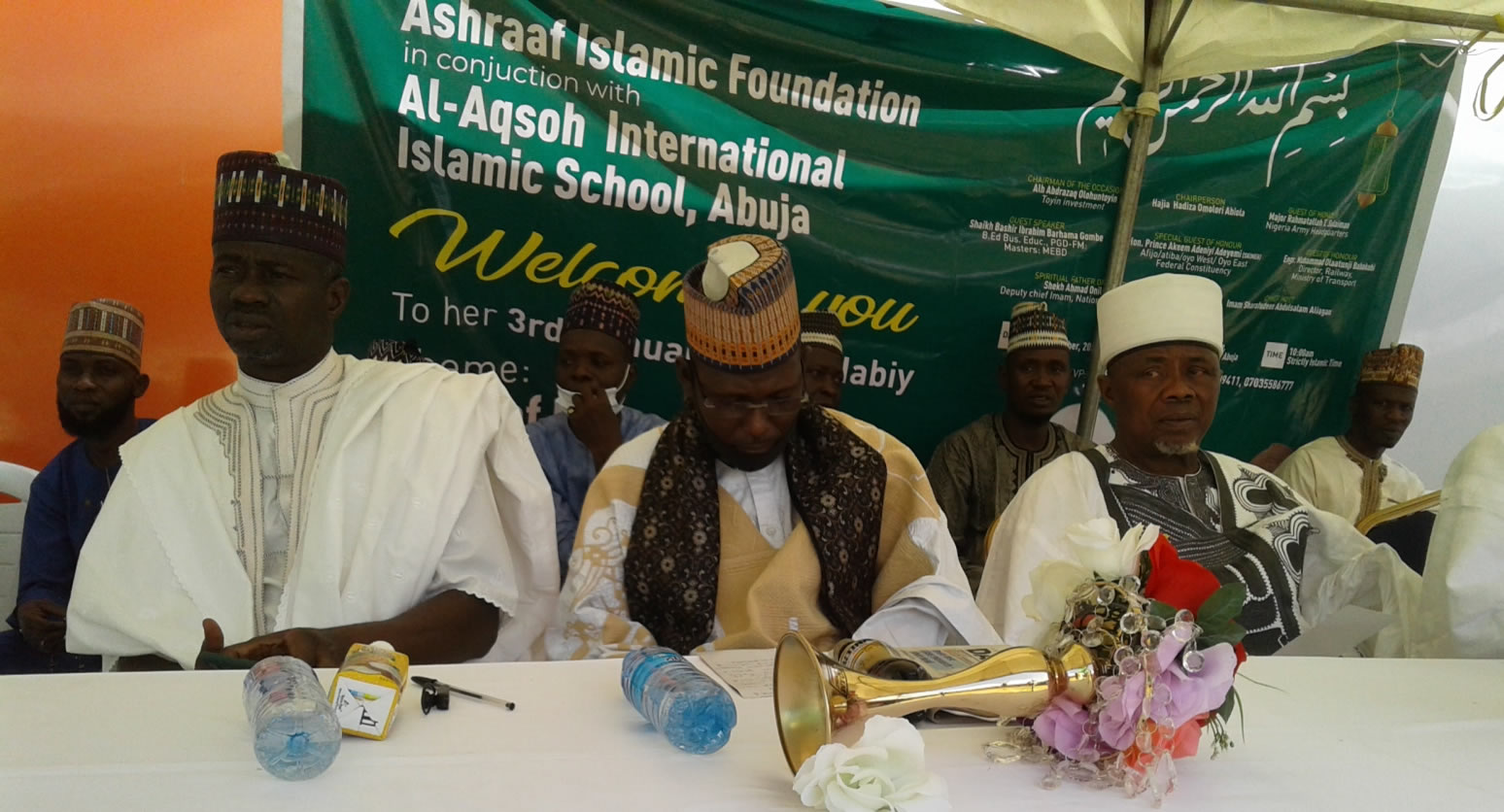
ALSO READ  Maolid Nabiy: Emulate Leadership Style of Prophet Muhammad – Imam Aliagan To Nigerian Leaders

ONE COMMISSION, ONE NATION, ONE DESTINY

Under Hon. Ayo Hulayat Omidiran, the Federal Character Commission will no longer be bureaucratic relic; it will become the nation’s moral compass. Each Commissioner is not merely a representative of a state, but a custodian of the Nigerian dream — a dream where justice and opportunity are evenly shared.

Together, they personify the spirit of Renewed Hope — the belief that governance must mirror the nation’s diversity while uniting it under a common purpose. From Abuja to the remotest local council, their collective mandate is to ensure that no citizen is invisible, and no community is forgotten.

OUR VERDICT: THE FCC REBORN, NIGERIA REAWAKENED

The Federal Character Commission, once seen as dormant, has found its pulse again — firm, fair, and forward-looking.

Under Omidiran, it will no longer be an institution of routine; it is a movement of renewal — restoring confidence, credibility, and national cohesion.

With this credible and competent team of Commissioners, fairness is no longer a promise — it is policy; inclusion is no longer aspiration — it is action.

In the rebirth of the FCC, Nigeria rediscovers her essence — a nation bound not by tribe or tongue, but by trust, transparency, and shared destiny.

Written by Dr George Allwell , a Public Affairs Analyst and Promoter of good governance in Nigeria

October 15,2025


Author Profile

Abdulrahman Obaje

Abdulrahman Obaje
Prince Abdulrahman Obaje is a Media, Information and Computer Technology Consultant. A quintessential Journalist, online marketer, social media strategist, Mathematician and Computer Scientist is based in Abuja, Nigeria. He is the Founder and the Publisher of The Informavores!. You can reach me on +234 805 939 5252 or send i-witness report directly to me on news@informavores.com.ng.
Continue Reading

News

The Art of the Opening: Choosing Your Narrative’s First Voice

Published

on

Dr Emman Shehu
Share this Story

By Emman Usman Shehu

In the intricate dance of creative writing, few decisions are as pivotal as determining where, and with whom, your story truly begins. The adage, “When you know the core of your story, it becomes easier to identify which of your characters has the burden of opening the window into the narrative,” isn’t just a truism; it’s a fundamental principle that underpins effective storytelling.


The character who first speaks, acts, or is observed holds immense power, shaping not only the reader’s initial perception of the world but also establishing the tone, stakes, and central conflict that will unfold.

The “core of your story” is its beating heart—the central theme, the primary conflict, the driving question. Is it a tale of profound loss and redemption? A high-stakes political thriller? A nuanced exploration of family dynamics? Once this essence is clear, the path to choosing your opening character becomes significantly clearer. This isn’t about simply picking the protagonist; it’s about identifying the character whose perspective offers the most immediate and impactful access to that core.

ALSO READ  What Really Transpired The Day Comrade Alex Ogbu Died?

Consider a story centered on a devastating societal collapse. While the ultimate hero might be a determined survivor, the most potent opening might come from a character experiencing the very first tremors of the catastrophe—perhaps a scientist observing an anomaly, or an ordinary citizen grappling with an inexplicable disruption. Their initial confusion, fear, or dawning realization directly conveys the core theme of societal vulnerability. Conversely, if the core of the story is an intensely personal journey of self-discovery, opening with the protagonist already on the cusp of a significant internal shift, even if subtly hinted at, immediately draws the reader into their interior world.

The character bearing the “burden of opening the window” serves multiple crucial functions. First, they are the “initial point of identification” for the reader. Their emotional state, their immediate surroundings, and their initial actions become the reader’s entry point into the narrative. If this character’s experience doesn’t resonate with the story’s core, the opening can feel disconnected, forcing the reader to work harder to understand the true purpose of the narrative.

Second, this character dictates the “initial narrative perspective and voice”. An opening through the eyes of a cynical detective will feel vastly different from one filtered through the wonder of a child, or the detached observation of an omniscient narrator. Each choice subtly, but powerfully, signals the kind of story that is about to unfold. If the story’s core is a dark mystery, a world-weary detective’s jaded perspective might be the perfect fit to set the tone.

ALSO READ  Nigeria's National Assembly under security siege

Finally, the opening character often introduces the “inciting incident or the seeds of conflict”. They might be the recipient of a life-altering message, witness a pivotal event, or simply be in a position where the central tension of the story is immediately evident. Their initial interaction with the world should hint at the larger forces at play, drawing the reader deeper into the narrative’s central question.

Ultimately, choosing the right character to open the narrative is not a random act; it’s a deliberate craft decision rooted in a deep understanding of your story’s essence. When the core is clear, the character best suited to unlock its mysteries and invite the reader into its world will emerge, bearing the essential burden of that crucial first impression. It is through their eyes, their voice, or their immediate circumstances that the story truly begins to breathe.

ALSO READ  The Making of Heroes, Saints and Martyres; The Point of Departure in Deconstructing the Inikpi Legend of Igala Land

*Shehu is the author of four poetry collections, Questions for Big Brother, Open Sesame, Icarus Rising and The River Never Returns. He is currently working on a poetry collection, a collection of short stories, and a collection of plays. He is also co-founder of the Abuja Writers Forum (AWF).


Author Profile

Abdulrahman Obaje

Abdulrahman Obaje
Prince Abdulrahman Obaje is a Media, Information and Computer Technology Consultant. A quintessential Journalist, online marketer, social media strategist, Mathematician and Computer Scientist is based in Abuja, Nigeria. He is the Founder and the Publisher of The Informavores!. You can reach me on +234 805 939 5252 or send i-witness report directly to me on news@informavores.com.ng.
Continue Reading

Copyright © 2021 Informavores Nigeria Communication Enterprises | Powered by ObajeSoft Inc