Health and Life Style
Post Covid-19: FCT to convert covid isolation center in Karu to general hospital
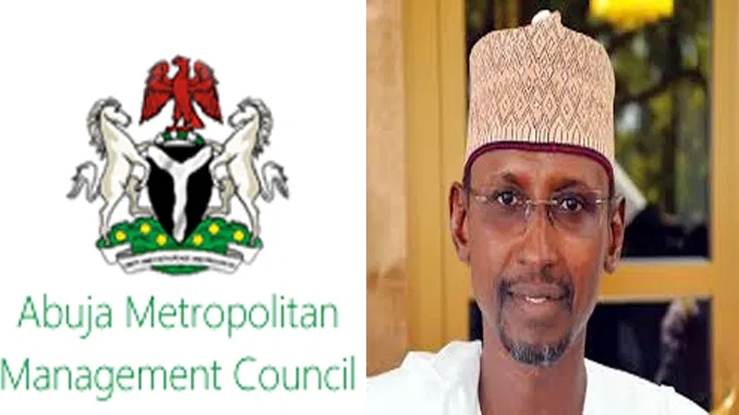
Director, Architecture Departments of the Federal Capital Development Authority [FCDA] Architect Robert Undel hinted that the Karu isolation center presently earmarked for the treatment of covid-19 pandemic will be converted to Karu General Hospital soon as the country overcome the coronavirus disease. adsbygoogle || []).push({});

Unde said that just like Asokoro General Hospital, the center will be decontaminated and restructured for such use .
‘’This is for 120 beds, we only took a part of 30 beds, we have upgraded our facilities to grades, 1,2,3, grade 3 are for milled patients, 2 for patients with some symptom but not very severe, we shall fix ventilators while grade 1 patients will get the tertiary institution treatments, we shall be providing necessary facilities and equipment next week for smooth take off’’.
Architect Robert Unde dropped the hint while commissioning the Karu isolation center for the treatment of Covid-19 in Karu ,Abuja..
In his remarks, the Acting Secretary, FCT Health Secretariat, Dr. Muhammed Kawu said the hospital was earlier opened to the general public before being restructured to be in tune with the facilities that can be found in any other isolation center for the treatment of Covid-19.
Earlier in his opening address, the Medical Director of Karu General Hospital, Dr. Osamuede Ojo said that the center has been structured to redefine and avoids movement clashes.
He noted, ‘’This center presently has 30 beds and 15 bed wards for patients..

Author Profile
Latest entries
NewsOctober 23, 2020#EndSARS: Senator Aduda Distance Self From Protests, Cautions Youths
NewsOctober 23, 2020#EndSARS: FCTA To Compensate For Vehicles, Properties Destroyed By Hoodlums
NewsAugust 9, 2020FCT Court convicts Naira Marley, see why…
MetroAugust 9, 2020There would be Improved Budgetary Provisions For Physical Planning – Aliyu
Health and Life Style
Ogori/Magongo LGA Emerges Overall Best In PHC Quality Service Delivery Award
From Joseph Amedu, Lokoja
The Ogiri/Mangogo Local Government Area, has emerged the overall best winner among the 21 local government areas of Kogi State, in quality Primary Healthcare (PHC) service delivery.
adsbygoogle || []).push({});
The State Governor, Alhaji Ahmed Usman Ododo, rewarded the outstanding LGAs and personnel during the Commissioning of 80 Revitalised PHCs facilities in Lokoja.
The governor announced various categories of cash prizes awards for recipients as part of efforts to strengthen healthcare delivery across the state.
The Ogiri/Mangogo LGA, who emerged the overall winner got a star prize of N5 million from the Governor, the first position in each Senatorial District got N3 million each, second position got N2 million.
The individual health officer with outstanding performance across LGAs in healthcare delivery received N250,000 each.
The governor noted that the commissioning of 80 revitalised PHC facilities is under the First phase of the state’s healthcare revitalisation programme supported by the World Bank and National Primary Healthcare Development Agency (PHCDA) under the IMPACT project.
The event also featured a stakeholders’ engagement meeting and handing over of medical equipment and commodities to 239 PHCs across the state.
The governor described the award’s recognition as both a reward for excellence and an incentive for health workers to deliver better services to citizens.
“This initiative is to encourage healthy competition and inspire improved service delivery in our PHC system,” the governor said.
Ododo noted that the commissioning of the 80 revitalised PHC facilities was a monumental achievement, acknowledging President Bola Ahmed Tinubu’s commitment to healthcare development through substantial federal support and strategic appointments.
The governor thanked all the relevant stakeholders and partners for their support and cooperation towards improving quality healthcare delivery to the people of Kogi State.
Ododo hailed President Bola Tinubu for several appointments that he had painstakingly given to Kogi State.
He particularly commended the appointment of Dr Muyi Aina, a Kogi State indigene, as Executive Director of NPHCDA, describing it as a recognition of merit and a boost to the state’s healthcare advancement.
The governor commended Tinubu for always being passionate of the health and welfare of Nigerians especially the people of Kogi State.
According to Ododo, the health intervention will ensure quality healthcare services to the people of the state.
The governor urged the award recipients to let the honour spur them to do more by giving quality service delivery to the people of the state.
Gov Ododo reaffirmed his commitment to continue to follow the footsteps of Mr President to continue to support and provide quality healthcare delivery for the people of Kogi State especially the vulnerable.
The governor urged communities to safeguard the revitalised facilities against vandalism to ensure their sustainability.
“It is our collective responsibility to protect the facilities for the benefit of people, the community and the state at large,” Ododo stated.
The governor also promised to introduce a monitoring mechanism to track service delivery, drug dispensation, and facility management across PHC centres in the state.
In his remarks, Dr Muyi Aina, the ED, NPHCDA, commended Governor Ododo for his visionary leadership and expansion of the state’s health insurance scheme despite limited resources.
Dr Aina lauded the quality and commitment of Kogi State’s health workers and urged the governor to sustain the leadership challenge as a model for service excellence.
The NPHCDA boss explained that the PHC Leadership Challenge was designed to reward officers who demonstrate excellence in prompt report submission, empathy in client relations, diligence, efficiency, and accurate data management.
The Kogi Commissioner for Health, Dr Abdulaziz Adams Adeiza, commended all stakeholders for their contributions.
The commissioner disclosed that the surveillance and feedback committees have been established to ensure sustainability and accountability in the sector.
Also speaking, the Executive Director of the Kogi State Primary Healthcare Development Agency (KSPHCDA), Dr Mu’azu Omeiza Musa, thanked Governor Ododo for his unwavering support to the healthcare sector.
He expressed optimism that the administration’s interventions would drastically reduce maternal and infant mortality rates in the state.
In her reciprocative gesture with the News Agency of Nigeria (NAN), the Executive Chairman of Ogirimangogo LGA, Hon Rosemary Ohiezu, appreciated the State Government and the NPHCDA for considering her local government worthy of the award.
Hon Ohiezu further commended the governor for his humility and for always listening to his people and prioritising their welfare by ensuring quality healthcare delivery.
She commended the management and staff of the LGA for working tirelessly to make the award possible.
According to Ohiezu, the PHCs in the LGA have given the opportunity to the people at the grassroots especially the vulnerable to easily access quality healthcare services without the need to travel far distance.
Hon Ohiezu advised other LGA Chairmen to always have a mutual interactions with their HODs’ Health to know their challenges and go round to monitor their activities for effective service delivery.
The governor later handed over medical equipment and commodities donated by the Federal Ministry of Health, the NPHCDA, and other development partners to the respective PHCs.
Gov. Ododo subsequently made a symbolic commissioning of the revitalised modern PHC at the Old Market Lokoja, with the state-of-the art health care and water facilities.
The awards cut across the three senatorial districts with the following winners: Kogi Central: 1st – Ogori/Magongo LGA, 2nd – Ajaokuta LGA; Kogi East: 1st – Bassa LGA; 2nd – Ofu LGA; and Kogi West: 1st – Mopa-Muro LGA; 2nd – Kogi LGA.
Overall Best: Ogori/Magongo LGA.
Ends
Author Profile

Latest entries
NewsNovember 11, 2025I will not be intimidated by any military – Wike
ICTNovember 11, 2025Digital Economy and eGovernance: Stakeholders Endorse Bill, Demand Institutional Role Definition
NewsNovember 11, 2025Igala Nation Backs Ododo/Tinubu 8 Years Mandate
NewsNovember 11, 2025Dan Amanan Fune Celebrates Emir of Ilorin on 30 Years of Remarkable Reign
Health and Life Style
Measles & Rubella vaccine: FCTA laments deficit of 1.2m unimmunized children, threatens to seal non compliance schools
By Wumi Tewogbadl, Abuja
The Federal Capital Territory Administration (FCTA), on Thursday, said out of 2.6 million that is the target, 1.6 million have been immunized and a deficit of 1.2 children unimmunized.
adsbygoogle || []).push({});
And she blamed the situation on some major private schools, refusal to allow access of immunization officers to their children.
Dr. Adedolapo Fasawe, the Mandate Secretary for Health and Environment, stated this while briefing media in Abuja.
Fasawe, lamented that those that are not compliying are denying such children their fundamental rights and this is unacceptable.
And, FCT Health Insurance Scheme [FHIS] supported 600 vaccination teams in the six Area councils with reflective jackets.
She said “However, while we celebrate this success, we must also confront the challenges that threaten the full realization of our campaign goals. It has come to our attention that several schools and institutions within the FCT refused access to vaccination teams.
“This non-compliance not only denied eligible children protection against measles and rubella but also disrupted the daily implementation plans of the campaign. Such actions are deeply concerning because they undermine public health gains and put our children at unnecessary risk.
“The Child Rights Act (CRA) of 2003, as domesticated in the FCT, guarantees every child the right to health and protection from preventable diseases. Specifically, Sections 13 and 14 of the Act place a legal obligation on parents, guardians, and institutions — including schools — to ensure that every child is fully immunized.
“Denying a child access to vaccination is, therefore, not merely an administrative lapse; it is a violation of a fundamental child right”.
She also said for those schools who refused compliance, might be sanction and their schools can be sealed.
“Failure to comply with these directives will attract administrative sanctions under existing FCT Education and Public Health Regulations”, she noted.
She revealed that her secretariat have already started compliying the names of schools in Abuja, that refused to comply.
“In response to the current situation, the FCT Health Services and Environment Secretariat has taken the following actions:
Compiled a comprehensive list of non-compliant schools and institutions;
Initiated targeted advocacy and community sensitization activities;
Issued letters to affected schools reminding them of their legal responsibilities under the CRA; and
Finalized plans for a three-day mop-up exercise involving 132 vaccination teams to reach unvaccinated children across affected areas”, she noted.
In order to strengthen enforcement and ensure sustainability, she said, the Administration has approved the following directives for all public and private schools:
Mandatory immunization verification during admission, re-admission, or transfer;
Maintenance of a Child Health Register in every school;
Collaboration with nearby Primary Health Care Centres (PHCs) for on-site immunization sessions;
Regular inclusion of immunization awareness in school assemblies and PTA meetings; and
Submission of monthly compliance reports through the Education Secretariat to HSES.
She commended the governing body of Stella Maris School, Abuja, for their full support of the ongoing immunization drive and their eagerness to welcome the vaccination team and being an example of compliance.
She therefore appealed to all parents to ensure their children are allowed to be vaccinated in line with the Child Health Act at school. Immunization is safe, effective, and essential for protecting every child.
Author Profile

Latest entries
NewsNovember 11, 2025I will not be intimidated by any military – Wike
ICTNovember 11, 2025Digital Economy and eGovernance: Stakeholders Endorse Bill, Demand Institutional Role Definition
NewsNovember 11, 2025Igala Nation Backs Ododo/Tinubu 8 Years Mandate
NewsNovember 11, 2025Dan Amanan Fune Celebrates Emir of Ilorin on 30 Years of Remarkable Reign
Health and Life Style
2025 World Polio Day: WHO raises alarm over 54% drop in virus detections in Africa
By Wumi Tewogbade, Abuja
The World Health Organization (WHO), on Thursday, October 23rd, 2025 raised alarm over 54% drop in virus detection in Africa.
This was revealed by WHO Regional Director for Africa, Dr Mohamed Janabi, Message in commemoration of 2025 World Polio Day, in Abuja.
adsbygoogle || []).push({});
googlesyndication.com/pagead/js/adsbygoogle.js">
He lamented that two countries in Africa reported type 1 cases, 14 countries type 2 and 3.
He said, “These collective efforts are showing results. Comparing the number of African countries with active
type 2 poliovirus outbreaks between 2024 and 2025 (as of October) declined from 24 to 14, and total
virus detections dropped by 54%. Two countries reported type 1 cases, 14 countries type 2 and 3
reported type 3 based on data as of October, 2025.
“In May 2025, Madagascar officially declared the end of its circulating variant poliovirus type 1
outbreak after comprehensive response measures and sustained surveillance.
eProgress is being sustained by stronger systems. By mid-2025, 11 WHO-supported laboratories had
expanded genomic sequencing capacity, while six began piloting advanced techniques. Notably,
Uganda’s Sanger facility was accredited early this year, improving detection and variant tracking.
Environmental surveillance has also expanded significantly. Today, 98% of countries in the WHO
African Region have systems to monitor wastewater and sewage for polioviruses, providing early
warnings of possible transmission, and enabling rapid response before the virus spreads”.
He noted that the decline in routine immunization coverage, is due to interruptions to vaccination
campaigns, insecurity and vaccine hesitancy continue to pose risks.
“To truly end polio, countries must sustain cross-border coordination, reach zero-dose and under-immunized children, expand surveillance and sequencing capacity, and maintain high-quality outbreak response.
Ending polio in Africa is about more than halting transmission. It means strengthening the systems,
workforce and networks that sustain immunization, outbreak preparedness and resilient health
services. The task ahead demands continued commitment, adequate financing and coordinated
action at every level.
The last mile is always the hardest, but it is also the most important”, he said.
The theme for this year is, ‘End Polio: Every Child, Every Vaccine, Everywhere, is a call to ensure that
no child, in any setting, is left unprotected’.
He therefore taaked, “On this World Polio Day, let us renew our determination to reach every child, with every vaccine, everywhere – and to consign polio to history, forever.
“Between January and October 2025, 15 African countries reached nearly 200 million children with at
least one dose of polio vaccine through supplementary immunization rounds. Thirteen countries
mounted synchronized campaigns, including in highly challenging contexts. In the Horn of Africa,
Djibouti, Ethiopia, Kenya and Somalia jointly vaccinated more than 18 million children in two
consecutive rounds, demonstrating the impact of regional collaboration.
“In the Lake Chad Basin and Sahel, cross-border synchronization has been key to reaching children in
border communities. In April 2025, Ministers of Health launched a coordinated campaign to protect
83 million children across the sub-region”.
He however noted that 98% of countries in the WHO African Region have systems to monitor wastewater and sewage for polioviruses, providing early warnings of possible transmission, and enabling rapid response before the virus spreads.
He noted that digital innovation is improving how frontline teams are supported and how data is used.
“More than 850 000 frontline workers across the region receive digital payments through mobile-money
platforms, with 95% paid within 10 days of campaign completion. This has enhanced accountability
and timeliness, especially in remote areas. Geospatial mapping by the WHO AFRO GIS Centre haalso helped countries locate and reach children in previously missed populations, including nomadic
and border communities”, he said.
Author Profile

Latest entries
NewsNovember 11, 2025I will not be intimidated by any military – Wike
ICTNovember 11, 2025Digital Economy and eGovernance: Stakeholders Endorse Bill, Demand Institutional Role Definition
NewsNovember 11, 2025Igala Nation Backs Ododo/Tinubu 8 Years Mandate
NewsNovember 11, 2025Dan Amanan Fune Celebrates Emir of Ilorin on 30 Years of Remarkable Reign