
Health and Life Style
Top 3 States Combating Neglected Tropical Diseases In Nigeria
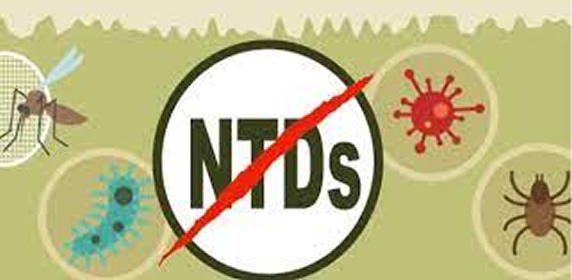
Neglected Tropical Diseases (NTDs) are viral, parasitic and bacterial diseases that mainly affect the world’s poorest people.
They are also regarded as a diverse group of communicable diseases that prevail in tropical and subtropical conditions in about 149 countries globally and affect more than one billion people across the world. js">

The governments of Ondo State, Ekiti State and Osun State are on top of the list of the governments working to tame this diseases as they are not complacent or leaving anything to chance in its preparedness or response to cases of Neglected Tropical Diseases (NTDs), its health officials have said.
The diseases to include Lymphatic Filariasis (Elephantiasis), Soil Transmitted Helminthiasis (STH), Onchocerciasis (River blindness), Trachoma (Granular Conjunctivitis) and Schistosomiasis (Bilharzia).
Others are: Rabbies, Leprosy, Yaws, Snakebites, Leishmaniasis, Human African Trypanosomiasis (HAT), Mycetoma and Fascioliasis.
Investigations by the News Agency of Nigeria (NAN) in the states shows that the government and its international partners including Mithosath and UNICEF have sustained the response to NTDs through sensitisation of the populace, provision of potable water, treatment and ensuring clean environments.
The Ondo State Coordinator of the Neglected Tropical Diseases (NTDs), Mrs Olanike Oladipupo, said that the state government was working assiduously with all stakeholders in addressing cases of NTDs across the state.
In an interview with NAN in Akure Oladipo said “there is collaboration with the Ministry of Water Resources to ensure that everybody in the state has potable water to drink and use.
“We do enjoin our people to avoid the use of stream or ocean water. People can easily contract infection or diseases such as schistosomiasis and onchocerciasis from such sources because black flies lay their eggs there.
“ Government is also working in earnest to clear drain channels across the state . There was a project carried out in recent time in collaboration with the University of Osun and Ondo State Government whereby some rivers in Ondo State were cleared.
“The aim of the project was to reduce black flies in some communities in the state. If there is reduction, the rate of bite and transmission will be reduced as well,” she said.
The NTDs coordinator said that the Ministry of Environment was also educating residents of the state on proper disposal of their wastes, saying there was aggressive campaign for adherence to environmental sanitation on regular basis to prevent outbreak of diseases in the state.
According to her, the state government is in partnership with Mithosath, a Non-Governmental Development Organisation and UNICEF in addressing NTDs in the state.
“ We have been collaborating with Mithosath, an NGO, and UNICEF so that there is proper dissemination of information about NTDs and the treatment across the 18 local government areas of the state.
“As it is known, government cannot do it all, other stakeholders should support.
“ The partnership enables us to get to people at the community level and they are in charge of NTDs programmes, so that no one will be left behind about NTDs and what they can do to prevent the diseases and the treatment.
“In that, Mithosath is helping the state to ensure that people have access to preventive chemotherapy like worm repellants and other necessary things.
“Those are the drugs given to people during mass campaign. Nobody is paying for the drugs and it’s for everybody.
“Before we distribute, we carry out powerful advocacy in all local government areas so that people will come out in large numbers to access the drugs. And they will use them in our presence, that is Directly Observed Therapy (DOT).
“ UNICEF is also doing a great job as regards this. It ensures hygiene promotion such as a programme called WASH, giving support to the government so that people will not bathe in rivers and streams nor defecate there. They also provide logistics,” she said.
Oladipupo explained that some of the NTDs could be prevented even without taking drugs, depending on one’s attitude to cleanliness and proper hygiene.
She said that through the partnership with the Mithosath many affected by NTDs across the three senatorial districts of the state had benefitted from surgical operations.
“There is Morbidity Management and Disability Prevention. This also goes to Mithosath in supporting the state. Some people that have hydrocele, that is swelling in their scrotum and those with lymphatic filariasis have access to free surgery.
“ The phase one was done in Idanre in the Central Senatorial District and the phase two was done in Okitipupa in the Southern Senatorial District of the state while the third phase is ongoing now as I speak with you in Ikare Akoko in the Northern Senatorial District.
“ The most common NTDs in the state are: schistosomiasis, which is a water-borne infection, lymphatic filariasis; onchocerciasis which is also known as river blindness and it is caused by black flies and soil transmitted helminthiasis, which is worm disease, and it is common among school age children.
“ The state government has intervention of distributing worm tablets to them so that their growth will not be stunted,” she said.
Also, the Ekiti Government says modern best practices at sustaining quick responses and preparedness to outbreak of Neglected Tropical Diseases (NTDs), among others, are being adopted by the state.
The Commissioner for Health and Human Services, Dr Oyebanji Filani made this known in an interview with the NAN in Ado-Ekiti.
He said Neglected Tropical Diseases, NTD’s are not new and as such are being tackled headlong.
“The state government therefore is doing everything humanly possible to prevent such diseases from escalating in identified communities.
“We are in collaboration with various multi-national agencies, among which is Mitosath, working with Ekiti State Primary Health Care Development Agency (ESPHCDA), to fight NTDs,” Filani said.
He assured that for now, Neglected Tropical Diseases are under control in the state
” Presently the state is distributing drugs, I mean mass distribution, to pre-school and school age children, to prevent transmission,” he said.
A community health doctor at the Federal Teaching Hospital, Ido-Ekiti, Dr Ipinmoye Taiwo, identified poor awareness, especially among people in rural communities, as a challenge to ending the spread of the diseases.
“The diseases are called neglected because they tend to affect the world’s poorest, and yet, receive less attention than other diseases,” he said.
He called on governments at the national and state levels to get involved in ending NTDs and its spread across the country.
In Osun, the state government has put in place measures to fully monitor, combat and control any outbreak of diseases, Dr Abiodun Boladale, an official in charge of NTDs in the Ministry of Health, has said.
Boladale said that the department of public health in the ministry was on top of situation and highly prepared to respond to emergencies in the state.
“Lasa Fever and Covid outbreaks equipped the state for emergencies and presently we have emergencies operation centres in the state where diseases are monitored.
“NTDs are among the diseases we are monitoring on the dashboard of the centres.
“We also have ‘Integrated Disease Surveillance and Response Unit’, which form part of the team monitoring diseases relating to NTDs.
“We are working with Disease Surveillance Monitoring Officers and Disease Notification Officers at the local level to stay on top of diseases’ outbreaks in the state.
“We also have NTDs officers at the local level who keep the ministry informed and document diseases outbreaks.” he said
Boladale said in case of outbreak of NTD outbreak, the state would follow national guidelines in managing them.
He said some foreign partners and organisations, in conjunction with the Federal Government, had been providing drugs and other medical support to the state to handle NTDs.
The official said that the Osun State University recently received a research grant for Schistosomiasis, a major NTD peculiar to the state.
NAN
Author Profile

Latest entries
 NewsJanuary 27, 2026Soludo’s Economic Blockade of Onitsha Is ‘Declaration of War’ Against Igbo People
 Business and EconomyJanuary 27, 2026Ododo Lauds Tinubu Over Public Finance Reforms, As Chief Ibori Commissions Kogi Audit House
 OpinionJanuary 27, 2026Rep Members Do Not Sell Contracts: Boniface Adie Must Cease the Barefaced Lies Against Hon. Peter Akpanke
 Food and AgricultureJanuary 16, 2026Kogi Vows To Invest More In Cashew Business For Job Creation, Others


Health and Life Style
He-RIN Accuses Health Ministry of Deliberately Sabotsging Local Manufacturers of Mosquito nets
By AbdulRahman Obaje
The Health Reform Initiative Nigeria (He-RIN),has rejected the SNG Health Agreement signed with the Federal Ministry of Health, describing it as self-serving, deceptive and a deliberate attempt to cripple existing local mosquito net manufacturers.
adsbygoogle || []).push({});
com/pagead/js/adsbygoogle.js">
In a statement signed for He-RIN by Sunday Tobi, Executive Director and Abdul Musa Secretary 24 December 2025, HE-RIN further revealed that the arrangement is merely a continuation of the activities of the United Nations Office for Project Services (UNOPS), which it said previously dominated the sector under questionable circumstances
The full statement read, “The Health Reform Initiative Nigeria (He-RIN), a civil society organisation advocating health sector reform through increased funding, accountability and local capacity building, has rejected the SNG Health Agreement signed with the Federal Ministry of Health, describing it as self-serving, deceptive and a deliberate attempt to cripple existing local mosquito net manufacturers.”
“In a joint statement issued on Wednesday by its Executive Director, Sunday Tobi, and Secretary, Abdul Musa, He-RIN condemned the agreement that led to a partnership between Vestergaard and Harvestfield, culminating in the formation of SNG Health for the supply of mosquito nets in Nigeria.”
“According to the organisation, the arrangement is merely a continuation of the activities of the United Nations Office for Project Services (UNOPS), which it said previously dominated the sector under questionable circumstances.”
“From available evidence widely reported in the media weeks ago, the so-called SNG Health was incubated by UNOPS at the instance of the Federal Ministry of Health through a Swiss company, in collaboration with the World Bank Nigeria, which operates as a sister organisation to UNOPS,” the statement said”
“He-RIN accused the Ministry of Health of deliberately undermining local manufacturers of insecticide-treated mosquito nets, tracing Nigeria’s persistent malaria burden and failure to significantly reduce malaria-related deaths to what it described as the ministry’s collusion with UNOPS years before the Bola Tinubu administration assumed office in 2023.”
“The group noted that Nigeria continues to bear the heaviest malaria burden globally. According to the World Health Organization (WHO) World Malaria Report, Nigeria accounts for approximately 27 per cent of global malaria cases and 31 per cent of malaria-related deaths, with an estimated 184,000 deaths annually, mostly among children under five and pregnant women.”
“He-RIN further stated that this grim outcome persists despite substantial public spending on health. Data from the Budget Office of the Federation show that Nigeria’s health sector has consistently received only 4–6 per cent of the annual national budget, far below the 15 per cent Abuja Declaration benchmark.”
“In the 2024 Federal Budget, the health sector received approximately N1.3 trillion, representing just over five per cent of total government expenditure.”
“On malaria-specific investments, the organisation disclosed that Nigeria has received and deployed over N1.5 billion for malaria control interventions between 2015 and 2023, according to figures from the National Malaria Elimination Programme (NMEP) and partner funding disclosures.”
“These funds, largely provided by the Global Fund, World Bank, USAID and UN agencies, were primarily spent on the procurement and distribution of insecticide-treated mosquito nets (ITNs), indoor residual spraying, diagnostics and antimalarial medicines.”
“Despite this scale of investment, Nigeria continues to struggle with malaria control due to policy inconsistency, excessive reliance on imported mosquito nets, weak local manufacturing capacity and opaque procurement practices,” He-RIN said.”
“The organisation recalled that the Federal Government had concluded arrangements for the local manufacturing of mosquito nets following a competitive bidding process completed in 2022, but alleged that the process was abruptly halted at the instance of UNOPS shortly after the current administration assumed office.”
“Since then, the sector has witnessed no meaningful investment. Mosquitoes continue to ravage communities, while Nigeria retains the unenviable position of the world’s most malaria-burdened country,” the statement added.”
“He-RIN argued that these developments directly contradict President Bola Tinubu’s Renewed Hope Agenda for the health sector, which prioritises a Sector-Wide Approach (SWAp) to Universal Health Coverage (UHC), increased funding, strengthened Primary Health Care through the Basic Health Care Provision Fund (BHCPF), reforms under the National Health Insurance Authority (NHIA), health workforce development, and the promotion of local production as a pillar of a resilient health system.”
“The group stressed that if local manufacturers had not been blocked from accessing a proposed $100 million contract for the local production of insecticide-treated nets, millions of direct and indirect jobs could have been created, foreign exchange conserved, and malaria-related deaths significantly reduced.”
“He-RIN maintained that SNG Health does not serve Nigeria’s best interests, describing it as a re-emergence of vested interests within the Ministry of Health in collaboration with UNOPS, following the failure of what it alleged was an attempt to divert the $100 million initiative..”
“The organisation stressed that the President must urgently investigate the matter to understand why the Ministry of Health is, in its view, prioritising profit-driven arrangements over the health and lives of Nigerians, while malaria continues to claim hundreds of thousands of lives annually”
“The organisation expressed deep concern that the Honourable Minister of Health has never publicly acknowledged the existence of local LLIN mosquito net manufacturers in Nigeria, despite their verifiable presence, prior international certifications, and documented supply history to agencies such as the Global Fund and the World Bank.”
“He-RIN alleged that the Minister assumed office with a clear conflict of interest, having previously worked in alignment with Vestergaard, and has since promoted policies that favour his personal and commercial interests while systematically disadvantaging Nigerian-owned manufacturers.”
“It revealed that the same Vestergaard company behind the partnership of SNG was the company responsible for closing down over 20 manufacturers of net in Nigeria including the bed net clusters in Lagos, Aba, kano and Onitshia when it came up with its standard Llin that was distributed free to Nigerians therefore killing the commercial market.”
“According to the organisation, the Minister deliberately encouraged UNOPS to exclude and effectively ban local manufacturers who had invested substantial personal and borrowed capital to establish LLIN factories, creating a vacuum that enabled the emergence of SNG Health as the preferred supplier.”
“He-RIN further alleged that the Minister refused to commence tenders or malaria intervention campaigns in World Bank-supported states until the SNG Health agreement was finalised and procurement contracts could be directly channelled to the SNG arrangement.”
“The group stated that the Minister unilaterally pushed for the award of over 25 million Global Fund-supported LLINs to a narrow group of favoured companies without the backing of any publicly disclosed or Nigeria-specific epidemiological study, despite existing national data showing that multiple LLIN types remain effective across different regions of the country”
“He-RIN emphasised that Nigeria’s epidemiological evidence supports the deployment of different LLIN technologies tailored to regional mosquito species and resistance patterns, noting that mosquitoes in Lagos differ significantly from those in Ebonyi and Sokoto States, making a single-net approach scientifically unjustifiable”
“The organisation asserted that corruption, rather than public health outcomes, appears to underpin policies that ignore existing local manufacturers who had previously spent millions of dollars to establish LLIN factories and had successfully produced nets for international donors, including the Global Fund and the World Bank”
vHe-RIN recalled that the Ministry of Health is still indebted to local manufacturers for supplies delivered over a decade ago, even as those same manufacturers once placed Nigeria on the global stage by producing the world’s largest mosquito net, recognised by the Guinness World Records and displayed at Eagle Square, Abuja, during the African Leaders’ Summit on Roll Back Malaria.”
“The group stated that the objective of producing the world’s largest mosquito net was to demonstrate Nigeria’s manufacturing capacity, encourage sustained local production of LLINs, and justify continued government and donor patronage for manufacturers who had borrowed heavily to establish factories.”
“He-RIN questioned why SNG Health was prioritised when Nigerian manufacturers could have been supported through sovereign-backed loan guarantees of up to $40 million, coupled with assured market access, achieving the same outcomes without displacing existing players.”
“The organisation warned that the Minister’s current policy framework is directly harmful to existing manufacturers, as SNG Health competes within the same limited market while enjoying preferential treatment that distorts competition and undermines local industry survival.”
“He-RIN further alleged that the Minister deliberately stalled the issuance of tenders for World Bank-borrowed funds for over two years—despite rising malaria deaths among children—until the SNG Health plan was fully positioned, and cautioned that similar strategies are now being deployed under the guise of promoting “dual” LLIN technology, even though SNG Health is not the sole global producer of such nets and dual LLINs should not be imposed as the exclusive option for Nigeria.”
“We therefore call on President Bola Tinubu to act in the national interest by halting the SNG Health arrangement and directing the Ministry of Health to publicly account for what happened to the $100 million initiative intended for local mosquito net manufacturing,” the statement said.”
Author Profile
Latest entries
NewsJanuary 27, 2026Soludo’s Economic Blockade of Onitsha Is ‘Declaration of War’ Against Igbo PeopleBusiness and EconomyJanuary 27, 2026Ododo Lauds Tinubu Over Public Finance Reforms, As Chief Ibori Commissions Kogi Audit HouseOpinionJanuary 27, 2026Rep Members Do Not Sell Contracts: Boniface Adie Must Cease the Barefaced Lies Against Hon. Peter AkpankeFood and AgricultureJanuary 16, 2026Kogi Vows To Invest More In Cashew Business For Job Creation, Others
Health and Life Style
Don Calls for Government Intervention To Tackle Diabetes Mellitus Havoc

From Joseph Amedu, Lokoja
A Professor of Medical Physiology, at the Federal University, Lokoja, Magnus Anyakudo, has called on government at all levels to expedite urgent action in tacking the alarming case of Diabetes Mellitus across the globe in order to save millions of lives.
adsbygoogle || []).push({});
googlesyndication.com/pagead/js/adsbygoogle.js">
Prof. Anyakudo made the call on Thursday while delivering the university’s 35th Inaugural Lecture held at Adankolo campus, Lokoja.
Our Correspondent reports that the topic of the lecture was “Nutrition, Your Health: Unlocking the Power of Evidenced-Based Dietary Strategies for Diabetes Mellitus.”
The lecturer said that the call became necessary in view of the country’s diabetes burden in the midst of health, economy and social issues.
According to him, the economic burden of diabetes is substantial, with estimated global healthcare expenditure reaching 772 billion dollars in 2018 and 1.015 trillion dollars in 2024.
He said “Diabetes Mellitus is a chronic disease for which there is no known cure as at now, but understanding the risk factors can help individuals to take proactive steps to reduce their chances of developing it through lifestyle changes and regular health screening.
“To tackle this escalating burden of diabetes mellitus in Nigeria, just like other Non-Communicable Disorders, prevention is the key.
“For those with higher risk, consulting healthcare professionals for personalised advice is recommended.
“There is the need, therefore, for joint or collaborative efforts to identify risk factors and control the modifiable ones among them through well-informed and planned nutritional strategies.”
He appealed for support to those already living with the disorder to promote a culture of health and wellness in the society.
“We should support research and education initiatives that aim to improve diabetes prevention and management. Our own mission is to improve the lives of people living with diabetes and prevent diabetes in those at risk.”
The professor advised people to always eat a balanced diet that comprised a variety of whole, unprocessed foods, including fruits, vegetables, whole grains, lean proteins and healthy fats.
“Endeavour to drink plenty water each day and limit sugary drinks, avoid baked foods and white bread, engage in regular physical activity such as walking to improve insulin sensitivity and overall health.
“Get adequate sleep and manage stress level – engaging in stress-reducing activities, such as yoga or meditation, which improves insulin sensitivity”, he added.
Ealier in his remarks, Prof. Olayemi Akinwumi, the FUL Vice-Chancellor, said that the university has a responsibility to ensure its research reaches beyond journals into clinics, marketplaces, and homes.
He said “we must strengthen partnerships between our researchers and health services, work with industry and civil society to develop wholesome food environments.
“We should also support public education campaigns that make healthy choices easy choices.
“By this inaugural lecture, Prof. Anyakudo has honoured the academic tradition, offered
knowledge that empower families, influence clinical practice, inform policy makers and guide public health practitioners.”
Author Profile
Latest entries
NewsJanuary 27, 2026Soludo’s Economic Blockade of Onitsha Is ‘Declaration of War’ Against Igbo PeopleBusiness and EconomyJanuary 27, 2026Ododo Lauds Tinubu Over Public Finance Reforms, As Chief Ibori Commissions Kogi Audit HouseOpinionJanuary 27, 2026Rep Members Do Not Sell Contracts: Boniface Adie Must Cease the Barefaced Lies Against Hon. Peter AkpankeFood and AgricultureJanuary 16, 2026Kogi Vows To Invest More In Cashew Business For Job Creation, Others
Health and Life Style
Ogori/Magongo LGA Emerges Overall Best In PHC Quality Service Delivery Award
From Joseph Amedu, Lokoja
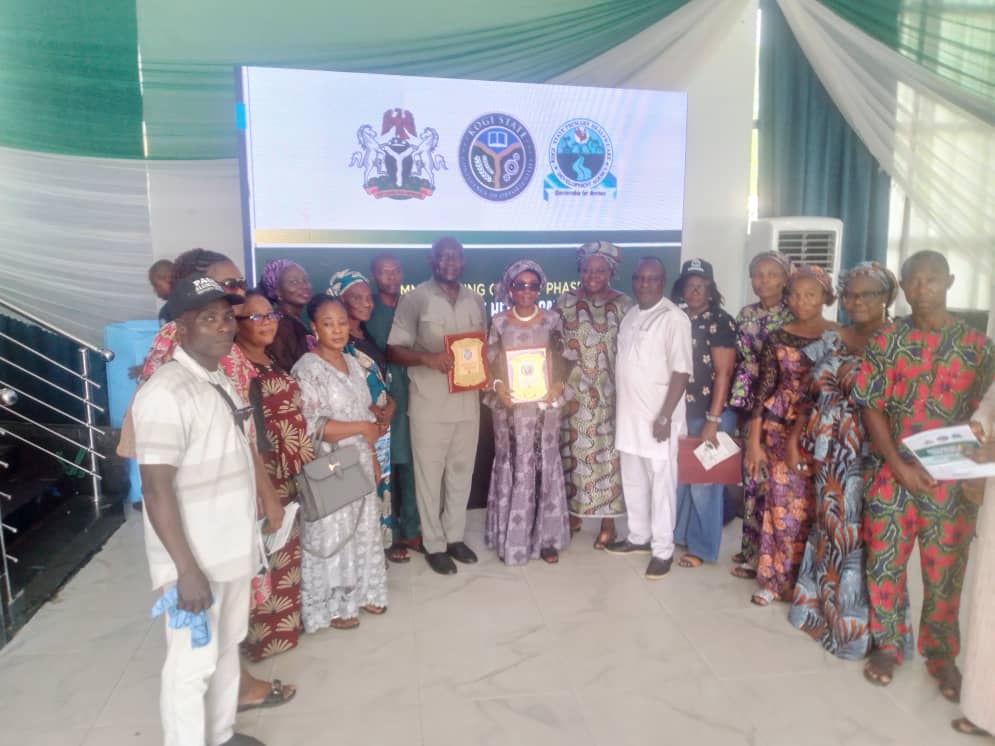
The Ogiri/Mangogo Local Government Area, has emerged the overall best winner among the 21 local government areas of Kogi State, in quality Primary Healthcare (PHC) service delivery.
adsbygoogle || []).push({});
The State Governor, Alhaji Ahmed Usman Ododo, rewarded the outstanding LGAs and personnel during the Commissioning of 80 Revitalised PHCs facilities in Lokoja.
The governor announced various categories of cash prizes awards for recipients as part of efforts to strengthen healthcare delivery across the state.
The Ogiri/Mangogo LGA, who emerged the overall winner got a star prize of N5 million from the Governor, the first position in each Senatorial District got N3 million each, second position got N2 million.
The individual health officer with outstanding performance across LGAs in healthcare delivery received N250,000 each.
The governor noted that the commissioning of 80 revitalised PHC facilities is under the First phase of the state’s healthcare revitalisation programme supported by the World Bank and National Primary Healthcare Development Agency (PHCDA) under the IMPACT project.
The event also featured a stakeholders’ engagement meeting and handing over of medical equipment and commodities to 239 PHCs across the state.
The governor described the award’s recognition as both a reward for excellence and an incentive for health workers to deliver better services to citizens.
“This initiative is to encourage healthy competition and inspire improved service delivery in our PHC system,” the governor said.
Ododo noted that the commissioning of the 80 revitalised PHC facilities was a monumental achievement, acknowledging President Bola Ahmed Tinubu’s commitment to healthcare development through substantial federal support and strategic appointments.
The governor thanked all the relevant stakeholders and partners for their support and cooperation towards improving quality healthcare delivery to the people of Kogi State.
Ododo hailed President Bola Tinubu for several appointments that he had painstakingly given to Kogi State.
He particularly commended the appointment of Dr Muyi Aina, a Kogi State indigene, as Executive Director of NPHCDA, describing it as a recognition of merit and a boost to the state’s healthcare advancement.
The governor commended Tinubu for always being passionate of the health and welfare of Nigerians especially the people of Kogi State.
According to Ododo, the health intervention will ensure quality healthcare services to the people of the state.
The governor urged the award recipients to let the honour spur them to do more by giving quality service delivery to the people of the state.
Gov Ododo reaffirmed his commitment to continue to follow the footsteps of Mr President to continue to support and provide quality healthcare delivery for the people of Kogi State especially the vulnerable.
The governor urged communities to safeguard the revitalised facilities against vandalism to ensure their sustainability.
“It is our collective responsibility to protect the facilities for the benefit of people, the community and the state at large,” Ododo stated.
The governor also promised to introduce a monitoring mechanism to track service delivery, drug dispensation, and facility management across PHC centres in the state.
In his remarks, Dr Muyi Aina, the ED, NPHCDA, commended Governor Ododo for his visionary leadership and expansion of the state’s health insurance scheme despite limited resources.
Dr Aina lauded the quality and commitment of Kogi State’s health workers and urged the governor to sustain the leadership challenge as a model for service excellence.
The NPHCDA boss explained that the PHC Leadership Challenge was designed to reward officers who demonstrate excellence in prompt report submission, empathy in client relations, diligence, efficiency, and accurate data management.
The Kogi Commissioner for Health, Dr Abdulaziz Adams Adeiza, commended all stakeholders for their contributions.
The commissioner disclosed that the surveillance and feedback committees have been established to ensure sustainability and accountability in the sector.
Also speaking, the Executive Director of the Kogi State Primary Healthcare Development Agency (KSPHCDA), Dr Mu’azu Omeiza Musa, thanked Governor Ododo for his unwavering support to the healthcare sector.
He expressed optimism that the administration’s interventions would drastically reduce maternal and infant mortality rates in the state.
In her reciprocative gesture with the News Agency of Nigeria (NAN), the Executive Chairman of Ogirimangogo LGA, Hon Rosemary Ohiezu, appreciated the State Government and the NPHCDA for considering her local government worthy of the award.
Hon Ohiezu further commended the governor for his humility and for always listening to his people and prioritising their welfare by ensuring quality healthcare delivery.
She commended the management and staff of the LGA for working tirelessly to make the award possible.
According to Ohiezu, the PHCs in the LGA have given the opportunity to the people at the grassroots especially the vulnerable to easily access quality healthcare services without the need to travel far distance.
Hon Ohiezu advised other LGA Chairmen to always have a mutual interactions with their HODs’ Health to know their challenges and go round to monitor their activities for effective service delivery.
The governor later handed over medical equipment and commodities donated by the Federal Ministry of Health, the NPHCDA, and other development partners to the respective PHCs.
Gov. Ododo subsequently made a symbolic commissioning of the revitalised modern PHC at the Old Market Lokoja, with the state-of-the art health care and water facilities.
The awards cut across the three senatorial districts with the following winners: Kogi Central: 1st – Ogori/Magongo LGA, 2nd – Ajaokuta LGA; Kogi East: 1st – Bassa LGA; 2nd – Ofu LGA; and Kogi West: 1st – Mopa-Muro LGA; 2nd – Kogi LGA.
Overall Best: Ogori/Magongo LGA.
Ends
Author Profile
Latest entries
NewsJanuary 27, 2026Soludo’s Economic Blockade of Onitsha Is ‘Declaration of War’ Against Igbo PeopleBusiness and EconomyJanuary 27, 2026Ododo Lauds Tinubu Over Public Finance Reforms, As Chief Ibori Commissions Kogi Audit HouseOpinionJanuary 27, 2026Rep Members Do Not Sell Contracts: Boniface Adie Must Cease the Barefaced Lies Against Hon. Peter AkpankeFood and AgricultureJanuary 16, 2026Kogi Vows To Invest More In Cashew Business For Job Creation, Others