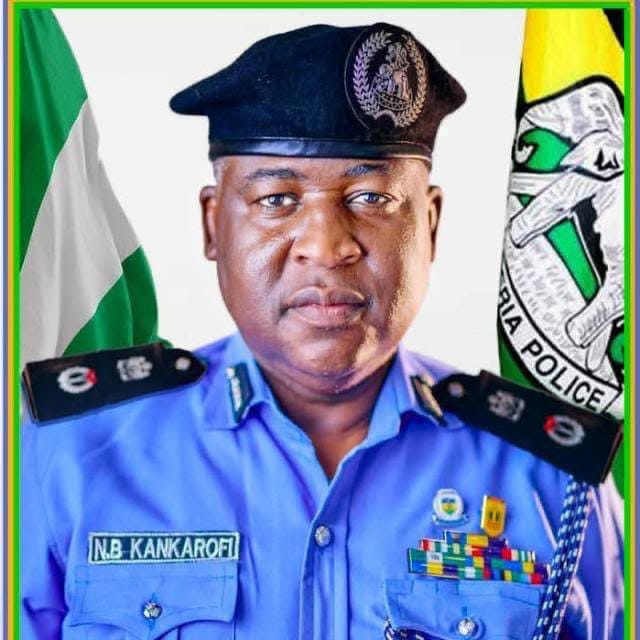
From Joseph Amedu, Lokoja
The Kogi State Commissioner of Police, CP Nazir Bello Kankarofi, has asked officers and men of the command to live above board in their responsibility of accountability, professionalism and respect for citizens’ rights, declaring that members of the public are the “bosses” of the Nigeria Police Force.
The CP, who spoke in Lokoja on Wednesday at the command’s 2026 Customer Service Week celebration, admitted that police brutality, extrajudicial activities, corruption and other misconduct by some officers had continued to undermine public confidence in the force.
He urged civil society organisations, religious bodies and other stakeholders to abandon “sugar-coated” speeches and openly expose shortcomings in police operations, saying the command needed honest criticism to improve its service delivery.
He said civil society organisations had a crucial role in that transformation, describing them as an important bridge between the police and the communities they serve.
He acknowledged the contributions of organisations involved in human rights, legislative advocacy, anti-human trafficking and other areas, saying their reports and interventions had helped expose gaps in policing and improve responses to vulnerable members of society.
He said partnerships with CSOs had, in different instances, helped the police uncover and disrupt human trafficking networks, rescue victims of sexual abuse, including rape and incest, and assist victims of domestic violence whose cases might otherwise have remained hidden.
Speaking on the theme of the celebration, “The Extra Mile,” the police chief said the command deliberately invited stakeholders to create an atmosphere for frank discussion about the performance of the police and citizens’ experiences in their encounters with officers.
“I will not be happy if everybody comes here praising the CP. That is not the purpose of this gathering. I am here to be battered so that I will go home and lick my wounds and improve,” he said.
The Commissioner said the objective was to enable officers, including the most junior constable, to hear directly from members of the public how their conduct and service were perceived, stressing that police personnel must understand that they were servants of the people and not their masters.
“The members of the public are our bosses. It is from their taxes that we are being paid our salaries. We are not their masters, but rather we are their servants,” he said.
The CP also acknowledged the historical burden of policing in Nigeria, noting that the colonial police system was originally established to protect colonial interests and suppress the local population, a mentality he said had, despite reforms in training, curriculum and democratic governance, continued to manifest in aspects of modern policing.
He called for a deliberate effort to dismantle such attitudes and build a police institution that listens to citizens, respects human rights and takes public perception and service delivery seriously.
The CP, however, appealed to stakeholders to ensure that information supplied to the police was timely and credible, warning that premature or unverified information could compromise investigations and ongoing security operations.
He assured citizens that the command would strengthen its complaint-response mechanisms, improve communication, listen to legitimate concerns and promote professionalism among its personnel, stressing that every interaction between an officer and a citizen could either strengthen or weaken public confidence.
He urged CSOs, religious organisations and community leaders to provide candid assessments of police operations rather than praise the command, saying such feedback would enable the police leadership to identify weaknesses and take corrective measures.
According to him, sustainable policing depends on public cooperation, noting that timely and credible information from communities could make the difference between a security threat being detected and a tragedy occurring.
The CP further urged stakeholders to use the celebration to provide concrete observations, recommendations and complaints which, he said, would be collated into a report for onward transmission to the Inspector-General of Police, IGP Olatunji Disu.
He said the initiative was ultimately aimed at building “a police force that the people can approach, a police force that listens, and a police force that responds with professionalism, fairness and respect.”
He called on officers to act within the law at all times and challenged the command to “fish out the bad eggs,” insisting that accountability, responsiveness and consistent engagement remained essential to restoring public confidence in policing.
The CP said the “Extra Mile” must therefore go beyond the annual Customer Service Week celebration and become a daily standard guiding how officers serve, communicate and relate with citizens across Kogi State.
“Our customers are the citizens whose lives, property, and rights we are sworn to protect. Going the extra mile may mean listening patiently to a complainant, responding promptly to a distress call, providing clear information, treating every person with dignity, or taking the additional step to ensure that a legitimate concern is properly addressed.”
Speaking on the SERVICOM mechanism, the Acting Officer in Charge of the unit, ASP Chikak Emmanuel, explained that the reintroduction of the SERVICOM Unit further underscores the command’s emphasis on citizen-focused, accountable and responsive policing.
According to him, the initiative provides a structured channel through which members of the public can raise concerns about police service delivery, obtain responses and contribute to identifying areas requiring improvement
He said the unit receives and documents complaints, forwards them to appropriate authorities for resolution and is expected to acknowledge complaints within 48 hours, while working towards resolving them within five to 15 working days, depending on their complexity.
Emmanuel said the unit would also engage communities, obtain feedback on police services, communicate citizens’ concerns to police authorities and identify service-delivery gaps between the force and the public.
He emphasized that the initiative which also aligns directly with this year’s theme, as exceptional service in policing, does not necessarily require grand gestures, adding that it only means listening patiently to a distressed citizen, acknowledging a complaint promptly, providing clear guidance, following up on a case or ensuring that a legitimate concern does not disappear in the system.
He however urged residents to use the mechanism to freely communicate their experiences, complaints and recommendations to the command.
The event also featured a Question and Answer session, during which participants subjected virtually every aspect of policing to critical interrogation; raising concerns, sharing personal experiences and seeking clarification on issues ranging from police conduct and accountability to crime prevention, complaint handling, human rights, community policing and service delivery, reinforcing the command’s call for frank, constructive engagement as a pathway to identifying gaps and improving public confidence.
Ends.
.