
Education
NFVCB Partners ABU on Capacity Building for Undergraduates
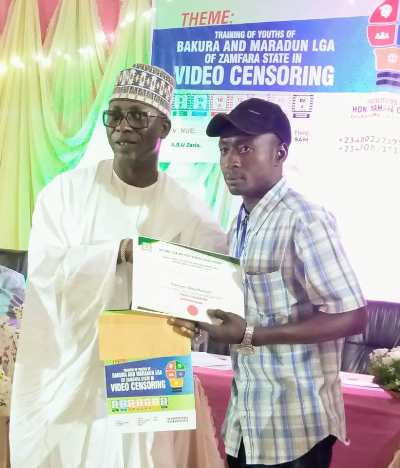
The National Film and Video Censors Board (NFVCB), in collaboration with the Department of Theatre and Performing Arts, has conducted a training on film and video censoring and creative capacity development for students from Zamfara state. adsbygoogle || []).push({});
The two-day capacity building programme , which held at the Samaru Campus of ABU Zaria, ended on Friday, with relevant stakeholders from the
academia, as well as officials of the board, held different sessions for
participants.
The students were taught basic dynamics of films and videos censoring and
classification, creative and entrepreneurial skills, as well as the
preservation of Nigeria’s cultural heritage through films.
The event also featured practical interactive and film critic session, as
well as panel discussion session , anchored by erudite scholar Prof. Steve
Abah.
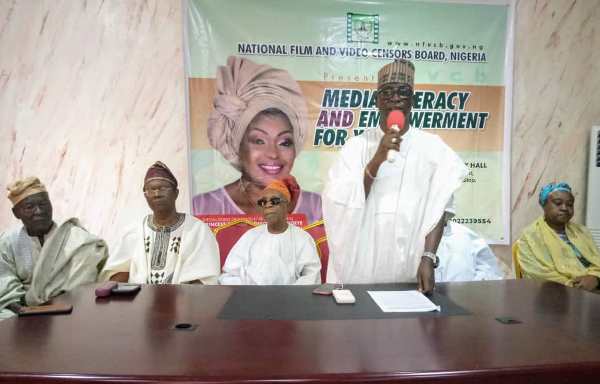
In his presentation, Alh Adedayo Thomas, Executive Director of NFVCB, said
the programme was in furtherance of the board’s Media Literacy and
Mentorship initiatives earlier launched for youths, especially Theatre and
other Creative Arts undergraduates in Nigerian Universities.
According to him, the board is set to equip young theatre practitioners
from the North- West with practical knowledge of the movie industry besides their academic experience.
“There is no reason to doubt that youths shape the future of a country, and
if a country’s youths are diligent and hardworking, then that nation is
bound to progress, but if its youths are indolent, then no one can save
that country from downfall.
“It is therefore, important to tap the unbridled vigor of our youths and
give it a right direction by effectively channelizing this energy into
productive endeavours , which will in turn discourage youthful extremism.
“As the key regulator of the Nigerian motion picture industry, NFVCB has
decided to bring practical knowledge of how the sector works to these
youths to secure the future of our movie industry.
“We are teaching them classifications and rating of videos and films as
well as productive use of social media in order to properly position them
for opportunities that abound in the industry,” he said.
Thomas further said that, under his watch, NFVCB had taken its Media
Literacy and Mentorship initiatives to universities across the six-geo
political zones.
He explained that Nigeria, like most countries, seeks to protect its young
and minors from unsuitable contents, thus the inherent need for censorship
and classification of films and video works.
He noted that, as a multi ethnic developing society, Nigeria needs to
preserve ethnic, racial and religious harmony, especially with the influx
of all kinds of media.
The NFVCB boss described the Censors Board as a mediator between filmmakers and society that needs to ascertain if a film is good for the consumption of Nigerians.
He noted, among other things, that beside its educational and entertainment values, such film must not negate the Nigerian culture, interest and values.
He further explained that a film that encourages religious, racial or
ethnic discrimination was inimical to the corporate existence of Nigeria.
In his remark, Dean of the Faculty of Arts, Prof. Abubakar Liman, expressed
delight over the collaboration and mentorship initiative by the board.
He said:”Our youths have a great future in self employment through
creativity, innovation and Imagination.
“A workshop like this that bothers on entrepreneurship is very important
as ours youths are inspired to look inward, develop themselves and follow
their dreams instead of looking up to the government for everything.”
Also, Hon.Yahaya Chado, former Federal Lawmaker who represented Gora
Bakura/Maradun constituency of Zamfara State, commended the NFVCB for
extending its youths empowerment programmes in the North-West to the state.
The event had in attendance Zamfara State Students association, filmmakers from the region and government functionaries, including a member of the Zamfara State House of Assembly, Hon.Alhasssan Kanoma and representatives of the state government.
Highpoint of the event was the presentation of certificate of participation
and the screening of three short films produced by the Theatre Arts
Department of the Institution.
Education
Settle 2026 Agreement in 14 Days or We’ll Down Varsities: SSANU Tells FG
By Nick Ibe, Abuja
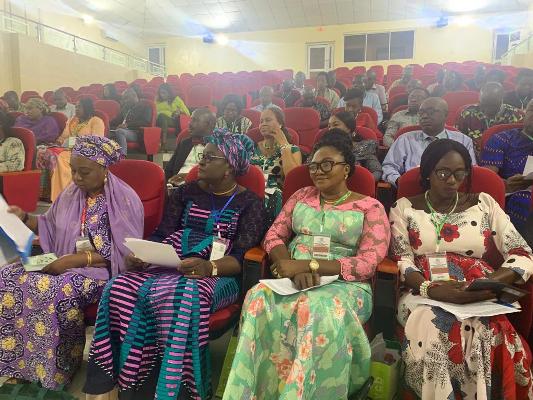
A 14-day ultimatum has been given the Federal government to release funds for the implementation of the recently signed 2026 Agreement and pay outstanding arrears, failing which the Senior Staff Association of Nigerian Universities, SSANU, will shut down universities.

Following the threat, the Minister of Education, Dr. Tunji Alausa, is said to be desperately making moves to avert the strike, by assuring that the funds would be released on or before next week.
At its 56th National Executive Council, NEC, meeting held at the University of Uyo, Akwa Ibom State, at the weekend, SSANU took the decision to down tools if the funds are not released.
Consequently, a communiqué issued at the end of the meeting and signed by its national president, Comrade Mohammed Ibrahim, SSANU noted that the arrears constitute legitimate financial entitlements of affected members and must be paid in full without further delay.
The communiqué stated that the meeting deliberated extensively on developments affecting the Nigerian university system, the welfare of members of the union and other issues of national importance, including the implementation of the 2026 FGN/SSANU Agreement, funding of universities, security, the economy and cost of living, public education, accreditation of university programmes, food security, technology and cybersecurity, energy, the rule of law and the general state of the nation.
The communique read:
“NEC acknowledged that implementation of the 2026 FGN/SSANU Agreement, which took effect from January 1, 2026, notwithstanding its formal signing on June 29, 2026, has commenced in some universities.
“NEC, however, expressed serious concern that implementation remains incomplete and uneven across the university system as a result of funding and administrative challenges.
“NEC categorically demanded the immediate release and payment of all outstanding arrears arising from the implementation of the 2026 FGN/SSANU CONTTA salary structure, calculated from the effective date of January 1, 2026.
“NEC stressed that these arrears constitute legitimate financial entitlements of affected members and must be paid in full without further delay. NEC further observed that universities which have so far implemented the CONTTA salary structure did so largely through internally sourced funds, without direct cash backing from the Federal Government.
“NEC therefore called on vice-chancellors and governing councils of universities that are yet to implement the financial and non-financial components of the 2026 FGN/SSANU Agreement to draw lessons from institutions that have taken proactive steps to implement the Agreement in the interest of staff welfare, industrial harmony and improved organisational performance.”
“Conclusively, NEC, in session, after exhaustive deliberations on the continued non-release of funds for the implementation of the 2026 FGN/SSANU Agreement, issued the Federal Government a 14-day ultimatum to release the required funds and ensure the full payment of all outstanding CONTTA arrears.
“NEC stressed that members have waited sufficiently for the benefits of an Agreement already concluded and therefore demand immediate and full compliance within the stipulated period.”
However, the SSANU president informed that the Minister of Education, Dr. Tunji Alausa, had assured them that the Office of the Accountant-General of the Federation was working hard to ensure that the funds were released by next week at the latest.
Comrade Mohammed said the release of the funds, as promised, before the expiration of the 14-day ultimatum would avert the situation.
In his words:
“At this juncture, I must inform you, comrades, that just before this press briefing, I received a call from the Minister of Education, Dr. Tunji Alausa, informing me of the current progress being made on the release of the money.
“He just confirmed to me that the Director of Funds in the Federal Ministry of Finance and the Accountant-General’s Office had confirmed that the money would be released on or before next week. We hope this will be done. And if that is done, it will avert the situation. Otherwise, our ultimatum stands.”
On the payment of the outstanding two months’ withheld salaries and one-year arrears of the 25 per cent and 35 per cent salary increases, “NEC expressed serious concern over the continued non-payment of the remaining two months’ salaries withheld during the 2022 industrial action and categorically demanded the immediate release and payment of the outstanding two months’ salaries to all affected members.”
The SSANU NEC further demanded the immediate release and payment of the outstanding one-year arrears arising from the 25 per cent and 35 per cent salary increases, stressing that these are legitimate entitlements due to affected university workers and should no longer be subjected to further delay.
“NEC therefore called on the Federal Government to take immediate steps to settle these outstanding obligations in full, in order to address the financial hardship being experienced by affected members and demonstrate commitment to the welfare of university workers.”
SSANU further expressed concern over the uneven implementation of the Agreement in state-owned universities and noted the varying experiences across institutions, including developments in Ondo, Delta and Kaduna states.
“NEC strongly called on state governments and governing councils of state universities to ensure full and equitable implementation of the Agreement and to provide the necessary funding for its execution. NEC maintained that staff of state universities must not be treated as lesser partners in the Nigerian University System and cautioned that selective or delayed implementation could undermine industrial harmony.”
Education
Kogi AGILE Begins ATM Card Distribution to 12,112 Second-Cohort Beneficiaries
From Joseph Amedu, Lokoja
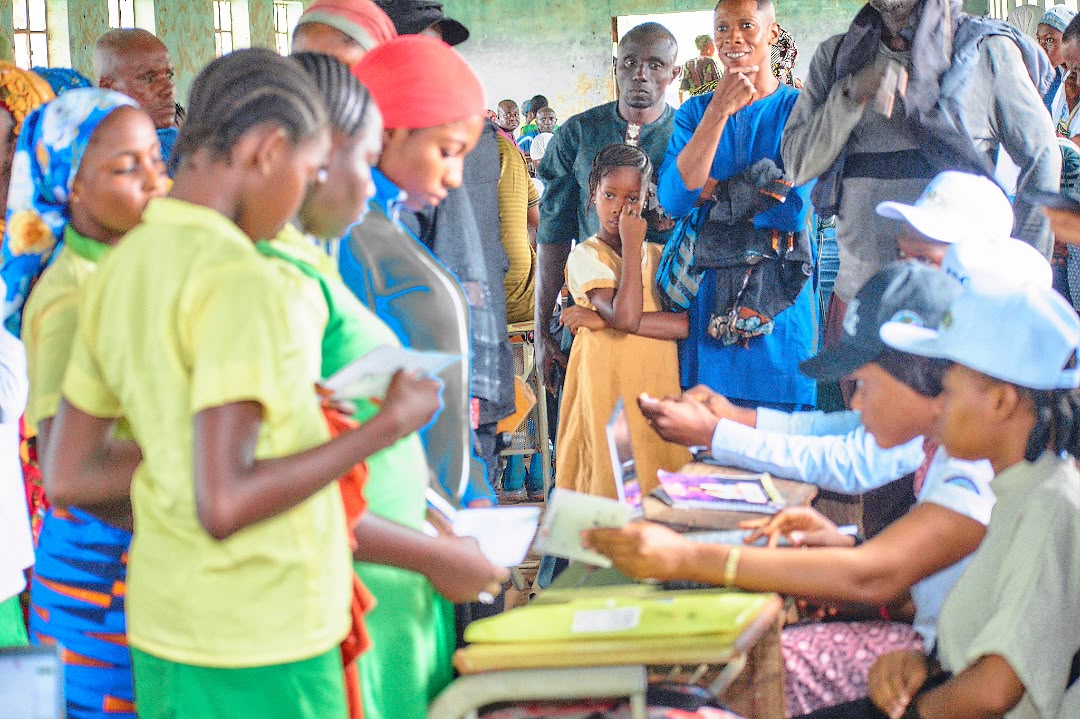
The Kogi State Adolescent Girls Initiative for Learning and Empowerment (AGILE) Project has commenced the distribution of Automated Teller Machine (ATM) cards to 12,112 adolescent girls enrolled as second-cohort beneficiaries under the Conditional Cash Transfer (CCT) component of the project.
The distribution exercise which started on Wednesday is being implemented across the three senatorial districts of Kogi State, is designed to facilitate beneficiaries’ access to their designated financial channels and ensure that eligible adolescent girls are adequately reached under the CCT intervention.
The CCT component is one of the interventions of the Kogi AGILE Project aimed at supporting adolescent girls to remain in school, transition successfully, and overcome some of the financial barriers that may affect their education.
Speaking during the exercise, the State Project Coordinator (SPC), Kogi AGILE Project, Alhaji Ahmed Tijani Oricha, reiterated the project’s commitment to ensuring that eligible beneficiaries receive the necessary support under the programme.
He explained that the distribution of ATM cards represents an important stage in the implementation of the CCT intervention, as it provides beneficiaries with the financial access required to receive the support provided under the programme.
Alhaji Oricha urged the beneficiaries and their parents or guardians to make responsible use of the intervention, stressing the importance of the support in promoting girls’ education and encouraging beneficiaries to remain committed to their studies.
He also called on school principals, parents, community stakeholders, and other relevant actors to support the successful implementation of the programme by ensuring that beneficiaries are properly guided and protected throughout the process.
The CCT Lead, Kunle Mumini, said the second cohort comprises 12,112 eligible adolescent girls whose ATM cards are being distributed as part of efforts to strengthen the delivery of the CCT intervention.
According to him, the distribution is being organized across the three senatorial districts to improve accessibility, reduce the burden of traveling long distances for beneficiaries, and ensure that the exercise reaches eligible girls across the state.
He further encouraged beneficiaries and their parents to cooperate with officials during the exercise and ensure that all required procedures are followed for proper documentation and accountability.
The commencement of the second-cohort ATM card distribution builds on the experience of the first cohort of the CCT intervention, which targeted 13,359 adolescent girls in all transitioning classes across Kogi State.
The first cohort was designed to support girls at critical transition points in their education, particularly as they move from one level of schooling to another. The continuation of the intervention with a second cohort underscores the project’s broader focus on improving girls’ access to and retention in education.
Some beneficiaries who spoke during the exercise expressed appreciation for the support, noting that the intervention would provide additional encouragement for them to remain focused on their education.
Parents and guardians also welcomed the initiative, with some describing the CCT support as an important intervention for families facing financial challenges associated with keeping their daughters in school.
School principals and administrators participating in the exercise similarly emphasised the importance of collaboration among schools, parents, communities and the AGILE Project in ensuring that the intervention achieves its intended objectives.
The distribution exercise is expected to continue across the three senatorial districts, with project officials working with relevant stakeholders to ensure that all eligible beneficiaries under the second cohort are adequately reached.
Ends.
Education
2026 NECO: Kano Overall Best Followed By Lagos, Oyo
The results of the 2026 Senior School Certificate Examination conducted by the National Examinations Council, have placed Kano State as the overall best.
Kano emerged as the leading state with 74,413 candidates obtaining at least five credits, including English Language and Mathematics.
The result places Lagos, which recorded 72,496 candidates, and Oyo with 55,543 candidates, as coming second and third respectively according to figures released by the Kano State Government.
The development marks the second consecutive year Kano has recorded the highest number of candidates meeting the five-credit benchmark, following its performance in the 2025 NECO examination.
Reacting to the result, Governor Abba Yusuf, in a statement issued on Saturday by his spokesperson, Sunusi Bature Dawakin Tofa, congratulated the students, teachers, parents and other stakeholders.
According to the statement, Yusuf described the performance as an indication that the state’s investment in education was yielding measurable results. In his words:
“This back-to-back performance is an indication that our sustained investment in education is producing measurable results.”
The governor assured residents that his administration would continue to prioritise education through increased funding, improved learning facilities, teacher recruitment and training, scholarships and support for indigent students.
“Our government spent more than N4.4bn in 2026 to sponsor candidates for the Senior School Certificate Examination, particularly indigent students, to remove financial barriers to participation,” the governor said.
Yusuf said the investment extended beyond examination sponsorship to classroom renovation, recruitment and training of teachers, provision of learning materials, uniforms and scholarships.
“We will continue to invest in education because our objective is to build a system that equips our young people with the knowledge and skills required for higher education, employment, innovation and leadership,” the governor said.
The statement said education had consistently received one of the largest allocations in Kano’s budgets under the Yusuf administration, with the sector allocated N168.35bn, representing 31 per cent of the 2025 budget.
For 2026, the state allocated N405.35bn to education, representing about 30 per cent of its N1.48tn budget, according to the government.
Yusuf dedicated the latest NECO performance to students, teachers, parents and residents of the state, while pledging to sustain interventions aimed at improving learning outcomes.
“This achievement belongs to our students, teachers, parents and the good people of Kano State,” the governor said.
The governor’s spokesman said the state had recorded more than five million school children in the latest annual school census, underscoring the scale of the government’s education responsibilities.
-
 Entertainments4 years ago
Nollywood Produces 541 Movies in 2022 First Quarter – NFVCB
-
 News7 years ago
I will Maintain High Decorum – Hon Monguno
-

 News5 years ago
2021 Ethics And Integrity Compliance Scorecard Of MDAs: ICPC Scores Censors Board High
-
 Business and Economy4 years ago
Non-interest TAJBank Reports 433% PBT in 2021 Financial Year
-
 Entertainments7 years ago
Censors Board Trains, Gives Grant to 100 Youths in Nasarawa State
-
 News4 years ago
ICDA North Central: Prince Oruma Sues for Igala Unity
-
 AWF7 years ago
AWF to Feature Adedokun, Kawu and Okah-Donli for April Guest Writer Session
-
 News3 years ago
Full List of The New Ministers and Their Portfolio