
Education
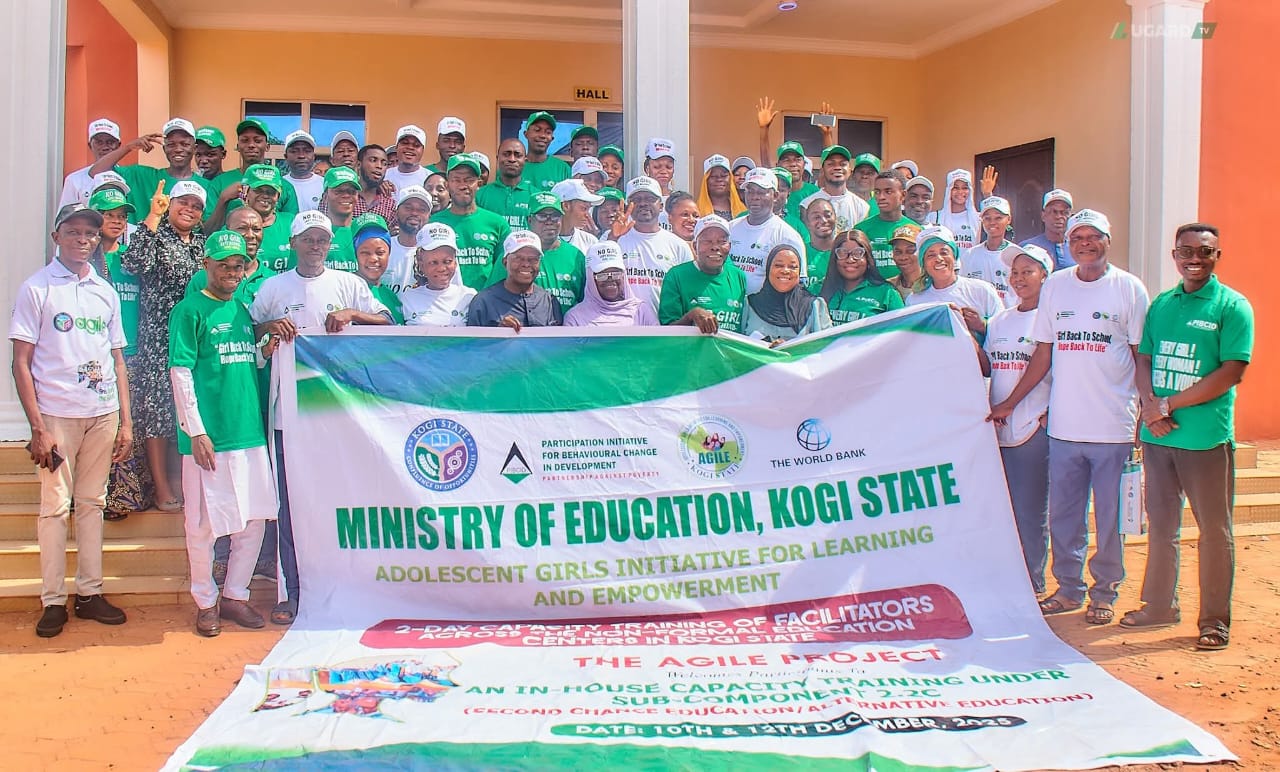
AGILE Trains 130 Non-Formal Education Facilitators In Kogi
From Joseph Amedu, Lokoja
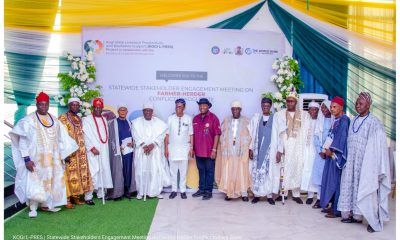
The Kogi State Ministry of Education, through the Adolescent Girls Initiative for Learning and Empowerment (AGILE) Project, has trained 130 facilitators drawn from non-formal education centres across the three senatorial districts of the state, to strengthen the delivery of second-chance and alternative education programmes.

The two-day capacity-building training, held under AGILE Sub-Component 2.2C (Second Chance/Alternative Education) in partnership with the Participation Initiative for Behavioural Change in Development (PIBCID), focused on enhancing facilitators’ understanding of post-literacy manuals, harmonising instructional methods, and promoting participatory and adult learning techniques.
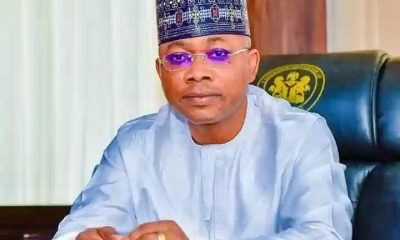
Speaking at the event, the State Project Coordinator (SPC), Alhaji Ahmed Tijani Oricha, described the training as a strategic intervention aimed at improving access, quality, and equity in education delivery. He noted that non-formal education remains critical to reaching adolescents and young people excluded from the formal system, adding that well-trained facilitators are central to achieving the objectives of the AGILE Project at the grassroots.
Alhaji Oricha urged participants to apply learner-centred approaches in their respective centres, stressing that their commitment and professionalism would directly influence learning outcomes and the overall success of the Second Chance Education programme.
The Component Lead, Hajia Mariam Bello, said the training was designed to ensure uniformity and consistency in content delivery across all non-formal education centres. She explained that facilitators were taken through structured sessions to deepen their understanding of lesson sequencing, integrated teaching approaches, and effective classroom engagement for adult and adolescent learners.
According to her, adopting participatory methods would help create inclusive learning environments that respond to learners’ realities while advancing AGILE’s goal of improved literacy, numeracy, and life skills acquisition.
Also speaking, the Executive Director of PIBCID, Mrs. Racheal Akande, reaffirmed the organisation’s commitment to supporting capacity development and behaviour-change interventions that strengthen teaching quality within the non-formal education sector.
The training featured technical sessions in English Language, Mathematics, Civic Literacy, and Basic Science, facilitated by experienced resource persons and reinforced through interactive discussions.
Participants described the programme as timely and impactful, pledging to deploy the skills acquired to improve learning outcomes across non-formal education centres in Kogi State.
Ends.






Education
Kogi AGILE Begins ATM Card Distribution to 12,112 Second-Cohort Beneficiaries
From Joseph Amedu, Lokoja
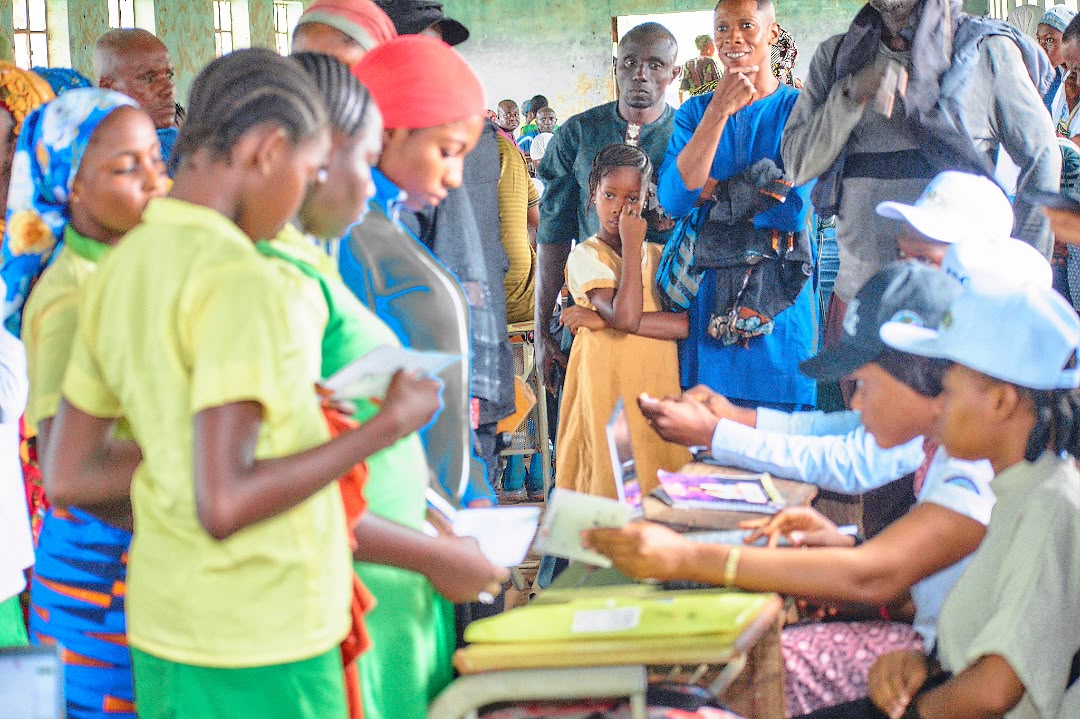
The Kogi State Adolescent Girls Initiative for Learning and Empowerment (AGILE) Project has commenced the distribution of Automated Teller Machine (ATM) cards to 12,112 adolescent girls enrolled as second-cohort beneficiaries under the Conditional Cash Transfer (CCT) component of the project.
The distribution exercise which started on Wednesday is being implemented across the three senatorial districts of Kogi State, is designed to facilitate beneficiaries’ access to their designated financial channels and ensure that eligible adolescent girls are adequately reached under the CCT intervention.
The CCT component is one of the interventions of the Kogi AGILE Project aimed at supporting adolescent girls to remain in school, transition successfully, and overcome some of the financial barriers that may affect their education.
Speaking during the exercise, the State Project Coordinator (SPC), Kogi AGILE Project, Alhaji Ahmed Tijani Oricha, reiterated the project’s commitment to ensuring that eligible beneficiaries receive the necessary support under the programme.
He explained that the distribution of ATM cards represents an important stage in the implementation of the CCT intervention, as it provides beneficiaries with the financial access required to receive the support provided under the programme.
Alhaji Oricha urged the beneficiaries and their parents or guardians to make responsible use of the intervention, stressing the importance of the support in promoting girls’ education and encouraging beneficiaries to remain committed to their studies.
He also called on school principals, parents, community stakeholders, and other relevant actors to support the successful implementation of the programme by ensuring that beneficiaries are properly guided and protected throughout the process.
The CCT Lead, Kunle Mumini, said the second cohort comprises 12,112 eligible adolescent girls whose ATM cards are being distributed as part of efforts to strengthen the delivery of the CCT intervention.
According to him, the distribution is being organized across the three senatorial districts to improve accessibility, reduce the burden of traveling long distances for beneficiaries, and ensure that the exercise reaches eligible girls across the state.
He further encouraged beneficiaries and their parents to cooperate with officials during the exercise and ensure that all required procedures are followed for proper documentation and accountability.
The commencement of the second-cohort ATM card distribution builds on the experience of the first cohort of the CCT intervention, which targeted 13,359 adolescent girls in all transitioning classes across Kogi State.
The first cohort was designed to support girls at critical transition points in their education, particularly as they move from one level of schooling to another. The continuation of the intervention with a second cohort underscores the project’s broader focus on improving girls’ access to and retention in education.
Some beneficiaries who spoke during the exercise expressed appreciation for the support, noting that the intervention would provide additional encouragement for them to remain focused on their education.
Parents and guardians also welcomed the initiative, with some describing the CCT support as an important intervention for families facing financial challenges associated with keeping their daughters in school.
School principals and administrators participating in the exercise similarly emphasised the importance of collaboration among schools, parents, communities and the AGILE Project in ensuring that the intervention achieves its intended objectives.
The distribution exercise is expected to continue across the three senatorial districts, with project officials working with relevant stakeholders to ensure that all eligible beneficiaries under the second cohort are adequately reached.
Ends.
Education
2026 NECO: Kano Overall Best Followed By Lagos, Oyo
The results of the 2026 Senior School Certificate Examination conducted by the National Examinations Council, have placed Kano State as the overall best.
Kano emerged as the leading state with 74,413 candidates obtaining at least five credits, including English Language and Mathematics.
The result places Lagos, which recorded 72,496 candidates, and Oyo with 55,543 candidates, as coming second and third respectively according to figures released by the Kano State Government.
The development marks the second consecutive year Kano has recorded the highest number of candidates meeting the five-credit benchmark, following its performance in the 2025 NECO examination.
Reacting to the result, Governor Abba Yusuf, in a statement issued on Saturday by his spokesperson, Sunusi Bature Dawakin Tofa, congratulated the students, teachers, parents and other stakeholders.
According to the statement, Yusuf described the performance as an indication that the state’s investment in education was yielding measurable results. In his words:
“This back-to-back performance is an indication that our sustained investment in education is producing measurable results.”
The governor assured residents that his administration would continue to prioritise education through increased funding, improved learning facilities, teacher recruitment and training, scholarships and support for indigent students.
“Our government spent more than N4.4bn in 2026 to sponsor candidates for the Senior School Certificate Examination, particularly indigent students, to remove financial barriers to participation,” the governor said.
Yusuf said the investment extended beyond examination sponsorship to classroom renovation, recruitment and training of teachers, provision of learning materials, uniforms and scholarships.
“We will continue to invest in education because our objective is to build a system that equips our young people with the knowledge and skills required for higher education, employment, innovation and leadership,” the governor said.
The statement said education had consistently received one of the largest allocations in Kano’s budgets under the Yusuf administration, with the sector allocated N168.35bn, representing 31 per cent of the 2025 budget.
For 2026, the state allocated N405.35bn to education, representing about 30 per cent of its N1.48tn budget, according to the government.
Yusuf dedicated the latest NECO performance to students, teachers, parents and residents of the state, while pledging to sustain interventions aimed at improving learning outcomes.
“This achievement belongs to our students, teachers, parents and the good people of Kano State,” the governor said.
The governor’s spokesman said the state had recorded more than five million school children in the latest annual school census, underscoring the scale of the government’s education responsibilities.
Education
Varsity Don Proffers Solutions to Building Prosperous Nigeria
From Joseph Amedu, Lokoja
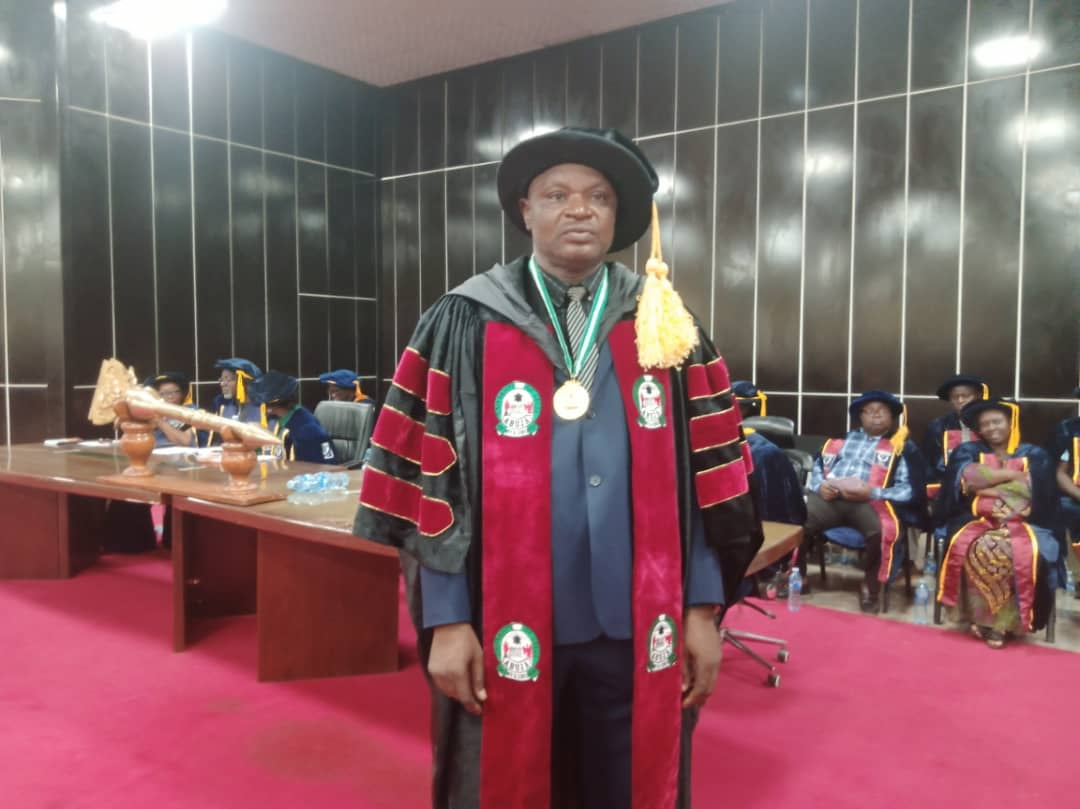
A Professor of Public Administration at the Federal University, Lokoja, Otinche Sunday, has called for collective responsibility of Nigerians in building prosperous nation that would meet with international standard.
adsbygoogle || []).push({});
Professor Otinche Sunday who made the call while delivering the 42nd Inaugural Lecture Series of the University at its Felele Campus in Lokoja on Wednesday, declared that “Building Nigeria of our own is a collective task before every citizen in respect of what they should do to achieve the goal”
In his Presentation titled ‘The Looking Glass-self Perspective of How Never to Build A Nation in The New World Order: Reflections on Nation Building Experiments in Nigeria, Professor Otinche Sunday noted that the rising level of insecurity in Nigeria, Africa and the World shows that we are gradually losing our humanity.
According to him, “The higher the rate of insecurity, the higher the risks humanity is exposed to. I am of the opinion that Nigerians should not only rely on the strength in our diversity but reflect on the weaknesses in our diversity and incrementally remedy it to prevent disintegration.
“The allegory of unknown gunmen are signs that Nigerians are gradually losing the collective vision and commitment to promote national unity due to our declining sense of national consciousness and citizenship values.
“We should begin to think of building a Nigerian state where the legitimacy of ethnic power can no longer be relied on to confer state power on any individual or group but civil power exercised by the citizens.
“Equitable distribution of political appointments creates balance of power in the power hierarchy of a nation. The reactions by individuals and groups against government’s rationalization of political appointments reveals its importance to nation building.
“Religion and place of origin in Nigeria should be delisted from all policy instruments and platforms that requires identity recognition in order to promote the unity in diversity captured in the national anthem thus “though tribes and tongue may differ, in brotherhood we stand”
“The role of the elites in nation building cannot be sufficiently reduced to simple intellectual review and analysis. The elites play immeasurable role in promoting ethnic tolerance, national integration and unity, conflict escalation and its resolution and national development.
“The secular belief in brotherhood and unity of Nigeria must be upheld. Great nations fall due to incremental neglect of efforts to resolve its national crisis.
“What I have tried to do is to hold-up a mirror so that you can see your own reflection. If you do not like what you see, breaking the mirror will not change anything, neither will cutting my arms off; killing me will change even less. The truth of man cannot be dissolved in his blood”
He shunned the futility of revenge or using one’s privileged position to silence critical voices, especially voices that reflects the looking glass self-perspective of how never to build a nation called Nigeria, in the new world order shaped by the forces of globalization.
In his welcome address, the Vice-Chancellor of the University, Professor Gbenga Solomon Ibileye disclosed that since assumption of office the institution has recorded three successful inaugural lectures in close succession
“This is a clear demonstration of my administration’s spirit of sustaining the culture we met and are committed to strengthening the standards in: discipline of time, depth of content and clarity of contribution.
Professor Ibileye discribed the title of the lecture: The Looking Glass-Self Perspective of How Never to Build a Nation in the New World Order: Reflections on Nation Building Experiments in Nigeria, as a very striking in academic research.
“We look forward to your reflection; clearly framed, sharply delivered and well within the time allotted”
-
 Entertainments4 years ago
Nollywood Produces 541 Movies in 2022 First Quarter – NFVCB
-
 News7 years ago
I will Maintain High Decorum – Hon Monguno
-

 News5 years ago
2021 Ethics And Integrity Compliance Scorecard Of MDAs: ICPC Scores Censors Board High
-
 Business and Economy4 years ago
Non-interest TAJBank Reports 433% PBT in 2021 Financial Year
-
 Entertainments7 years ago
Censors Board Trains, Gives Grant to 100 Youths in Nasarawa State
-
 News4 years ago
ICDA North Central: Prince Oruma Sues for Igala Unity
-
 AWF7 years ago
AWF to Feature Adedokun, Kawu and Okah-Donli for April Guest Writer Session
-
 News3 years ago
Full List of The New Ministers and Their Portfolio