
News
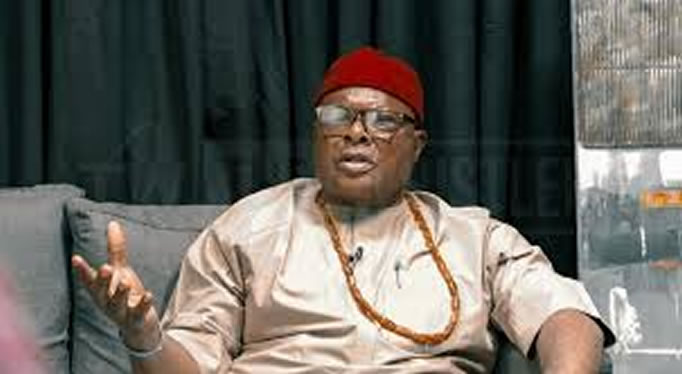
You Don’t Speak For Us, Tinubu Has Not Addressed Igbo Marginalisation, US-Based Groups Tell Umahi
By Our Correspondent
United States–based Igbo groups have strongly rejected claims by the Minister of Works, Senator David Umahi, that the Federal Government under President Bola Tinubu has addressed the marginalisation of Ndigbo, describing such assertions as “insulting, misleading and self-serving.

In a joint statement issued on Saturday, the groups said Umahi lacks the authority to speak on behalf of the Igbo people and should not project his personal political views as a collective Igbo position.
“Our attention has been drawn to an unguarded statement by Senator David Umahi that Ndigbo should forget Biafra agitation because the federal government has addressed all the challenges of Ndigbo,” the statement read. “We wish to remind him that he does not have the mandate to speak for Ndigbo. He should not allocate to himself powers he does not have.”
The statement was signed by Dr Sylvester Onyia, President of the American Veterans of Igbo Descent; Ben Nwankwo for Ambassadors for Self-Determination; and Maxwell Dede for The Rising Sun.
The groups accused Umahi of attempting to delegitimise longstanding grievances in the South-East while aligning himself with the political establishment in Abuja.
“Since he said he does not believe in Biafra, Biafrans also do not believe in traitors like him,” they said. “Nobody is coercing him to join the struggle, but he lacks the powers to stop it or speak for the people.”
They maintained that claims of an end to Igbo marginalisation were far removed from reality, questioning what concrete benefits the South-East has received under the Tinubu administration.
“It is an insult on the sensibility of Ndigbo for Umahi to claim that we are no longer marginalised,” the groups stated. “Since Tinubu became president, what exactly has Alaigbo gained?”
They cited what they described as persistent infrastructural neglect, including the continued abandonment of the Umuahia–Enugu railway line, while rail projects such as Lagos–Kano and Katsina–Niger Republic are operational.
“Why is the Umuahia–Enugu railway still moribund when other regions enjoy functional rail lines?” they asked. “Why does the South-East still have only five ministers, with two of them being junior ministers, while a single state in the South-West has four ministers?”
The groups also lamented the absence of a functional seaport and cargo airport in the South-East, despite the region’s commercial importance.
“Is Umahi not aware that there is no seaport in the South-East, even though our people are the highest importers in the country?” the statement said. “Do we have any functional cargo airport, major federal industries or maritime projects? Other regions do. Alaigbo does not.”
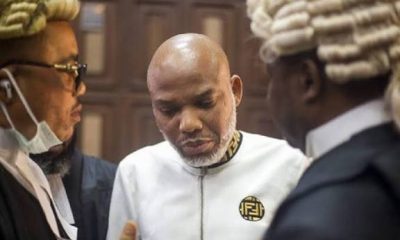
On the continued detention of Mazi Nnamdi Kanu, leader of the Indigenous People of Biafra (IPOB), the groups described his incarceration as emblematic of injustice against the Igbo people.
“Why is Mazi Nnamdi Kanu jailed while real terrorists and mass murderers roam freely and are treated with levity?” they asked. “Anyone who helps to keep Kanu in detention is working against the Igbo people.”
They alleged that Kanu’s detention has the backing of foreign interests and some Nigerian politicians who, according to them, have chosen “personal comfort over justice.”
“That is why people are angry. That is why people feel betrayed,” the statement added.
The groups also criticised the formation of the Ebube Agu regional security outfit, accusing its promoters of enabling abuses in parts of the South-East and demanding accountability.
“Those who created Ebube Agu should be held accountable for the atrocities committed in Igbo land, which are often wrongly blamed on IPOB and ESN,” they said.
Reaffirming their stance, the groups insisted that the agitation for Biafra transcends individual politicians and political appointments.
“Biafra is bigger than Umahi,” they declared. “The struggle is not about appointments or pleasing Abuja. It is about justice, dignity and self-respect.”
They concluded with a direct message to the minister and the Federal Government: “Dave Umahi does not speak for Ndi Igbo. He speaks only for himself. Our demand remains simple and clear: release Mazi Nnamdi Kanu. Anything else is deception.”





News
Tinubu Declares 3-Day National Mourning For Air Force Personnel Killed In Ondo Plane Crash
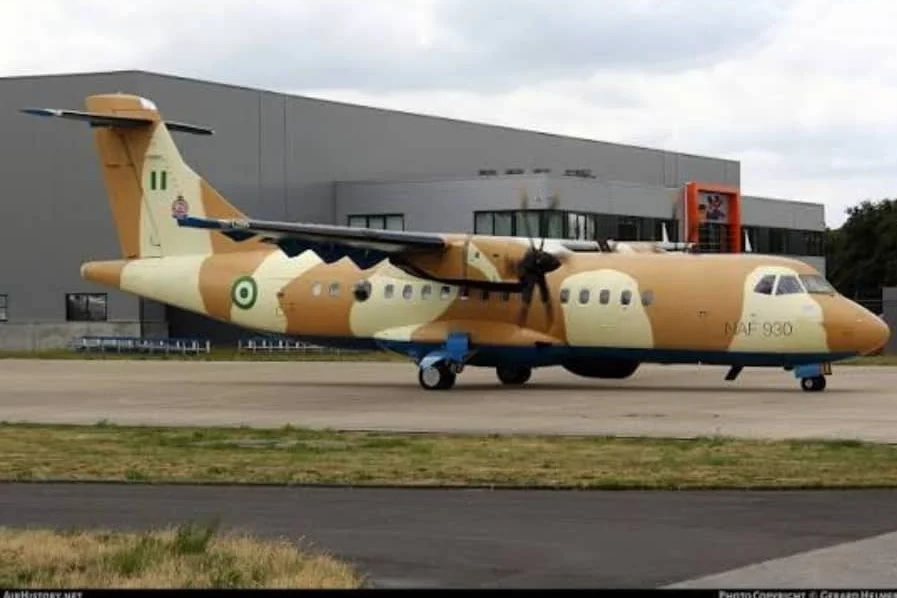
President Bola Ahmed Tinubu has declared a three-day national mourning for Air Force personnel who died in the crash of a military aircraft on Saturday.
The President also directed that flags be flown at half-mast across the country in honour of the fallen officers.
President Tinubu had earlier expressed profound sadness over the crash of a Nigerian Air Force ATR-42 jet near a naval base in the Igbokoda area of Ondo State.
The aircraft, carrying 25 passengers and seven crew members, was on a routine mission from Benin to Lagos when it crashed.
In a condolence message to the Chief of Air Staff, Air Marshal Sunday Kelvin Aneke, and all officers, airmen and airwomen of the Nigerian Air Force, the President described the incident as a painful moment for the Armed Forces and the entire nation.
“This is a painful moment for our Armed Forces and for the entire nation. Our Air Force personnel put their lives on the line every day to secure Nigeria. Their sacrifice will never be forgotten,” President Tinubu said.
He disclosed that the Chief of Air Staff had briefed him on the incident and that he has directed the Air Force to immediately commence a thorough investigation to determine the cause of the crash and prevent future occurrences.
“I commend the Nigerian Air Force for activating an immediate search and rescue operation following the accident,” he added.
According to the statement, the Nigerian Air Force will release the names of the officers after contacting their families.
News
NIGERIA AT 66: INDEPENDENCE MUST MEAN FREEDOM FROM IMPUNITY, INSECURITY AND THE CULTURE OF SILENCE
As Nigeria marks 66 years of independence and 27 years of uninterrupted constitutional democracy, the Nigerian Guild of Investigative Journalists (NGIJ) joins millions of Nigerians at home and abroad in reflecting on the country’s journey, honouring the sacrifices of its founding fathers and renewing our collective commitment to building a nation where freedom, justice, accountability and equal opportunity are realities for all.
The struggle for independence was driven by the desire of a people to determine their destiny, govern themselves and build a society founded on dignity, justice and shared prosperity. Sixty-six years later, however, our celebration must go beyond ceremonial speeches, patriotic displays and reflections on history. We must confront a more fundamental question: What does independence mean to the ordinary Nigerian struggling to feed a family, secure decent employment, access quality healthcare, move safely from one community to another and live with dignity?
For us at NGIJ, celebrating Nigeria must never mean pretending that Nigerians are not hurting. Across the country, households continue to grapple with the rising costs of food, transportation, housing, energy and other essentials. Although recent economic indicators point to some moderation in headline inflation, the reality for many families remains difficult, with food prices and the general cost of living continuing to exert pressure on household incomes.
These realities deserve honest acknowledgement, responsive leadership and practical solutions. Economic reforms must ultimately translate into improved living conditions, expanded opportunities, productive enterprises and measurable relief for ordinary citizens. We acknowledge progress where it is measurable, but we must never confuse reform with the final destination. The true test of economic recovery is not merely what the figures indicate, but how significantly it improves the lives of Nigerians.
Equally important is the question of national security. Kidnapping, terrorism, banditry, communal violence, oil theft and other forms of criminality continue to threaten lives, livelihoods and the stability of communities. While recognising the efforts and operational successes of our security agencies, we believe that sustained vigilance, stronger institutions, intelligence-driven operations and effective community engagement remain essential to addressing these challenges.
Every Nigerian deserves the freedom to live, work, farm, travel, worship and pursue legitimate aspirations without fear. Security is not a privilege to be enjoyed by a few; it is a fundamental responsibility of the state and an essential condition for national development.
Beyond political independence, Nigeria must pursue institutional independence from impunity, corruption, institutional failure and the culture of silence. Independence must be matched by transparency, accountability, respect for the rule of law and responsible management of public resources.
Public office is a trust, not a personal entitlement. Those entrusted with public responsibilities must remain answerable to the people, while public institutions must operate with integrity, efficiency and respect for citizens’ rights. Accountability should not be mistaken for hostility, just as constructive criticism should not be treated as an attack on government. Rather, both are essential ingredients of democratic governance.
This is where the responsibility of investigative journalism becomes particularly important. As an organisation committed to investigative and public-interest journalism, NGIJ recognises that the media must remain a credible watchdog of society.
Investigative journalists are not enemies of government. They are partners in the pursuit of transparency, good governance and national development. Governments deserve recognition when they deliver measurable results, but they must equally be prepared to answer difficult questions when public interest is affected.
We believe that a society that welcomes scrutiny strengthens its institutions, while one that suppresses questions weakens public confidence. Our responsibility is to follow the evidence, uncover facts, expose wrongdoing, amplify the voices of the underserved and ensure that issues affecting citizens are brought to public attention. We shall continue to discharge this responsibility without fear, favour or political allegiance.
However, the responsibility for strengthening journalism does not rest with government alone. Journalists must also hold themselves to the highest standards of professional conduct. The urgency of public-interest reporting must never become an excuse for carelessness, misinformation or sensationalism.
We therefore urge media practitioners to verify before publishing, investigate before accusing, distinguish established facts from allegations, protect confidential sources and resist political manipulation. The profession must increasingly embrace data, technology and innovative investigative methods while remaining conscious of national security and the potential consequences of irresponsible reporting.
National security considerations must not become a blanket justification for suppressing legitimate journalism, just as press freedom must not be used to justify the publication of unverified or harmful information. Professional independence demands both courage and responsibility.
We are equally concerned about the place of young Nigerians in the country’s development. A nation cannot fully realise its potential when millions of its young people feel excluded from economic opportunities, meaningful participation and leadership.
Our young people must be seen beyond their value as voters, campaign mobilisers or instruments of political calculations. They are innovators, entrepreneurs, professionals, creatives and potential leaders whose contributions are indispensable to national progress.
We call for sustained investment in education, vocational and digital skills, entrepreneurship, technology, creative industries, productive employment and leadership development. Nigeria must create an environment where talent is rewarded, enterprise is encouraged and young people can build sustainable futures without having to abandon their dreams or leave the country in search of opportunities.
We must also make national unity practical rather than rhetorical. Nigeria’s strength lies in the diversity of its peoples, cultures, languages, faiths and experiences. That diversity must become an asset for development, not an instrument for division.
We urge political, religious, traditional and community leaders, as well as citizens across the country, to promote mutual respect, tolerance, peaceful coexistence and a shared sense of responsibility. Our differences should enrich our national identity rather than undermine our collective aspirations.
As we reflect on the country’s journey, we recognise that nation-building is an ongoing process. It requires honest assessments of our challenges, recognition of genuine achievements, willingness to correct failures and the courage to pursue necessary reforms. No administration or institution has a monopoly on national progress, and no citizen should be excluded from the responsibility of building a better Nigeria.
As the Nigerian Guild of Investigative Journalists begins another chapter under its current leadership, we reaffirm our commitment to building an institution that is professionally strong, ethically grounded, independent and relevant to Nigeria’s democratic and developmental aspirations.
Under the collective leadership of the National President, Mallam Abdulrahman Aliagan, and the National Secretary, Rowland Shuwa, NGIJ will continue to strengthen investigative journalism, promote professional excellence, defend the public interest and contribute meaningfully to national conversations through credible, evidence-based reporting.
Our leadership philosophy remains simple: Don’t Start Again. Build Forward.
This philosophy extends beyond the Guild. Nigeria, too, must build forward. We must build on our successes, learn from our experiences, correct our failures, confront our challenges and strengthen the institutions required to secure a more prosperous and equitable future.
As we celebrate 66 years of independence, we call on every Nigerian to remain hopeful, engaged and committed to the collective task of nation-building. We owe it to the sacrifices of our founding fathers, the aspirations of present generations and the dreams of those yet unborn to create a country where freedom is meaningful, justice is accessible, leadership is accountable and opportunity is not determined by privilege.
Happy 66th Independence Anniversary, Nigeria!
Mallam Abdulrahman Aliagan
National President
Nigerian Guild of Investigative Journalists (NGIJ)
Rowland Shuwa
National Secretary
Nigerian Guild of Investigative Journalists (NGIJ)
News
FG Charges New NFAN Leadership on Unity, Transparency and Accountability
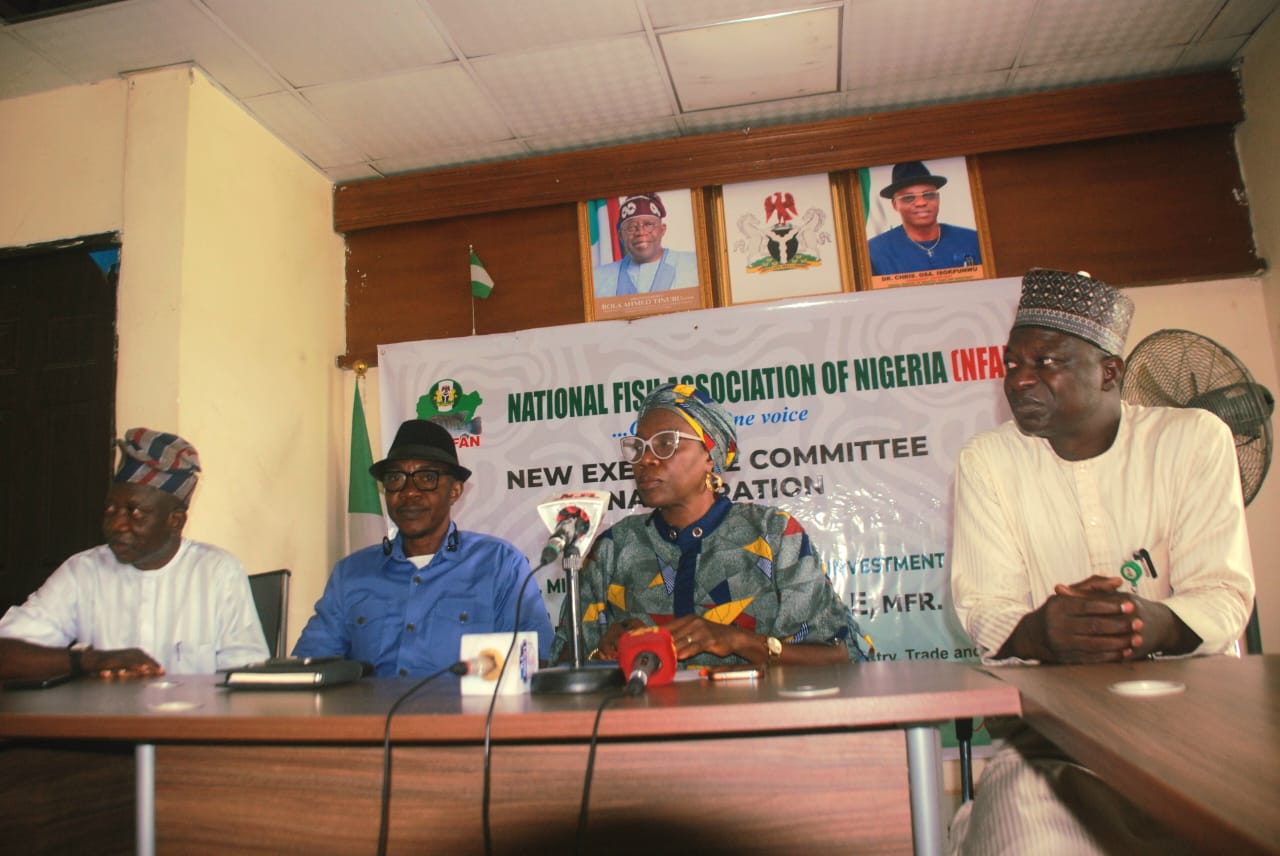
The Federal Government has charged the newly elected Executive of the National Fish Association of Nigeria (NFAN) to promote unity, transparency, accountability and inclusiveness in running the affairs of the association. adsbygoogle || []).push({});
The Director of Commodities and Export Department, Federal Ministry of Industry, Trade and Investment, Mr Usman Bokani, gave the charge in Abuja during the formal presentation of the newly elected executives of the association, led by its President, Dr. Ladan Aliyu, to the Ministry following its recently conducted election.
Mr. Bokani welcomed the new executives and commended the association for conducting a free, fair and credible election, which led to their emergence, describing it as a demonstration of commitment to responsible leadership and democratic principles.
The Director, represented by a Deputy Director in the department, Mrs. Felicia Udeh, reminded the executives that their election was both an honour and a responsibility, stressing that they must put in their best to come up with ideas that would move the country and the association forward.
“I encourage you all to promote unity, transparency, accountability and inclusiveness to ensure that the interest of the wider membership remains central to your activities. So that it will not be between some few people. Let it be a wide range, holistic, that is when you can move forward.
“Because one thing we are trying to avoid is litigations. We’ve seen so many associations at the end of the day, they end up in litigation because they are not agreeing. It’s either the Exco is not carrying the member or the Excos have divisions among them.
“And we have been preaching so hard that we don’t want such to come up again. So that is why we are telling you here that you have to work as a family. If you have agreed to come together as an association, you should also agree to work holistically.”
The President of the National Fish Association of Nigeria (NFAN), Dr. Ladan Aliyu, thanked the Ministry and other stakeholders for their support, saying that the inauguration marked a significant milestone in uniting stakeholders to promote sustainable development of fishery and aquaculture in Nigeria.
“As we begin this new chapter, let us remain committed to unity, professionalism, collaboration and the advancement of the fishery sector. Together we can create greater opportunities for our members, improve fish production, strengthen livelihoods and contribute meaningfully to Nigeria’s food security and economic development.”
Dr. Aliyu called on members to embrace the spirit of “One Fish, One Voice” to improve fish production, strengthen livelihoods and contribute to Nigeria’s food security and economic development.
On the high cost of fish in the market, the President attributed the development to the depreciation of the naira and dependence on importation.
Dr. Aliyu explained that imported fish, including Titus, Mackerel and Sardine, are bought with dollars like petrol, adding that the fall in the value of the naira had forced marketers to increase prices.
He explained that Nigeria requires about three million metric tonnes of fish annually, but currently produces less than a quarter of that, with importation covering only half of the shortfall, leaving a significant gap.
“Actually, we have to come together as a formidable and sustainable cooperative society. When we do that, we train the farmers, we make sure that the government comes in as a partner, to help with other input that we require and the policies that we need for the fish. That will help in improving the production.”
Also, the Deputy President of the association, Mr. Adewale Adeogun, said the rise in the price of Titus is a global phenomenon and not peculiar to Nigeria, noting that world prices are skyrocketing. He expressed optimism that government policies would help bring down prices.
The representative of the Federation of Agricultural Commodity Associations of Nigeria (FACAN), Pastor Isaac Ojonugwa, congratulated the new executives and pledged its support, urging them to work with their predecessors and link members along the value chain for the growth of the sector.
-
 Entertainments4 years ago
Nollywood Produces 541 Movies in 2022 First Quarter – NFVCB
-
 News7 years ago
I will Maintain High Decorum – Hon Monguno
-
 News5 years ago
2021 Ethics And Integrity Compliance Scorecard Of MDAs: ICPC Scores Censors Board High
-

 Business and Economy4 years ago
Non-interest TAJBank Reports 433% PBT in 2021 Financial Year
-
 Entertainments7 years ago
Censors Board Trains, Gives Grant to 100 Youths in Nasarawa State
-
 News4 years ago
ICDA North Central: Prince Oruma Sues for Igala Unity
-
 AWF7 years ago
AWF to Feature Adedokun, Kawu and Okah-Donli for April Guest Writer Session
-
 News3 years ago
Full List of The New Ministers and Their Portfolio