
Opinion
9th National Assembly, a Parliament Waging a War Against its Own People
By Moses Idika
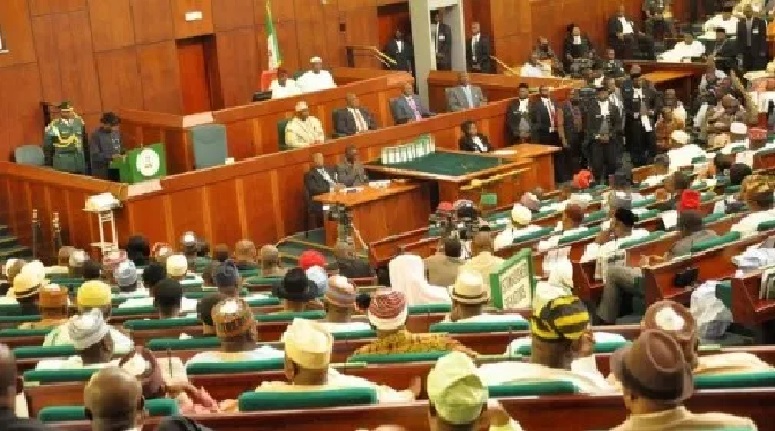
On June 11, 2019 the 9th National Assembly was inaugurated with fanfare in Abuja as Nigerians from all the 36 states converged on Abuja to celebrate the “induction” their representatives into the hallowed chambers of Nigeria’s apex lawmaking body. adsbygoogle || []).push({});

All the hotels and many private homes in and around Abuja were filled with well wishers, supporters and family members who arrived the nation’s capital to rejoice with their new or re-elected lawmakers. One week earlier, June 6th, 2019, the life span of the 8th National Assembly had elapsed and it subsequently adjourned, sine die.
By nightfall of same June 11, 2019, however, some of the earlier excitement had already began to wane in some circles, especially when the leadership of the National Assembly was “done and dusted” (as young Nigerian fresh university graduates would want to say).
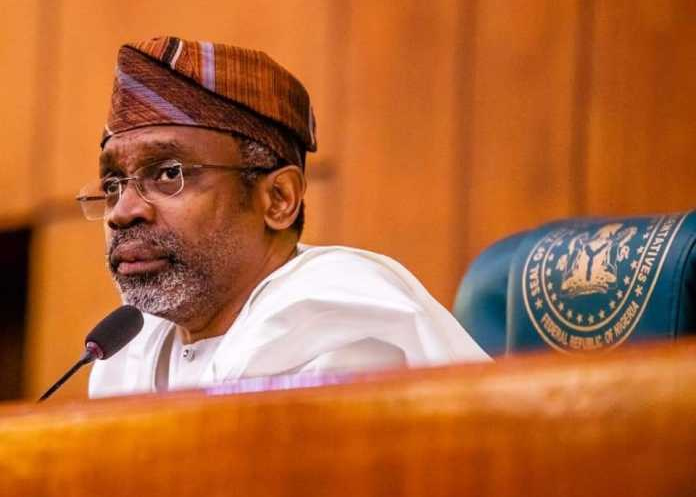
The emergence of the duo of Dr. Ahmad Lawan (APC Yobe North) and Hon. Femi Gbajabiamila (APC Surulere 1, Lagos) as the President of the Senate and Speaker of the House of Representatives respectively, left many Nigerians feeling that the Nigerian parliament may have been “conquered” by some forces in the Presidency.
The feeling by Nigerians that the National Assembly may have been “conquered” was against a background hinged on the frosty relationship that characterized the immediate past 8th National Assembly led by Senator Bukola Saraki and Hon. Yakubu Dogara, the President of the Senate and Speaker of the House of Representatives respectively whereby, the Presidency blamed every misfortune of President Buhari’s government on the “sabotaging” efforts of the leadership of the 8th National Assembly. In other words, the Presidency insisted that until it installs its own lackeys as the leadership of the National Assembly nothing good was ever going to come out of the parliament.
In the 8th National Assembly, the Nigerian parliament was seen as being on the side, with the Nigerians, while the Presidency and the entire cabinet of President Buhari saw the Assembly as a “clog” in the wheel. The 8th National Assembly rejected several bills and initiatives that they argued were not in the interest of Nigerians. In retaliation, President Buhari withheld assent to several bills passed into law by the 8th National Assembly, including the very important electoral Act amendment bill. The President of the Senate was even docked for corruption charges, while other members of the 8th Assembly leadership had anti graft agencies unleashed on them endlessly throughout the life of the Assembly.
Chief among some of the outstanding decisions of the 8th Assembly include the rejection by the senate of a $29.96 billion loan request by President Muhammadu Buhari. In a media interview, the then Chairman of Senate Committee on Local and Foreign Debt, Senator Shehu Sani said that the Senate rejected the request to save Nigeria from fresh colonization by creditor nations and foreign financial instutitions.
“We turned down the Federal Government loan request of $29.96bn to save Nigeria from sinking into the dark gully of a perpetual debt trap.We don’t want our country to be recolonised by creditor banks.”
“If we had approved that loan request, our external debt could have catapulted to over $52bn and that is not sustainable.
“With the current escalation of borrowing, we will be walking into debt slavery and move from landlords to tenants in our own country.
“They will always tell you that even America is borrowing and I don’t know how rational it is to keep on borrowing because another country is borrowing,” Senator Sani explained.
Another watershed decision of the 8th National Assembly that shaped the perception of Nigerians about the parliament was the outright failure to sail through a bill that sought to gag Nigerians in the social media sponsored by then Spokesman of the Senate, Sabi Abdulahi, a senator from Niger state.
Enter the 9th National Assembly
Since June 11, 2019 when it was inaugurated, the President of the Senate, Ahmad Lawan promised that he was going to lead a senate, nay National Assembly that will “work collaboratively with the executive arm of the government.” And true to Lawan’s promise, the National Assembly has collaborated with the executive on all its decisions irrespective of what the intensions of the executive decision may be.
A Retinue of Anti People Legislations
As if choreographed, all the anti people and unpopular policies rejected by Nigerians and the 8th National Assembly have all found a fertile ground in the 9th National Assembly and the 9th session has barely spent one year out of its four year term.
The Anti Social Media Bill
Barely five months after its inauguration, the 9th National Assembly fired its first missile against Nigerians and specifically targeted its youths through the introduction of an obnoxious and draconian bill aimed at caging and gagging the young people from expressing themselves against the government policies, especially as government policies continues to incapacitate the future of Nigeria and Nigerians.
On November 5, 2019, Senator Muhammed Sani Musa (APC Niger East) introduced the “Protection from Internet Falsehood and Manipulations Bill 2019,” a bill he admitted to have copied from a country with some of the worst Human Rights record in the world, Singapore. The bill sought to ensure that Nigeria government effectively controlled what the citizens could say or not say, especially against the government.
As if that was not enough, one week after the introduction of the gag bill, a second bill couched in even more dangerous nomenclature was also introduced by another APC senator, also from Niger state, Sahabi Abdulahi who coincidentally is the Deputy Chief Whip of the Senate.
“The National Commission for the Prohibition of Hate Speeches (Est. etc.) Bill, 2019 otherwise known as the “Hate Speech Bill” sponsored by Sabi Abdulahi prescribed death by hanging for any Nigerian the commission he seeks to establish deemed to have made any “hate speech.” Curiously, the bill did not specify what constitutes hate speech, but rather left the interpretation of what constitutes hate speech to whims and caprices of the government through the head of the Commssion.
Notwithstanding, the obvious evil intentions of these two bills, the 9th Senate gave overwhelming support to them. It took a hard fight from Nigerians, including protests, community advocacy actions and outright intervention of various rights groups, including Amnesty International and the Nigerian media (the primary target of the two bills) to shoot down the draconian bills.
$22.7 Billion Loan
The 8th Senate had rejected an opaque request by President Muhammadu Buhari to borrow a whopping $29.96 billion from various countries and international financial institutions because, like Senator Shehu Sani said, the loan was going to plunge Nigeria into the abyss of “financial colonization” and subsequently “burying ourselves and leave behind for our children a legacy of debt burden.”
Nevertheless, on March 5th, 20020 the 9th Senate without any form of scrutiny approved the $22.7 billion loan request by President Buhari.
In fact, the speed with which the loan was approved made it impossible for even the lawmakers themselves to notice that the entire Southeast geopolitical zone, a region comprising 5 states were not in any way accommodated in the bogus projects the government said the loan was going to be expended on.
It took the over 4hours protest by the Southeast National Assembly caucus led by former Deputy President of the Senate on the alleged “exclusion” of the Southeast for the House of Representatives to pause a little before giving the bill a similar jet-speed approval as the Senate did. The loan request has since been approved, albeit clandestinely by the House.
Now the Infectious Disease Bill
The fourth in the series of anti-peoples bills that have come out of the 9th National Assembly within a six month period is the Control Of Infectious Diseases Bill 2020 (A Bill For An Act To Repeal The Quarantine Act And Enact The Control Of Infectious Diseases Act, Make Provisions Relating To Quarantine And Make Regulations For Preventing The Introduction Into And Spread In Nigeria Of Dangerous Infectious Diseases, And For Other Related Matters.) sponsored by the Speaker of House of Representatives, Hon. Femi Gbajabiamila (APC Lagos) Hon. Pascal Obi (APC, Imo), and Hon. Tanko Sununu (APC, Kebbi).
The latest offering to Nigerians from the 9th National Assembly may be the most dangerously encompassing yet in the history of anti-people law in Nigeria to date. This bill in a most audacious manner simply seeks to abrogate the rights of both the elites and masses of Nigeria.
The “satanic bill” as former lawmaker and a member of the 8th National Assembly, Senator Dino Melaye described it seeks to turn Nigeria into a banana republic where any Nigerian can be removed from the society and quarantined into oblivion by as simple as innocuous suspicion by a new leviathan to be called the Director General (DG) of the Nigeria Centre for Disease Control (NCDC).
Reading through the various provisions of the infectious disease bill, one will only then appreciate the position of the current DG of the NCDC, Dr. Chikwe Ihekweazu who told Gbajabiamila that he (Chikwe) was looking “forward to working with the Speaker to bring a new bill after the COVID-19 pandemic was over.”
Obviously Dr. Ihekweazu must have read the bill and wondered while anyone in their right mind would propose such a law in a democracy.
The Infectious Disease bill can pass for the worst bill ever contemplated in any democracy in the world. The bill is and outright frontal attack on the constitution of the Federal Republic of Nigeria and an audacious attempt to emasculate all the fundamental rights of Nigerians.
Even dead Nigerians are not exempted from the all powerful and audacious leviathan the bill seeks to create!
Section 4 (5) of the proposed bill seeks to strip medical practitioners in Nigeria of their right to maintain the privacy of their patients. Section 12 of the proposed bill seek to ensure that the dead were not allowed to rest in peace as it empowers the DG, NCDC to impound any dead body he “suspects” to have died of any infectious disease.
Section 13 empowers the DG, NCDC to forcefully seize and isolate anyone or groups (including minors which the bill provides that they be isolated with their parents) of persons they suspect to be infected of such a disease as they may deem to be infectious, while section 14 empowers DG, NCDC to place anyone in Nigeria under surveillance on suspicion of being infected by any disease the DG feels is infectious. Section 15 of the proposed bill even goes further to empower the DG, NCDC to be able to isolate entire areas or even communities they suspect of having an infectious disease. In section 15, the bill empowers the “health officer” or a police officer on the direction of the DG, NCDC to seize anyone on the street, in their homes, church or any gathering and quarantines such person or persons on any suspicion of having an infectious disease.
Sections 16, 17, 18, 19, 20, 21, 22, 23, 24, 25-30 makes various obnoxious provisions that expressly removes the rights of Nigerians to gather in groups, including religious gatherings. It is instructive that the infectious disease bill poses serious threat to all sections of Nigeria’s national life, including abrogating the rights of governors and the President and giving same to the all powerful Director General of the NCDC.
The infectious disease bill also removes the courts from the affairs of Nigerians as it seeks to empower the Minister of Health to be the last arbiter (sections, 17, 18, 19 and 20). In the bill, the Minister of Health and the Director General, NOT the courts decides the fate of the offenders of the obnoxious law.
Good enough, while the National Assembly has the oversight rights over other arms of the government, the people, happily are the ones constitutionally empowered to oversight the parliament.
Nigerians must, therefore, as a matter of survival stand up to the opaque intentions of the 9th National Assembly which is daily baring its fangs to strangulate Nigerians and return the country to a despotic authoritarian nation.
Author Profile
Latest entries
 InterviewsJuly 22, 2023Why I seek Urgent Intervention on Karim and Wurkin Ethnic Crisis – Hon Lauya
 EducationJune 26, 2023Why I Support Fuel Subsidy Removal, How State Police Can Work – University Don
 NewsSeptember 2, 2022Regulations 2019: NAPTIP Extends 60 Days Ultimatum Issued To Private Shelters And Rehabilitation Homes
 NewsJune 26, 2022Hon Buba Felicitates with Speaker Gbajabiamila at 60





Opinion
LIES VS FACTS: Revisiting The Aregbesola Years In Osun

By Gbenga Shaba
Public debates about Rauf Aregbesola’s time as Osun governor often swing between praise and criticism, but many arguments overlook the economic realities of that period. The nationwide recession from 2014 to 2016 hit state finances hard, with 23 states unable to pay salaries at all.
adsbygoogle || []).push({});
One of the biggest misconceptions is that Aregbesola intentionally paid half salaries. In reality, the Labour Government Salary Apportionment Committee, which was made up of labour leaders and government officials, jointly agreed on a temporary modulated payment structure to prevent mass layoffs. Throughout the recession, over 70 percent of workers (junior staff, teachers, health workers and local government employees) continued receiving full salaries and pensions. The modulation applied mainly to senior officers and political appointees.
Another widespread falsehood is that Aregbesola’s successor, Gboyega Oyetola, inherited the salary modulation. Records show this is untrue. A few outstanding balances of the modulated salaries were already cleared before Aregbesola handed over, and full salary payment had resumed eight months before the end of his administration.
Beyond the salary debate, Osun continued major development programmes. The School Feeding initiative served 254,000 pupils daily and later became a national policy. Thousands of classrooms were constructed or rebuilt, the OYES youth programme absorbed unemployed youths, and road projects continued across the state despite the financial strain.
It is true that the recession created emotional and financial pain for many families, and their feelings are valid. But emotions cannot replace verified facts. Transparency was maintained throughout the crisis, and Aregbesola’s strong grassroots support today reflects public recognition of his long term developmental impact.
The Aregbesola years were a mix of economic challenges and visible transformation. Narratives based on half truths may trend online, but they cannot erase the documented reforms, infrastructural investments and social programmes that reshaped Osun during one of Nigeria’s toughest economic periods.
Author Profile

Latest entries
 ReligiousDecember 11, 2025Peace Across Faiths: Minna Town Hall Strengthens Nigeria’s Commitment to Religious Freedom
 OpinionDecember 10, 2025LIES VS FACTS: Revisiting The Aregbesola Years In Osun
 Business and EconomyDecember 9, 2025KGIRS Sensitizes Stakeholders On Implementation Of New Nigeria Tax Act, 2025
 NewsDecember 9, 2025Insecurity: Ododo Briefs President Tinubu On Proactive Measures Put In Place
Opinion
Is Nigeria Becoming A Failed State Under President Tinubu?

By Gbenga Shaba
Nigeria is currently at one of the most troubling security crossroads in its history. The scale and frequency of violent attacks, mass abductions, territorial infiltration by bandits and terror groups, and the collapse of safety in many communities have raised serious questions about the capacity of the state to protect its citizens.
com/pagead/js/adsbygoogle.js">
Across the northern region, the wave of kidnappings and attacks has forced governments to take drastic measures. Katsina State ordered the immediate closure of all government schools. Taraba State directed that all secondary schools should operate only as day schools. These decisions were not made out of convenience. They were made out of fear. They were made because students have become targets, and schools have become vulnerable grounds. Education, the foundation of national development, is now under threat.
In recent weeks, the scale of kidnappings has escalated sharply. In Niger State, 34 students and three teachers were abducted from a government secondary school. They spent several days in captivity, enduring harsh conditions with limited food and water. Negotiations for their release were tense, with parents and authorities working tirelessly to secure their safe return. In Kebbi State, more than 40 children and 10 staff members were abducted from a private academy. The victims described being blindfolded, bundled into vehicles, and transported through forested areas under armed guard. In several other incidents across Kaduna, Zamfara, and Katsina, hundreds of men, women, and children have been taken in separate attacks, some held for weeks before rescue or ransom payments were made.
As if that was not enough, just few hours ago, some residents of Isapa in Kwara were abducted. Pregnant women, nursing mothers and children were allegedly abducted.
The ordeal for these children and their families is traumatic. Parents live in constant fear of the next attack, and even when children are rescued, they often return home in shock and fear. Many students have developed anxiety about returning to school, and communities are traumatized, with the memories of abduction and violence lingering long after the victims are freed.
Even more worrying is the deepening culture of ransom payments. Reports indicate that over ₦1 billion has been paid to bandits in recent weeks alone. This alarming trend not only empowers criminal networks but also signals the state’s weakening control. When kidnappers see consistent payouts from the government or local authorities, it encourages further attacks, creating a vicious cycle of fear and extortion.
This raises a critical question: Is Nigeria drifting toward a failed state under the current administration?
A country moves toward failure when the government can no longer protect its citizens, secure its borders, enforce laws, provide essential services, and maintain public confidence. Judged by these indicators, Nigeria is showing many worrying signs. The strength of non-state armed groups is rising. Large parts of the country are becoming ungoverned spaces. Communities are living under constant fear. Schools are shutting down. Businesses are relocating. Farmers are abandoning their fields. Ordinary Nigerians no longer trust the state to safeguard their lives.
President Tinubu came into office with promises of firm action on security. Nearly two years later, the practical reality suggests that insecurity is expanding faster than the response to it. Despite efforts by the security agencies, violent groups remain active and resilient. The lives of citizens are increasingly threatened, and the confidence in government’s capacity to reverse the trend is weakening.
It is therefore understandable when analysts conclude that the government is failing in the area of security. Citizens like Deacon Olanrewaju have voiced what many Nigerians feel: children are now staying at home not because of a pandemic but because of fear. Communities are shutting down not because of a virus but because of terror. The country is experiencing a form of paralysis driven by violence and fear.
Just like COVID-19, insecurity is gradually locking Nigeria down.
During the COVID era, movement was restricted, economic activities were disrupted, and schools were forced to close. Today, Nigeria is witnessing the same pattern, but the cause is not a global disease. It is insecurity. Communities are avoiding travel. States are closing schools. Businesses are shrinking their operations. Citizens live indoors once the sun sets. The sense of national freedom is shrinking under the weight of fear.
Nigeria may not yet be officially classified as a failed state, but the signs are becoming too visible to ignore. Without urgent, intelligent, and coordinated action, the country risks sliding deeper into a security crisis that will be harder to reverse.
Just like Simon Kolawole recalls what President Bola Tinubu said years ago. I recall that on November 5, 2014, in Ilorin, Kwara State, at a rally organised by Governor Abdulfatah Ahmed to declare his second-term bid, the APC leaders spoke one after the other about insecurity in Nigeria. Among those in attendance were Gen Muhammadu Buhari, then a presidential aspirant, Alhaji Abubakar Atiku, also an aspirant, Rt Hon Aminu Tambuwal, then speaker of the house of reps, and Alhaji Lai Mohammed, then the APC spokesman. Tinubu, who was the national leader of the party, said I saw the sea of refugees caused by the Boko Haram insurgents and the lies coming from Jonathan’s administration. They have exhibited failure, lack of capacity, vision and creativity.
He went further. The lies of yesterday are what they repeat today and are what they will repeat tomorrow. If you control the armed forces and you are the Commander-in-Chief, why should any part of this country be under occupation? And you give us excuses every day. In any civilised country, Jonathan should have resigned. But if he will not resign, he should wait for our broom. We will sweep him away.
They swept Jonathan away. But here we are, a decade later.
Tinubu is now the Commander-in-Chief, but Nigeria remains under siege. We could poke fun at the APC today and say they are only getting a dose of their own medicine. But it is human lives, the lives of Nigerians, that we are talking about here. We are talking about a reign of terror, about helpless Nigerians being abducted, about hapless Nigerians being killed for fun. If nothing else, it should make us sober. If nothing else, we should learn from our past and put politics aside regarding matters of security.
This is the moment for honest reflection and decisive leadership. What Nigeria faces today is not just a temporary challenge. It is a test of the state’s ability to protect its people and preserve its sovereignty. The longer this insecurity wave continues, the closer the nation moves toward the edge of failure.
Author Profile
Latest entries
ReligiousDecember 11, 2025Peace Across Faiths: Minna Town Hall Strengthens Nigeria’s Commitment to Religious FreedomOpinionDecember 10, 2025LIES VS FACTS: Revisiting The Aregbesola Years In OsunBusiness and EconomyDecember 9, 2025KGIRS Sensitizes Stakeholders On Implementation Of New Nigeria Tax Act, 2025NewsDecember 9, 2025Insecurity: Ododo Briefs President Tinubu On Proactive Measures Put In Place
Opinion
#Ebinpawa: Nigerians Decry Tinubu’s Anti-social Policies, Ask — Can Awolowo Ever Do This?

By Gbenga Shaba
When Nigerians coined the hashtag #Ebinpawa, it wasn’t just a joke. It was a cry of exhaustion, a desperate lament from citizens stretched beyond survival. President Bola Ahmed Tinubu’s 15% fuel import duty has now become another wound on a people already bleeding from endless reforms that punish instead of protection.
js">
Between Reform and Ruin: A People Betrayed
Tinubu’s administration calls it reform, a path to fiscal recovery. But for millions of Nigerians, these policies feel more like a betrayal than a rebirth. Every new “economic adjustment” digs deeper into the pockets of those who have nothing left to give.
Since the removal of fuel subsidy and the floating of the naira, prices have spiralled. Now, this 15% duty on imported fuel adds insult to injury. The government promises a stronger economy, but all Nigerians see is a weaker household.
The Human Cost: Ordinary Nigerians Paying the Price
For the average Nigerian, economics isn’t theory, it’s ’s breakfast, transport, and rent. A man who once spent ₦2,000 on daily transport now spends ₦3,000. The food vendor pays double for cooking gas. The barber struggles to afford petrol for his generator.
Farmers face rising costs for diesel, while small business owners can barely keep the lights on. Survival has become a privilege. Behind every statistic of “growth” lies a story of human deprivation, children pulled from school, meals skipped, dreams deferred.
Taxing Misery in the Name of Reform
The tragedy of Tinubu’s economic policy lies not just in its impact but in its intent. Governance has become a numbers and citizens reduced to economic data points.
Fuel, a basic necessity, is treated like a luxury item to be taxed. The government calls it “fiscal prudence,” but it’s closer to moral blindness. A system that balances books by breaking backs is not reforming. It’s exploiting.
When you tax misery, you create resentment. When you justify it as reform, you lose empathy.
The Politics of Pain
Let’s not pretend this 15% duty is merely economic, it’s deeply political. It reflects a government that preaches sacrifice but practices inequality.
Powerful elites shield themselves from the consequences of policies they impose. Meanwhile, the masses are told to “tighten their belts,” as if hunger were an act of patriotism.
Tinubu’s rhetoric of “sacrifice for a better tomorrow” has lost meaning. When sacrifice becomes perpetual, it stops being patriotic, and it becomes institutionalized suffering.
Trump’s Stand on Genocide in Nigeria
Even across the Atlantic, voices are rising. U.S. President Donald Trump recently condemned the escalating violence in Nigeria, calling attention to what he described as “a slow-motion genocide” against Christians. His remarks have reignited international debate on Nigeria’s worsening insecurity and the government’s selective silence.
While Nigerians battle economic hardship, they also live in fear of kidnappers, bandits, and religious extremists. Tinubu’s government can not claim reform while failing to protect its people. There’s no economic revival in a climate of fear and bloodshed.
A Nation at the Crossroads
The 15% fuel import duty is more than a fiscal measure — it’s a moral test of leadership. How much more can Nigerians endure in the name of reform? How long before survival replaces faith in governance?
Awolowo once said that “the worst crime is poverty in the midst of plenty.” Today, Nigerians live that reality — plenty promises, but empty plates.
The cries of #Ebinpawa are not just trending words; they are history being written in the language of pain. If leadership does not listen, the reform they call progress will become the ruin the people call betrayal.
What A True Progressive Would Have Done…
Progressives are known by their actions. They are not swayed by rhetorics. They don’t pass blames. They simply act!
Unlike what we are currently experiencing in Nigeria, true Progressives like Obafemi Awolowo’s emphasises on polices that focused on welfarism and modernization, most notably introducing free primary education and free healthcare for children under 18 in the Western Region. His administration also launched infrastructure projects like the first television station in Africa (WNTV) and established industrial initiatives, such as the Ikeja Industrial Estate and a cooperative to support cocoa farmers. He was a proponent of federalism, fiscal discipline, and using state resources for social and economic development.
He implemented universal free primary education in the Western Region, boosted literacy rates, and established new schools and teacher training colleges.
Introduced free healthcare for all children under the age of 18 and established a hospital in every administrative division.
He advocated for federalism, regional autonomy, and fiscal discipline, believing that education was crucial for national progress and that the government should invest resources in social services and development.
Awolowo would have put the people first and would have created some sort of soft landing to prevent the kind of deep hardship that has ruined so many businesses and livelihoods.
Today, the man leading us is claiming to be progressive but not in his actions and policies. Nigerians can no longer feed themselves. Out of school children are on the rise, insecurity is now the new national anthem, and the cost of living is now sending people to their graves. Nigerians are crying #Ebinpawa.
Gbenga Shaba, is a renowned journalist.
Author Profile
Latest entries
 OpinionNovember 4, 2025#Ebinpawa: Nigerians Decry Tinubu’s Anti-social Policies, Ask — Can Awolowo Ever Do This?
 NewsNovember 2, 2025Nnamdi Kanu: US-Based Cleric Demands His Immediate Release, Cite Reason
 PoliticsJuly 6, 2025Kogi Mass Defection: Ex-Gov Yahaya Bello the Master Strategist
 PoliticsJuly 5, 2025Mass Defection: Ododo’s Promise to APC Bears Fruit as Thousands Join Party In Kogi