
Business and Economy
How Islamic Economic Development Model Can Rescue Nigeria Economy – Dr. Hussein Saddam
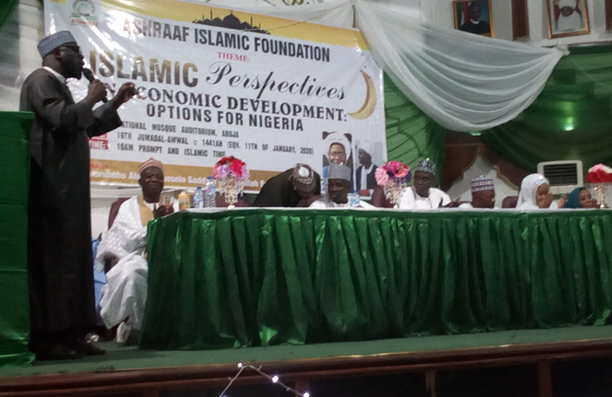
An Islamic Cleric, Dr. Folorunsho Ahmad Hussein Saddam Hanaaullah Fagba has called on the Nigeria authorities to embrace the Islamic model of economic development so as to bring the country out of its state of economic doldrums. adsbygoogle || []).push({}); js">

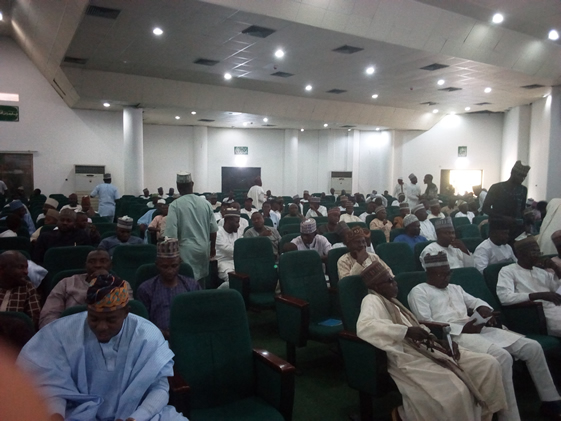
The University of Ilorin Lecturer, Dr. Ahmad Hussein Saddam while delivering a lecture at the Ashraaf Islamic Foundation 2nd Maolid Nabiyy themed: Islamic Perspectives on Economic Development: Options for Nigeria, said Islam has a vibrant economic framework that can bring any country out of economic lethargy.
He said that, “Zakat is one of the institutions, a very powerful institution that can raise the Muslim world from poverty, even the world from the poverty.
“Zakat is one of the institution that we need to institutionalize. We have not institutionalized it and we are wasting a lot of wealth. Institutionalizing it is by individualizing the payment of zakat.
“In Malaysia, Google, the zakat house in Malaysia you would see it. I don’t think we have a building that is as high as the zakat house in Malaysia. What are they doing there? They pooled all zakat of the Muslim people in Malaysia in that arena and utilize it for the good of the people.
“I assert within myself that if every Muslim within Nigeria who is qualified to pay zakat pay it and we pool it together, it would be more than the 2020 Nigeria budget.
He further said that individual economic activities is a formidable catalyst that can catapult the nation to economic sustenance.
In his narration, he said that, “When prophet Muhammad was growing up, he was a working youth. His zeal to work and develop himself economically led him to working for Khadija, the great merchant.”
“Why did Allah directed our noble prophet Muhammad (PBUH) to go and work? Allah has the power to let him remain seated and everything he want would come around him from now till his death. But it is to serve as an example, the mission Allah has led him to promulgate to be an exemplary leader of that mission. Allah wants him to serve as an example that is why he directed him to work.”
“Anabi Muhammad Rasululah was developed economically. He enhanced Khadija’s business to a great extent. What is important is that every individual must first be developed economically. It is our respective economic development that would be summed up and brought together to develop the nation’s economic. That is the way I see it.”
“Alhaji Aliko Dangote, everybody knows what his business is doing to the economics of this country. Femi Otedola; everybody knows the role his business is playing in the economic development of this nation, likewise every other person that does his/her own business.”
“So without everybody’s economic development the nation cannot be developed because you and I are the nation. Islamic permits individual economic development, that’s why you have to work, you just have to work, because Islam recognize, acknowledge and encourages individual economic development.”
The cleric sighted the past prophets of God as an example in other to support his submission that everybody must eat from his/her handwork.
“Allah said every person; he didn’t say every Muslim – He said every person is to eat from the work of his/her hand. Prophet Dawud as a prophet of God was a blacksmith.”
“Anabi said let each and every one of you carry his hoe, go into the bush, cut trees, pack it, carry it on your back, go and sell it outside and eat out of it. It is better for you than to be asking people, please give me fisabililaha.”
He further
continued, “In what I coined as ‘The
objective of Islam in human life and Human development’. Individual
economic development would develop the nation economy, because it is when you
are stabilized economically that you would be able to contribute your quota to
the economic development of your nation. Someone who is struggling to eat do
not have optimum sense of reasoning, when you are hungry, you do not think of
any other thing.”
“How do we develop our country? It is obvious that Islam has good and vibrant facility for economic development.
“It was during Sayidinina Umar (A.S) that the concept of Baitul-mal was giving birth. What is Baitul-mal? It is a public dormitory where zakat and Sadaqat are pooled for the development of the state economy.”
“The role the establishment of baitul-mal plays in life of the Muslim people cannot be over-emphasized.
“Zakat is one of the institution, a very powerful institution that can raise the Muslim world from poverty, even the world from the poverty.
“Zakat is one of the institution that we need to institutionalize. We have not institutionalized and we are wasting a lot of wealth. Institutionalizing it is by individualizing the payment of zakat.
“In Malaysia, “Google, the zakat house in Malaysia you would see it. I don’t think we have a building that is as high as the zakat house in Malaysia. What are they doing there? They pooled all zakat of the Muslim people in Malaysia in that arena and now utilize it for the good of the people.
“I assert within myself that if every Muslim within Nigeria who is qualified to pay zakat pay it and we pool it together, it would be more than the 2020 Nigeria budget.
The Lawyer further called on everybody to be in harmony with one another.
“There is one thing I used to say when am given a chance to talk like this. It is high time we do away with our religious dichotomy. We are cheating ourselves, we are wasting our precious resources and we are destroying our future.
“When a Muslim sees a Christian and develop natural hatred towards him and a Christian would say ‘He’s a Muslim, he doesn’t have anything to do with him.
“We have problem because Allah that brought us together has a reason for not making us Umatan Waida (of a single religion or tribe). Allah says he has the power to make you Ummatun Waida (of a single religion or tribe), but I am not doing that.
“Who are we now to questions Allah’s authority for making us different and living together. Why can’t we study Allah and the rationale behind what he has done in our life?
“Let us forget about the prayers I am observing, it doesn’t concerns anybody. It is between me and my God, like, it’s between me and my God, like zakat, it’s between me and my God, the hajj I go to, it is between me and my God – leave a Christian to his church and his worship, but remember it is the same blood that runs in Adam that runs in everybody today.”, he continued.
Maolid
Nabbiy is an annual Muslim celebration to mark the birth of the Noble Prophet
Muhammad Rasulu Lah (PBUH).
Author Profile

Latest entries
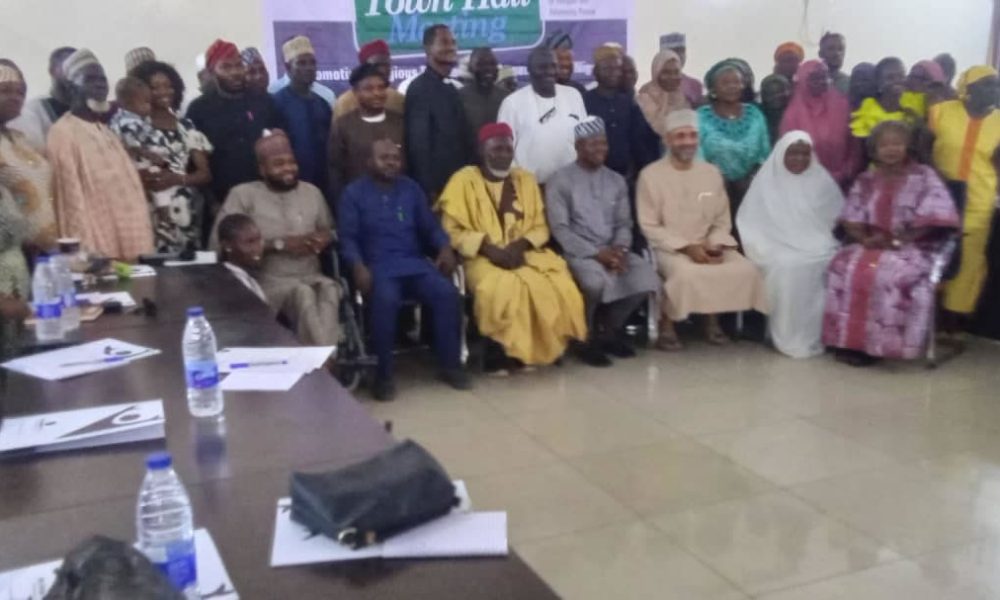 ReligiousDecember 11, 2025Peace Across Faiths: Minna Town Hall Strengthens Nigeria’s Commitment to Religious Freedom
 OpinionDecember 10, 2025LIES VS FACTS: Revisiting The Aregbesola Years In Osun
 Business and EconomyDecember 9, 2025KGIRS Sensitizes Stakeholders On Implementation Of New Nigeria Tax Act, 2025
 NewsDecember 9, 2025Insecurity: Ododo Briefs President Tinubu On Proactive Measures Put In Place
Business and Economy
KGIRS Sensitizes Stakeholders On Implementation Of New Nigeria Tax Act, 2025
From Joseph Amedu, Lokoja
As the new Nigeria’s Tax Act 2025, becomes operational come January, 2026, the Kogi State Internal Revenue Service (KGIRS) on Tuesday, commenced Stakeholders’ Engagement towards full implementation of the law.
adsbygoogle || []).push({});
js">
Speaking at the one day Sensitization Programme held at the Lugard House, Lokoja, the Executive Chairman of the KGIRS, Alhaji Sule Salihu Enehe, said that the commencement of the Nigeria’s Tax Act, January next year, is in line with the Federal Government’s tax reform policy aimed at boosting tax administration.
“The Stakeholders’ Engagement is targeted at ensuring better understanding of the Nigeria Tax Act ahead of its full implementation January next year”
He explained that the operation of multiple tax administration law was condensed into one now called “Nigeria Tax Act 2025” to enhance transparency and efficiency in the system.
He also explained that the new law was put in place to avoid the problem of double taxation and duplication in the system.
Alhaji Enehe therefore, urged taxable citizens and critical stakeholders in tax administration sector to embrace the new law in support of President Bola Ahmed Tinubu’s tax reform policy which he said would go a long way in stabilising the nation’s dwindling economy.
The Special Adviser to Governor Ahmed Usman Ododo on revenue generation, Dr. Nasir Rahman Ichanyi, in his speech, commended KGIRS for organising the Stakeholders’ Engagement Forum which has provided avenue for robust dialogue and collaboration for comprehensive understanding of the Nigeria Tax Act 2025.
He described the Stakeholders’ Engagement as timely and proactive measures put in place by KGIRS to achieve the desired success in the implementation of the new law.
Dr. Ichanyi promised that Kogi State Government would not relent in support of President Tinubu’s tax reform policy which he said would enhance the nation’s economy.
Author Profile
Latest entries
ReligiousDecember 11, 2025Peace Across Faiths: Minna Town Hall Strengthens Nigeria’s Commitment to Religious FreedomOpinionDecember 10, 2025LIES VS FACTS: Revisiting The Aregbesola Years In OsunBusiness and EconomyDecember 9, 2025KGIRS Sensitizes Stakeholders On Implementation Of New Nigeria Tax Act, 2025NewsDecember 9, 2025Insecurity: Ododo Briefs President Tinubu On Proactive Measures Put In Place
Business and Economy
Revenue Service Tasks Kogi Assembly On Domestication Of Nigeria Tax Act
From Joseph Amedu, Lokoja
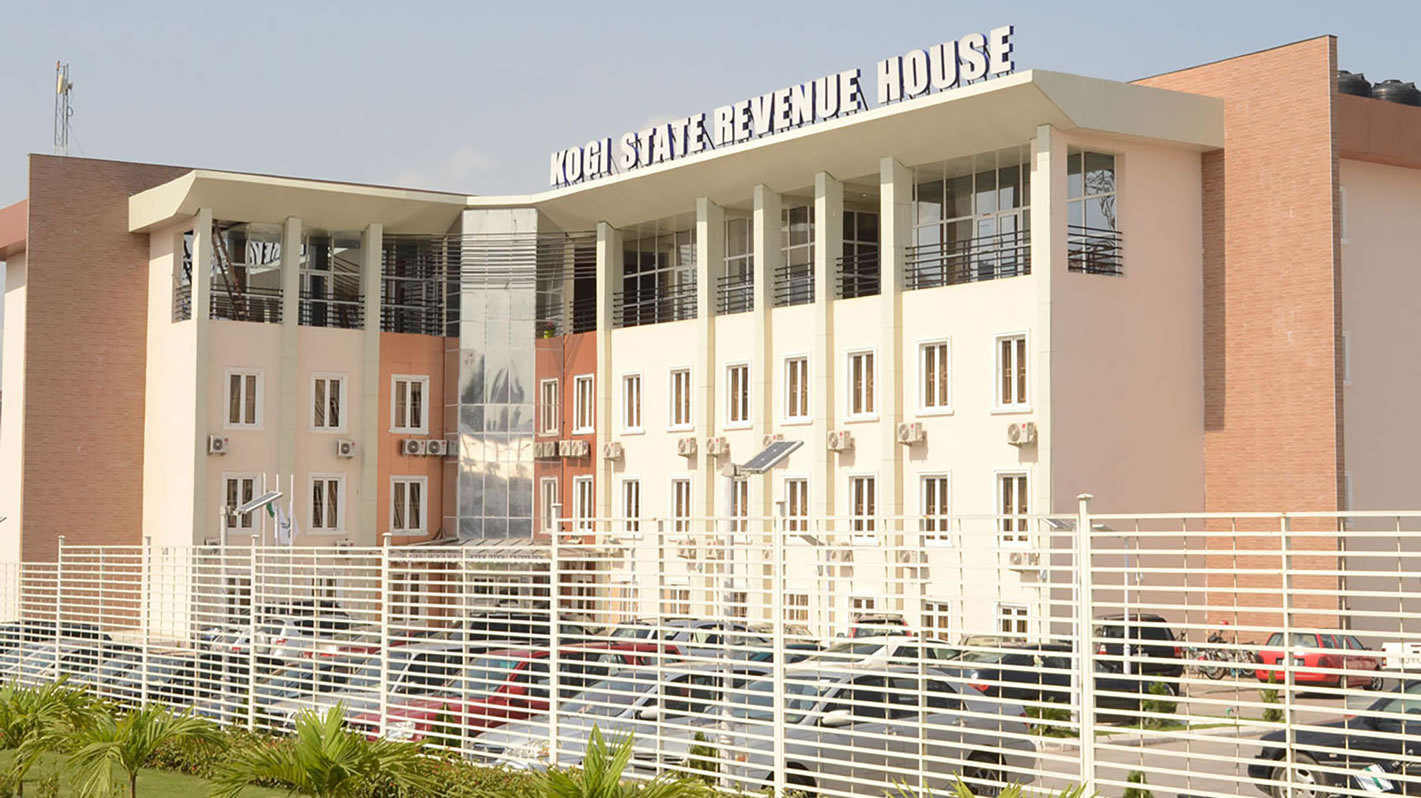
Kogi State Internal Revenue Service (KGIRS) has asked the State House of Assembly to domesticate the Nigeria Tax Act and Nigeria Tax Administration Act, for easy implementation in the state.
adsbygoogle || []).push({});
The Executive Chairman of the Service, Dr Salihu Enehe who led his team to the Assembly Complex in Lokoja said the awareness meeting with the Assembly has become imperative.
He described the Nigeria Tax Act as a compressed compendium of various tax laws hitherto operating in the country into a single document with a view to addressing issues of multiple taxation and promotion of transparency in tax administration in the country.
He commended President Bola Ahmed Tinubu for taking the bold step on embarking on the tax reforms to enable harmony in the tax ecosystem.
Enehe said that implementation of the new tax laws, scheduled to take effect from January, 2026, would enhance transparency in administration and transactions, investments and proffer measures against tax evasions.
“On 26th of June this year, the President of the Republic of Nigeria signed four laws, and these four laws have caused disruptions going forward into the future, in terms of tax and Administration”, he said.
“With these disruptions come a great opportunity and great threat. A great opportunity for those who are ready and prepared to abide and adhere to the laws but a great threat for those want to remain in the past and resistant to change.”
According to him, the four laws include the Nigeria Tax Act, the Nigeria Tax Administration Act, the Joint Revenue Board Establishment Act, and the Nigeria Revenue Service Establishment Act.
He noted that implementation of the Nigeria Tax Act and the Nigeria Tax Administration Act operational at states level would be fair to low income earners, reduction for middle level and tough on high income earners.
The Executive Chairman pointed out that under the new tax laws, which would be operational from January, 2026, people earning gross annual income of less than N1.3 million would be exempted from tax while middle level earners of between N1.3 million and N3 million would have their taxes reduced.
He further explained that higher gross annual income above N3 million, would attract higher taxes meaning that “Big men” and business organisations would pay more.
A Consultant with the KGIRS, Barrister Henry Ojuola in his remark, urged the House not bother with making new laws on the matter even though the Acts provides that they could enact or implement.
Barrister Ojuola, a former member of the Assembly however advised the Assembly and the Service to rely on the Acts in their implementation saying Chapter 5 of the Tax Administration Act has specified many offences as well as punishments for the Tax Tribunal to handle.
“Ensure your Tax Tribunal is effective by ensuring that “Unpurchaseable persons” are members. Ensure that the people you send to collect taxes are not dishonest Nigerians’, Legal Practitioner advised.
In his closing remarks, Chairman of the House standing Committee on Finance, Hon. Akus Lawal appreciate the KGIRS Chairman and his team for initiating the engagement.
The Lawmaker expressed optimism that in no time Kogi would be rated as the number three state among the 19 Northern states After Kano, Kaduna, Kogi State and number one in North-Central in terms of Internally Generated Revenue drive.
Hon. Lawal, representing Ankpa I Constituency, said the legislators were now better informed on the issue of revenue and tax administration in Nigeria and are looking forward to receiving the two tax laws to “do the needful”.
Author Profile
Latest entries
ReligiousDecember 11, 2025Peace Across Faiths: Minna Town Hall Strengthens Nigeria’s Commitment to Religious FreedomOpinionDecember 10, 2025LIES VS FACTS: Revisiting The Aregbesola Years In OsunBusiness and EconomyDecember 9, 2025KGIRS Sensitizes Stakeholders On Implementation Of New Nigeria Tax Act, 2025NewsDecember 9, 2025Insecurity: Ododo Briefs President Tinubu On Proactive Measures Put In Place
Business and Economy
Ododo Unveils N820.49 Billion 2026 Draft Budget
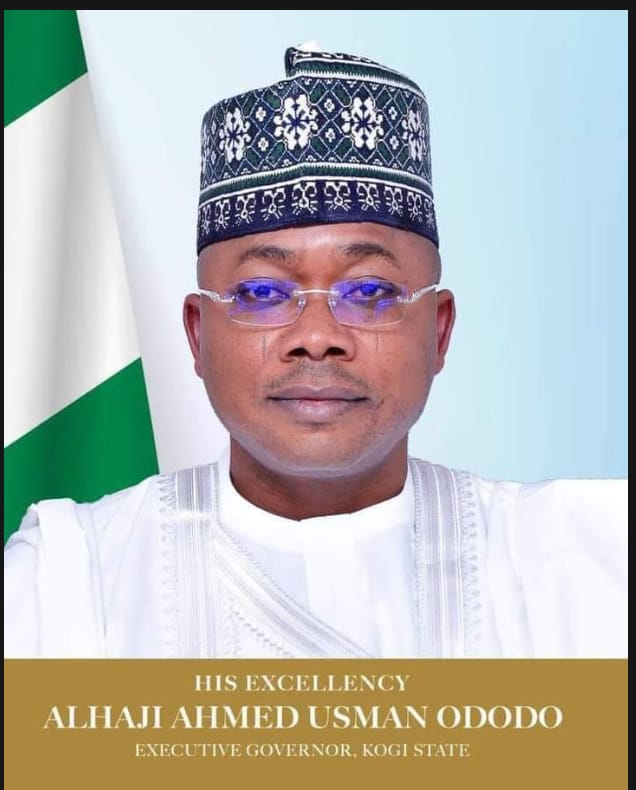
From Joseph Amedu, Lokoja
Governor Ahmed Usman Ododo of Kogi statte has unveiled the 2026 draft budget, titled “Budget of Shared Prosperity,” totaling N820.49 billion. The announcement was made following a meeting of the State Executive Council in Lokoja.
adsbygoogle || []).push({});
com/pagead/js/adsbygoogle.js">
The budget represents a 35.7% increase over the 2025 revised budget, signaling the state government’s focus on sustainable growth, inclusive development, and enhanced service delivery.
Commissioner for Finance, Budget, and Economic Planning, Asiwaju Asiru Idris, briefed journalists after the council meeting, highlighting that the 2026 budget is designed to strengthen internal revenue, improve debt recovery, foster a business-friendly environment, and deepen public-private partnerships.
“The 2026 budget proposals reflect a robust and balanced financial strategy emphasizing enhanced revenue generation, strategic expenditure control, and a strong commitment to capital investment,” Idris said.
He added that the significant rise in both recurrent and capital expenditure underscores the government’s determination to expand infrastructure and improve public service delivery. The total estimated revenue and expenditure for the 2026 draft budget is N820,490,585,443, reflecting a fully balanced fiscal plan.
The meeting also addressed other critical issues, including access to clean water, road safety, and land administration reforms. Commissioner for Information and Communication, Kingsley Fanwo, noted that Governor Ododo directed all commissioners to sink three boreholes each in their respective local government areas and tasked the council with taking over land consent authority to curb fraudulent transactions.
The inclusive meeting, which included former commissioners, reflected Governor Ododo’s commitment to unity and collective progress. Former Commissioner Hon. Salisu Sani Ogu praised the governor’s leadership style, saying, “He has shown a desire to carry everyone along and build on the foundation laid since 2016.”
The 2026 draft budget aligns with the state government’s long-term goals of infrastructure expansion, improved public services, and economic diversification, aiming to create a more prosperous environment for Kogi residents.
Author Profile
Latest entries
ReligiousDecember 11, 2025Peace Across Faiths: Minna Town Hall Strengthens Nigeria’s Commitment to Religious FreedomOpinionDecember 10, 2025LIES VS FACTS: Revisiting The Aregbesola Years In OsunBusiness and EconomyDecember 9, 2025KGIRS Sensitizes Stakeholders On Implementation Of New Nigeria Tax Act, 2025NewsDecember 9, 2025Insecurity: Ododo Briefs President Tinubu On Proactive Measures Put In Place