
Science and Technology
2020 Budget: The Token for Federal Ministry of Science and Technology
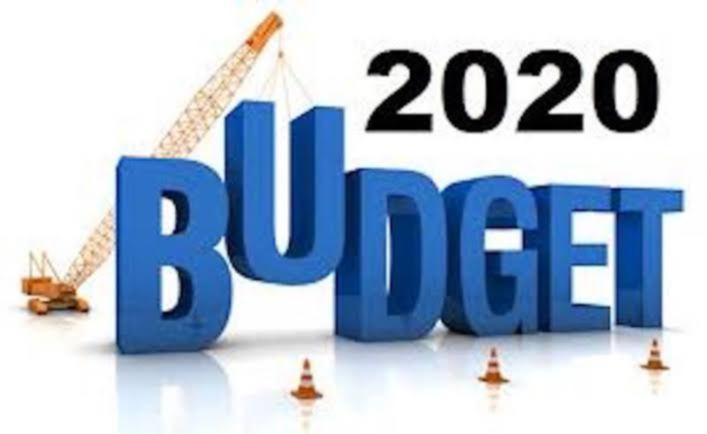
“Budget of Sustaining Growth and Job Creation” is the year 2020 executive budget proposal of President Mohammadu Buhari presented to joint session of the National Assembly, Abuja on Tuesday, October 8, 2019 with N10. adsbygoogle || []).push({}); 33 trillion been the total budget. However, N10.33 trillion is estimated as the total Federal Government revenue in 2020 and comprises oil revenue N2.64 trillion, non-oil tax revenues of N1.81 trillion and other revenues of N3.7 trillion. This is 7 percent higher than the 2019 comparative estimate of N7.594 trillion inclusive of the Government Owned Enterprises. According to President Buhari “investing in critical infrastructure is a key component of our fiscal strategy under the 2020 Budget Proposals.
An aggregate sum of N2.46 trillion (inclusive of N318.06 billion in statutory transfers) is proposed for capital projects in 2020”. Although the 2020 capital budget is N721.33 billion (or 23 percent) lower than the 2019 budget provision of N3.18 trillion, it is still higher than the actual and projected capital expenditure outturns for both the 2018 and 2019 fiscal years, respectively. However, at 24 percent of aggregate projected expenditure, the 2020 provision falls significantly short of the 30 percent target in the Economic Recovery and Growth Plan (ERGP) 2017-2020. Budget deficit is projected to be N2.18 trillion in 2020. This includes draw downs on project-tied loans and the related capital expenditure. This represents 1.52 percent of estimated GDP, well below the 3 percent threshold set by the Fiscal Responsibility Act of 2007, and in line with the ERGP target of 1.96 percent.
The deficit will be financed by new foreign and domestic borrowings, Privatization Proceeds, signature bonuses and draw downs on the loans secured for specific development projects. In terms of debt servicing which has become one of this administration big criticism.2020 budgets, provide the sum of N2.45 trillion for debt service. Of this amount, 71 percent is to service domestic debt which accounts for about 68 percent of the total debt. The sum of N296 billion is provided for the Sinking Fund to retire maturing bonds issued to local contractors.
The foregoing on 2020 budget is to provide an over view of what the proposal key details entails. However, the concern of this piece is to address cogent aspect of the budget as its affect science and technology in Nigeria. The pattern of budget allocation for the science and technology sector over the last few years’ shows that the allocation to this sector, as not been encouraging, especially if we must consider how critical this sector is to the overall economy development of our nation. For instance in the appropriation bill for the year 2020 N87.35 Billion is allocated for the Federal Ministry of Science and Technology (FMST). A breakdown of this show that for capital project N37.55.billion and recurrent expenditure N49.80 billion. A review of the outgoing year 2019 budget N66, 823,303,434 in the 2019 for the Federal Ministry of Science and Technology (FMST). According to the Appropriation Bill 2019, N35, 020,953,172 is proposed for recurrent expenditure and N31, 802,350,262 for capital expenditure.
According to the 2020 budget details, Federal Ministry of Science and Technology (FMST) are among the top 12 capital and recurrent allocations in the 2020 budget. But unfortunately, it occupied the 12th position on both side. This portrayed that budget for S&T is still not a cardinal priority for us in Appropriation Bill 2020 just as it happen in 2019 budget and others before now. While we acknowledge the importance of all sectors and their relevance, we must also prioritise our development agenda as S&T remains critical. The top 12 capital allocations in 2020 budget are; Works and Housing N259.20 billion; Education N162.74billion; Power N127.67billion;TransportN123.07billion;DefenceN99.87billion;HealthN90.88;AgricultureN79.79billion;Water resourceN78.34billion;Humanitarian affairs and Disaster N54.45billion;Aviation N53.85billion;Industry,trade and investment; Science and Technology N37.55billion
At recurrent allocations side Defence top the table with N778.59 billion as the war against boko Haram is still much around, one would not expect less for that sector. Education followed next with N490.20 billion; Police affairs N395.83billion; Health N336.32 billion; Interior N219.46 billion; Youth and Sport N168.33 billion; Office of the National Security Adviser (ONSA) N114.91 billion; Petroleum ResourcesN75.60billion; Foreign Affairs N67.56 billion; Office of the Secretary to the Government of the of the Federation (OSGF) N59.60billion; Agriculture & Rural Development N58.67 billion; while Science and Technology N49.80 billion occupied the 12th position.
The ministry as established has the following mandates:
*Formulation, monitoring and review of the National Policy on Science, Technology and Innovation to attain the macro-economic and social objectives of Vision 20:2020 as it relates to science and technology; *Acquisition and application of science, technology and innovation contribution to increase agricultural and livestock productivity; *Increasing energy reliance through sustainable R&D in nuclear, renewable and alternative energy sources for peaceful and development purposes; *Promotion of wealth creation through support to key industrial and manufacturing sectors; *Creation of technology infrastructure and knowledge base of facilitate its wide application for development; *Application of natural medicine resources and technologies for health sector development; *Acquisition and application of Space Science and Technology as a key driver of economic development; and *Ensuring the impact of R&D results in the Nigerian economy through the promotion of indigenous research capacity to facilitate technology transfer. With Seventeen (17) key agencies
At a time the current government planning to diversify the economy away from crude oil and seek for alternative means to leverage its growth and jobs creation target as well as revenue generation. Critical sectors like Science, Technology, Innovation and Research potentials are nonetheless real and cannot be easily written off. Unlocking this potentials as well as achieving sustainable development is also pragmatically hinged on Science, Technology, and Innovation and Research development.
As this piece makes case for science and technology in Nigeria, it is in our opinion that for S&T, understanding the political economy and socio-economy context is off due diligence as a matter of course when it comes to budgeting for S&T, knowing the vast of opportunities that come with it. The non-transition over the years by Nigeria’s economy from traditional mono-cultural economy oil is bane her development economically. Nigeria needs a genuine transition, a change of orientation from a consuming nation to a manufacturing economy which creates jobs or bequeaths equitable wealth distribution on citizens.
While we must commend the president for early presentation of the budget to the national Assembly, also we must charge legislature to fulfill their own part to fast-tracking the debate and committee hearing from MDAs and Parastatals .As Nigerians would not entertain delayed passage of budgets that has done incalculable harm to the economy over the years. Infrastructure projects, which catalyse economic developments, suffer most with late implementation. Local investments are delayed as investors tarry to see how their businesses could be affected. This malaise cripples jobs and wealth creation.
Science and Technology
Bill Gates Warns AI Is ‘Powerful’ Enough To Destroy Humanity
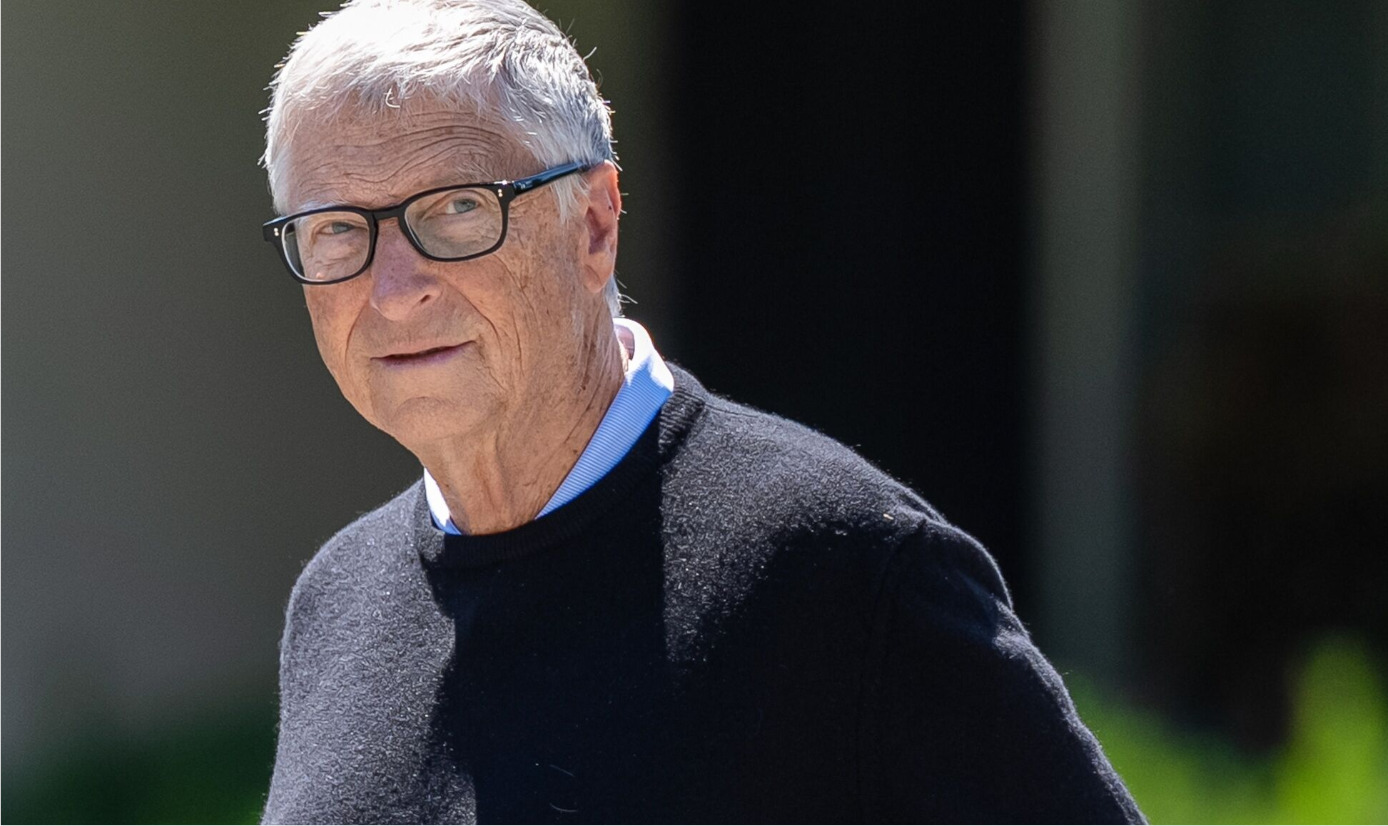
–There “absolutely” needs to be legislation regulating AI and law enforcement
Billionaire Bill Gates told “Meet the Press” that government regulation is needed for artificial intelligence and warned the technology is “powerful” enough to “cause a billion deaths” if used maliciously, as Washington and the AI industry consider how to move forward in light of dire warnings about AI’s potential effects.

NBC News released a clip Friday of Gates’ interview with “Meet the Press,” in which the billionaire and philanthropist was asked about warnings from AI workers if the technology could potentially wipe out humanity.
“AI is certainly powerful enough to drive events that … cause a billion deaths,” Gates said, noting “there’s never been a weapon as powerful as the combination of people with ill intent using the latest AI tools.”
Gates was also asked about Anthropic CEO Dario Amodei’s recent essay calling for a slowdown on AI, which argued frontier labs should slow down the pace of their progress and “voluntarily work together to set standards” around artificial intelligence.
“No one thinks self-regulation is enough,” he said about the prospect of AI companies leading the charge on curbing their own actions, arguing there “absolutely” needs to be legislation regulating AI and “you need law enforcement and the politicians to get into the discussion about what safeguards and monitoring look like.”
Amodei’s essay also called for government involvement in AI, though he noted, “Unfortunately, passing laws can take time, and AI is advancing very quickly.”
It still remains to be seen what the federal government will do on AI regulation, as Republican leaders in Congress have downplayed the issue after President Donald Trump came out strongly against AI guardrails and described calls for regulation as a “hoax.”
Gates’ comments come ahead of a planned meeting Tuesday between Trump, House Speaker Mike Johnson, R-La., and AI executives, according to multiple outlets, though it’s still unclear what the focus of the meeting will be. Johnson has previously said he wants Trump and AI CEOs to “go in a big room, close the door and sort this out,” and told reporters last week there should be “a deliberate discussion about the responsibility of the companies to maintain safety, and what role, if any, the government has to play in that.” It also remains to be seen which specific AI leaders could attend the meeting, which comes after major players in the industry like Elon Musk and OpenAI chief Sam Altman were at the White House for a state dinner Thursday.
Will Congress Take Action On AI?
Johnson and Senate Majority Leader John Thune, R-S.D., so far haven’t shown much urgency when it comes to passing legislation regulating AI. Johnson downplayed fears the technology could wipe out humanity as a “hoax,” and while Thune has long called for regulating AI and introduced legislation on the issue in 2023, the senator has more recently suggested he won’t be pushing for the matter to be taken up as an urgent priority. Thune told reporters in mid-September it was “probably TBD” whether the chamber could pass AI legislation by the end of the year, noting, “Getting anything done in the near term is going to be challenging given the other stuff we’re dealing with.” The Senate leader does seem to be considering the issue, however, telling Axios on Wednesday that Sen. Amy Klobuchar, D-Minn., who consponsored Thune’s previous AI bill, is working on getting more Democratic support before the bill gets reintroduced in Congress. The legislation, based on how it was introduced in 2023, would impose measures like requiring critical AI systems to be subject to certification, transparency requirements for content made with generative AI, forcing companies to perform AI risk assessments and ordering further government research into distinguishing AI-generated content and what guardrails should be implemented in the industry.
It remains to be seen whether that or any other bill would be able to make it through Congress and not get vetoed by Trump, though Thune told Axios he believes the president is more open to allowing AI guardrails than he’s publicly let on.
Key Background
The debate over AI safety and regulation has sharply escalated in recent weeks, after former Anthropic researcher Jacob Coxon publicly announced on Sept. 9 that he had resigned from the company and alleged, “The people building AI earnestly believe that it could kill us all by the end of the decade.” Evan Hubinger, Anthropic’s alignment science lead, amplified the warning, writing Coxon is “correct” and AI officials “really do earnestly believe AI could kill all humans!” Hubinger said he thought there was “10%” chance of AI wiping out humanity “within the next decade,” and warned Anthropic does “not yet have a plan to solve alignment for superintelligence and [is] not clearly on track to.” The warning ramped up the public backlash and escalated calls for regulation, and Google, Anthropic and OpenAI have banded together in the wake of the outcry and started making plans for an AI safety group. Altman and Amodei also stressed the need for global cooperation and international standards on AI at the United Nations this week, with Amodei arguing decisions on the technology “must be shaped through democratic processes and by governments accountable to the people that they serve.”
Bill Gates says AI companies self-regulating isn’t enough and governments should be involved in monitoring (NBC News)
Dire AI Doomsday Warnings Are Everywhere—But What Could One Actually Look Like? (Forbes)
News
Gov Ododo Hails Prof. Abdulsalam Naeem’s Appointment as Ajaokuta Steel Company MD
By Abah Benjamin Eneojoh
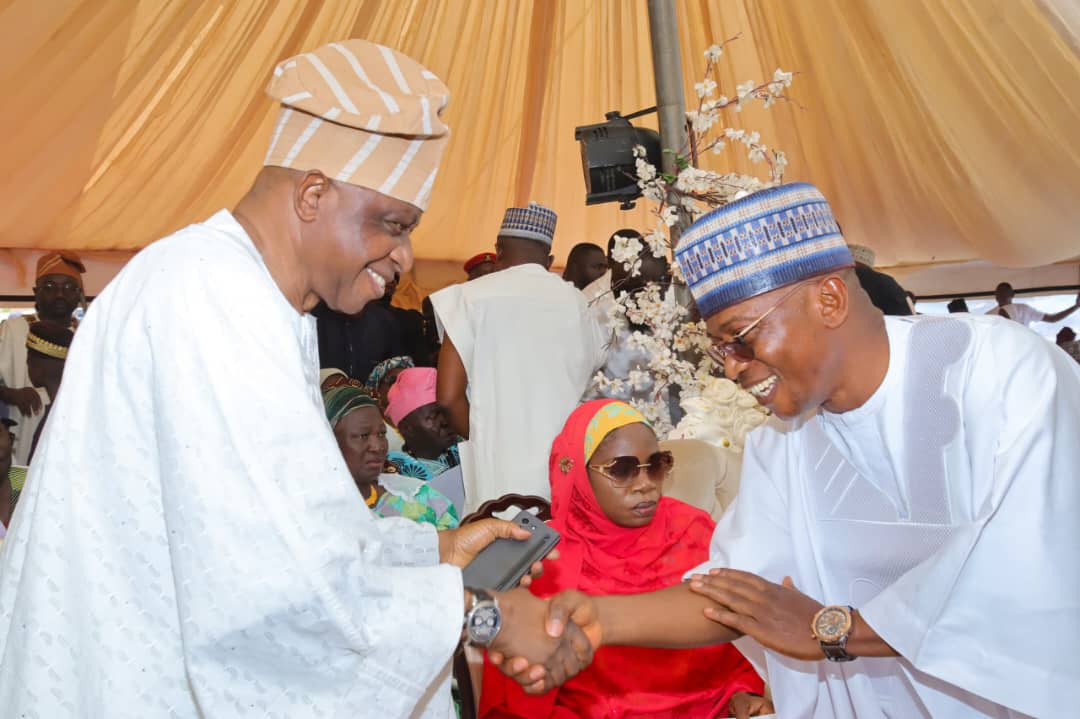
The Kogi State Governor, Alh Ahmed Usman Ododo has praised the appointment of Prof. Abdusalam Nasir Naeem as the new Managing Director of Ajaokuta Steel Company Ltd, describing it as well deserved.
In a Press statement issued by the press secretary to the Deputy Governor Mr Unubi Emmanuel, the Governor on Sunday, June 8th, 2025 at a grand reception ceremony organized by Okun Concern Citizens to welcome Prof. Abdulsalam Nasir Naeem at Aiyegunle Gbede in Ijumu Local Government Area expressed his satisfaction with the Federal Government on the appointment of Abdulsalam.
The Governor represented by his Deputy, Comrade Joel Salifu expressed pride and hope, highlighting Prof. Naeem’s vast experience, academic excellence, and visionary leadership. He stated that Prof. Naeem’s appointment is a round peg in a round hole, and his leadership will undoubtedly steer the company towards greater heights of success and prosperity.
He stressed that under Prof. Naeem’s capable leadership, Ajaokuta Steel Company Ltd is expected to be revived and reclaim its position as a cornerstone of Nigeria’s economy and a beacon of industrial progress.
The Governor extended his warmest congratulations to Prof. Naeem on his appointment and thanked President Bola Ahmed Tinubu, GCFR, for recognizing and appointing an indigene of Kogi State to head the Ajaokuta Steel Company. This gesture, he said, has rekindled the hope and belief of the people in a just and fair Nigeria under the President’s watch.
Ododo called on the people to join hands in welcoming the new MD with open hearts and minds and pledged their full support and cooperation as he takes on the important responsibility.
The ceremony which was chaired by former Governor Yahaya Bello had many dignitaries from all walks of life in attendance.
With Prof. Naeem who specializes in Steel and Geo physics at the helm, Ajaokuta Steel Company Ltd is expected to make a significant impact on the nation’s economy and industrial progress.
Science and Technology
Biotechnology requires robust regulatory frameworks — NBRDA DG
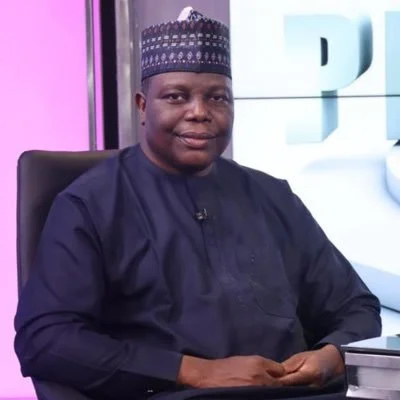
The Director-General, National Biotechnology Research and Development Agency (NBRDA), Prof. Abdullahi Mustapha says biotechnology requires robust regulatory frameworks to overcome regulatory hurdles facing its adoption.
Mustapha made this submission in an interview with the News Agency of Nigeria (NAN) on Wednesday, June 26th, 2024 in Abuja.
Prof. Abdullahi who was reacting to the challenges and ethical considerations surrounding biotechnology in Nigeria, said it needed ethical guidelines, stakeholder engagements and technology transfer mechanisms.
According to him, in understanding biotechnology, it harnesses biological processes, organisms or systems to develop innovative products and solutions.
“The benefits of biotechnology are far-reaching, cutting across sectors such as healthcare, agriculture, environment and industry.
“Biotechnology offers environmental solutions such as environmental sustainability through bio-remediation, waste management and renewable energy production.
“Bio-remediation is a branch of biotechnology that employs the use of microbes and bacteria to decontaminate affected parts.
“Microbial bio-remediation techniques clean up contaminated environments, reducing environmental degradation and associated economic costs.’’
The NBRDA boss also explained that in the area of sustainable industrial development, industrial biotechnology promoted sustainable production processes and products.
“Bio-based materials, renewable fuels, and biodegradable plastics are examples of industrial biotechnology applications.
“Adoption of industrial biotechnology fosters environmental conservation and economic opportunities in renewable industries.
“In the area of healthcare advancements, healthcare adoption of biotechnology reduces healthcare costs and stimulates economic growth.
“Biotechnology innovations transform healthcare through personalised medicine, advanced diagnostics and novel treatments,” he said.
Mustapha added that biopharmaceuticals derived from biotechnology processes offered targeted therapies for various diseases. NAN
-
 Entertainments4 years ago
Nollywood Produces 541 Movies in 2022 First Quarter – NFVCB
-
 News7 years ago
I will Maintain High Decorum – Hon Monguno
-

 News5 years ago
2021 Ethics And Integrity Compliance Scorecard Of MDAs: ICPC Scores Censors Board High
-

 Business and Economy4 years ago
Non-interest TAJBank Reports 433% PBT in 2021 Financial Year
-
 Entertainments7 years ago
Censors Board Trains, Gives Grant to 100 Youths in Nasarawa State
-

 News4 years ago
ICDA North Central: Prince Oruma Sues for Igala Unity
-
 AWF7 years ago
AWF to Feature Adedokun, Kawu and Okah-Donli for April Guest Writer Session
-
 News3 years ago
Full List of The New Ministers and Their Portfolio