
Education
Covid-19: Kogi Sets to Reopen Schools
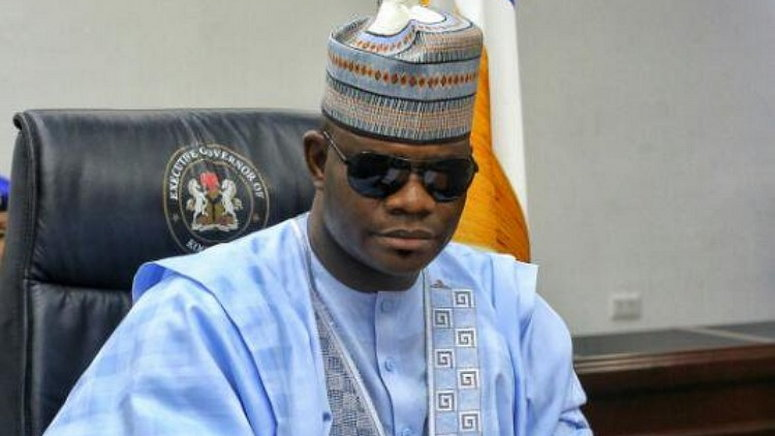
The Kogi State Government on Tuesday announced the reopening of schools at all levels on September 14, 2020, including Primary, Secondary and Tertiary institutions in the state.
The State’s Commissioner for Education, Science and Technology, Hon. adsbygoogle || []).push({}); com/pagead/js/adsbygoogle.js"> Wemi Jones made the announcement at a press briefing on Tuesday 1st September, 2020 in Lokoja.
According to the Commissioner, the State Government arrived at this decision after series of interaction with the relevant stakeholders and assessment of both private and public schools in the state to ascertain their level of preparedness and safety for reopening of schools from Covid-19 break.
”You will recall that His Excellency, Gov. Yahaya Bello, had directed the closure of all schools from primary to tertiary institutions in the state from March 23rd, 2020, because of the ravaging Covid-19 pandemic.
”’Subsequently, upon the directive of the Federal Ministry of Education, exit classes were opened for Primary 6, JSS3 and SS3 in Kogi on August 10, 2020, to particularly allow the SS3 classes to prepare and write the WAEC examination.
”Therefore, upon further review having had several meetings with relevant stakeholders, His Excellency has directed that all schools in Kogi State should fully reopen on September 14, 2020, that is two weeks from today”, he said.
The Commissioner stressed that the state government arrived at this decision after assessing the situations of schools especially for the exit classes that had resumed, saying ”we have not recorded any negative report as far as Covid-19 pandemic is concerned.
”Hence, His Excellency dimmed it fit for every school to open for full academic activities.
He, however, advised and encouraged all heads of every school to ensure full compliance with the Covid-19 protocols which had been clearly set out by the Presidential Task Force (PTF) on Covid-19.
He noted that all these details and guidelines on Covid-19 protocols by PTF were available and in public space.
”The ministry will review the state’s Academic Calendar accordingly to reflect on the new development, and the details would be worked out and released to the relevant stakeholders in due course before resumption.
”However, we encouraged that all relevant educational stakeholders like ANCOPSS, ASSUS, SUBEB, NAPPS, Heads of Tertiary Institutions in Kogi State, NUT, STETSCOM and every other stakeholders are very free to liaise with us at the ministry for further clarification.
”We are equally informing the general public, parents, guardians, schools heads that we are very particular about the health and safety of our learners in Kogi State.
”So, the State Government will not stop at anything to ensure that our learners are kept in good condition as far as Covid-19 pandemic and indeed other diseases or health issues are concerned”, he said.
He, therefore encouraged everybody to play their roles to ensure personal hygiene reiterating that personal hygiene remained the personal responsibility of everybody.
”For the higher institutions, I have personally placed direct telephone calls to the heads of all state’s tertiary institutions and I had discussions with them to ascertain their level of preparedness. It appears that all of them are fully ready for schools’ reopening.
”We have equally asked them to get in touch with the ministry should there be any further requirements in order for them to make their institutions safe for the benefit of students and staff”, the Commissioner said.
Author Profile
Latest entries
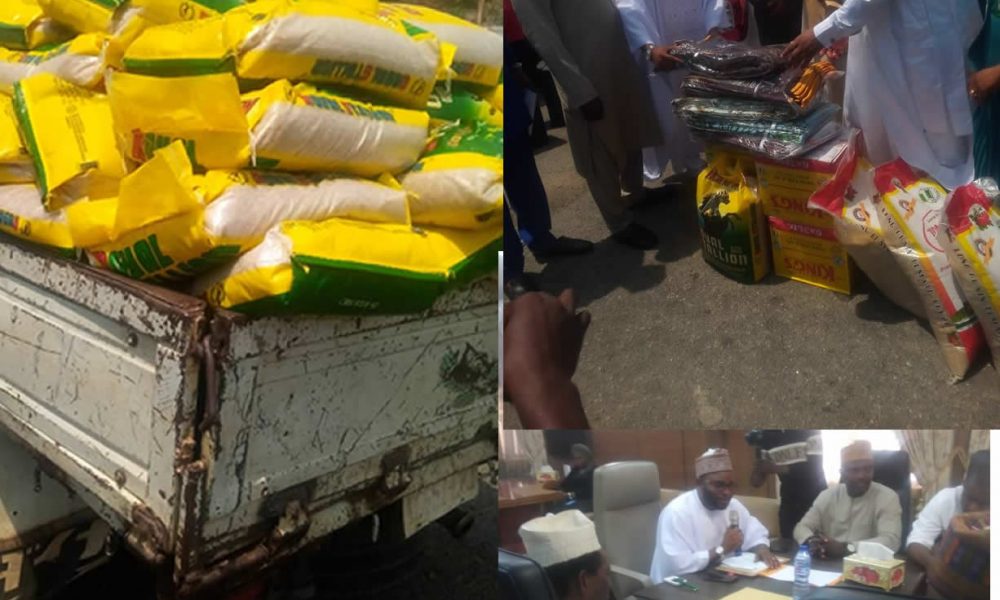 NewsMarch 8, 2023HYPPDEC Donates Food Stuff, Clothing to Locals in Kogi to Tackle Cashless Policy Effect
 NewsMay 30, 2022Activist Tasks Youths On Active Participation In Politics
 PoliticsMay 30, 20222023: CSO Seeks for Adequate Security, Active Youths Participation in Politics
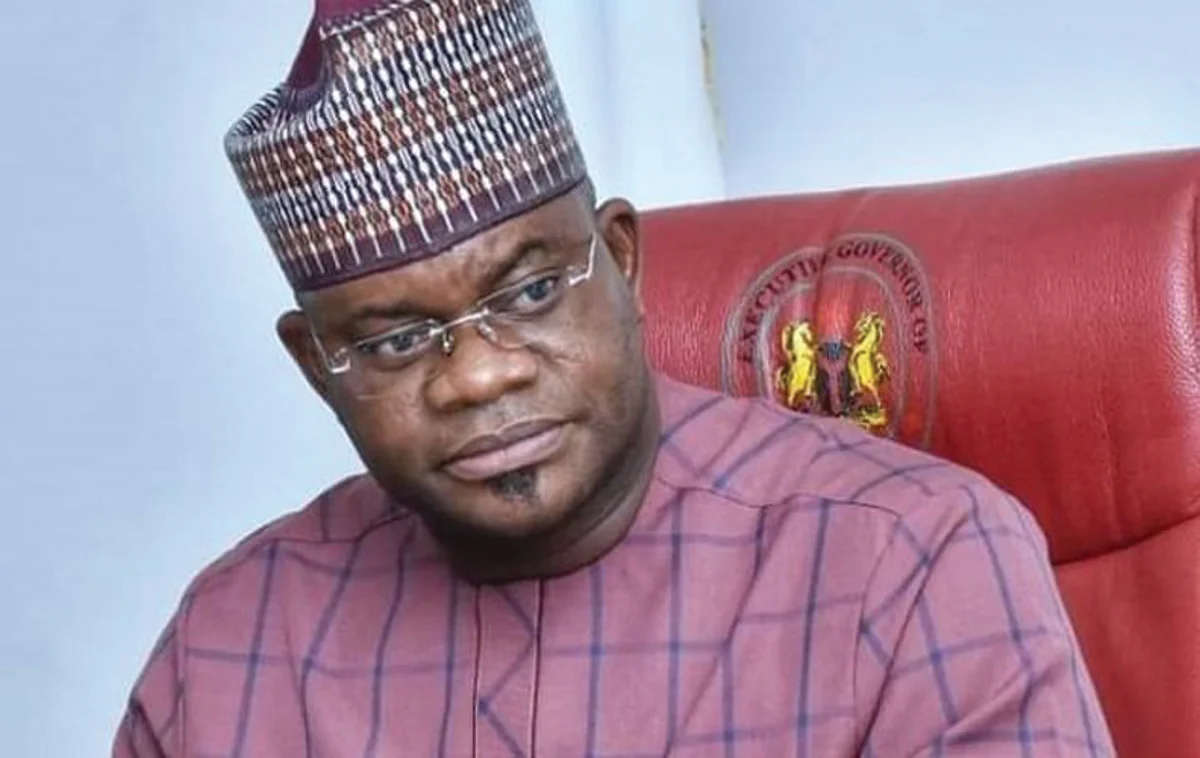 NewsOctober 1, 2020Nigeria @ 60: Bello Promises More Democracy Dividends, Vows To Sues Fraudulent Workers








Education
Kogi AGILE Project Moves to Renovate 728 Public Secondary Schools

From Joseph Amedu, Lokoja
The Kogi State Government has commenced preparations for the large-scale renovation of 728 public secondary schools across the state’s three senatorial districts under the AGILE Project.
adsbygoogle || []).push({});
The State Governor, Alhaji Ahmed Usman Ododo disclosed this at a one-day Environmental and Social Compliance Training for Technical Service Providers under the Kogi AGILE Project, held in Lokoja.
The training, supported by the World Bank, brought together building industry professionals who will oversee the execution of the renovation works across the state.
The project’s Component 1.2, which focuses on infrastructure renewal, will kick off with the renovation of 150 public secondary schools in the first phase. The remaining 578 schools will be addressed in subsequent phases, bringing the total number of benefiting schools to 728.
Represented by the Commissioner for Education, Mr. Wemi Jones, Governor Ododo emphasized that 30 Technical Service Providers were selected and trained to understand and strictly adhere to World Bank guidelines, specifications, and operational culture in project implementation.
He noted that while government can facilitate opportunities, performance and delivery rest squarely on the shoulders of the contractors.
“We can only help you secure the job; we cannot do it for you. The responsibility to deliver quality work according to specifications lies with you,” the Governor stated, reaffirming his administration’s commitment to repositioning the education sector.
The Governor urged Technical Service Providers (TSPs) engaged for the project to uphold the highest standards of professionalism, quality, and compliance in delivering the assignment.
In a remark, Mr. Erinms Emmanuel of the Admin/Grievance Redress Mechanism, National Project Coordinating Unit, said the AGILE Project is currently being implemented in 21 states, with seven already recording significant progress.
He urged the service providers to ensure transparency, integrity, and strict adherence to quality standards in the utilization of funds disbursed for the project, noting that proper execution is critical to safeguarding the state from financial liabilities.
Earlier in his welcome address, the Kogi State Project Coordinator of AGILE, Ahmed Tijani Oricha, explained that the training was designed to strengthen the capacity of Technical Service Providers in understanding and implementing environmental and social management safeguards tied to the AGILE Project.
According to him, the goal is to ensure that renovation works across schools are safe, inclusive, environmentally responsible, and socially sustainable.
He stressed that decisions taken on-site including workforce management, community engagement, and risk mitigation must align with World Bank environmental and social safety standards, including safeguards against gender-based violence.
A Resource Person and Environmental Consultant at the National Project Coordinating Unit in Abuja, Dr. Fadele Idowu, noted that participants were equipped with comprehensive knowledge of environmental protocols and safeguard instruments required for effective project execution.
Some of the Technical Service Providers, including Architect John Attah, Chairman of the Kogi State Chapter of the Nigerian Institute of Architects, alongside Engineers Rahimat Muhammad and Salihu Adinoyi, described the training as impactful and timely.
They pledged to comply fully with the code of conduct signed and to deliver projects in strict accordance with approved specifications.
Author Profile

Latest entries
 PoliticsMarch 5, 2026Ajia Congratulates Kwara APC Exco , Gov. AbdulRaham Others Over Successful State Congress
 NewsMarch 3, 2026Ajia: Tunji Disu’s Leadership Offers Hope for Tackling Insecurity
 NewsMarch 3, 2026Rev. Fr. Barkindo of the Kukah Centres highlights 2 points to tackle insecurity, at the Ashraaf Islamic Foundation Centre Ramadan Lecture
 NewsMarch 3, 2026Ashraaf Islamic Foundation Tackles Insecurity with 9th Annual Ramadan Lecture
Education
Kogi Poly Sacks Two Staff, Demotes Deputy Registrar Over Misconduct

From Joseph Amedu, Lokoja
The Governing Council of Kogi State Polytechnic, Lokoja, has approved the termination of the appointment of Mr. Mukhtar Muhammed, an Administrative Officer II, for sexual molestation.
adsbygoogle || []).push({});
Similarly, the appointment of Mrs. Funmilayo Afolabi, an Assistant Chief Executive Officer, was terminated for absconding from duty for nine months.
The Council equally approved the demotion of a Deputy Registrar, Mr. Audu Mathew, to the rank of Principal Assistant Registrar over negligence of duty.
The Council further approved the promotion of 11 Principal Lecturers to the rank of Chief Lecturer, as well as the promotion of 572 other teaching and non-teaching staff of the institution.
These decisions were among the far-reaching resolutions taken at the 72nd Regular Meeting of the Governing Council, presided over by the Chairman, Barrister Sani Shaibu.
The Council also approved the recommendation that 49 academic staff and 71 non-teaching staff be promoted for the 2024 promotion exercise. It further approved the promotion of 225 academic staff and 227 non-teaching staff for the 2025 promotion exercise.
Earlier in his address, the Rector of Kogi State Polytechnic, Professor Salisu Ogbo Usman, expressed his appreciation to members of the Governing Council for their presence at the meeting, describing it as a clear reflection of their steadfast commitment to the institution’s growth, stability, and sound governance.
Prof. Usman also informed the Council of the uncovering of a result forgery syndicate involving one Mr. Henry Tope, who was apprehended in possession of 30 statements of result and one original certificate, all bearing the name and insignia of the Polytechnic.
He further expressed gratitude to the Visitor to the Polytechnic and Executive Governor of Kogi State, His Excellency, Alhaji Ahmed Usman Ododo, for his support, leadership, and continued guidance.
Prof. Usman stressed that Governor Ododo’s administration has provided an enabling environment that has enhanced academic stability, infrastructural development, and overall institutional growth at the Polytechnic.
Author Profile
Latest entries
PoliticsMarch 5, 2026Ajia Congratulates Kwara APC Exco , Gov. AbdulRaham Others Over Successful State CongressNewsMarch 3, 2026Ajia: Tunji Disu’s Leadership Offers Hope for Tackling InsecurityNewsMarch 3, 2026Rev. Fr. Barkindo of the Kukah Centres highlights 2 points to tackle insecurity, at the Ashraaf Islamic Foundation Centre Ramadan LectureNewsMarch 3, 2026Ashraaf Islamic Foundation Tackles Insecurity with 9th Annual Ramadan Lecture
Education
NGO Heightens Advocacy for Indigenous Climate Education With Pulitzer Center

From Joseph Amedu, Lokoja
The Ace Initiative for Sustainable Development, has successfully concluded a comprehensive climate education programme supported by the Pulitzer Centre.
The event bringing together primary schools, universities, government representatives, and environmental experts in a landmark effort to expand climate literacy across Nigeria.
com/pagead/js/adsbygoogle.js">
The project, which culminated virtually on the 27th to 28th November, unfolded in three phases: primary school outreach, an inter-university climate competition, and a high-level panel discussion.
Prof. Sade Oderinde, representing the Acting Vice Chancellor of Tai Solarin Federal University of Education, Prof. Adekunle Olanrewaju Adeogun, delivered the welcome address, emphasising the university’s commitment to environmental education.
The first phase introduced climate education to five public primary schools in Ijebu-Ode through engaging Yoruba-language videos adapted from Pulitzer Centre climate investigations.
Stories including “Investigation: How Big Businesses, Individuals Deplete Nigeria’s Protected Forests” by Uchenna Igwe, “Red Gold Project: Battle for the Soul of Depleting Nigerian Forest Reserve” by Taiwo Adebulu, and “Amid Deforestation Scourge, Vanishing Herbal Plants Pose Health Crisis in Southwestern Nigeria” by Abdulwaheed Sofiullahi and other Pulitzer stories were transformed into illustrated storytelling videos featuring indigenous proverbs and local examples.
Project Lead, Dr. Oluwaseun Anselm, coordinated the outreach together with Dr. Faleke Mary, the Schools Liaison Lead.
Participating schools included Emmanuel Anglican Primary School I and II, St Augustine Primary School, Olu-Ola Primary School, and Moslem Primary School.
Pre- and post-learning assessments revealed significant improvements in climate awareness, with pupils making “Climate Hero Pledges” to protect trees, conserve water, and educate their families.
The second phase brought universities students together from the six geopolitical zones in Nigeria including TASFUED, University of Lagos, Ahmadu Bello University, University of Jos, Federal University Kashere, Federal University of Education Zaria, Yobe State University, and University of Ilorin.
Students analysed Pulitzer stories to discuss climate challenges and propose solutions ranging from urban heat mitigation to reforestation strategies.
Institutional representatives including Dr Yakubu Salihu Muhammad (Federal University Kashere), Dr Yusuf Abdulkabir Toriola (Federal University of Education Zaria), Dr Seun Nurudeen Akorede (Ahmadu Bello University), Dr Jamiu AbdulQudus Tosin (University of Ilorin) and others, mobilised student participation.
The programme climaxed with a panel discussion opened by Prof. Oladipo Samuel, Director of Research and External Relations at TASFUED.
Distinguished panellists included Dr Godsday Usiabulu, Certified African Climate Ambassador; Prof. Oluwafemi Saibu, Professor of Economics at University of Lagos; Prof. Adefunke Ekine, Department of Childhood Education, TASFUED; and Prof. Adekunle Bamiro, Department of Chemical Sciences, TASFUED.
Other were: Dr Oluwatoyin Fatunsi, Environmental Chemist, University of Lagos; Prof. Moshood Bello, Department of Health and Safety Promotion, TASFUED; Mr Rasaq Olatunji, Forest Economist and Acting Project Manager at J4; and Prof. Zacchaeus Ojekunle, Department of Geography, Federal University of Agriculture, Abeokuta.
Panellists engaged with Pulitzer investigations including “How Airports Fuel Climate Change in Nigeria” by Nkrumah Bankong-Obi, “Cost of Farming: How Iseyin Women Farmers Cope with Climate Change and credit Crunch” by Francis Annagu and “Climate Shocks, Governance Gaps and the Refugee Crisis in the Sahel,” by Ibrahim Adeyemi and other stories published with support of Pulitzer Center, USA.
The programme successfully created a coherent knowledge pipeline from child-friendly indigenous narratives to advanced policy analysis.
Ace Initiative for Sustainable Development plans to expand this model to additional states, reaching more schools and strengthening climate resilience conversations nationwide.
Author Profile
Latest entries
PoliticsMarch 5, 2026Ajia Congratulates Kwara APC Exco , Gov. AbdulRaham Others Over Successful State CongressNewsMarch 3, 2026Ajia: Tunji Disu’s Leadership Offers Hope for Tackling InsecurityNewsMarch 3, 2026Rev. Fr. Barkindo of the Kukah Centres highlights 2 points to tackle insecurity, at the Ashraaf Islamic Foundation Centre Ramadan LectureNewsMarch 3, 2026Ashraaf Islamic Foundation Tackles Insecurity with 9th Annual Ramadan Lecture