
Health and Life Style
Kogi COVID-19 Status: Our Findings About the Expatriate – Gov Yahaya Bello
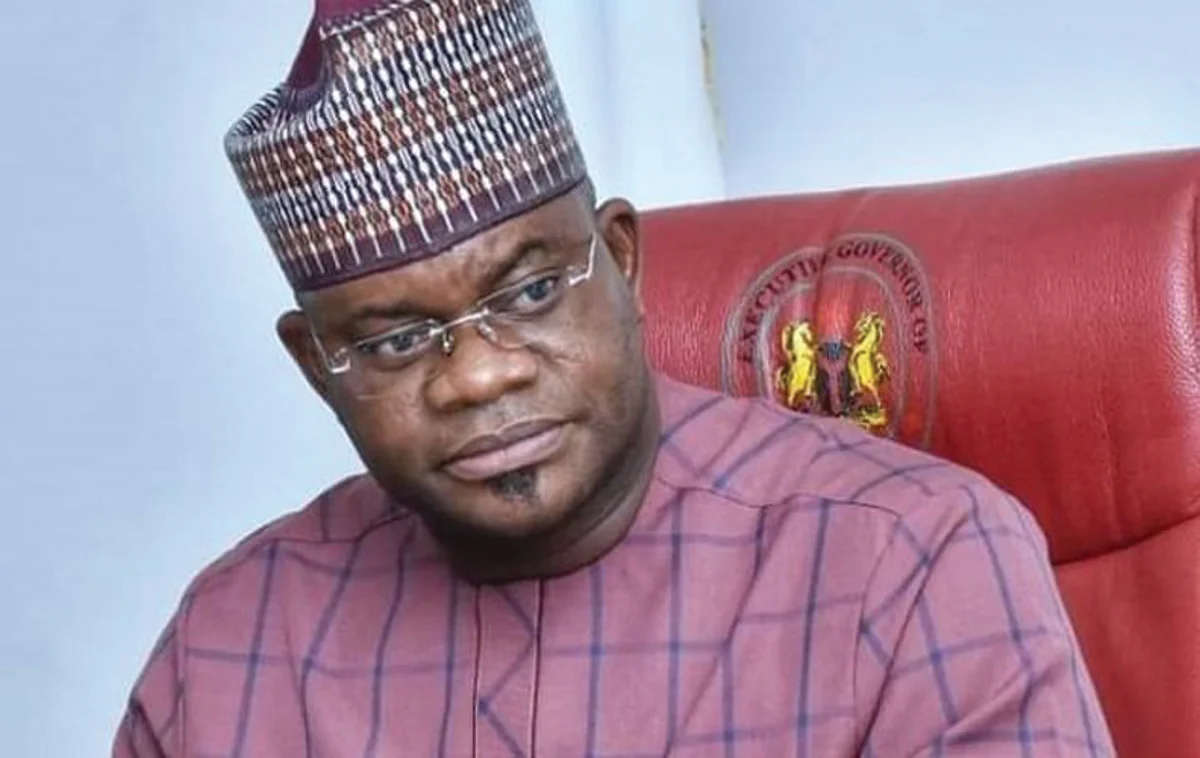
The Kogi state governor Yahaya Bello has called as hoax, the case of the female expatriate that requested for COVID-19 test.
This was revealed in a statement signed by the Hon. adsbygoogle || []).push({}); Commissioner for Information and Communication, Kingsley Fanwo and made available to the Informavores
The statement that pledge continuous assurance of fishing out a genuine case of COVID-19 said, the expatriate present no symptoms attributed to the novel Coronavirus.
Fanwo said, “A distress call from an expatriate working with an international organization in Kogi State who suspected that she had symptoms similar to those associated with COVID-19 had generated widespread speculation and it is therefore pertinent that we set the records straight.
“The case does not fit into the spectrum of criteria set by the National Centre for Disease Control (NCDC) for actual or suspected CoviD-19 cases requiring testing.
“The expatriate, an adult female, sent message to the Kogi State COVID-19 Squadron Committee, expressing fears that she was exhibiting symptoms similar to those of COVID-19.
“Immediately the message was received, the Incident Manager who is also the Kogi State Commissioner for Health, Dr Saka Haruna, led a team of medical experts to assess the situation with a bid to ascertaining if the alleged symptoms fit into the criteria set by the National Centre for Disease Control for CoviD-19 testing.
“Upon arrival at the residence of the expatriate, she narrated to the team in an interview captured on video how the symptoms she earlier communicated in her phone call had disappeared.
“The Incident Officer still went ahead to take her temperature using the recommended infrared thermometer and her temperature was at a healthy 36.8°C.
“The temperature readings fell totally within normal range and she did not exhibit any of the other symptoms which by the latest NCDC guidelines ought to have paired her nonexistent fever to necessitate further tests for COVID-19.
“Curiously, the said individual still insisted that her case be escalated to the NCDC for CoviD-19 testing.
‘The Kogi State Government is genuinely suspicious of the motive behind her insistence, especially as we strongly suspect there are attempts to import the disease or declare fictitious cases in Kogi State.
“In view of the fact that Kogi State is one of only two states still CoviD-19 free in Nigeria and having regard to recent pressures from some interesting quarters for Kogi State to find and declare cases of the disease, we are wary of an unholy conspiracy to declare COVID-19 in all states of the federation.
“It is therefore pertinent to note that while the Kogi State Government will never conceal any real case of the novel coronavirus disease if it occurs in the state, she will adhere strictly to NCDC guidelines to vehemently resist all attempts to manufacture false figures or cases of COVID-19 in Kogi State.
“The great people of Kogi State have shown admirable resilience and a strong sense of responsibility since the Covid-19 pandemic broke out and we urge them to continue observing the recommended personal, environmental and respiratory hygiene protocols as recommended by both international and national regulatory authorities.
“We assure all Kogites that His Excellency, Governor Yahaya Bello and his team take seriously indeed the duty to safeguard them from all threats to their health and will continue to safeguard them from all diseases, including COVID-19, Lassa Fever and other ailments.







Health and Life Style
How Prof Obi Davies-Ekwenna: Surgeon Led Nigeria’s First Tele-robotic Surgery
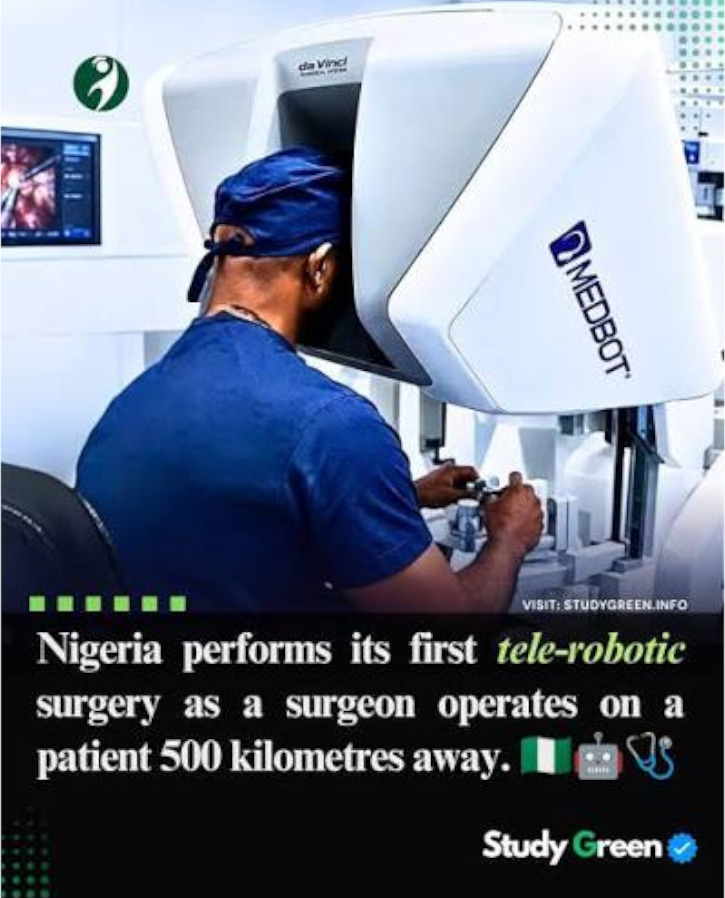
The Managing Director of Robo Medics, and founder and Chief Executive Officer of RoboMed Global Inc., Professor Obi Davies-Ekwenna is a Professor of urology and transplant surgery that has been involved in pioneering robotic surgical programmes in Nigeria and West Africa.

Davies-Ekwenna led the team that performed Nigeria’s first tele-robotic surgery, remotely operating on a patient in Abuja from Redeemer’s Health Village in Mowe, Ogun State.
The landmark procedure, announced on Saturday, September 19th, 2026 involved a robot-assisted right radical nephrectomy to remove a kidney affected by a cancerous tumour.
Davies-Ekwenna performed the operation from a Toumai robotic surgical console at Redeemers Health Village, RHV, while the patient remained at Nisa Premier Hospital in Abuja.
The surgical robot at the Abuja hospital was connected to the robotic control system at RHV through an internet connection, allowing the surgeon to operate on the patient remotely.
The procedure was carried out in real time, with Davies-Ekwenna’s movements in Ogun State transmitted to the robotic system at the Nisa Premier Hospital in Abuja.
Following the surgery, Davies-Ekwenna said the development demonstrated how tele-robotic technology could help overcome geographical barriers to specialist healthcare.
“We were able to operate on a patient in Abuja, 500 kilometres away. We were able to operate on a patient with a kidney tumour, a cancer tumour. And so that was successful,” he said.
He further revealed that the technology could expand access to specialist expertise beyond the location of the surgeon.
“It means access to experts from within and outside the country. Telesurgery can be done from any part of the world with precision, with excellent results,” the robotic surgeon said.
Robotic surgeon who led the procedure, Prof. Obi Davies-Ekwenna, during Nigeria’s first tele-robotic surgery
In a video shared by Redeemer’s Health Village on its Instagram page on Sunday, Davies-Ekwenna was seen thanking members of the medical teams in Abuja, Lagos and Ogun State after the procedure was completed.
He was also cheered by members of the team at the hospital following the successful operation.
Things to know about Obi Davies-Ekwenna
Davies-Ekwenna is a Professor of Urology and Transplant Surgery and a robotic surgeon. He is also the founder and Chief Executive Officer of RoboMed Global Inc. and the Managing Director of Robo Medics.
He is a professor at the University of Toledo
He is a Professor and Vice-Chair in the Department of Urology at the University of Toledo in Ohio, United States, where he also serves as Associate Director of the Urology Residency Programme.
Before becoming a professor, Davies-Ekwenna worked as an Assistant Professor of Urology and Transplantation and later as an Associate Professor.
Professor Obi Davies-Ekwenna, the Managing Director of Robo Medics…Photo Credit: YT/ Obi Ekwenna
Davies-Ekwenna has been involved in the development of robotic surgical programmes in Nigeria and West Africa, including the tele-robotic procedure that connected the medical team in Ogun State with a patient in Abuja.
He trained in urology and transplantation
His professional training includes an abdominal transplantation fellowship at the University of Miami, where he also completed his urology residency.
He obtained his medical degree from the University of Illinois College of Medicine after earning a bachelor’s degree in Biochemistry and Molecular Biology from the University of California, Berkeley.
Professor Obi Davies-Ekwenna, the Managing Director of Robo Medics
He holds professional certifications
Davies-Ekwenna is a Fellow of the American College of Surgeons and a Diplomate of the American Board of Urology.
The surgery
The procedure was a collaboration between Redeemer’s Health Village, RoboMed Global and Nisa Premier Hospital, Abuja.
Tele-robotic surgery, also known as remote surgery, allows a surgeon to operate on a patient from another location using robotic equipment and telecommunications technology.
In the Nigerian procedure, the patient was in Abuja while Davies-Ekwenna controlled the surgical robot from the RHV facility in Ogun State. Medical teams were present at both locations to support the procedure.
The operation marked a new stage in the country’s use of robotic surgery, following the development of RHV’s robotic surgery programme.
Davies-Ekwenna said the achievement was not only about completing one operation but also about developing the capacity to provide advanced surgical care to patients regardless of where they live.
He said the initiative could allow specialists in Nigeria and abroad to provide expertise to patients without requiring them to travel long distances or outside the country.
What next?
Following the successful operation, Davies-Ekwenna said continuous training would be important to sustain the technology.
He disclosed plans for a robotic academy that would train surgeons and other medical professionals, with a target of training at least 150 surgeons within two years.
The procedure brought together medical teams in Ogun and Abuja, with the robotic system enabling Davies-Ekwenna to perform the surgery remotely.
The successful operation could mark a significant development in the use of tele-robotic technology to expand access to specialist surgical care in Nigeria.
Health and Life Style
Kogi L-PRES Project Takes Delivery of Vaccines for Transboundary Animal Disease

From Joseph Amedu, Lokoja
The Kogi State Livestock Productivity and Resilience Support (Kogi L-PRES) Project, has taken delivery of its allocated vaccines from the L-PRES National Coordination Office, Abuja for mass vaccination against major Transboundary Animal Diseases (TADs) in Nigeria
The vaccination program under the L-PRES Project aims to improve animal health, enhance livestock productivity, food safety and security in Nigeria.
The vaccines were received in Lokoja, by the State Project Coordinator (SPC), Mr Abdulkabir Onoruoyiza Otaru and handed over to the Honourable Commissioner for Livestock Development, Dr Olufemi Bolarin.
Dr Bolarin commended the Federal Government’s initiative, saying the vaccines will benefit livestock farmers; pastoralists, poultry and small ruminant farmers in the state.
“The impact of this initiative is an increase in the livestock productivity as it would improve animal health,” he said.
Mr. Otaru, the Project Coordinator, described the vaccine delivery as a “critical intervention” that would enhance livestock productivity in Kogi State.
According to him, the vaccines include 200,000 Doses of CBPP vaccines, 30,000 Doses of Newcastle Disease vaccines (NCDV), and 3,000 Doses of Foot and Mouth Disease vaccines (FMDV).
The SPC explained that the vaccines would be administered to livestock at the 64 value chain clusters across the 21 LGAs of the state.
Mr Otaru noted that the vaccines would be stored in a cold chain facility established by the Kogi L-PRES project at the Ministry of Livestock Development in Kogi State.
He thanked the National Project Coordinator, Dr Sanusi Abubakar, for his result oriented leadership and the support to Kogi State.
Barr. Ken Agim, Legal Advisor, L-PRES Project, Abuja, who delivered the vaccines, stated that the initiative aligns with the federal government’s efforts to boost the livestock sector.
“The vaccines, procured by the Federal Ministry of Livestock Development through L-PRES, aim to combat transboundary and other diseases affecting livestock nationwide.
“The vaccines are being distributed simultaneously to all 36 states and the FCT, expected to enhance livestock productivity, resilience, and contribute to the economy.
“This follows a similar distribution exercise in 2024, which yielded positive results in boosting livestock productivity,” Agim said.
The move is seen as a step towards controlling TADs and boosting livestock productivity in the state.
Health and Life Style
Varsity Scholar X-rays Findings On Remote Work

From Joseph Amedu, Lokoja
Mrs. Oluwanifesimi Ibikunle, a scholar and lead author of a research group, from the Department of Project Management at the University of Northampton, in an interview with Our Correspondent, X-rayed her findings on remote work as well as new research which reveals why flexibility alone doesn’t guarantee employee satisfaction
Speaking on the Workplace Report of February 6th 2026, Ibikunle said that her research also reveals that Remote Work Makes IT Staff Happier, But Only When Done Right
According to her “Working from home has transformed from an occasional perk to a defining feature of the information technology sector, but new research reveals that simply allowing remote work doesn’t automatically make employees happier.
What matters is how that flexibility is structured, supported, and experienced.
“A conceptual study published in the International Journal of Social Sciences and Humanities Development examines why some IT professionals thrive working remotely whilst others struggle, despite having the same flexible arrangements. The findings challenge the assumption that location independence alone drives satisfaction.
“Remote work isn’t inherently good or bad for satisfaction,” explains Oluwanifesimi Ibikunle from the Department of Project Management at the University of Northampton, the study’s first author. “What matters is whether employees experience genuine autonomy, maintain strong relationships with their organisations, and receive adequate support for managing work boundaries.”
“The research identifies three critical factors that distinguish satisfying remote work from problematic arrangements: the quality of autonomy employees experience, the strength of their organisational relationships, and the adequacy of structural support for managing work-life boundaries.
“True autonomy means more than choosing where to work,” notes Dr Temiloluwa Ajibade from Health Business School at Health Science University in London. “It means having genuine control over how and when work gets done, being trusted to manage your own schedule, and having authority to make decisions without constant oversight. When remote work simply relocates micromanagement from the office to Zoom, satisfaction suffers.”
“Social Exchange Theory provides a lens for understanding these dynamics. When remote employees believe their organisation cares about their wellbeing, provides necessary resources, and values their contributions, satisfaction increases substantially. “The strength of organisational relationships doesn’t depend on physical proximity,” argues Dr Kennedy Oberhiri Obohwemu, Senior Researcher and Project Coordinator of PENKUP Research Institute in Birmingham. “What matters is whether employees feel valued, supported, and connected to organisational goals.”
“Work-life balance emerges as particularly complex. Flexibility theoretically allows better integration of professional and personal responsibilities, but the same flexibility can create work-life blur where boundaries dissolve and work expands to fill all available time.
“Work-life balance requires boundaries, not just flexibility,” observes Dr Christianah Adekunbi Falade from the Department of Business Management at Scholars School System in Bradford. “Remote workers need clear expectations about when they’re available, explicit permission to disconnect outside working hours, and organisational cultures that respect boundaries rather than expecting constant responsiveness.”
Individual circumstances matter enormously. “We can’t treat remote work as a one-size-fits-all solution,” notes Dr Charles Leyman Kachitsa from Leeds Trinity University. “What works brilliantly for one employee might be terrible for another depending on their living situation, personality, work style, and life stage.”
The IT sector’s technical sophistication creates a paradox. “IT professionals are comfortable with technology but that doesn’t mean they’ve figured out healthy ways to use it,” observes Oladipo Vincent Akinmade from the Digital Health and Rights Project at the University of Warwick. “Being able to work anywhere, anytime through digital tools doesn’t mean you should. The always-on culture enabled by technology can be particularly intense in the IT sector.”
“The findings offer practical guidance. “Remote work requires deliberate organisational design,” argues Oluwafemi Emmanuel Ooju from the World Health Organisation in Abuja. “You can’t just tell people to work from home and expect everything to work out. Organisations need policies on availability expectations, investment in collaboration technology, and mechanisms for maintaining organisational culture.”
“Trust matters more than surveillance. Dr Eddy Eidenehi Esezobor from Universidad Católica San Antonio de Murcia notes: “Some organisations respond to remote work with monitoring software that tracks activity. This approach undermines the autonomy that makes remote work satisfying, treating employees as potential shirkers rather than trusted professionals.”
“Future research needs to examine long-term effects. “Most research examines short-term satisfaction, but questions remain about career development, innovation, and sustainability of remote arrangements over many years,” observes Daniel Obande Haruna from St. Mary’s University in London.
“The question isn’t whether remote work is good or bad,” concludes Dr Festus Ituah from Regent College in London. “It’s under what conditions remote work supports satisfaction, wellbeing, and performance. Understanding those conditions allows organisations to design practices that genuinely enhance employee experience rather than just reducing office costs whilst calling it flexibility.”
“The research, “Remote Working and Employee Satisfaction in the Information Technology Sector: A Conceptual Reappraisal Grounded in Wellbeing and Work Experience,” appears in the International Journal of Social Sciences and Humanities Development, Volume 3, Issue 2. The study was conducted by researchers from institutions across the UK, Spain, and Nigeria, with support from PENKUP Research Institute in Birmingham.
-
 Entertainments4 years ago
Nollywood Produces 541 Movies in 2022 First Quarter – NFVCB
-
 News7 years ago
I will Maintain High Decorum – Hon Monguno
-

 News5 years ago
2021 Ethics And Integrity Compliance Scorecard Of MDAs: ICPC Scores Censors Board High
-

 Business and Economy4 years ago
Non-interest TAJBank Reports 433% PBT in 2021 Financial Year
-
 Entertainments7 years ago
Censors Board Trains, Gives Grant to 100 Youths in Nasarawa State
-
 News4 years ago
ICDA North Central: Prince Oruma Sues for Igala Unity
-
 AWF7 years ago
AWF to Feature Adedokun, Kawu and Okah-Donli for April Guest Writer Session
-

 News3 years ago
Full List of The New Ministers and Their Portfolio