Opinion
When Wind Blows: Regulatory Failures All Over The Place
I don’t seem to get it. Almost all our regulatory bodies in Nigeria, are busy telling us what is going wrong in the sectors they are regulating, instead of tackling the wrongs.
If we are not aware of the wrongs, will the regulatory bodies be set up in the first place?
The Nigerian Electricity Regulatory Commission (NERC) is busy telling us, it’s the duty of the Distribution Companies (DISCOs) to meter consumers, that the DISCOs are not following their estimated billing methodology. [adrotate banner="51"] And are yet tackle the DISCOs and compel them to meter every consumer. Rather there is this back and forth, over whose duty or responsibility it is, to meter consumers.
The EFCC is also telling us how fraudsters are also inside the banks, and are assisting politicians to launder money for them. Meanwhile, the EFCC has never been able to tell us, how much they have recovered from EACH of the person they said they have been able to obtain convictions on, over time.
The NCC is also telling us how kidnappers are using pre-registered SIM cards to perpetrate their crimes. And it’s because of their regulatory lapses, that unregistered SIM cards were activated in our GSM Network provider’s platforms, from the very beginning. Which has birthed the menace of the pre-registered SIM cards. Instead of making sure, no Pre-registered SIM card, and unidentified persons can access our Telecoms platforms, they are narrating the problem.
The Federal Mortgage Bank and/or the Ministry of Power, Works & Housing are telling us of about 17 Million housing deficit in Nigeria. Whereas, the National Housing Fund (NHF) has Billions of naira in its kitty, the funds are being disbursed to estates developers, whose houses, majority of the NHF contributors cannot afford them. So, there are empty houses all over the place, and many NHF contributors don’t have a house of their own. And Shagari built houses all over the places across the country in his era, without any Housing fund in existence then.
For their information, we are aware of the problems before they were established to tackle them. If they don’t have the well with thou, to carry out the tasks, they should tell us. Some among us are ready and willing to tackle some of the challenges head on.
Author Profile
Latest entries
- OpinionMay 11, 2020WHEN WIND BLOWS: Who are and will be the true and sincere stakeholder in Nigeria?
 When Wind BlowsMay 6, 2019When Wind Blows: Whose Responsibility Is It To Take The Bull By The Horn?
- OpinionApril 11, 2019“When Wind Blows” Lobbying & Lobbyists.
- OpinionApril 9, 2019When Wind Blows: Regulatory Failures All Over The Place

Opinion
Rep Members Do Not Sell Contracts: Boniface Adie Must Cease the Barefaced Lies Against Hon. Peter Akpanke
By Clement Abuo
Marcus Tullius Cicero (106–43 BCE), the renowned Roman orator, lawyer, statesman, and philosopher, once observed that “as fire, when thrown into water, is cooled and extinguished, so also a false accusation, when brought against a man of pure and holy character, boils over, dissipates, and vanishes.
adsbygoogle || []).push({});
[adrotate banner="51"]”
This timeless reflection aptly captures the nature of the unfounded and misleading allegations recently made against Hon. Peter Akpanke. Lies, no matter how loudly proclaimed or persistently repeated, cannot outweigh truth, integrity, and a record of noble character.
It is therefore unsurprising that the accusations leveled against Hon. Peter Akpanke collapsed under the slightest scrutiny. No reasonable or fair-minded individual can take seriously allegations coming from a man who openly admits to fraudulent conduct and then paradoxically turns around to claim victimhood.
Such contradictions strip the accusations of credibility from the outset.
To state the facts clearly and unequivocally, members of the House of Representatives—just like their counterparts in the Senate—do not sell contracts. They do not own contracts, they do not bid for contracts, and they do not execute contracts. Their constitutional role is limited to nominating constituency projects, after which the relevant ministries, departments, and agencies handle procurement and execution in line with established procedures. Any claim suggesting otherwise is either born out of ignorance or driven by deliberate malice.
Against this backdrop, one is compelled to question the motive behind Boniface Adie’s hurried dash to the public space with such poorly constructed allegations. He openly admitted to giving out money to “buy” contracts, without pausing to consider the legal, moral, and logical implications of such a claim. How does one admit to an act of corruption and then expect public sympathy? More importantly, how does one claim to buy what does not exist in the custody of a legislator?
Boniface Adie further attempted to emotionally blackmail the public by dragging Hon. Peter Akpanke into his family matter, citing the illness and eventual death of his brother. He admitted that Hon. Akpanke showed concern and reached out, yet he argued that the Honourable Member was obligated to shoulder the entire medical expenses simply because he represents the constituency. This line of reasoning is not only illogical but also reveals a gross misunderstanding of the responsibilities of a lawmaker.
A member of the House of Representatives cannot possibly attend to every personal challenge faced by constituents while simultaneously performing legislative duties—participating in debates, sponsoring bills, raising motions, and advocating for infrastructure and development. Such expectations are unrealistic and, frankly, unreasonable.
Despite this, Hon. Peter Akpanke has consistently gone beyond the limits of his constitutional mandate. He has organized general health outreaches across his constituency, offering free medical services to individuals facing serious health challenges and who cannot afford even basic check-ups.
Those requiring treatment have received care, while others in need of medication support have been assisted financially. These humanitarian gestures, though not required by law, have been undertaken voluntarily and with genuine compassion.
It is therefore deeply uncharitable and misleading to suggest that Hon. Peter Akpanke must personally shoulder every hardship faced by every constituent.
In what can only be described as desperation, Boniface Adie went as far as urging a television station, during a live broadcast, to call the wife of Hon. Peter Akpanke to explain an alleged contractual transaction. One must ask: since when do contractual dealings between two consenting adults require spousal interrogation—especially on live television?
This action exposes the extent to which sensationalism and blackmail were being prioritized over truth and ethics.
Boniface Adie attempted to justify this reckless behavior by claiming that Hon. Peter Akpanke was unreachable. This claim is disingenuous, as he was fully aware of the Honourable Member’s office address and had, by his own admission, contacted him repeatedly, sometimes through his aide.
The decision by the television station to proceed with the broadcast despite knowing that Hon. Akpanke was unavailable raises serious ethical questions. Should Hon. Akpanke later establish his innocence conclusively, how does one undo the reputational damage caused by such premature and one-sided accusations?
Equally troubling is Boniface Adie’s claim that he was approached to buy contracts to fund his election after a failed attempt to become a local government chairman. According to him, this approach was made by someone he identified as “Charlie Emeji,” allegedly an aide to Hon. Peter Akpanke. However, there is no individual by that name serving as an aide to Hon. Akpanke. This fact alone casts significant doubt on the authenticity of the entire story.
Furthermore, Boniface Adie admitted that the so-called meeting took place without the presence of Hon. Peter Akpanke. If that is the case, then it is only logical to conclude that impersonation with the intent to extort may have occurred. Anyone can claim to be an aide to a public office holder, especially when such impersonation serves personal gain.
Boniface Adie must therefore clarify his contradictory claims.
In one instance, he said he paid money to buy contracts; in another, he said the money was meant to facilitate contracts. Both claims are mutually inconsistent and unsupported by verifiable evidence. As already established, members of the House of Representatives do not own contracts and cannot sell or facilitate what is not within their authority.
It would have been more prudent to allow room for peaceful and amicable resolution of any perceived grievance, rather than embarking on a smear campaign fueled by speculation, inconsistencies, and political undertones.
As elections approach, it is not unusual for political opponents to clutch at straws in their bid to discredit perceived threats. Unfortunately, individuals of weak judgment often allow themselves to be used as tools for such schemes, lending their voices to narratives designed to mislead the public.
Hon. Peter Akpanke remains a dedicated, diligent, and hardworking representative of the Obudu/Bekwara/Akamkpa (OBA) Federal Constituency. He has consistently raised motions in the House and advocated policies aimed at improving the welfare of his people. His constituents continue to express satisfaction with his representation.
He has executed numerous constituency projects geared toward transforming infrastructure and improving living standards across OBA. In the education sector, he has supported students through scholarships, sponsorship of JAMB forms, renovation of classrooms, and other impactful interventions.
It is only fair and reasonable to allow Hon. Peter Akpanke to continue the work for which the people entrusted him with their mandate.
Boniface Adie must therefore desist from being used as a cheap instrument of blackmail by political actors nursing failed ambitions and plotting toward 2027.
Clement Abuo is an Abuja-based public affairs analyst and commentator. He can be reached at clemabuo@gmail.com.
Author Profile

- Prince Abdulrahman Obaje is a Media, Information and Computer Technology Consultant. A quintessential Journalist, online marketer, social media strategist, Mathematician and Computer Scientist is based in Abuja, Nigeria. He is the Founder and the Publisher of The Informavores!. You can reach me on +234 805 939 5252 or send i-witness report directly to me on news@informavores.com.ng.
Latest entries
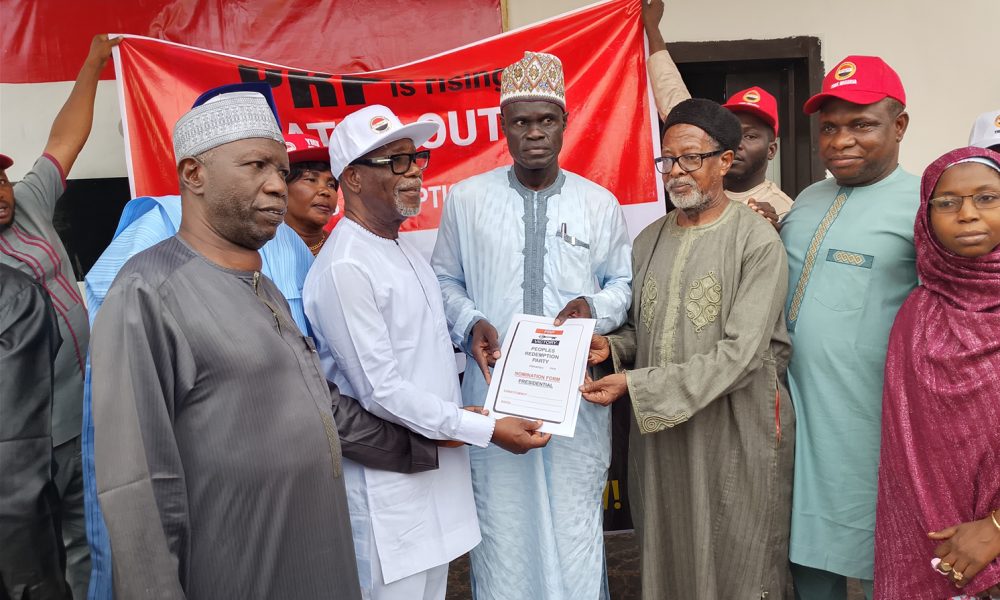 PoliticsMay 1, 20262027 Presidential Election: YMK Emerges First Presidential Candidate, Contesting Against President Tinubu
 PoliticsApril 23, 2026Yunusa Charges Team to intensify coordination, discipline as YMK Nigeria Steps on PRP Platform for 2027 Presidential Election
 PoliticsApril 20, 2026Kogi Central APC Stakeholders Kick Against Imposition of Unpopular Candidate Endorse Obaro
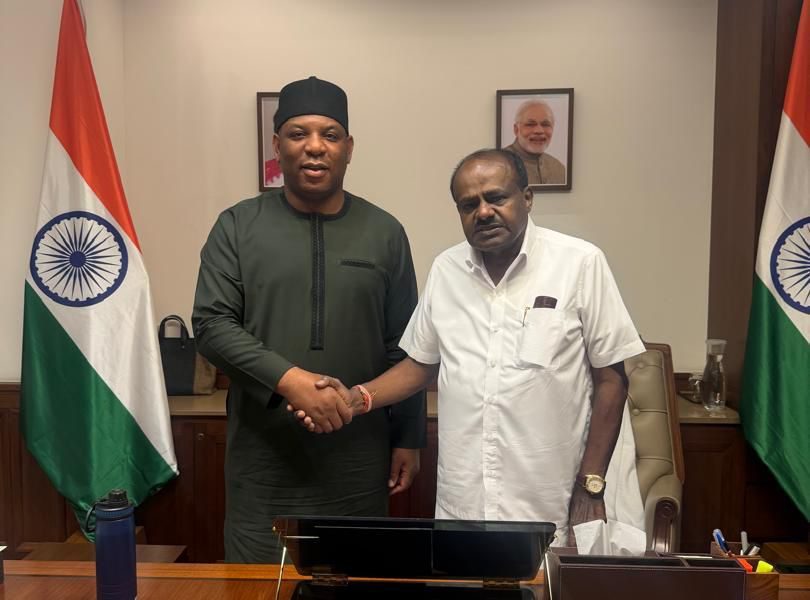 Steel and MineApril 19, 2026Nigeria Deepen Bilateral Ties With India to Develop the Steel and Mines Industry
Opinion
LIES VS FACTS: Revisiting The Aregbesola Years In Osun

By Gbenga Shaba
Public debates about Rauf Aregbesola’s time as Osun governor often swing between praise and criticism, but many arguments overlook the economic realities of that period. The nationwide recession from 2014 to 2016 hit state finances hard, with 23 states unable to pay salaries at all.
adsbygoogle || []).push({});
[adrotate banner="51"] Osun faced a sharp drop in federal allocation and internally generated revenue, forcing difficult decisions.
One of the biggest misconceptions is that Aregbesola intentionally paid half salaries. In reality, the Labour Government Salary Apportionment Committee, which was made up of labour leaders and government officials, jointly agreed on a temporary modulated payment structure to prevent mass layoffs. Throughout the recession, over 70 percent of workers (junior staff, teachers, health workers and local government employees) continued receiving full salaries and pensions. The modulation applied mainly to senior officers and political appointees.
Another widespread falsehood is that Aregbesola’s successor, Gboyega Oyetola, inherited the salary modulation. Records show this is untrue. A few outstanding balances of the modulated salaries were already cleared before Aregbesola handed over, and full salary payment had resumed eight months before the end of his administration.
Beyond the salary debate, Osun continued major development programmes. The School Feeding initiative served 254,000 pupils daily and later became a national policy. Thousands of classrooms were constructed or rebuilt, the OYES youth programme absorbed unemployed youths, and road projects continued across the state despite the financial strain.
It is true that the recession created emotional and financial pain for many families, and their feelings are valid. But emotions cannot replace verified facts. Transparency was maintained throughout the crisis, and Aregbesola’s strong grassroots support today reflects public recognition of his long term developmental impact.
The Aregbesola years were a mix of economic challenges and visible transformation. Narratives based on half truths may trend online, but they cannot erase the documented reforms, infrastructural investments and social programmes that reshaped Osun during one of Nigeria’s toughest economic periods.
Author Profile
- Prince Abdulrahman Obaje is a Media, Information and Computer Technology Consultant. A quintessential Journalist, online marketer, social media strategist, Mathematician and Computer Scientist is based in Abuja, Nigeria. He is the Founder and the Publisher of The Informavores!. You can reach me on +234 805 939 5252 or send i-witness report directly to me on news@informavores.com.ng.
Latest entries
- PoliticsMay 1, 20262027 Presidential Election: YMK Emerges First Presidential Candidate, Contesting Against President Tinubu
- PoliticsApril 23, 2026Yunusa Charges Team to intensify coordination, discipline as YMK Nigeria Steps on PRP Platform for 2027 Presidential Election
- PoliticsApril 20, 2026Kogi Central APC Stakeholders Kick Against Imposition of Unpopular Candidate Endorse Obaro
- Steel and MineApril 19, 2026Nigeria Deepen Bilateral Ties With India to Develop the Steel and Mines Industry
Opinion
Is Nigeria Becoming A Failed State Under President Tinubu?

By Gbenga Shaba
Nigeria is currently at one of the most troubling security crossroads in its history. The scale and frequency of violent attacks, mass abductions, territorial infiltration by bandits and terror groups, and the collapse of safety in many communities have raised serious questions about the capacity of the state to protect its citizens.
com/pagead/js/adsbygoogle.js">
[adrotate banner="51"] When a government begins to lose the ability to secure lives, enforce law and order, and guarantee the safety of children in schools, the debate about state failure becomes unavoidable.
Across the northern region, the wave of kidnappings and attacks has forced governments to take drastic measures. Katsina State ordered the immediate closure of all government schools. Taraba State directed that all secondary schools should operate only as day schools. These decisions were not made out of convenience. They were made out of fear. They were made because students have become targets, and schools have become vulnerable grounds. Education, the foundation of national development, is now under threat.
In recent weeks, the scale of kidnappings has escalated sharply. In Niger State, 34 students and three teachers were abducted from a government secondary school. They spent several days in captivity, enduring harsh conditions with limited food and water. Negotiations for their release were tense, with parents and authorities working tirelessly to secure their safe return. In Kebbi State, more than 40 children and 10 staff members were abducted from a private academy. The victims described being blindfolded, bundled into vehicles, and transported through forested areas under armed guard. In several other incidents across Kaduna, Zamfara, and Katsina, hundreds of men, women, and children have been taken in separate attacks, some held for weeks before rescue or ransom payments were made.
As if that was not enough, just few hours ago, some residents of Isapa in Kwara were abducted. Pregnant women, nursing mothers and children were allegedly abducted.
The ordeal for these children and their families is traumatic. Parents live in constant fear of the next attack, and even when children are rescued, they often return home in shock and fear. Many students have developed anxiety about returning to school, and communities are traumatized, with the memories of abduction and violence lingering long after the victims are freed.
Even more worrying is the deepening culture of ransom payments. Reports indicate that over ₦1 billion has been paid to bandits in recent weeks alone. This alarming trend not only empowers criminal networks but also signals the state’s weakening control. When kidnappers see consistent payouts from the government or local authorities, it encourages further attacks, creating a vicious cycle of fear and extortion.
This raises a critical question: Is Nigeria drifting toward a failed state under the current administration?
A country moves toward failure when the government can no longer protect its citizens, secure its borders, enforce laws, provide essential services, and maintain public confidence. Judged by these indicators, Nigeria is showing many worrying signs. The strength of non-state armed groups is rising. Large parts of the country are becoming ungoverned spaces. Communities are living under constant fear. Schools are shutting down. Businesses are relocating. Farmers are abandoning their fields. Ordinary Nigerians no longer trust the state to safeguard their lives.
President Tinubu came into office with promises of firm action on security. Nearly two years later, the practical reality suggests that insecurity is expanding faster than the response to it. Despite efforts by the security agencies, violent groups remain active and resilient. The lives of citizens are increasingly threatened, and the confidence in government’s capacity to reverse the trend is weakening.
It is therefore understandable when analysts conclude that the government is failing in the area of security. Citizens like Deacon Olanrewaju have voiced what many Nigerians feel: children are now staying at home not because of a pandemic but because of fear. Communities are shutting down not because of a virus but because of terror. The country is experiencing a form of paralysis driven by violence and fear.
Just like COVID-19, insecurity is gradually locking Nigeria down.
During the COVID era, movement was restricted, economic activities were disrupted, and schools were forced to close. Today, Nigeria is witnessing the same pattern, but the cause is not a global disease. It is insecurity. Communities are avoiding travel. States are closing schools. Businesses are shrinking their operations. Citizens live indoors once the sun sets. The sense of national freedom is shrinking under the weight of fear.
Nigeria may not yet be officially classified as a failed state, but the signs are becoming too visible to ignore. Without urgent, intelligent, and coordinated action, the country risks sliding deeper into a security crisis that will be harder to reverse.
Just like Simon Kolawole recalls what President Bola Tinubu said years ago. I recall that on November 5, 2014, in Ilorin, Kwara State, at a rally organised by Governor Abdulfatah Ahmed to declare his second-term bid, the APC leaders spoke one after the other about insecurity in Nigeria. Among those in attendance were Gen Muhammadu Buhari, then a presidential aspirant, Alhaji Abubakar Atiku, also an aspirant, Rt Hon Aminu Tambuwal, then speaker of the house of reps, and Alhaji Lai Mohammed, then the APC spokesman. Tinubu, who was the national leader of the party, said I saw the sea of refugees caused by the Boko Haram insurgents and the lies coming from Jonathan’s administration. They have exhibited failure, lack of capacity, vision and creativity.
He went further. The lies of yesterday are what they repeat today and are what they will repeat tomorrow. If you control the armed forces and you are the Commander-in-Chief, why should any part of this country be under occupation? And you give us excuses every day. In any civilised country, Jonathan should have resigned. But if he will not resign, he should wait for our broom. We will sweep him away.
They swept Jonathan away. But here we are, a decade later.
Tinubu is now the Commander-in-Chief, but Nigeria remains under siege. We could poke fun at the APC today and say they are only getting a dose of their own medicine. But it is human lives, the lives of Nigerians, that we are talking about here. We are talking about a reign of terror, about helpless Nigerians being abducted, about hapless Nigerians being killed for fun. If nothing else, it should make us sober. If nothing else, we should learn from our past and put politics aside regarding matters of security.
This is the moment for honest reflection and decisive leadership. What Nigeria faces today is not just a temporary challenge. It is a test of the state’s ability to protect its people and preserve its sovereignty. The longer this insecurity wave continues, the closer the nation moves toward the edge of failure.
Author Profile
- Prince Abdulrahman Obaje is a Media, Information and Computer Technology Consultant. A quintessential Journalist, online marketer, social media strategist, Mathematician and Computer Scientist is based in Abuja, Nigeria. He is the Founder and the Publisher of The Informavores!. You can reach me on +234 805 939 5252 or send i-witness report directly to me on news@informavores.com.ng.
Latest entries
- PoliticsMay 1, 20262027 Presidential Election: YMK Emerges First Presidential Candidate, Contesting Against President Tinubu
- PoliticsApril 23, 2026Yunusa Charges Team to intensify coordination, discipline as YMK Nigeria Steps on PRP Platform for 2027 Presidential Election
- PoliticsApril 20, 2026Kogi Central APC Stakeholders Kick Against Imposition of Unpopular Candidate Endorse Obaro
- Steel and MineApril 19, 2026Nigeria Deepen Bilateral Ties With India to Develop the Steel and Mines Industry