
Business and Economy
Kaduna Senator Introduces ‘Factoring Bill’ to Promote Nation’s International Businesses
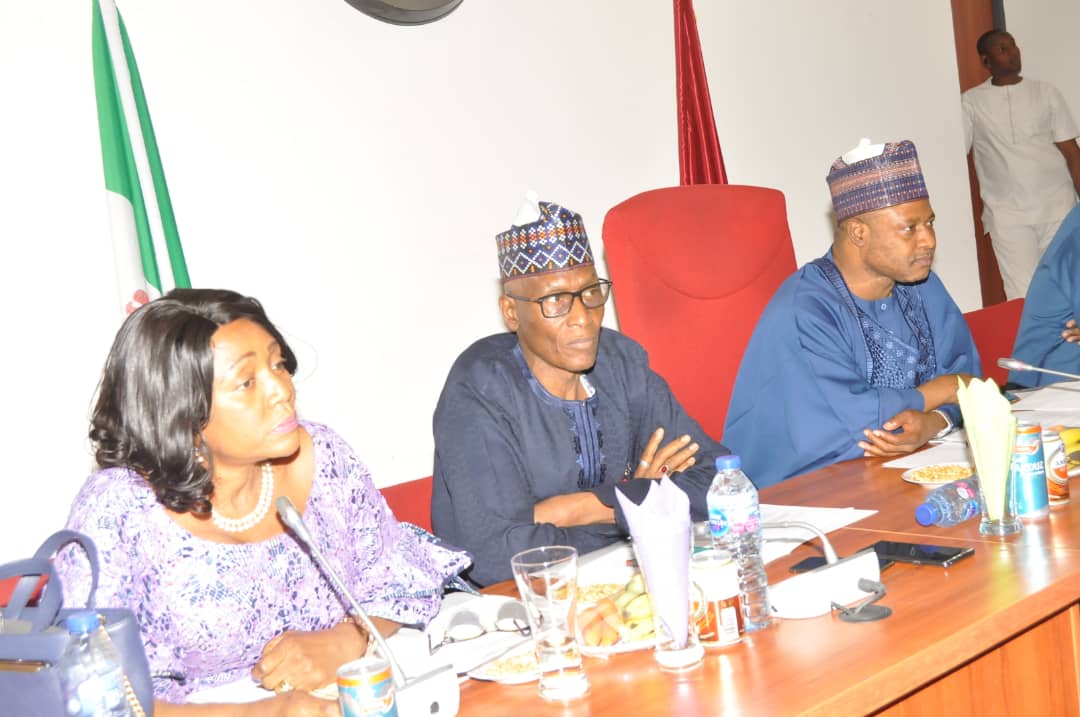
Senator representing Kaduna Central Senatorial district, Uba Sani disclosed on Monday that he would introduce ‘Factoring Bill’ to grow import and export businesses in Nigeria.
Senator Sani who is the Chairman of Senate Committee on Banking, Insurance and other Financial Institutions, expressed hope that the proposed Factoring Bill will strategically serve as a catalyst for more financial flow in the trade sector as well as complementing the giant efforts of government in diversifying the nation’s economy.
Speaking at a meeting with the Nigerian Factoring Group at the National Assembly in Abuja, the lawmaker was “delighted at the opportunity to robustly engage the Nigerian Working Group on Factoring and members of the African Working Group on the promotion of Factoring in Nigeria”.
He further stated: “As we are all aware, Factoring is an essential component in international trade and plays a significant role in the promotion of of export and import activities of a country by providing the needed platform for businesses to accelerate their cash flow.
“Factoring Bill, if passed into law will also promote the integration of Nigeria into the global Factoring market and enhance contributions of Small and Mediums Enterprises.
“SMEs to non-oil export trade, particularly within the context of African Continental Free Trade Area, thus hoping to support the diversification, objectives of the Federal Government of Nigeria under the Economic and Growth Plan”.
The meeting which was aimed at engaging strategically and forging a partnership to quicken the passage of the Nigerian Factoring Bill had the managing Director, Intra-African Trade Initiatives, African Export-Import Bank, Secretary General of Factor Chain International (FCI), MD, Nigerian Export-Import Bank and representative of the Central Bank of Nigeria.





Business and Economy
President Tinubu Said The $12m Entrepreneurship Centre In Abuja Will…
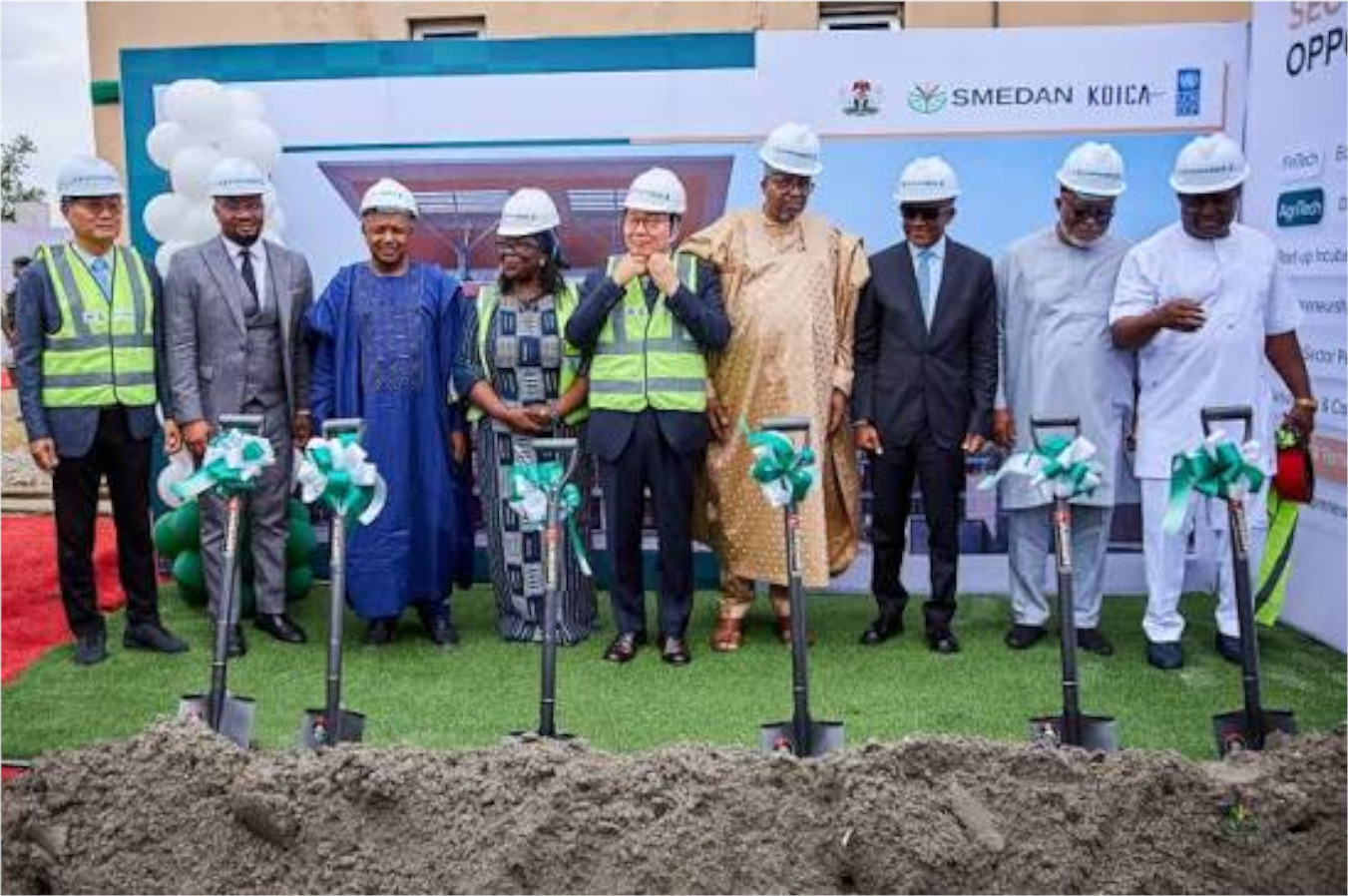
President Bola Ahmed Tinubu welcoming the construction of the $12 million Abuja Centre for Entrepreneurship, said the project will strengthen Nigeria’s MSME ecosystem and help more businesses grow, while more jobs would be created with expanded economic activity. adsbygoogle || []).push({});
This is contained in a statement on Tuesday, September 23, 2026, by his Special Adviser on Information and Strategy, Bayo Onanuga. The statement further revealed President Tinubu saying the Centre would help in establishing, strengthening and growing businesses.
The Centre, funded by the Republic of Korea through the Korea International Cooperation Agency (KOICA), is being developed at the SMEDAN Industrial Development Centre in Idu, Abuja, in partnership with the Federal Government through SMEDAN and the United Nations Development Programme (UNDP).
“Small businesses are an important part of our economy. They employ people, support families and create activity in communities across the country,” the President said.
“Many entrepreneurs already have the ideas and the determination to succeed. What they often need is better access to facilities, technology, training and the support that can help their businesses grow. This Centre will provide more of that support and strengthen the ecosystem around them.”
The Centre will support the wider MSME and entrepreneurship ecosystem, providing facilities, technology, training and enterprise support for aspiring entrepreneurs, start-ups and growing businesses, with an initial target of 500 entrepreneurs, 400 start-ups and 1,500 MSMEs.
About $5.9 million will go into construction, while $6.1 million will fund equipment and programmes for entrepreneurs and businesses.
According to the statement, ACE will provide workspaces, digital facilities, training, incubation and enterprise support for entrepreneurs, start-ups and growing businesses.
It will serve businesses in Abuja and surrounding cities, including Kaduna, Jos, Keffi, Lafia, Minna, Makurdi and Lokoja, while contributing to a stronger entrepreneurship and MSME ecosystem across Northern Nigeria.
President Tinubu said the Federal Government would continue to expand conditions that allow small businesses to grow and compete.
“We want more Nigerians to be able to start businesses, grow them and employ others. We also want existing small businesses to have better access to the tools and support they need to become stronger and more productive. That is important for jobs, incomes and the wider economy,” he said.
The President said the project complements the administration’s wider investments in digital skills, entrepreneurship, enterprise development and support for MSMEs.
The Centre has also been designed to accommodate women and persons with disabilities. It will include accessible facilities and crèche services for women with young children.
While construction is ongoing, SMEDAN, KOICA and UNDP will work with universities, incubators, financial institutions, private-sector organisations and entrepreneur networks to build a wider support system around the Centre and identify businesses that can benefit from its programmes.
President Tinubu thanked the Government of the Republic of Korea for the $12 million investment and commended KOICA, UNDP and SMEDAN for bringing the project to the construction stage.
He said Nigeria would continue to welcome investments and partnerships that strengthen local businesses, deepen enterprise development and create more jobs.
Business and Economy
Dangote IPO Not a Magic Wand to wealth
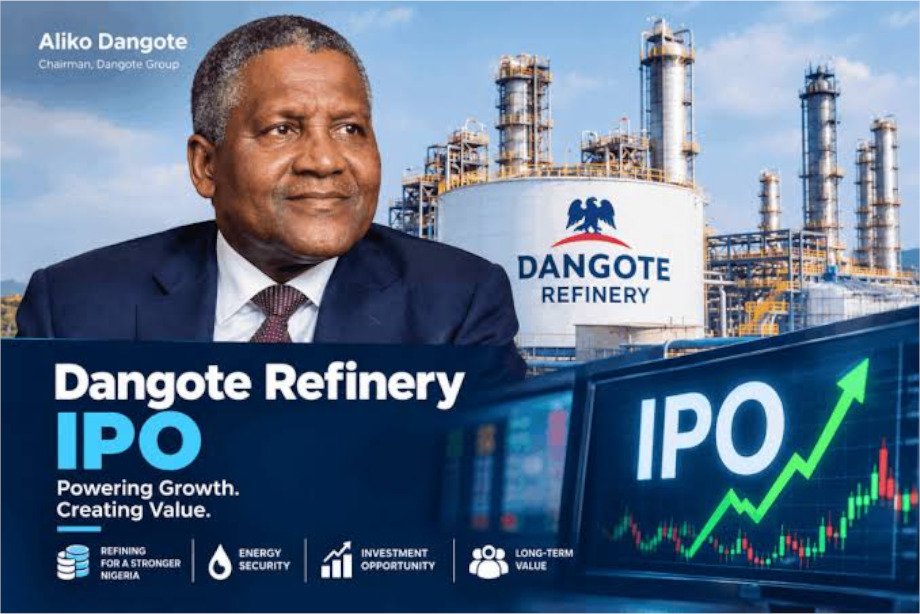
The high expectation for immediate profit as being expressed especially by new investors who participated in the Dangote IPO from their investment may land them in disappointment, after all.
This much has been highlighted by BusinessDay’s analysis of Ifeoluwa Balogun, as a case study, whether real or an imaginary figure, captures the excitement around Dangote Refinery’s public offer.
googlesyndication.com/pagead/js/adsbygoogle.js">
For instance, Balogun optimistically says:
“I bought Dangote shares that are worth N42,000. I am expecting to cash out big time to buy something valuable, at least a piece of land in Imowe-Ibafo, Ogun State.”
To have hope is good. But to be definite about what you are not in control of may trigger unpleasant consequences. For example, the Baloguns may not know that Dangote’s: “N2.15 trillion IPO is creating access to ownership, not a shortcut to wealth. With 4.1 billion shares offered at N525 each and a minimum subscription of just 10 shares, the offer is bringing equity ownership within reach of ordinary Nigerians. What happens to their money after the subscription, however, will depend on the refinery’s future earnings, cash generation and share-price performance,” it has pointed out.
This case study goes further with the analysis: “For Balogun, N42,000 buys 80 shares before applicable charges. If the shares eventually reach N1,050, his holding would be worth N84,000. If they reach N5,250, it would be worth N420,000. Neither outcome has a timetable, and neither price is guaranteed.”
That distinction is becoming important as the Dangote IPO draws first-time investors into Nigeria’s stock market.
The offer is scheduled to close on October 13, having been opened to the public on September with the minimum subscription set at N5,250.
Sure, investors are buying a stake in a business that has recently demonstrated substantial earning power. Dangote Refinery reported $13.91 billion in revenue in the first half of 2026, alongside $2.60 billion in EBITDA and $1.82 billion in net profit, according to BusinessDay. The result marked a sharp turnaround from the loss recorded in 2025.
“Those numbers explain the enthusiasm around the offer. But an equity investor is buying future earnings, not simply the latest six months of profit.” In addition, it’s important to note that:
“The refinery operates in a volatile global business. Its earnings are exposed to crude-oil costs, refined-product prices, refining margins, foreign exchange, demand and international energy-market conditions. A strong first half does not guarantee that future periods will produce the same results.”
The company’s future expansion also matters. Dangote says the refinery has crude-distillation capacity of 700,000 barrels per day and plans to expand that to 1.4 million barrels per day. Basically, ” The wider complex includes petrochemicals, storage, marine infrastructure and logistics.
“For shareholders, therefore, the investment case extends well beyond the IPO. The value of their shares will depend on whether the company can sustain production, expand profitably, manage its financial obligations, generate cash and return value to shareholders. That makes the distance between owning shares and becoming wealthy important.”
If Balogun’s 80 shares rise from N525 to N1,000, his holding would be worth N80,000. But that increase remains a market gain until he sells. If the market price falls below N525, the value of his investment falls instead. The investor therefore has to live with the market’s timing.
Someone who expects the shares to finance a land purchase within a particular period could be forced to sell earlier than planned, potentially at a price below expectation. The market does not adjust its timing to an investor’s financial needs.
It’s in view of these fluctuating realities that the regulator, “The Securities and Exchange Commission has urged prospective investors to read the approved prospectus and understand the terms and risks before subscribing. It has also warned against people or platforms promising guaranteed allocations or returns.”
The significance of the IPO is therefore broader than whether Dangote shares rise after listing. It is introducing more Nigerians to ownership of productive assets at a time when household incomes remain under pressure. But ownership comes with uncertainty: the investor participates in both the gains and the risks of the business.
The punchy end of the discourse is even more important: “For Balogun, the more useful question is not how quickly N42,000 can become enough to buy land. It is whether he can afford to hold the investment long enough for the underlying business to create value. The Dangote IPO can put ownership within reach of ordinary Nigerians. It cannot put a guaranteed fortune within reach overnight.”
Business and Economy
Nigeria’s Recapitalised Banks Position as Engines of $1 Trillion Economy at London Capital Forum

By AbdulRahman Obaje
With 32 banks meeting new capital requirements and 72 per cent of funds raised domestically, Nigeria’s banking sector emerges from its most significant reform cycle as the primary engine of the country’s capital mobilisation agenda
LONDON — When Nigeria’s banking recapitalisation exercise was announced, the debate centred largely on compliance: which banks would meet the threshold, and by when.
At The Africa Capital Forum’s inaugural convening in London on Tuesday, the conversation had moved on entirely. The question was no longer whether Nigeria’s banks could recapitalise. It was what a recapitalised Nigerian banking sector could now do for a $1 trillion economy.
The answer, according to the chief executives who gathered at The Peninsula London alongside President Bola Ahmed Tinubu’s UK state visit, is considerable.
Akin Ogunranti, Executive Director of Zenith Bank, set the tone early. “We need to give ourselves credit,” he told delegates. “The fact that over 72 per cent of the capital was raised locally is a major milestone.” That figure carries weight beyond optics. It signals that Nigerian capital markets are deepening, that domestic investors have confidence in the banking sector’s trajectory, and that the foundation for long-term growth is being built from within.
CBN Governor Olayemi Cardoso was direct about what the sector has become. “We are very proud of what the Nigerian banks have been able to accomplish,” he said. “They play a dominant role on the African continent and in the United Kingdom. They are our ambassadors.” Thirty-two banks have now met the CBN’s new capital requirements, and Cardoso described the system that has emerged as categorically different from what preceded it. “The financial system we had is dead and buried. What we have now is a new system that has brought liquidity and transparency.”
The implications for the broader economy were spelled out across the afternoon’s sessions. Yemisi Edun, Managing Director of First City Monument Bank, noted that recapitalisation had directly expanded the credit available to businesses: “The raised capital has created expansion of credits. The new recapitalisation has given more credibility to what we can do as industries.” Segun Alebiosu, Managing Director of First Bank, made the international dimension explicit. “With currency reforms, Nigerian banks will be able to take home bigger transactions. We can do more, and crowd new investments.” He added that Nigerian banks today maintain at least seven operations in the United Kingdom alone.
The scale of Nigerian banking’s continental footprint was perhaps most vividly illustrated by Oliver Alawuba, Group Managing Director of UBA, who noted that over 65 per cent of the bank’s revenue now comes from outside Nigeria. “That means that we can do more in Africa,” he said.
That outward reach is not incidental to the $1 trillion economy agenda. It is central to it. Miriam Olusanya, Managing Director of Guaranty Trust Bank, pointed to the restoration of correspondent banking relationships as a structural shift: “The confidence has been restored and corresponding banking relationships will continue to grow.” Those relationships determine Nigeria’s ability to facilitate cross-border trade, attract foreign investment, and participate in the global capital markets at the scale a $1 trillion economy requires.
Sanyade Okoli, Special Adviser to the President, framed the government’s position plainly: “The government alone cannot fund this growth. We need to work with partners who will bring the sticky, equity capital.” A recapitalised, internationally credible banking sector is how that partnership becomes possible.
Governor Cardoso closed by placing the banking sector’s transformation within its broadest context. “This is perhaps the first time in many years that we’ve had this level of consistent stability,” he said. “And it is likely to stay on course.”
The Africa Capital Forum was convened by the Central Bank of Nigeria in partnership with the UK Foreign, Commonwealth and Development Office and hosted by BBC News Presenter Lukwesa Burak. It was supported by Access Bank, FCMB, First Bank, Goldman Sachs, GTCO, J.P. Morgan, Nigerian Exchange Group, UBA, and Zenith Bank.
The Africa Capital Forum is an independent institutional convening platform dedicated to advancing strategic dialogue on capital mobilisation, financial system development, and investment into Africa. The Forum convenes senior leaders from global financial institutions, development finance organisations, central banks, and the private sector to examine the policy and market conditions shaping Africa’s economic trajectory.
-
 Entertainments4 years ago
Nollywood Produces 541 Movies in 2022 First Quarter – NFVCB
-
 News7 years ago
I will Maintain High Decorum – Hon Monguno
-
 News5 years ago
2021 Ethics And Integrity Compliance Scorecard Of MDAs: ICPC Scores Censors Board High
-
 Business and Economy4 years ago
Non-interest TAJBank Reports 433% PBT in 2021 Financial Year
-
 Entertainments7 years ago
Censors Board Trains, Gives Grant to 100 Youths in Nasarawa State
-
 News4 years ago
ICDA North Central: Prince Oruma Sues for Igala Unity
-
 AWF7 years ago
AWF to Feature Adedokun, Kawu and Okah-Donli for April Guest Writer Session
-
 News3 years ago
Full List of The New Ministers and Their Portfolio