
Business and Economy
Nigeria Central Bank To Inaugurate N15 Trillion Infrastructure Fund In October 2021
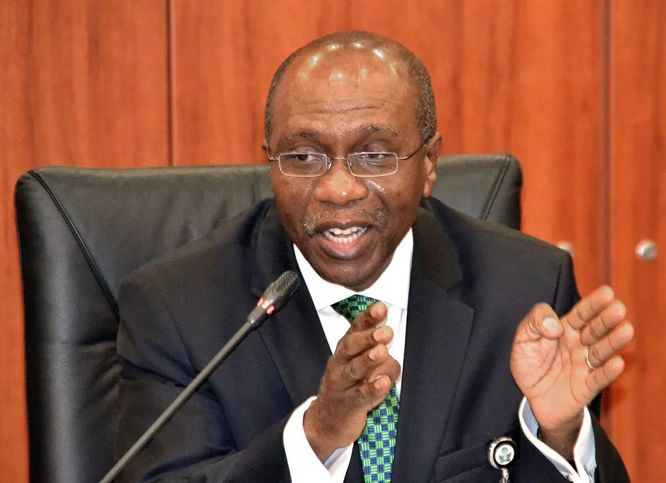
The CBN Governor, Godwin Emefiele has disclosed that the N15 trillion infrastructure fund would be inaugurated in Oct. 2021.
Emeifele who made this known at the 14th Annual Banking and Finance Conference of Chartered Institute of Bankers of Nigeria in Abuja, stated that the innovations like the Nigeria/International Financial will provide a gateway for capital and investments, and digital currency, e-naira, will enhance inclusion.
He said the regulatory body had been working with the Bankers Committee to scale the challenges posed by Covid-19, which include reduction of interest rates on loans, increasing the moratorium for payments, and injecting N3 trillion loans in the private sector.
“We do expect that the pace of inflation will moderate as we approach the harvest season,’’ he added.
President Muhammadu Buhari says N300 billion has been disbursed to farmers while 1.6 million poor and vulnerable households are currently benefiting from the Conditional Cash Transfer programme.
The president who revealed this while virtually declaring the conference open, said that some of the various initiatives embarked upon to boost agricultural trade in Nigeria include the Anchor Borrowers Programme.
He stated that the Central Bank of Nigeria had made more than N300 billion available to over 3.1 million smallholder farmers of 21 different commodities.
He said the commodities included Rice, Wheat, Maize, Cotton, Cassava, Poultry, Soybeans, Groundnut, Fish, cultivating over 3.8 million hectares of farmland.
“It is on record that 80% of rice consumed in Nigeria is now produced locally,’’ he said.
He added that the National Social Register of poor and vulnerable Nigerians had 32.6 million persons from seven million poor and vulnerable households identified, imploring bankers to play a stronger role in improving livelihoods.
President Buhari said the National Social Investment Programme was biggest in Sub-Sahara Africa and one of the largest in the world.
To further strengthen recovery and enable more Nigerians, President Buhari said, last year, he approved the establishment of InfraCo Plc, a world-class infrastructure development vehicle, wholly focused on Nigeria, with combined debt and equity take-off capital of N15 trillion.
“In May 2021, the Rural Electrification Agency announced the planned deployment of solar-powered grids to 200 Primary Health Centres and 104 Unity Schools nationwide.
“Under the Family Homes Fund Limited, Social Housing programme incorporated by the Federal Government of Nigeria, more than two thousand hectares of land with title documents have been issued by 24 states with the capacity to accommodate about 65,000 new homes.
“The Central Bank of Nigeria is providing a N200 Billion financing facility, with a guarantee by the Federal Government,’’ he said.
The president affirmed that the theme of the conference, “Economic Recovery, Inclusion, and Transformation: The Role of Banking and Finance’’ was most appropriate, following the global shocks from COVID-19.
“I salute the Institute and the entire banking and finance industry for the commitment towards charting a practical path for economic recovery and transformation of our country, Nigeria, and by extension Africa as epitomized by the theme of your conference.
The President commended CBN, working in collaboration with the Bankers’ Committee, for providing single-digit financing to young Nigerians in the fields of fashion, film, music and Information Technology through establishment of the Creative Industry Financing Initiative.







Business and Economy
Inaugural Africa-Alamenin Forum: Nigeria Urges Africa to Put Trade at Centre of Diplomacy
From Joseph Amedu, Lokoja
Nigeria has called on African nations to place trade and economic cooperation at the centre of Pan-African diplomacy, saying partnerships will only endure when anchored on shared economic interests. adsbygoogle || []).push({});
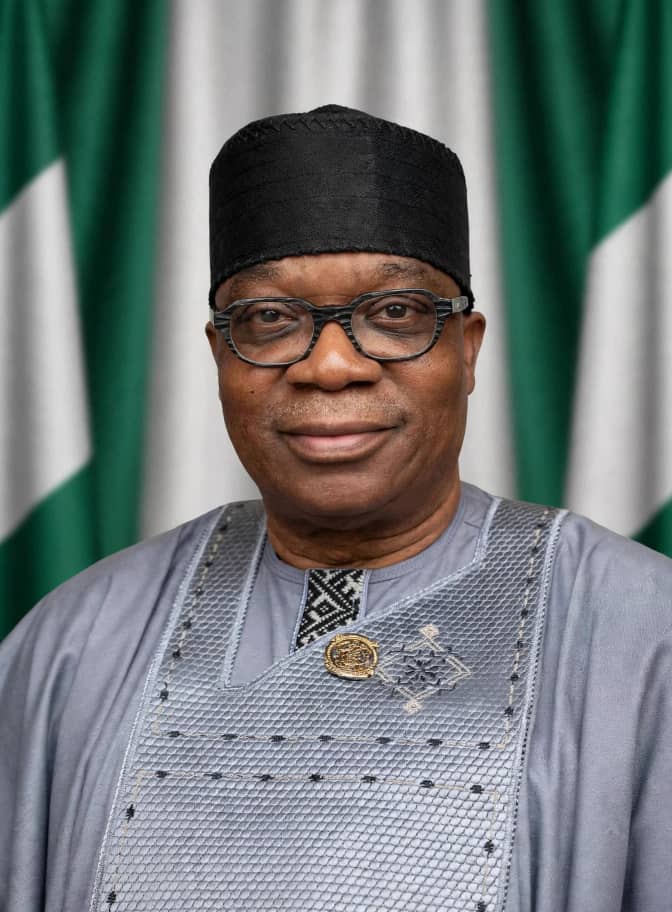
Minister of State for Foreign Affairs, Amb. Sola Enikanolaiye, made the call on Friday, 2nd October, 2026, at the Ministerial Roundtable on “Trade and Economic Cooperation at the Centre of Pan-African Diplomacy” at the inaugural Africa-Alamein Business Forum (Go63) in New Alamein City, Egypt.
“For too long, we treated trade and diplomacy as separate tracks. Our partnerships endure only when they rest on shared economic interests,” he said, noting that Africa remains the centrepiece of Nigeria’s foreign policy.
Enikanolaiye cited Nigeria’s reforms since 2023 — fuel subsidy removal, FX unification and fiscal strengthening — yielding 4.43% growth in Q2 2026, inflation down to 15.39% in August, reserves at $54.86bn as of 24th September, and MPR cut to 23%. He added that the National Single Window went live on 27th March 2026 and the Nigeria Tax Act consolidating over 60 levies took effect on 1st January 2026.
On AfCFTA, he described it as Africa’s most important trade instrument, with 50 ratifications and 39 countries now on the Guided Trade Initiative. Nigeria has validated its Implementation Strategy, gazetted its tariff concessions, submitted services commitments and ratified the Digital Trade Protocol in November 2025. A new air cargo corridor with Uganda Airlines and UNDP has cut freight costs by 50-75%.
He stressed that trade needs finance, welcoming Afreximbank and PAPSS, and disclosed that CBN directed banks to adopt PAPSS from April 2025 for local-currency settlement.
The Minister proposed five actions: make trade facilitation a standing diplomatic item; tackle non-tariff barriers; widen trade finance for SMEs, women and youth; invest in transport/energy corridors and regional value chains; and speak with one voice in external trade negotiations.
On Nigeria-Egypt ties, he said trade at $223m in 2025 is below potential and called for implementation of the July 2025 Nigeria-Egypt Business Forum and the proposed Joint Investment Council.
Earlier, Egyptian Prime Minister H.E. Dr. Mostafa Madbouly opened the Forum, describing it as a sustainable platform for dialogue among governments, private sector and financial institutions. Egypt’s Minister of Investment and Foreign Trade, H.E. Mohamed Farid, also called for cooperation to build an integrated African automotive industry.
The Go63 Forum, organized by Egypt, Afreximbank and AUDA-NEPAD, runs till 4th October and is a permanent biennial platform to convert integration goals into investments.
Ends.
Business and Economy
President Tinubu Said The $12m Entrepreneurship Centre In Abuja Will…
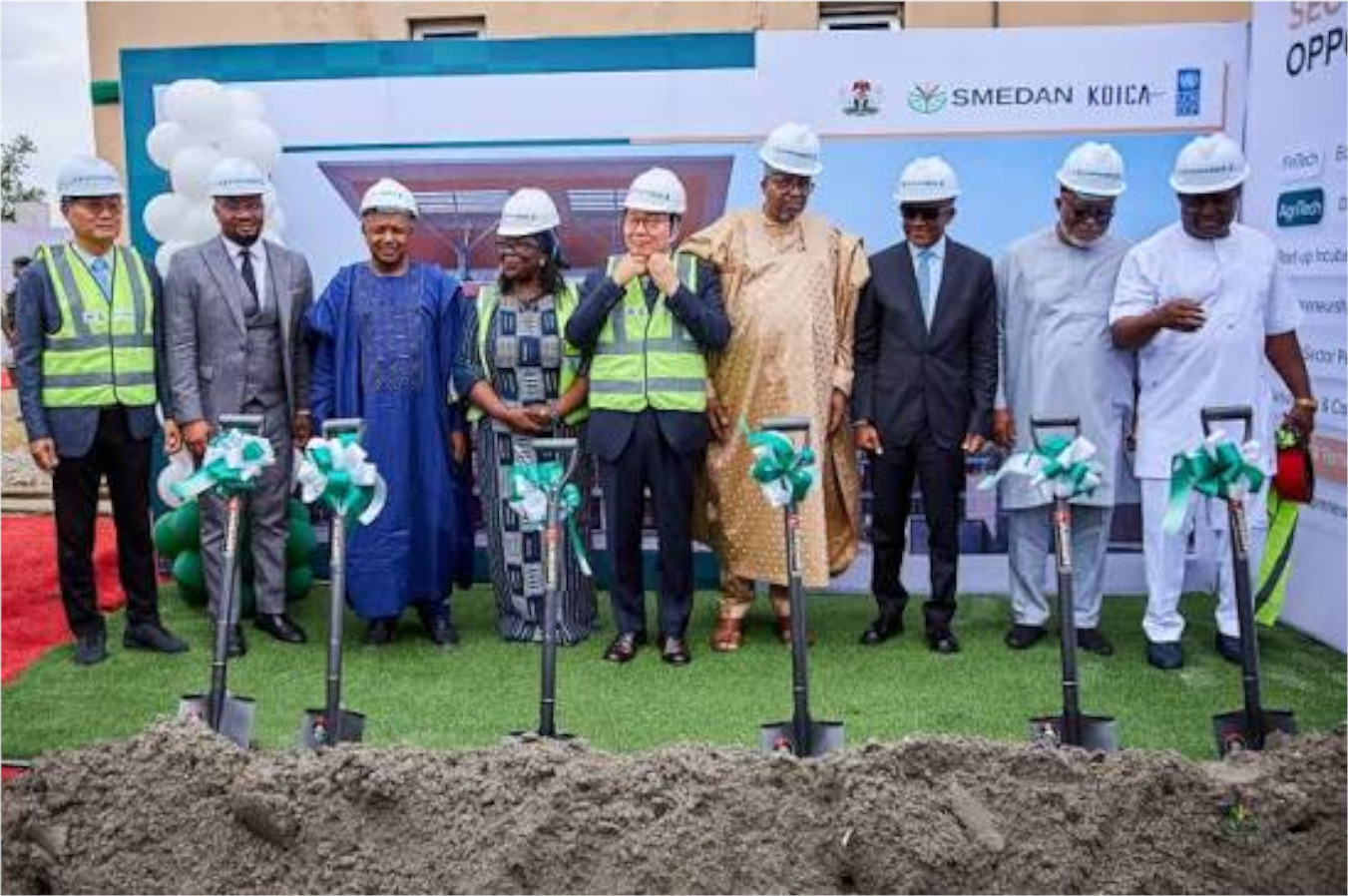
President Bola Ahmed Tinubu welcoming the construction of the $12 million Abuja Centre for Entrepreneurship, said the project will strengthen Nigeria’s MSME ecosystem and help more businesses grow, while more jobs would be created with expanded economic activity. adsbygoogle || []).push({});
This is contained in a statement on Tuesday, September 23, 2026, by his Special Adviser on Information and Strategy, Bayo Onanuga. The statement further revealed President Tinubu saying the Centre would help in establishing, strengthening and growing businesses.
The Centre, funded by the Republic of Korea through the Korea International Cooperation Agency (KOICA), is being developed at the SMEDAN Industrial Development Centre in Idu, Abuja, in partnership with the Federal Government through SMEDAN and the United Nations Development Programme (UNDP).
“Small businesses are an important part of our economy. They employ people, support families and create activity in communities across the country,” the President said.
“Many entrepreneurs already have the ideas and the determination to succeed. What they often need is better access to facilities, technology, training and the support that can help their businesses grow. This Centre will provide more of that support and strengthen the ecosystem around them.”
The Centre will support the wider MSME and entrepreneurship ecosystem, providing facilities, technology, training and enterprise support for aspiring entrepreneurs, start-ups and growing businesses, with an initial target of 500 entrepreneurs, 400 start-ups and 1,500 MSMEs.
About $5.9 million will go into construction, while $6.1 million will fund equipment and programmes for entrepreneurs and businesses.
According to the statement, ACE will provide workspaces, digital facilities, training, incubation and enterprise support for entrepreneurs, start-ups and growing businesses.
It will serve businesses in Abuja and surrounding cities, including Kaduna, Jos, Keffi, Lafia, Minna, Makurdi and Lokoja, while contributing to a stronger entrepreneurship and MSME ecosystem across Northern Nigeria.
President Tinubu said the Federal Government would continue to expand conditions that allow small businesses to grow and compete.
“We want more Nigerians to be able to start businesses, grow them and employ others. We also want existing small businesses to have better access to the tools and support they need to become stronger and more productive. That is important for jobs, incomes and the wider economy,” he said.
The President said the project complements the administration’s wider investments in digital skills, entrepreneurship, enterprise development and support for MSMEs.
The Centre has also been designed to accommodate women and persons with disabilities. It will include accessible facilities and crèche services for women with young children.
While construction is ongoing, SMEDAN, KOICA and UNDP will work with universities, incubators, financial institutions, private-sector organisations and entrepreneur networks to build a wider support system around the Centre and identify businesses that can benefit from its programmes.
President Tinubu thanked the Government of the Republic of Korea for the $12 million investment and commended KOICA, UNDP and SMEDAN for bringing the project to the construction stage.
He said Nigeria would continue to welcome investments and partnerships that strengthen local businesses, deepen enterprise development and create more jobs.
Business and Economy
Dangote IPO Not a Magic Wand to wealth
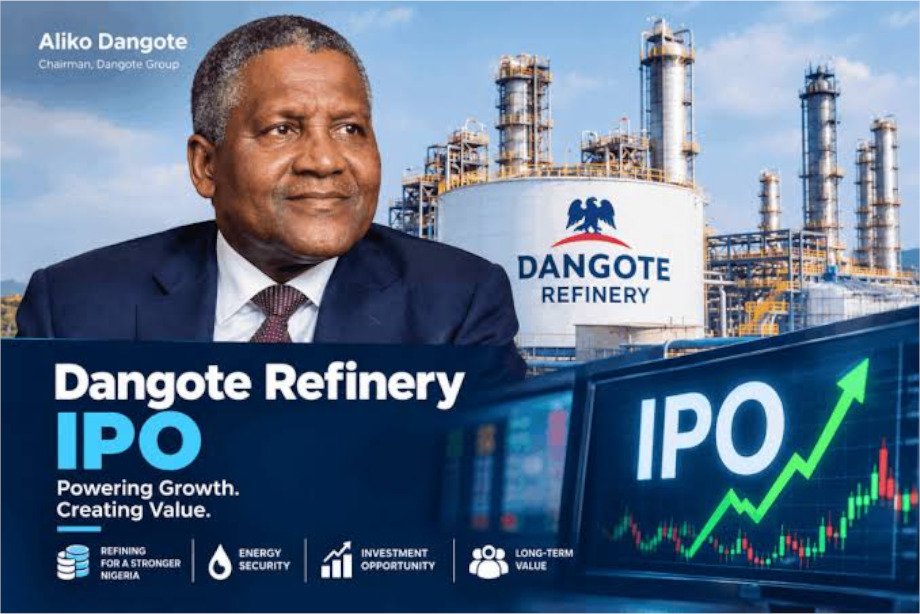
The high expectation for immediate profit as being expressed especially by new investors who participated in the Dangote IPO from their investment may land them in disappointment, after all.
This much has been highlighted by BusinessDay’s analysis of Ifeoluwa Balogun, as a case study, whether real or an imaginary figure, captures the excitement around Dangote Refinery’s public offer.
googlesyndication.com/pagead/js/adsbygoogle.js">
For instance, Balogun optimistically says:
“I bought Dangote shares that are worth N42,000. I am expecting to cash out big time to buy something valuable, at least a piece of land in Imowe-Ibafo, Ogun State.”
To have hope is good. But to be definite about what you are not in control of may trigger unpleasant consequences. For example, the Baloguns may not know that Dangote’s: “N2.15 trillion IPO is creating access to ownership, not a shortcut to wealth. With 4.1 billion shares offered at N525 each and a minimum subscription of just 10 shares, the offer is bringing equity ownership within reach of ordinary Nigerians. What happens to their money after the subscription, however, will depend on the refinery’s future earnings, cash generation and share-price performance,” it has pointed out.
This case study goes further with the analysis: “For Balogun, N42,000 buys 80 shares before applicable charges. If the shares eventually reach N1,050, his holding would be worth N84,000. If they reach N5,250, it would be worth N420,000. Neither outcome has a timetable, and neither price is guaranteed.”
That distinction is becoming important as the Dangote IPO draws first-time investors into Nigeria’s stock market.
The offer is scheduled to close on October 13, having been opened to the public on September with the minimum subscription set at N5,250.
Sure, investors are buying a stake in a business that has recently demonstrated substantial earning power. Dangote Refinery reported $13.91 billion in revenue in the first half of 2026, alongside $2.60 billion in EBITDA and $1.82 billion in net profit, according to BusinessDay. The result marked a sharp turnaround from the loss recorded in 2025.
“Those numbers explain the enthusiasm around the offer. But an equity investor is buying future earnings, not simply the latest six months of profit.” In addition, it’s important to note that:
“The refinery operates in a volatile global business. Its earnings are exposed to crude-oil costs, refined-product prices, refining margins, foreign exchange, demand and international energy-market conditions. A strong first half does not guarantee that future periods will produce the same results.”
The company’s future expansion also matters. Dangote says the refinery has crude-distillation capacity of 700,000 barrels per day and plans to expand that to 1.4 million barrels per day. Basically, ” The wider complex includes petrochemicals, storage, marine infrastructure and logistics.
“For shareholders, therefore, the investment case extends well beyond the IPO. The value of their shares will depend on whether the company can sustain production, expand profitably, manage its financial obligations, generate cash and return value to shareholders. That makes the distance between owning shares and becoming wealthy important.”
If Balogun’s 80 shares rise from N525 to N1,000, his holding would be worth N80,000. But that increase remains a market gain until he sells. If the market price falls below N525, the value of his investment falls instead. The investor therefore has to live with the market’s timing.
Someone who expects the shares to finance a land purchase within a particular period could be forced to sell earlier than planned, potentially at a price below expectation. The market does not adjust its timing to an investor’s financial needs.
It’s in view of these fluctuating realities that the regulator, “The Securities and Exchange Commission has urged prospective investors to read the approved prospectus and understand the terms and risks before subscribing. It has also warned against people or platforms promising guaranteed allocations or returns.”
The significance of the IPO is therefore broader than whether Dangote shares rise after listing. It is introducing more Nigerians to ownership of productive assets at a time when household incomes remain under pressure. But ownership comes with uncertainty: the investor participates in both the gains and the risks of the business.
The punchy end of the discourse is even more important: “For Balogun, the more useful question is not how quickly N42,000 can become enough to buy land. It is whether he can afford to hold the investment long enough for the underlying business to create value. The Dangote IPO can put ownership within reach of ordinary Nigerians. It cannot put a guaranteed fortune within reach overnight.”
-
 Entertainments4 years ago
Nollywood Produces 541 Movies in 2022 First Quarter – NFVCB
-
 News7 years ago
I will Maintain High Decorum – Hon Monguno
-
 News5 years ago
2021 Ethics And Integrity Compliance Scorecard Of MDAs: ICPC Scores Censors Board High
-
 Business and Economy4 years ago
Non-interest TAJBank Reports 433% PBT in 2021 Financial Year
-
 Entertainments7 years ago
Censors Board Trains, Gives Grant to 100 Youths in Nasarawa State
-
 News4 years ago
ICDA North Central: Prince Oruma Sues for Igala Unity
-
 AWF7 years ago
AWF to Feature Adedokun, Kawu and Okah-Donli for April Guest Writer Session
-
 News3 years ago
Full List of The New Ministers and Their Portfolio