
Business and Economy
Indignity of Labour: The Bitter Tales Inside Nigeria Flour Mills’ Sugar Eestate
By NGIJ team of Oluwasegun Abifarin and Olawale Abideen
The smoke of accusation and counter accusation has continued to rise over the indignity of labour and bitter working condition by workers of Sunti Golden Sugar Estates Limited, a subsidiary of Flour Mills Nigeria Plc.

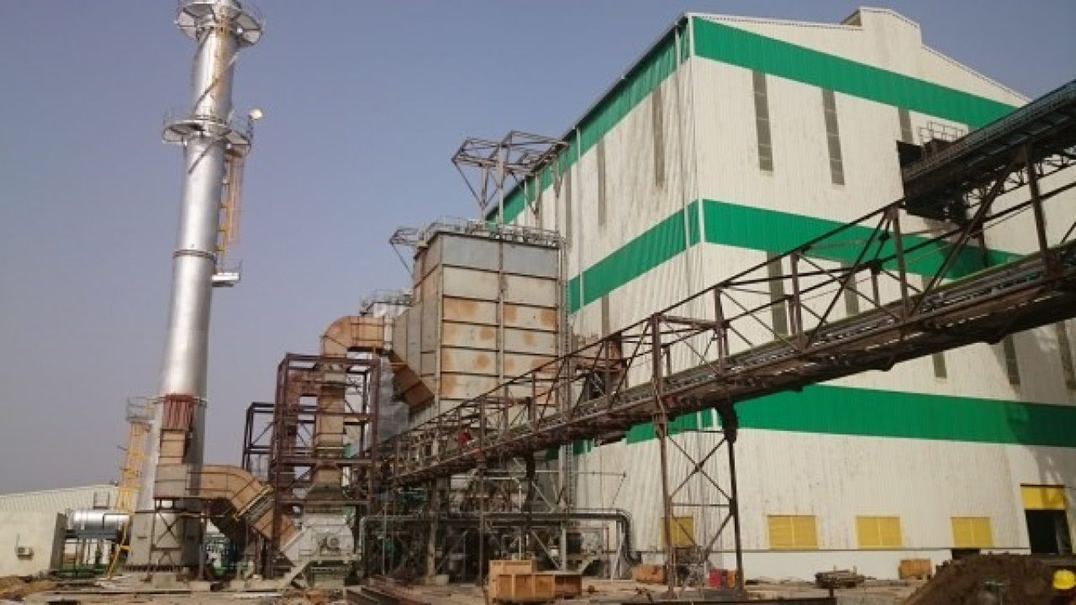
Located on the banks of River Niger, in Mokwa, Niger state, Sunti Golden Sugar Estates Limited features 17, 000 hectares of irrigable farmland and a Sugar mill that process 4,500 metric tons of sugarcane per day. At full capacity, the estate is expected to produce 1 Million tons of Sugarcane which roughly translates into 100,000 metric tons of sugar yearly.
When Flour Mills of Nigeria took up loans amounting to about 60 Billion Naira facilitated by the Nigerian Government to acquire and complete the Sunti Farms in order to establish a sugarcane farm and set up a factory, the workers and host communities thought their sweet and happy moment had arrived.
And on 15th March, 2018, when the company was officially launched amidst pomp and pageantry, expectations and hopes were raised as there were promises of better living for host communities, their youths and the workers.
This eventually turned to a forlorn dream going by the layers of worker/labour indignity going on in the company.
One star case till date is the story of Mr. Amusa Monsuru Adewale who joined Nigeria Flour Mills on the 9th of April, 2014 as a Draftsman. The Human Resource Manager, Mr. Chatjock Chom on the basis of the strong recommendation from Adewale’s boss, Mr. John Beverley, confirmed his appointment as an Architect and also as a senior staff with job class 8 reward level 10.
In the course of Adewale’s employment, the company seconded him to Sunti Golden Sugar Estates Ltd where he has been working directly under the supervision of Engr. Akeem Kolawole Gbadamosi.
But on the 15th day of September, 2016 Mr. Adewale had an industrial accident on site which affected his left eye. Despite the accident, he continued to work diligently in the company, but on the 7th day of November, 2016 his was diagnose with severe keratitis on the left eye and he was placed on drugs. After some months, the Doctor recommended a Cornea transplant surgery for a clearer vision.
On the 3rd of June 2018, he received the bill for the surgery which he submitted to the Human Resource department. Prior to the submission of the bill, Adewale alleged that his boss, Gbadamosi had threatened on different occasions, to sack him “without any reason.” And upon submission of the bill, Adewale said he received two queries within one week.
After answering the query, Gbadamosi recommended to the Human Resource department for him to be sacked, but the recommendation was declined and instead a 5 day suspension was given to Adewale on the 2nd of July 2018.
After his resumption on the 9th of July, Gadamosi demoted him to the position of a store keeper .And by a letter dated 9th of April, 2019, Adewale was sacked, citing medical grounds as the reason.
Adewale’s Counsel, Chief Afe Babalola, SAN however disputed this, saying his client is medically fit to undertake his responsibilities and that no medical examination was conducted to support the company’s claim.
In a bid to resolve the matter amicably, Flour Mills invited Adewale and his lawyers to a meeting in Apapa, Lagos on 21st June, 2019 by 10:00a.m, whereat it was agreed to convey the resolution to the management of the company and get back to Adewale’s team to know the next alternative to explore. Till date, nothing has happened.
Another sordid case is that of Adeleke Wuraola, a Procurement Manager Sunti Golden Estate. As one of the oldest employees in the company, he was reputed to be very intelligent and good at his job, but he allegedly had issues with the wife of the General Manger.
It was gathered that for years, they plotted his removal until he fell into the trap of one Magdalene, a female staff allegedly brought by the GM and his wife to do the hatchet job. “Magdalene does not have the intelligence and confidence to come up with this grandiose scheme. She is being pushed and encouraged by someone in management,” Adeleke said.
For now the GM is said to have brought a family friend who is out of job from South Africa to replace Adeleke.
The case of Dr. Akande Yusuf who manages the Sunti Clinic is another sore point. Yusuf, had reported verbal assault and several episodes of interference in patient management as well as the open confrontation on the professionalism of the medical team at the clinic by the General Manager’s wife.
Specifically Yusuf recalled that on January 30th, 2019, the wife of the General Manager came to the clinic, assembled all the clinic staffs and dressed him down that he is “useless, unprofessional, and that she is ashamed of me.”
The medical doctor added that GM wife added that “she is the one paying my salary and that she can fire me if she wants; and when the GM’s wife is talking, I should not say anything ever again that I am disrespectful for thinking I can say something; that we are all fucking idiots.”
In his letter to the HR Manager, dated February 14, 2019, Yusuf lamented that “I have been brooding over these utterances in the last two weeks against the background of prior confrontational threats and intimidation from the GM and his wife on 18th of October 2018 in which case a lot of hurtful words and insults were hauled at me.
“Permit me to sincerely note that the derogatory remarks, verbal abuse, offensive words, threats, emotional and psychological subjugation from both the General Manager and his wife are having their toll on me and by extension, the other medical staffs. Our morale are down.”
On the frosty relationship between the company and the host community, Samuel Iboroma, FMN Corporate Communication Manager had maintained that Sugar Golden Sugar Estates has enjoyed very cordial relations with its host communities.
He also sent a letter of appreciation sent by the Etsu Nupe, Alhaji Yahaya Abubakar acknowledging the receipt of four thousand cartons of chicken indomine noodles donated to the community by FMN recently.
But a recent letter by the host community addressed to the Chairman of FMN points to another direction. They complained that the Sunti GM “has been showing so much disrespect to the community leaders and the citizen together with the Community Liaison Officer, Mr. Samuel.”
According to them, “the community no longer has source of income for our livelihood because of the activities of the Company and the autocratic nature of the GM has also led to the termination of the appointment of many skilled, and experienced personnel from the company.”
Sources informed us that communities such as Kusogi, Jaagi, Batagi, Kupanti, etc suffered most from the activities of Sunti Golden Estate.
On the allegation of poor working condition, Iboroma argued that the “assertions all wrong,” adding that “like most of our investments in the food value chain, we are creating jobs and empowering our communities through active collaboration.”
But some of the workers who spoke to our correspondent in the estate last week countered Iboroma’s assertion arguing that “slavery continues here.” They pointed to the meagre salary and the un-abating casualization of workers as a major twin evil. “A graduate earns N30, 000 here, an amount too little for the so called expatriates to spend at a shopping,” one of the workers told us last week.
Attempts to get the company’s reaction to the latest allegations were futile last week. There was no reply to mails and messages sent to Iboroma’s through phone, wattsapp and emails address.
Instead, Sources at Sunti hinted early this week that the company is planning to bring some selected journalists to the Estate to ”come and see things for themselves.”
“It is expected that journalists will be around within this week, and they have been improving on things they believe could implicate them. Presently, they have been going about begging workers not to speak ill of the company,” a worker told our correspondent last week.
Strangely, some of the journalists have also been calling our correspondent to back off from the story, pleading that “Flour Mills is their client.”


Business and Economy
President Tinubu Said The $12m Entrepreneurship Centre In Abuja Will…
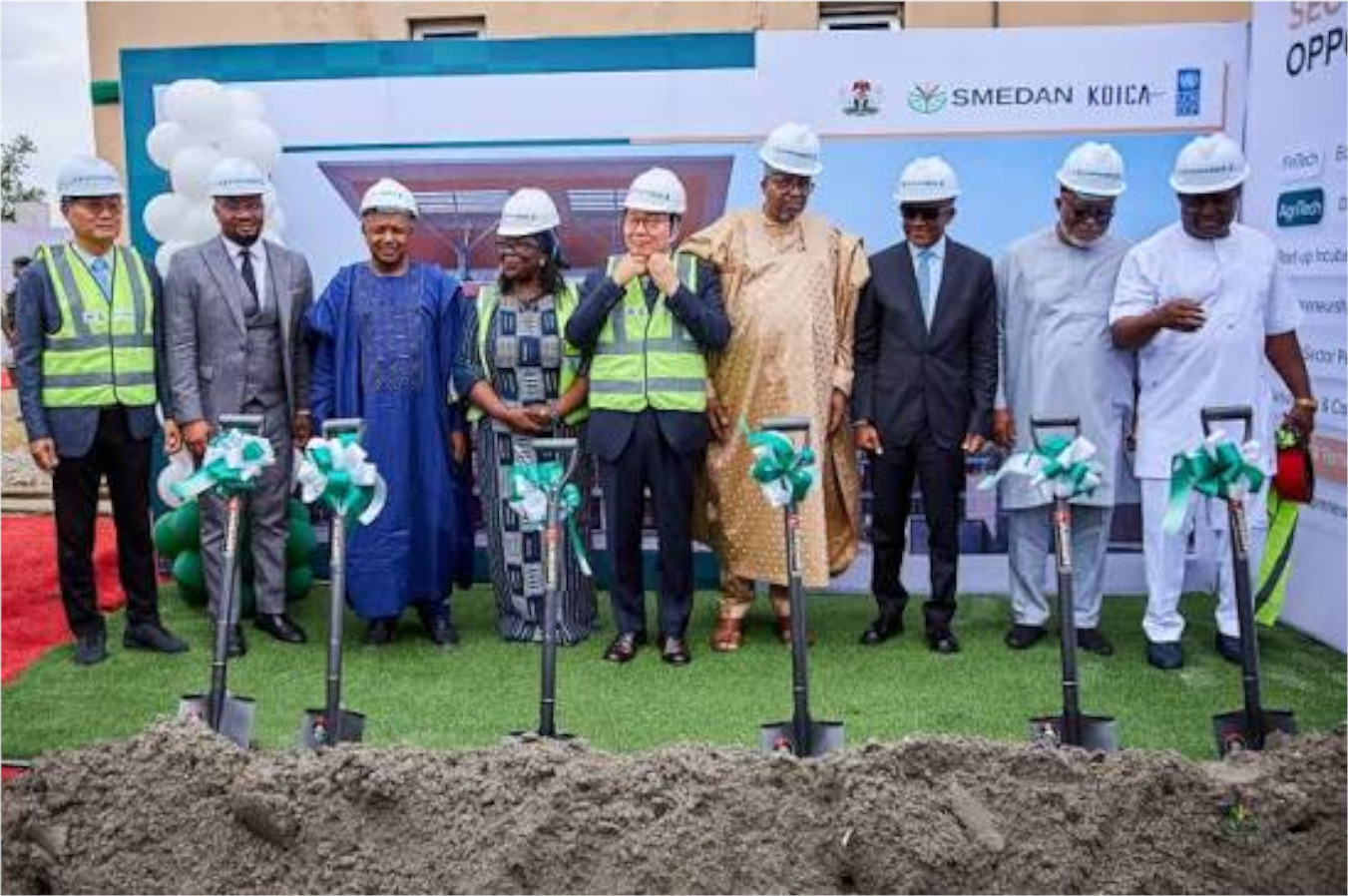
President Bola Ahmed Tinubu welcoming the construction of the $12 million Abuja Centre for Entrepreneurship, said the project will strengthen Nigeria’s MSME ecosystem and help more businesses grow, while more jobs would be created with expanded economic activity. adsbygoogle || []).push({});
This is contained in a statement on Tuesday, September 23, 2026, by his Special Adviser on Information and Strategy, Bayo Onanuga. The statement further revealed President Tinubu saying the Centre would help in establishing, strengthening and growing businesses.
The Centre, funded by the Republic of Korea through the Korea International Cooperation Agency (KOICA), is being developed at the SMEDAN Industrial Development Centre in Idu, Abuja, in partnership with the Federal Government through SMEDAN and the United Nations Development Programme (UNDP).
“Small businesses are an important part of our economy. They employ people, support families and create activity in communities across the country,” the President said.
“Many entrepreneurs already have the ideas and the determination to succeed. What they often need is better access to facilities, technology, training and the support that can help their businesses grow. This Centre will provide more of that support and strengthen the ecosystem around them.”
The Centre will support the wider MSME and entrepreneurship ecosystem, providing facilities, technology, training and enterprise support for aspiring entrepreneurs, start-ups and growing businesses, with an initial target of 500 entrepreneurs, 400 start-ups and 1,500 MSMEs.
About $5.9 million will go into construction, while $6.1 million will fund equipment and programmes for entrepreneurs and businesses.
According to the statement, ACE will provide workspaces, digital facilities, training, incubation and enterprise support for entrepreneurs, start-ups and growing businesses.
It will serve businesses in Abuja and surrounding cities, including Kaduna, Jos, Keffi, Lafia, Minna, Makurdi and Lokoja, while contributing to a stronger entrepreneurship and MSME ecosystem across Northern Nigeria.
President Tinubu said the Federal Government would continue to expand conditions that allow small businesses to grow and compete.
“We want more Nigerians to be able to start businesses, grow them and employ others. We also want existing small businesses to have better access to the tools and support they need to become stronger and more productive. That is important for jobs, incomes and the wider economy,” he said.
The President said the project complements the administration’s wider investments in digital skills, entrepreneurship, enterprise development and support for MSMEs.
The Centre has also been designed to accommodate women and persons with disabilities. It will include accessible facilities and crèche services for women with young children.
While construction is ongoing, SMEDAN, KOICA and UNDP will work with universities, incubators, financial institutions, private-sector organisations and entrepreneur networks to build a wider support system around the Centre and identify businesses that can benefit from its programmes.
President Tinubu thanked the Government of the Republic of Korea for the $12 million investment and commended KOICA, UNDP and SMEDAN for bringing the project to the construction stage.
He said Nigeria would continue to welcome investments and partnerships that strengthen local businesses, deepen enterprise development and create more jobs.
Business and Economy
Dangote IPO Not a Magic Wand to wealth
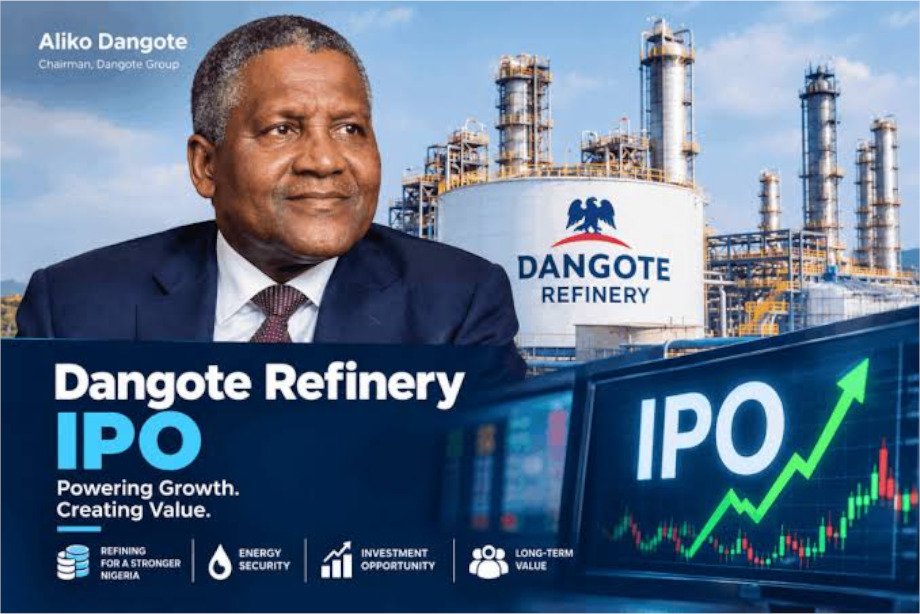
The high expectation for immediate profit as being expressed especially by new investors who participated in the Dangote IPO from their investment may land them in disappointment, after all.
This much has been highlighted by BusinessDay’s analysis of Ifeoluwa Balogun, as a case study, whether real or an imaginary figure, captures the excitement around Dangote Refinery’s public offer.
googlesyndication.com/pagead/js/adsbygoogle.js">
For instance, Balogun optimistically says:
“I bought Dangote shares that are worth N42,000. I am expecting to cash out big time to buy something valuable, at least a piece of land in Imowe-Ibafo, Ogun State.”
To have hope is good. But to be definite about what you are not in control of may trigger unpleasant consequences. For example, the Baloguns may not know that Dangote’s: “N2.15 trillion IPO is creating access to ownership, not a shortcut to wealth. With 4.1 billion shares offered at N525 each and a minimum subscription of just 10 shares, the offer is bringing equity ownership within reach of ordinary Nigerians. What happens to their money after the subscription, however, will depend on the refinery’s future earnings, cash generation and share-price performance,” it has pointed out.
This case study goes further with the analysis: “For Balogun, N42,000 buys 80 shares before applicable charges. If the shares eventually reach N1,050, his holding would be worth N84,000. If they reach N5,250, it would be worth N420,000. Neither outcome has a timetable, and neither price is guaranteed.”
That distinction is becoming important as the Dangote IPO draws first-time investors into Nigeria’s stock market.
The offer is scheduled to close on October 13, having been opened to the public on September with the minimum subscription set at N5,250.
Sure, investors are buying a stake in a business that has recently demonstrated substantial earning power. Dangote Refinery reported $13.91 billion in revenue in the first half of 2026, alongside $2.60 billion in EBITDA and $1.82 billion in net profit, according to BusinessDay. The result marked a sharp turnaround from the loss recorded in 2025.
“Those numbers explain the enthusiasm around the offer. But an equity investor is buying future earnings, not simply the latest six months of profit.” In addition, it’s important to note that:
“The refinery operates in a volatile global business. Its earnings are exposed to crude-oil costs, refined-product prices, refining margins, foreign exchange, demand and international energy-market conditions. A strong first half does not guarantee that future periods will produce the same results.”
The company’s future expansion also matters. Dangote says the refinery has crude-distillation capacity of 700,000 barrels per day and plans to expand that to 1.4 million barrels per day. Basically, ” The wider complex includes petrochemicals, storage, marine infrastructure and logistics.
“For shareholders, therefore, the investment case extends well beyond the IPO. The value of their shares will depend on whether the company can sustain production, expand profitably, manage its financial obligations, generate cash and return value to shareholders. That makes the distance between owning shares and becoming wealthy important.”
If Balogun’s 80 shares rise from N525 to N1,000, his holding would be worth N80,000. But that increase remains a market gain until he sells. If the market price falls below N525, the value of his investment falls instead. The investor therefore has to live with the market’s timing.
Someone who expects the shares to finance a land purchase within a particular period could be forced to sell earlier than planned, potentially at a price below expectation. The market does not adjust its timing to an investor’s financial needs.
It’s in view of these fluctuating realities that the regulator, “The Securities and Exchange Commission has urged prospective investors to read the approved prospectus and understand the terms and risks before subscribing. It has also warned against people or platforms promising guaranteed allocations or returns.”
The significance of the IPO is therefore broader than whether Dangote shares rise after listing. It is introducing more Nigerians to ownership of productive assets at a time when household incomes remain under pressure. But ownership comes with uncertainty: the investor participates in both the gains and the risks of the business.
The punchy end of the discourse is even more important: “For Balogun, the more useful question is not how quickly N42,000 can become enough to buy land. It is whether he can afford to hold the investment long enough for the underlying business to create value. The Dangote IPO can put ownership within reach of ordinary Nigerians. It cannot put a guaranteed fortune within reach overnight.”
Business and Economy
Nigeria’s Recapitalised Banks Position as Engines of $1 Trillion Economy at London Capital Forum

By AbdulRahman Obaje
With 32 banks meeting new capital requirements and 72 per cent of funds raised domestically, Nigeria’s banking sector emerges from its most significant reform cycle as the primary engine of the country’s capital mobilisation agenda
LONDON — When Nigeria’s banking recapitalisation exercise was announced, the debate centred largely on compliance: which banks would meet the threshold, and by when.
At The Africa Capital Forum’s inaugural convening in London on Tuesday, the conversation had moved on entirely. The question was no longer whether Nigeria’s banks could recapitalise. It was what a recapitalised Nigerian banking sector could now do for a $1 trillion economy.
The answer, according to the chief executives who gathered at The Peninsula London alongside President Bola Ahmed Tinubu’s UK state visit, is considerable.
Akin Ogunranti, Executive Director of Zenith Bank, set the tone early. “We need to give ourselves credit,” he told delegates. “The fact that over 72 per cent of the capital was raised locally is a major milestone.” That figure carries weight beyond optics. It signals that Nigerian capital markets are deepening, that domestic investors have confidence in the banking sector’s trajectory, and that the foundation for long-term growth is being built from within.
CBN Governor Olayemi Cardoso was direct about what the sector has become. “We are very proud of what the Nigerian banks have been able to accomplish,” he said. “They play a dominant role on the African continent and in the United Kingdom. They are our ambassadors.” Thirty-two banks have now met the CBN’s new capital requirements, and Cardoso described the system that has emerged as categorically different from what preceded it. “The financial system we had is dead and buried. What we have now is a new system that has brought liquidity and transparency.”
The implications for the broader economy were spelled out across the afternoon’s sessions. Yemisi Edun, Managing Director of First City Monument Bank, noted that recapitalisation had directly expanded the credit available to businesses: “The raised capital has created expansion of credits. The new recapitalisation has given more credibility to what we can do as industries.” Segun Alebiosu, Managing Director of First Bank, made the international dimension explicit. “With currency reforms, Nigerian banks will be able to take home bigger transactions. We can do more, and crowd new investments.” He added that Nigerian banks today maintain at least seven operations in the United Kingdom alone.
The scale of Nigerian banking’s continental footprint was perhaps most vividly illustrated by Oliver Alawuba, Group Managing Director of UBA, who noted that over 65 per cent of the bank’s revenue now comes from outside Nigeria. “That means that we can do more in Africa,” he said.
That outward reach is not incidental to the $1 trillion economy agenda. It is central to it. Miriam Olusanya, Managing Director of Guaranty Trust Bank, pointed to the restoration of correspondent banking relationships as a structural shift: “The confidence has been restored and corresponding banking relationships will continue to grow.” Those relationships determine Nigeria’s ability to facilitate cross-border trade, attract foreign investment, and participate in the global capital markets at the scale a $1 trillion economy requires.
Sanyade Okoli, Special Adviser to the President, framed the government’s position plainly: “The government alone cannot fund this growth. We need to work with partners who will bring the sticky, equity capital.” A recapitalised, internationally credible banking sector is how that partnership becomes possible.
Governor Cardoso closed by placing the banking sector’s transformation within its broadest context. “This is perhaps the first time in many years that we’ve had this level of consistent stability,” he said. “And it is likely to stay on course.”
The Africa Capital Forum was convened by the Central Bank of Nigeria in partnership with the UK Foreign, Commonwealth and Development Office and hosted by BBC News Presenter Lukwesa Burak. It was supported by Access Bank, FCMB, First Bank, Goldman Sachs, GTCO, J.P. Morgan, Nigerian Exchange Group, UBA, and Zenith Bank.
The Africa Capital Forum is an independent institutional convening platform dedicated to advancing strategic dialogue on capital mobilisation, financial system development, and investment into Africa. The Forum convenes senior leaders from global financial institutions, development finance organisations, central banks, and the private sector to examine the policy and market conditions shaping Africa’s economic trajectory.
-
 Entertainments4 years ago
Nollywood Produces 541 Movies in 2022 First Quarter – NFVCB
-
 News7 years ago
I will Maintain High Decorum – Hon Monguno
-

 News5 years ago
2021 Ethics And Integrity Compliance Scorecard Of MDAs: ICPC Scores Censors Board High
-
 Business and Economy4 years ago
Non-interest TAJBank Reports 433% PBT in 2021 Financial Year
-
 Entertainments7 years ago
Censors Board Trains, Gives Grant to 100 Youths in Nasarawa State
-
 News4 years ago
ICDA North Central: Prince Oruma Sues for Igala Unity
-
 AWF7 years ago
AWF to Feature Adedokun, Kawu and Okah-Donli for April Guest Writer Session
-
 News3 years ago
Full List of The New Ministers and Their Portfolio