
General News
Berlin Global Dialogue 2026: Nigeria Makes Case for Sovereignty-Based Partnership
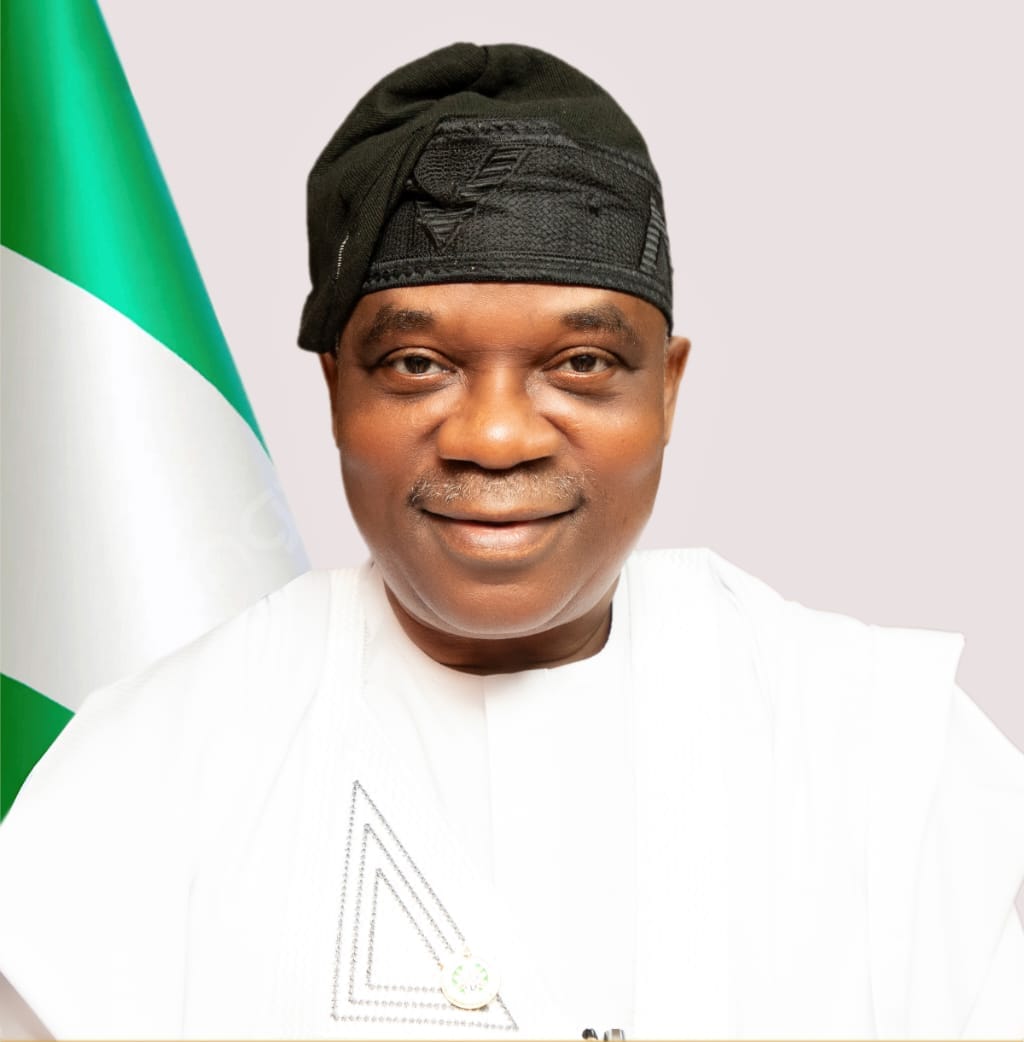
From Joseph Amedu, Lokoja
Minister of State for Foreign Affairs, Amb. Sola Enikanolaiye, has articulated Nigeria’s vision for a reformed global engagement with Africa anchored on sovereignty, strategic autonomy, domestic resource mobilization and bankable infrastructure.

Speaking at the Berlin Global Dialogue 2026 — at the High-Level Panel on “Foreign Policy by Other Means: Trade, Technology, and Geopolitical Power” and the Policy Lab on Infrastructure and Investment — the Minister said Africa’s new engagement model is grounded on sovereignty, commitment to African priorities, mutual respect and shared prosperity.
“Africa has come to this conversation with great assets, substantial opportunities and a determination to shape its own development based on partnership with the rest of the world,” he stated.
In a statement from his Media Office made available to journalists in Lokoja on Saturday, the minister noted that diplomacy is shifting from rigid political alliances to pragmatic, fluid, transaction-focused strategies, citing a recent policy lab organized in Abuja by a foreign embassy with participation of the Adviser to Mr. President as evidence of this new approach.
On Foreign Policy, Business and Strategic Autonomy, the Minister traced the historical nexus between business and diplomacy from the Royal Niger Company to post-independence multinationals, stressing that Africa’s marginalization is a wake-up call for inward mobilization. Citing Aliko Dangote’s public offer subscribed by over 52 countries, he said: “Foreign capital can only complement but cannot replace the kind of resources that we need.”
He defined government’s role as clearing the path for private enterprise, referencing Nigeria’s stabilizing role through ECOMOG in Liberia and Sierra Leone which enabled Nigerian banks to thrive regionally.
On great-power competition, he affirmed Nigeria’s doctrine of Strategic Autonomy: “It allows us a space of action regardless of ideology or political complexion of the various blocs to advance our own national interest, including those of Nigerian companies.”
The Minister insisted the extractive model must end, stressing beneficiation over raw mineral exports. He said Federal Government policy now requires investors to establish local processing industries with strict oversight for environmental and community protection. “We learned from our experience in the Niger Delta. We are now doing things differently to give rights to local communities where minerals are found.”
On Infrastructure and Bankable Projects, he said Africa’s infrastructure ambition needs sustained attention. “Reliable electricity, efficient intermodal transport and wider digital connectivity are essential to expanding production and creating opportunities for our young population.” He added that revenue generation through metering is another major opportunity for foreign investment in Africa’s power sector.
He noted that African governments have overhauled legacy laws to attract investment, driven by macroeconomic stabilization and deregulation, and stressed that de-risking requires well-prepared projects, predictable regulation, transparent procurement and credible risk-sharing.
He highlighted the roles of Afreximbank, African Development Bank, EBID and the new African Credit Rating Agency in Mauritius in providing guarantees and blended finance.
On economic integration, he cited Africa’s 4.3% average growth with an ambition of 7%, progress on the ECO currency, Nigeria’s single window system, and PAPSS launched in January 2026 as critical to raising intra-African trade from 16% under AfCFTA. “We need to trade more among ourselves to develop competitive advantages.”
He called for reform of the international credit rating system, welcomed the African Credit Rating Agency, and tied Africa’s AI future to stable power supply.
On human capital for infrastructure, he highlighted: reviewing curricula for technical education and skills; leveraging Diaspora remittances amid declining ODA; revenue generation through metering as an investment opportunity; ongoing reforms to improve Nigeria’s business environment; and China’s non-conditional approach to infrastructure.
He concluded by urging mobilization of long-term capital and reaffirmed Nigeria’s commitment to fiscal discipline, transparency, democracy and rule of law.