
Food and Agriculture
FG To Deploy ICT-based Platform to Leverage on Delivering Farm Inputs
For effective delivery of farm inputs, the Federal Government said it had taken steps to leverage the efficient implementation of the rebranded National Agricultural Growth Scheme and Agro-pocket, (NAGs -AP), . adsbygoogle || []).push({});

Mr Ibrahim Arabi, National Programme Coordinator, Agricultural Transformation Agenda Support, said this in an interview with the News Agency of Nigeria (NAN) in Abuja.
He said that the proposed technology would ensure that farm inputs such as fertilizers, seeds, and agrochemicals, among others, got to the farmers across the country.
Arabi said: “We are using an ICT platform delivery system to leverage the system of distribution, we are going to include the farmers and farm inputs in the system to make it an ICT treatment and transparent.”
He said that the recent NAGS meeting was organised to sensitise farmers and fashion out the way forward in the implementation of the scheme.
“This meeting is on the strategy to support farmers with subsidised inputs and also with the institutional capacity for increased productivity,” the coordinator said
On whether the inputs were affordable, Arabi said the Federal Government was giving out about 80 per cent subsidy of the commodity to the farmers.
According to him, the government is using the ICT platform to ensure that farmers have smooth delivery of inputs for the 2023 farming season.
Arabi said that delivery of the inputs would be perfected and the mistakes of 2022 corrected to ensure a seamless delivery of the farm inputs.
Also speaking, Mr Ishaku Buba, Deputy Director, Growth Enhancement Scheme in the Ministry of Agriculture and Rural Development, said that the government was creating a system to evaluate its support to the farmers.
He said: ” We are creating a system whereby we will be able to see the impact of the government on the farmers.
”For instance, I supported you, I met you at this level, and I want to know the impact of what I have supported you with.”
Buba said the distribution of inputs would soon start, adding that the government was targeting the right time of farming activities.
On the cost of inputs such as fertilizers, he said that the cost was dynamic depending on the prevailing market price of the commodity.
“On cost, we look at the prevailing market price and put our subsidy based on that, we cannot fix the price in January and then use it now it is dynamic.
“We have looked at the climatic conditions, we know the procedures to follow for the planting season and we are targeting this period.
“The distribution of inputs will take two to three weeks, but we will start with the seeds. We’ll show the farmers how to apply the seeds very well so that we can get a better result from them,” Buba said.
Mrs Mary Afan, President of the Small-Scale Women Farmers Organisation (SWOFON), said that the women were waiting for the Federal Government to distribute the farm inputs.
According to her, fertilizer which was bought in the market at the rate of N27,000 or N30,000 a bag in 2022, had increased to N35,000 and N38,000 per bag.
She urged the government to consider giving more incentives to the farmers so that they could increase production.
Meanwhile, the Fertiliser Producers, Suppliers Association of Nigeria (FEPSAN) has blamed the current hike in the price of the product on foreign exchange.
Mr Gideon Nagedu, the association’s Executive Secretary, said almost all the blending materials for fertilizer were imported.
Nagedu told the News Agency of Nigeria in Abuja that the current policy on forex had drastically affected the price of the commodity.
According to him, in June, the price of a 50kg bag of fertilizer was as low as N18, 000, adding that at the moment, it had risen to N25, 000 to N26, 000. respectively.
Nagedu said: “Interestingly prices of fertilizer have been fluctuating as a bag of 50kg fertilizer that sold as high as N29,000 last year, just a month ago came as low as N18,000 and in some places N20,000.
“ But, suddenly a change in foreign exchange eventually skyrocketed the price of the product. Most of the blending materials for fertilizer are imported.”
In another development, some farmers in Abuja have decried the high cost of farm inputs, saying this would have a negative impact on food security.
They said only a few farmers have the resources to buy fertilizers and pesticides to apply on their farms.
Mr Adams Dogo, a farmer in Bwari Area Council said the price of a bag of fertilizer was high, contributing to the low crop production yield.
He said: “Most of us local farmers in the rural areas find it very difficult to buy fertilizers and pesticides that we need on the farm, most times we use local means to help boost our farms”.
Mrs Victoria Yohana, also a farmer, appealed to the government to ensure that farmers at all levels got access to farm inputs.
The President of the Potatoes Farmers Association (POFAN), Mr Daniel Okafor, said his members were yet to get fertilizers from the government.
Source: NAN
Author Profile

Latest entries
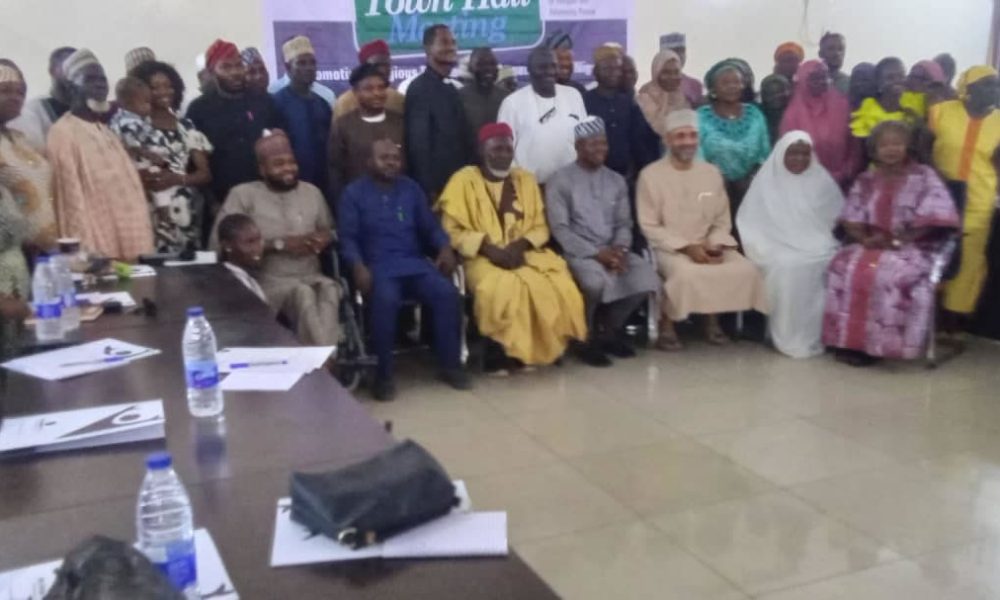 ReligiousDecember 11, 2025Peace Across Faiths: Minna Town Hall Strengthens Nigeria’s Commitment to Religious Freedom
 OpinionDecember 10, 2025LIES VS FACTS: Revisiting The Aregbesola Years In Osun
 Business and EconomyDecember 9, 2025KGIRS Sensitizes Stakeholders On Implementation Of New Nigeria Tax Act, 2025
 NewsDecember 9, 2025Insecurity: Ododo Briefs President Tinubu On Proactive Measures Put In Place






Food and Agriculture
Kogi L‑PRES Trains 300 Livestock Extension Workers, Farmers, Community Service Providers

From Joseph Amedu, Lokoja
The Kogi State Livestock Productivity and Resilience Support Project (Kogi L‑PRES), has commenced a capacity‑building workshop to mainstream Participatory Rural Appraisal (PRA) and Participatory Learning Action (PLA) methodologies into livestock extension training for Livestock Development in Kogi State
The event, held across the three Senatorial Districts of Kogi State, gathered over 300 Livestock Extension Agents, Lead Livestock Farmers, Key Value Chain Actors and community service providers, among others.
While declaring the workshop open in Lokoja, the Commissioner for Livestock Development, Dr Olufemi Bolarin, expressed pleasure at the gathering, noting that livestock is vital to Kogi’s economy, food security, and poverty reduction.
He highlighted challenges such as limited extension access, inadequate technical skills, and low technology adoption, and reaffirmed the state government’s commitment to empowering its workforce.
Represented by the Ministry’s Permanent Secretary, Dr Abdulsalam Hadi, the Commissioner urged participants to actively share experiences and learn for the benefit of farmers.
Earlier in his welcome address, the State Project Coordinator of Kogi L‑PRES Trains 300 Livestock Extension Workers, Farmers, Community Service Providers Mr Abdulkabir Onoruoyiza Otaru, said the training kicked off on Thursday in Lokoja for participants from Kogi West, continued on Friday in Anyigba for the East, and today, Saturday, in Okene for Kogi Central participants.
He said the workshop aims to strengthen participants’ ability to integrate PRA/PLA techniques into their extension / Advisory service delivery at Livestock Value Chain Clusters across the 21 LGAs of Kogi State.
According to him, it will improve the relevance and effectiveness of training programmes, address the specific needs of rural livestock farmers, and accelerate adoption of innovative technologies and Good Animal Husbandry Practices.
“The programme is structured as a “Train‑of‑Trainers” (ToT) initiative targeting 300 participants, including livestock extension agents, lead livestock farmers, and key value‑chain actors.
Mr Otaru noted that while Kogi L‑PRES initially recorded over 54,000 livestock farmers at baseline, a re‑validation exercise identified 32,000 genuine livestock farmers, declaring that the era of portfolio farmers without farms is gone in Kogi State.
He emphasised that the trained livestock extension agents and lead livestock farmers will cascade the training to at least 32,000 farmers across 64 Livestock Value Chain Clusters in the 21 local government areas of the state.
He noted that competent resource persons from the National Agricultural Extension Research and Liaison Services (NAERLS), ABU‑Zaria, will facilitate the workshops, supported by a National Extension Service Specialist from L‑PRES National Coordination Office, Abuja.
Mr Otaru thank and appreciate the Governor, His Excellency, Alhaji Ahmed Usman Ododo for his unwavering support toward empowering Kogi livestock farmers, enhancing livestock productivity, and ensuring the achievement of food security in the state.
He urged participants to engage actively, noting that the workshop should be a “contributory and participatory program” that will drive sustainable livestock management and long‑term community resilience, especially in underserved areas.
The Managing Director, Kogi State Agricultural Development Project (ADP), Dr Bello George Ogirima, described the training workshop as a crucial step toward building the Livestock Extension Agents and Lead Livestock Farmers capacity and strengthening adaptive strategies for livestock production.
He emphasized that livestock extension agents are key to quality extension/advisory service delivery at the agribusiness clusters and urged full cooperation to complement project goals.
A Livestock Extension Agent, Mr Johnson Olusegun from Mopamuro LGA, commended Kogi L‑PRES for prioritizing continuous training and retraining of extension agents and farmers, stating the workshop would empower them to address challenges hindering livestock value chains.
The workshop featured presentations from resource persons on topics such as Participatory Needs Assessment (PNA), PRA/PLA in livestock extension, Participatory Planning and Prioritization, Participatory Technology Development and Testing, and Monitoring & Evaluation Methods, among others.
The workshop is expected to mark a significant step toward mainstreaming participatory approaches in Kogi’s livestock sector, laying a foundation for scalable and resilient farming practices across the state.
Author Profile
Latest entries
ReligiousDecember 11, 2025Peace Across Faiths: Minna Town Hall Strengthens Nigeria’s Commitment to Religious FreedomOpinionDecember 10, 2025LIES VS FACTS: Revisiting The Aregbesola Years In OsunBusiness and EconomyDecember 9, 2025KGIRS Sensitizes Stakeholders On Implementation Of New Nigeria Tax Act, 2025NewsDecember 9, 2025Insecurity: Ododo Briefs President Tinubu On Proactive Measures Put In Place
Food and Agriculture
Kogi L-PRES Distributes Motorcycles, Medical Equipment to Boost Livestock Productivity

From Joseph Amedu, Lokoja
The Kogi State Livestock Productivity and Resilience Support Project (Kogi L-PRES), has distributed 21 Motorcycles to the Livestock Extension Agents in the 21 Local Government Areas as mobility support to boost Livestock Extension and Advisory Service delivery at the livestock value chain clusters in Kogi State.
js">
Also 1,000 Livestock Extension Manual were distributed to the Livestock Farmers across the 64 Livestock Value Chain Clusters in the State.
In addition, Veterinary Medical Equipment which comprises; Veterinary Laboratory Equipment, Meat Inspection Kits, Veterinary Ambulatory Kits and Veterinary Surgical Kits were handed over to the Department of Veterinary Services, Ministry of Livestock Development, Lokoja to improve animal disease diagnosis, veterinary services, food safety and security in Kogi State
The state’s Commissioner for Livestock Development, Dr Olufemi Bolarin, who flagged off the distribution exercise in Lokoja, said the initiative was part of activities heralding a One-Day Stakeholders’ Engagement on Effective Livestock Extension and Advisory Services Delivery in the state.
The Commissioner charged the Livestock Extension Agents to make judicious use of the facilities placed at their disposal for the intended purposes towards livestock value chain development in the state.
Dr Bolarin cautioned the beneficiaries not to use the facilities for commercial or private ventures but purely meant to carry out their extension and advisory services and nothing else.
He admonished L-PRES State Project Coordinator, Otaru Abdulkabir to continue to prioritise staff welfare and renumeration so as to achieve the needed productivity in the livestock sub-sector.
He stressed that the economic power of any nation depended on its level of agricultural transformation as a bedrock of socioeconomic development and employment creation.
Earlier, the State Project Coordinator of L-PRES, Mr Otaru Abdulkabir presented the structure of the Livestock Extension/Advisory Service delivery in Kogi State. He expressed delight on the adoption of Farmer to Farmer Extension/Advisory Services having the Lead Livestock Farmers/Value Chain Cluster Coordinators adequately and efficiently playing the role at the various value chain clusters along the priority value chains in Kogi State. He further explained that the livestock extension services have gone digital to showcase the technical know-how of the extension workers by using Kobo Tool to capture real time data during the delivery of Extension and Advisory Services in the state.
Otaru disclosed that the collaboration between Kogi L-PRES and Kogi Agricultural Development Project had changed the narratives with positive and impactful results assuring that the feat would be sustained in the years ahead.
He thanked and appreciated His Excellency, Alh Ahmed Usman Ododo, for providing an enabling environment to ensure that L-PRES activities thrive in Kogi State.
The Kogi State’s Commissioner for Agriculture and Food Security, Mr Timothy Ojomah; the Managing Director of Kogi Agricultural Development Project (ADP), Dr Bello Ogirima;, the State Coordinator, Federal Ministry of Livestock Development, Mrs Abah Helen, and the representative of the Livestock Farmers Mr Ibrahim Daniel Arome in their separate remarks commended the initiative saying it would further strengthen livestock productivity in the state.
They admonished the government at all levels to be wary of ghost farmers syndrome and be ready to weed them out to allow genuine farmers benefit from government patronage and assistance to them to carry out their agricultural activities in Kogi State.
Daniel Arome, a beneficiary, praised the state government and L-PRES for the initiative, pledging effective utilization of the resources for intended purposes.
Author Profile
Latest entries
ReligiousDecember 11, 2025Peace Across Faiths: Minna Town Hall Strengthens Nigeria’s Commitment to Religious FreedomOpinionDecember 10, 2025LIES VS FACTS: Revisiting The Aregbesola Years In OsunBusiness and EconomyDecember 9, 2025KGIRS Sensitizes Stakeholders On Implementation Of New Nigeria Tax Act, 2025NewsDecember 9, 2025Insecurity: Ododo Briefs President Tinubu On Proactive Measures Put In Place
Food and Agriculture
Kogi Launches National Animal Identification, Traceability, to Enhance Livestock Productivity

From Joseph Amedu, Lokoja
The Kogi State Ministry of Livestock Development has organized a sensitization workshop alongside the launch of the National Animal Identification system towards enhancing livestock management and productivity in the state.
adsbygoogle || []).push({});
js">
Commissioner for Livestock Development, Dr. Femi Bolarin while speaking at the event, said that the initiative underscores Governor Ahmed Usman Ododo’s administration commitment to bolstering the livestock sector, a crucial component for food security and rural economic growth.
He described the establishment of Kogi Ministry of Livestock Development as a right step in the right direction and reaffirmed government’s commitment to work closely with all stakeholders to ensure effective livestock registration.
He gave an assurance that the effort of Governor Ododo to modernize livestock production in Kogi would not go in vain.
According to the commissioner “The NAITS initiative is designed to ensure effective identification, registration and traceability of all livestock across the country. This technology will not only enhance productivity and data-driven planning but will also checkmate incessant menace of cattle rustling, livestock theft and transboundary animal diseases that have over time affected the growth of the livestock sub-sector
“In Kogi State, livestock farming remains an integral part of rural livelihoods and food security, the implementation of NAITS comes at the right time. With this system, we shall be able to track animal movement, monitor health status, and facilitate trade transparency to create confidence among farmers, herders, and consumers alike”
He commended the visionary leadership of Governor Ahmed Usman Ododo for his continued support towards livestock transformation.
“I also acknowledge the partnership, technical and financial coordinating office, Kogi L-PRES coordinating office and our development partners as well as field officers”
The commissioner explained that the sensitization training workshop was organised to create awareness and enlightenment on livestock production and management.
Representative of the Federal Ministry of Livestock Development, Abdulkareem Durosinolorun disclosed that NAITS is a national programme under the federal government national livestock transformation plan in collaboration with Megacorp Nigeria Limited.
He lauded Kogi State Government for keying into the programme to boost livestock production in the state.
Kogi State Commissioner for Agriculture and Food Security, Timothy Ojomah in his goodwill message at the occasion, maintained that Governor Ahmed Usman Ododo’s led administration would not relent in prioritising all segments of agricultural activities in the state.
Mr. Otaru Abdulkabir, Kogi State Project Coordinator of Livestock Productivity and Resilience Support (L-PRES), expressed happiness with the launch of the National Animal Identification and Traceability System in the state describing the development as a major step forward in collective effort to modernize and secure livestock production and management in Nigeria.
Earlier in his welcome address, the Kogi State Director of Animal Husbandry Services, Isah Anate Jimoh, said that his department remains fully committed to ensuring smooth implementation and sustainability of the programme in the 21 Local Government Areas of the state.
“We will continue to work closely with livestock associations, community leaders and security agencies to ensure that every livestock owners participate in the registration and tagging process”
Author Profile
Latest entries
ReligiousDecember 11, 2025Peace Across Faiths: Minna Town Hall Strengthens Nigeria’s Commitment to Religious FreedomOpinionDecember 10, 2025LIES VS FACTS: Revisiting The Aregbesola Years In OsunBusiness and EconomyDecember 9, 2025KGIRS Sensitizes Stakeholders On Implementation Of New Nigeria Tax Act, 2025NewsDecember 9, 2025Insecurity: Ododo Briefs President Tinubu On Proactive Measures Put In Place