
Education
Why I Support Fuel Subsidy Removal, How State Police Can Work – University Don
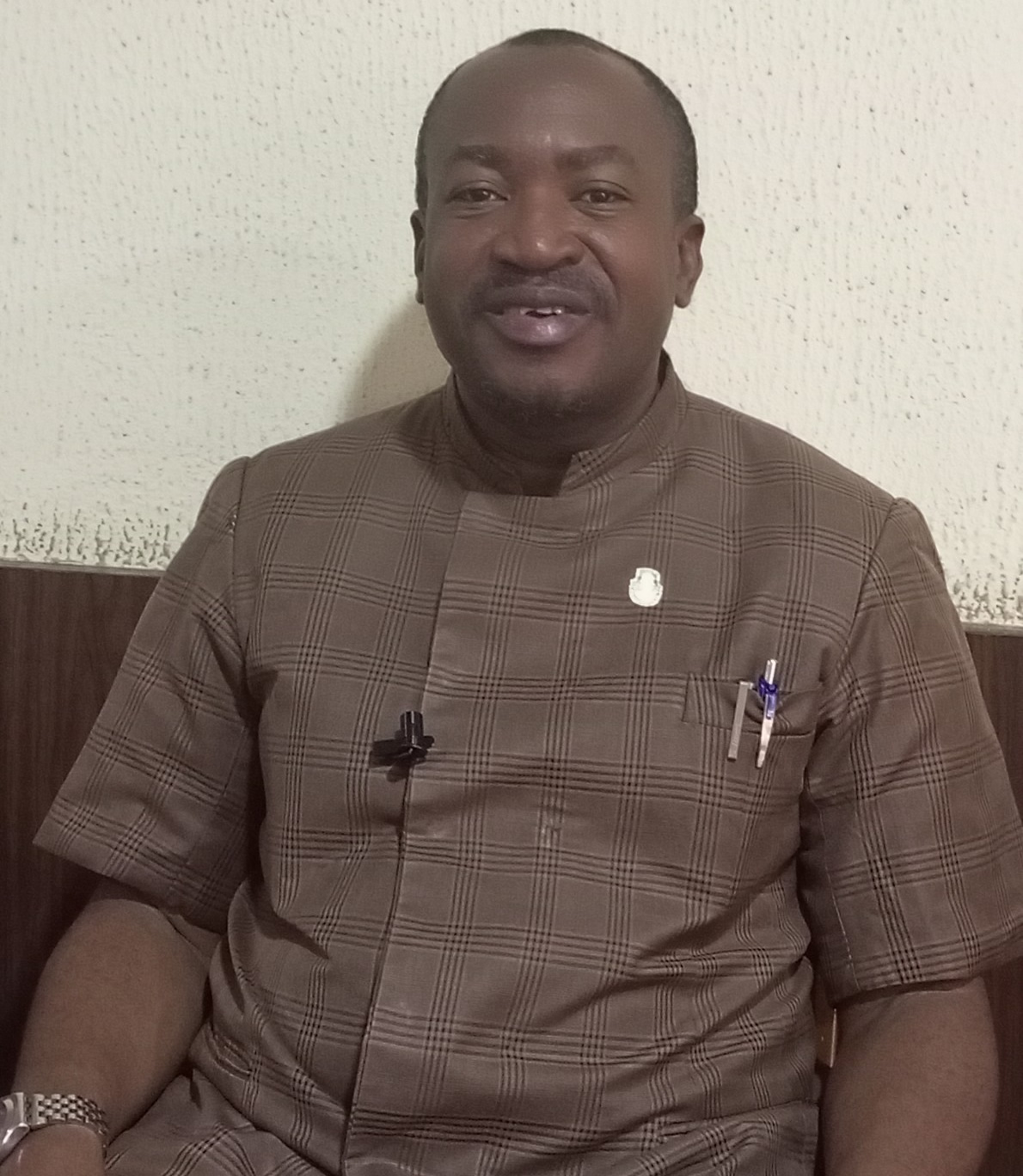
The fuel subsidy removal is the most serious issue that greeted the President Bola Tinubu led FG Administration with mixed reactions from every quarter within and outside the country. In this interview with Professor Hakeem Fawehinmi, Professor of Clinical Anatomy and Medical Anthropology, and the current Vice Chancellor of Nigeria British University Asa, Abia State, by Informavores National Assembly Correspondent, Ogechi Okorie, the issue of Fuel Subsidy removal, State Police, Education among others were discussed.

The excerpt:
Following the removal of fuel subsidy by the president and the Mixed reactions that follow, what is your thought on the issue of fuel subsidy removal?
In my opinion, it is a courageous step. I command the President for doing that. I have never really been an ardent supporter of the President but any President that removes subsidy now is time and infact removal of fuel subsidy is long overdue because a lot of people think that it is poverty alleviation policy but I can tell you that it is still the rich that benefits from it more than the poor. it is the rich who drives Air conditioned vehicles. It is another way of tasking the rich for the poor. if the Government is responsive and responsive and again, the merging of the exchange rate is a step in the right direction. Let the market forces determine the price of the dollar or pound in the foreign exchange market and not artificial means of using Government money and our foreign exchange reserves in the name of supporting manufacturers to bring down prices .So for to me, it is good. Ordinarily a President who come at such a time and with not knowing the possible outcome of the Presidential petition tribunal will want to play to the gallery and come up with policies that looks like welfarist policies in a bid to hoodwink the masses but the President is going ahead taking courageous steps which I see some elements of sincerity of purpose
Not too long ago, Nigeria has an alarming number of out-of-school children. What must the Government do to make sure that the number is reduced?
The Government must improve on the security situation in the country especially in the North East. You don’t expect Families who has been displaced because of insurgency to be talking about Education or putting Education of their children in the front burner when they are
Iiving as refugees in other places
Talking about Education, the President recently signed the student loan bill and a lot of stringet conditions were attached to it. it would have been a welcome development but with the conditions attached to it, are there doubts on its workability?
I don’t support it because anything that has to do with a large no of people in public policy in Nigeria hardly works . For instance, National Housing fund, National Health Insurance Scheme, Pension Scheme did not end well and even the tradermonie that was introduced to help businesses did not end well because many people are not really willing to pay back the money. How can you call some young people and give them 500,000(five hundred thousand naira) every year and you expect them to pay back when they get a job and how will you know they have been employed? it is not likely to work and with the mammoth crowd of young people we have here in Nigeria, how can you push that kind of policy through and which bank will be able to certify 10% of them and to worsen the situation, some people don’t have address because they live in the rural areas. How will you be able to trace this people? I advocate for a moderate increase in tuition whether we like it or not. I sympathise with Vice Chancellor of Public institutions because the tuition they are operating with or with we call school charges, has been operational for nearly 20 years. 20 years ago the salaries of their employee has tripled more than 4 to 5 times and you expect people to use charges of 20 years ago to run a municipal community?
It is unlikely to work because you will maintain security on campus, ensure there is adequate water supply, light and other municipal services, clean environment and all. I don’t see it working but a moderate increase in school fees for instance, private universities could be charging upwards of 1.5million to 2million, it won’t be too much to ask public universities to charge 10% of that. There is no where in the world where Education is for paupers, in as much as brilliant children from poor homes want to go to school, if there is no scholarship, people,families should be able to put together 100,000(hundred thousand)for a year.
We have a lot of people in middle class and even in the lower class paying for private, primary and secondary school and beyond that for their children and come to think of it, University education does not come even if you consider the services that is being rendered and the qualifications of the teachers and when you consider how long it took them to get their Degree, Masters, PhD and do so much research to become professors.
The process of the loan scheme is just not workable. How do you get students to fill forms and get their parents to also fill tax clearance forms as well, maybe get guarantors and all. How many of them will bank get to administer their accounts and how do you get the money back maybe after 10 and 20 years when the people who gave them the loan are no longer there in the bank to retrieve the loan? Look at what happens to corporate institutions taking loans from bank it takes a lot to recover those loans and that is why we have Amcon and Amcon is being stifled by corruption. So in this situation you give a young person 500,000 Naira and you think it will be easy to get the money back. It is true they do it in UK and some Western countries. They have a way of making sure that the money is payed back and it is a criminal offence when you don’tpay back the loan but here ,because you don’t have the record you will not know when the person has gotten a job.
Coming to Insecurity, with the rate of crime and many people advocating for State police, What is your take on this?
You cannot stay in Abuja and police 774 local Government Areas in this country. I have put a paper about my proposal on the issue of state police. I understand why the Government at the center is dragging their feet. Some Governors will be using them at will but at the same time, it can be curbed in the sense that every state police will still have its command at the center. There will be a police council that will be responsible for their professional activities like promotion and things like that but the police belongs to the state and since the Governor is the Chief Security officer of the state, every other ranked person will be an indigenes of the state and the officers will not have to be indigenes.
And when there is a countrol over how police is used by the Chief Security Officer of the State,there won’t be much need for all the various paramilitaries in the country. So at the end of the day, I seriously advocate for state police.
Infact, I even advocated a situation where the AIGs are in charge of 2 states and Commissioners of police 1 state and then the Area commands, should be under the authority an Assistant Commissioner of Police.So in every State, with 3 to 4 Area commands should be manned by a Chief Superintendent of Police because there are local Government Areas so an Area commander should Man it and in so doing, it brings police closer to the grassroot. The DPO stay where they are and the Deputy Commissioners of police will work with the Commissioners of police and once it goes beyond the state, you can now juggle people that are not from that state as AIGs so that if because the Commissioner of police of a state wants to be used by the Governor, the police Council will not allow that to happen.
Finally Prof, let’s talk about your University?
The Nigerian British University is a very beautiful brand, it isa world class 21st century conventional University. We have been licensed by NUC since last year and it was formally inaugurated this year. The Nigerian British University is bringing a blended British/Nigerian educational system where you can come and spend 2 years with us and spend 1 year in one of our affiliate University abroad and you can gain their Degree or ours and it is properly intertionalised to the extent that we expect people to come from outside the country to be our student and for those who cannot afford the 2 plus1, you stay there for the 4/5years (depending on the course)and graduate with a well rounded education which improves your employability and entrepreneurship skills because we are bringing a lot of mentoring and when you look at our recreational and extra curricular activities,you see that we are trying to build a global citizen and again, our security architecture is very good.
The University is opposite 144 battalion and our internal security architecture is also top notch. All our student will be on campus and I will advocate for any parent/parents who wants a top notch University who offer the very best to come to Nigerian/British
What courses does Nigerian/University offer?
We are a conventional University and we are not faith based. For a start we have faculty of computing and information technology, faculty of law, faculty of management and social sciences and our business school is going to start running post graduate programmes in the business school with our international affiliations.
We are affiliated with some Universities in the UK where they can start the program and do 6 months of their PhD research in those Universities outside the country if they chose to and we are planning to start Medicine and Engineering in the near future hopefully by the next academic section
Thank you Prof for your time.
Thank you for having me.
Author Profile
Latest entries
 InterviewsJuly 22, 2023Why I seek Urgent Intervention on Karim and Wurkin Ethnic Crisis – Hon Lauya
 EducationJune 26, 2023Why I Support Fuel Subsidy Removal, How State Police Can Work – University Don
 NewsSeptember 2, 2022Regulations 2019: NAPTIP Extends 60 Days Ultimatum Issued To Private Shelters And Rehabilitation Homes
 NewsJune 26, 2022Hon Buba Felicitates with Speaker Gbajabiamila at 60






Education
Kogi Poly Sacks Two Staff, Demotes Deputy Registrar Over Misconduct

From Joseph Amedu, Lokoja
The Governing Council of Kogi State Polytechnic, Lokoja, has approved the termination of the appointment of Mr. Mukhtar Muhammed, an Administrative Officer II, for sexual molestation.
adsbygoogle || []).push({});
Similarly, the appointment of Mrs. Funmilayo Afolabi, an Assistant Chief Executive Officer, was terminated for absconding from duty for nine months.
The Council equally approved the demotion of a Deputy Registrar, Mr. Audu Mathew, to the rank of Principal Assistant Registrar over negligence of duty.
The Council further approved the promotion of 11 Principal Lecturers to the rank of Chief Lecturer, as well as the promotion of 572 other teaching and non-teaching staff of the institution.
These decisions were among the far-reaching resolutions taken at the 72nd Regular Meeting of the Governing Council, presided over by the Chairman, Barrister Sani Shaibu.
The Council also approved the recommendation that 49 academic staff and 71 non-teaching staff be promoted for the 2024 promotion exercise. It further approved the promotion of 225 academic staff and 227 non-teaching staff for the 2025 promotion exercise.
Earlier in his address, the Rector of Kogi State Polytechnic, Professor Salisu Ogbo Usman, expressed his appreciation to members of the Governing Council for their presence at the meeting, describing it as a clear reflection of their steadfast commitment to the institution’s growth, stability, and sound governance.
Prof. Usman also informed the Council of the uncovering of a result forgery syndicate involving one Mr. Henry Tope, who was apprehended in possession of 30 statements of result and one original certificate, all bearing the name and insignia of the Polytechnic.
He further expressed gratitude to the Visitor to the Polytechnic and Executive Governor of Kogi State, His Excellency, Alhaji Ahmed Usman Ododo, for his support, leadership, and continued guidance.
Prof. Usman stressed that Governor Ododo’s administration has provided an enabling environment that has enhanced academic stability, infrastructural development, and overall institutional growth at the Polytechnic.
Author Profile

Latest entries
 NewsJanuary 27, 2026Soludo’s Economic Blockade of Onitsha Is ‘Declaration of War’ Against Igbo People
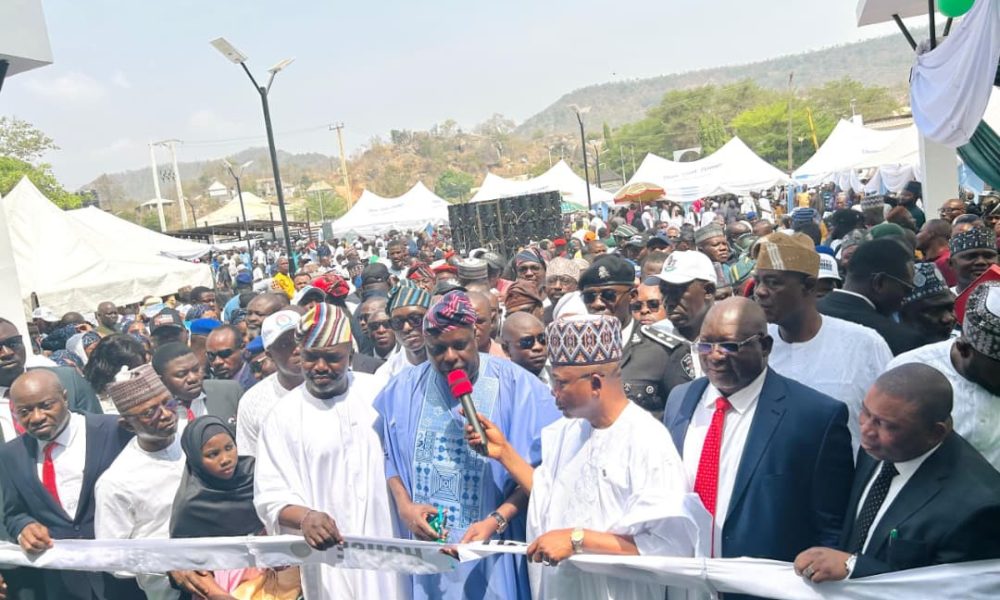 Business and EconomyJanuary 27, 2026Ododo Lauds Tinubu Over Public Finance Reforms, As Chief Ibori Commissions Kogi Audit House
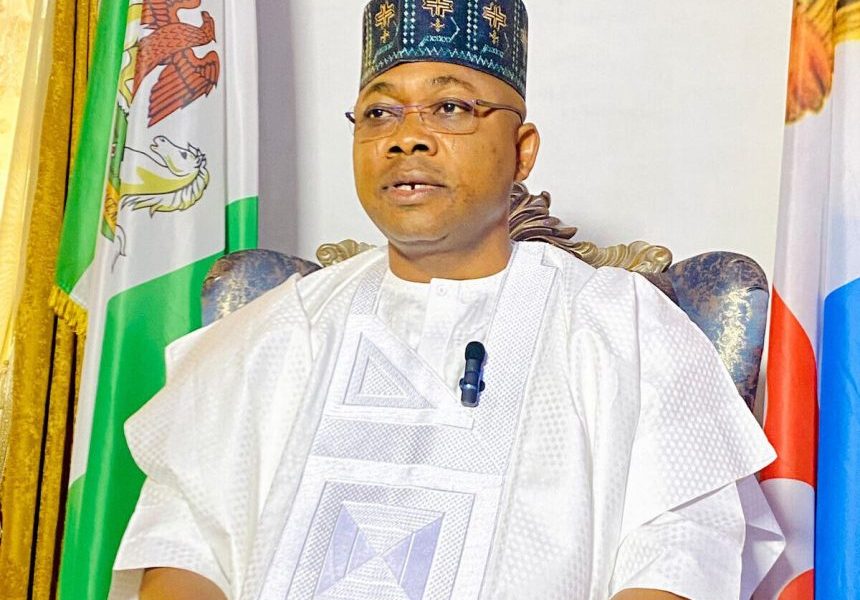
 OpinionJanuary 27, 2026Rep Members Do Not Sell Contracts: Boniface Adie Must Cease the Barefaced Lies Against Hon. Peter Akpanke
 Food and AgricultureJanuary 16, 2026Kogi Vows To Invest More In Cashew Business For Job Creation, Others
Education
NGO Heightens Advocacy for Indigenous Climate Education With Pulitzer Center

From Joseph Amedu, Lokoja
The Ace Initiative for Sustainable Development, has successfully concluded a comprehensive climate education programme supported by the Pulitzer Centre.
The event bringing together primary schools, universities, government representatives, and environmental experts in a landmark effort to expand climate literacy across Nigeria.
com/pagead/js/adsbygoogle.js">
The project, which culminated virtually on the 27th to 28th November, unfolded in three phases: primary school outreach, an inter-university climate competition, and a high-level panel discussion.
Prof. Sade Oderinde, representing the Acting Vice Chancellor of Tai Solarin Federal University of Education, Prof. Adekunle Olanrewaju Adeogun, delivered the welcome address, emphasising the university’s commitment to environmental education.
The first phase introduced climate education to five public primary schools in Ijebu-Ode through engaging Yoruba-language videos adapted from Pulitzer Centre climate investigations.
Stories including “Investigation: How Big Businesses, Individuals Deplete Nigeria’s Protected Forests” by Uchenna Igwe, “Red Gold Project: Battle for the Soul of Depleting Nigerian Forest Reserve” by Taiwo Adebulu, and “Amid Deforestation Scourge, Vanishing Herbal Plants Pose Health Crisis in Southwestern Nigeria” by Abdulwaheed Sofiullahi and other Pulitzer stories were transformed into illustrated storytelling videos featuring indigenous proverbs and local examples.
Project Lead, Dr. Oluwaseun Anselm, coordinated the outreach together with Dr. Faleke Mary, the Schools Liaison Lead.
Participating schools included Emmanuel Anglican Primary School I and II, St Augustine Primary School, Olu-Ola Primary School, and Moslem Primary School.
Pre- and post-learning assessments revealed significant improvements in climate awareness, with pupils making “Climate Hero Pledges” to protect trees, conserve water, and educate their families.
The second phase brought universities students together from the six geopolitical zones in Nigeria including TASFUED, University of Lagos, Ahmadu Bello University, University of Jos, Federal University Kashere, Federal University of Education Zaria, Yobe State University, and University of Ilorin.
Students analysed Pulitzer stories to discuss climate challenges and propose solutions ranging from urban heat mitigation to reforestation strategies.
Institutional representatives including Dr Yakubu Salihu Muhammad (Federal University Kashere), Dr Yusuf Abdulkabir Toriola (Federal University of Education Zaria), Dr Seun Nurudeen Akorede (Ahmadu Bello University), Dr Jamiu AbdulQudus Tosin (University of Ilorin) and others, mobilised student participation.
The programme climaxed with a panel discussion opened by Prof. Oladipo Samuel, Director of Research and External Relations at TASFUED.
Distinguished panellists included Dr Godsday Usiabulu, Certified African Climate Ambassador; Prof. Oluwafemi Saibu, Professor of Economics at University of Lagos; Prof. Adefunke Ekine, Department of Childhood Education, TASFUED; and Prof. Adekunle Bamiro, Department of Chemical Sciences, TASFUED.
Other were: Dr Oluwatoyin Fatunsi, Environmental Chemist, University of Lagos; Prof. Moshood Bello, Department of Health and Safety Promotion, TASFUED; Mr Rasaq Olatunji, Forest Economist and Acting Project Manager at J4; and Prof. Zacchaeus Ojekunle, Department of Geography, Federal University of Agriculture, Abeokuta.
Panellists engaged with Pulitzer investigations including “How Airports Fuel Climate Change in Nigeria” by Nkrumah Bankong-Obi, “Cost of Farming: How Iseyin Women Farmers Cope with Climate Change and credit Crunch” by Francis Annagu and “Climate Shocks, Governance Gaps and the Refugee Crisis in the Sahel,” by Ibrahim Adeyemi and other stories published with support of Pulitzer Center, USA.
The programme successfully created a coherent knowledge pipeline from child-friendly indigenous narratives to advanced policy analysis.
Ace Initiative for Sustainable Development plans to expand this model to additional states, reaching more schools and strengthening climate resilience conversations nationwide.
Author Profile
Latest entries
NewsJanuary 27, 2026Soludo’s Economic Blockade of Onitsha Is ‘Declaration of War’ Against Igbo PeopleBusiness and EconomyJanuary 27, 2026Ododo Lauds Tinubu Over Public Finance Reforms, As Chief Ibori Commissions Kogi Audit HouseOpinionJanuary 27, 2026Rep Members Do Not Sell Contracts: Boniface Adie Must Cease the Barefaced Lies Against Hon. Peter AkpankeFood and AgricultureJanuary 16, 2026Kogi Vows To Invest More In Cashew Business For Job Creation, Others
Education
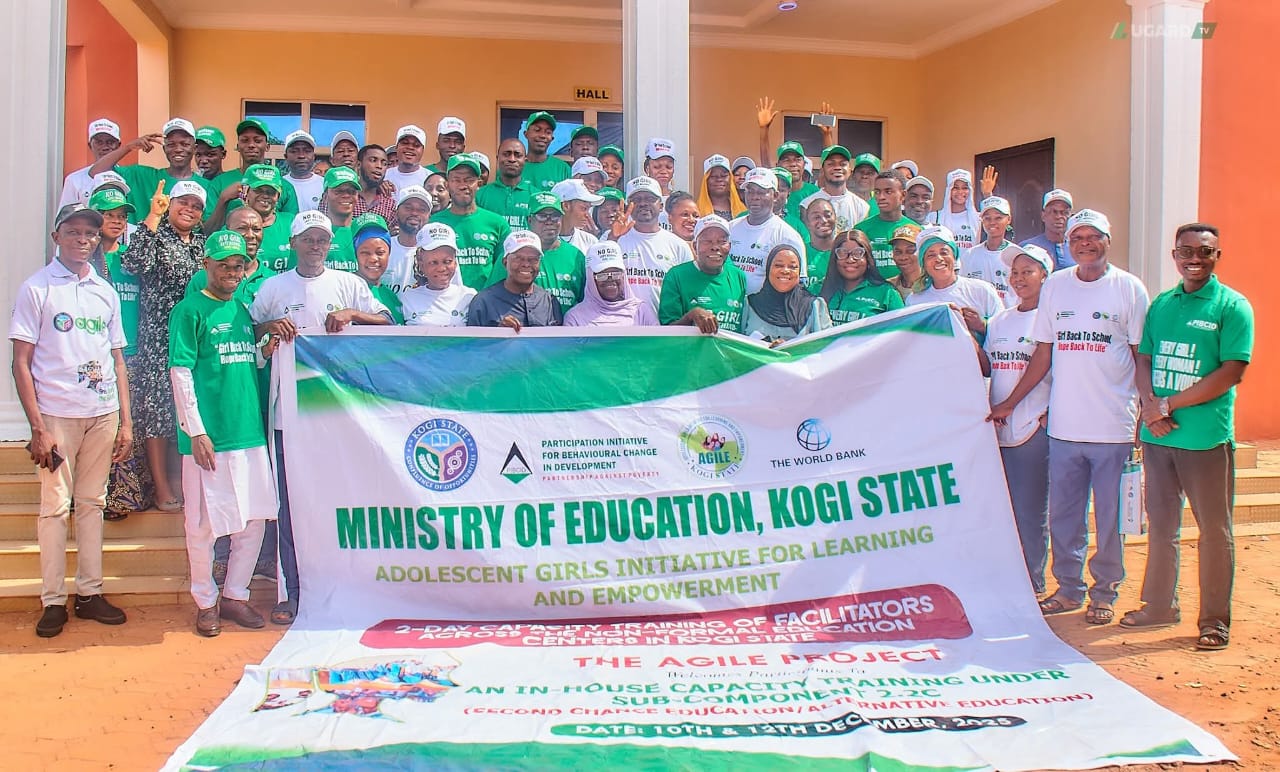
AGILE Trains 130 Non-Formal Education Facilitators In Kogi
From Joseph Amedu, Lokoja
The Kogi State Ministry of Education, through the Adolescent Girls Initiative for Learning and Empowerment (AGILE) Project, has trained 130 facilitators drawn from non-formal education centres across the three senatorial districts of the state, to strengthen the delivery of second-chance and alternative education programmes.
com/pagead/js/adsbygoogle.js">
The two-day capacity-building training, held under AGILE Sub-Component 2.2C (Second Chance/Alternative Education) in partnership with the Participation Initiative for Behavioural Change in Development (PIBCID), focused on enhancing facilitators’ understanding of post-literacy manuals, harmonising instructional methods, and promoting participatory and adult learning techniques.
Speaking at the event, the State Project Coordinator (SPC), Alhaji Ahmed Tijani Oricha, described the training as a strategic intervention aimed at improving access, quality, and equity in education delivery. He noted that non-formal education remains critical to reaching adolescents and young people excluded from the formal system, adding that well-trained facilitators are central to achieving the objectives of the AGILE Project at the grassroots.
Alhaji Oricha urged participants to apply learner-centred approaches in their respective centres, stressing that their commitment and professionalism would directly influence learning outcomes and the overall success of the Second Chance Education programme.
The Component Lead, Hajia Mariam Bello, said the training was designed to ensure uniformity and consistency in content delivery across all non-formal education centres. She explained that facilitators were taken through structured sessions to deepen their understanding of lesson sequencing, integrated teaching approaches, and effective classroom engagement for adult and adolescent learners.
According to her, adopting participatory methods would help create inclusive learning environments that respond to learners’ realities while advancing AGILE’s goal of improved literacy, numeracy, and life skills acquisition.
Also speaking, the Executive Director of PIBCID, Mrs. Racheal Akande, reaffirmed the organisation’s commitment to supporting capacity development and behaviour-change interventions that strengthen teaching quality within the non-formal education sector.
The training featured technical sessions in English Language, Mathematics, Civic Literacy, and Basic Science, facilitated by experienced resource persons and reinforced through interactive discussions.
Participants described the programme as timely and impactful, pledging to deploy the skills acquired to improve learning outcomes across non-formal education centres in Kogi State.
Ends.
Author Profile
Latest entries
NewsJanuary 27, 2026Soludo’s Economic Blockade of Onitsha Is ‘Declaration of War’ Against Igbo PeopleBusiness and EconomyJanuary 27, 2026Ododo Lauds Tinubu Over Public Finance Reforms, As Chief Ibori Commissions Kogi Audit HouseOpinionJanuary 27, 2026Rep Members Do Not Sell Contracts: Boniface Adie Must Cease the Barefaced Lies Against Hon. Peter AkpankeFood and AgricultureJanuary 16, 2026Kogi Vows To Invest More In Cashew Business For Job Creation, Others