
News
Post COVID-19 era: 7 reasons why N’Assembly must pass local content Bill
By Yemi Itodo
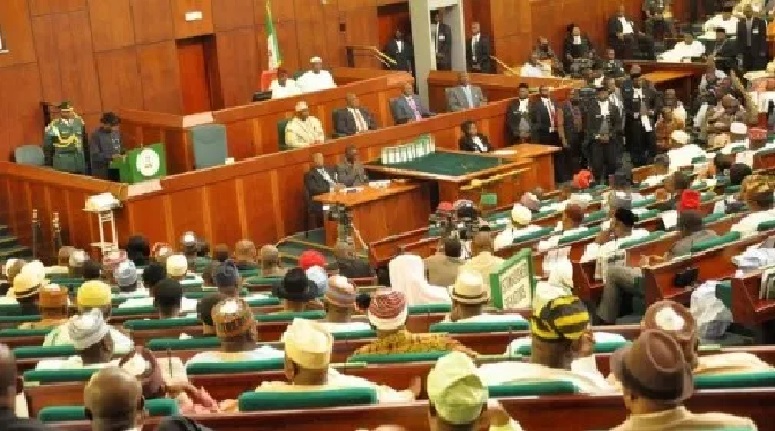
As the world prepares for measures in boosting economies after the ease of global lockdown, the Nigerian National Assembly, is once again, saddled with the responsibility of coming up with legislative piece and actions that could help rejuvenate the nation’s economy and help Nigerians overcome post-Corona virus hardship. googlesyndication.com/pagead/js/adsbygoogle.js">
One swift step that must be taken by both Houses of the National Assembly, is to give serious attention to, and speedily pass the local content enforcement Bill.
The Bill which is known as, the Nigerian Local Content Development and Enforcement Bill 2020, passed second reading on the floor of the House of Representatives, on Tuesday, 19th May, 2020.
The Bill is being sponsored by the Speaker, House of Representatives, Rt. Hon. Femi Gbajabiamila; Chairman, House Committee on Nigerian Content Development and Monitoring, Rep. Legor Idagbo and 7 others.
Amongst other things, the Bill seeks to expand the scope of local content in the extant NOGICD Act, thereby putting the Nigerian economy in the hands of Nigerians, creating jobs and enhancing the value of indigenous businesses in the post Covid-19 era.
Spokesman of the House, Rep. Benjamin Kalu, while analysing the general principles of the Bill in a statement on Monday, said, the idea of local content Bill or policy was to encourage local participation, ownership and control of certain key sectors by indigenous businesses.
“This is vital to preserving Nigeria’s socioeconomic independence and enhancing the ability of indigenous businesses to exploit local opportunities, while staying globally competitive”, Kalu said.
Stressing further, the Spokesman said, “so far, the key local content legislation in Nigeria is the 10-year old Nigerian Oil and Gas Industry Content Development Act 2010 (NOGICDA), which established the Nigerian Content Development and Monitoring Board (NCDMB) but is limited to the oil sector.
“Also notable, are the President’s efforts to extend local content compliance to the public procurement practices of federal parastatals vide his Executive Orders 003 and 005.
“However, as we celebrate the Africa Day (May 25), a day commemorating Africa’s independence, liberation and socioeconomic freedom from foreign dominion and exploitation, and in the light of the current COVID-19 induced global economic position which has forced countries to look inwards for economic growth and sustainability, it has become imperative to extend local content policy beyond the Petroleum Industry to other critical sectors like, ICT, Manufacturing, Agriculture, Power, Solid Minerals, Construction, Health, etc, through comprehensive legislation”.
THE SOCIO-ECONOMIC BENEFITS OF THE BILL IN NIGERIA’S POST COVID-19 ERA:
- The Bill, when passed and assented to, will promote local manufacturing and economic diversification with focus on ICT, Agriculture, Solid Minerals, Hydrocarbon Refining and Power.
It provides for incentives to encourage local processing of hydrocarbon resources, export of processed minerals and agricultural commodities, local manufacturing of equipment, machinery, spares, chemicals, ICT hardwares, development of softwares and others.
The Local Content Bill also provides for standardisation of locally made goods and locally sourced raw materials to make them competitive in the international market.
- The Bill makes it mandatory for Nigerian made goods and services in all public procurements; Nigerian content philosophy as a key requirement in all public sector procurements; provides for creation of local content departments in MDAs and provides requirement for Nigerian Content Plan (NCP) on major projects (above N100m) outlining minimum Nigerian Content thresholds for materials, labour and services required on the project.
It also strengthens Nigerian content requirements in solicitation of bids and requires Nigerian content compliance certificate as a pre-condition for contract awards; while recommending the creation of Nigerian Content Committee (NCC), to develop economy-wide local content policy.
- Creation of a robust R&D ecosystem to drive home grown technology development; promoting collaborations between Research institutions, product developers and end users of Research; as well as provision to incentives funding of research by public and private sector entities, is another green side of the Bill that would help develop the Nigerian system.
- In job creation drive to address unemployment, the Bill seeks to give first consideration to Nigerians with requisite skills in all public funded projects.
The Bill also provides for creation of national database of available skills amongst the Nigerian locals and requirements for approval and utilisation of expatriates will only role where there is immediate skills shortage.
- Local Content Enforcement Bill will address capacity building to develop resilient local supply chain; Provision for targeted sector-specific capacity building programmes and requirement to close capacity gaps in education, infrastructure, facilities and vendor development on the back of projects.
- Sustainable funding for local content is another clause in the Bill that will help promote and grow the Nigerian economy in Post COVID-19 era.
To achieve this, the Bill provides for creation of a Nigerian Content Trust Fund (NCTF), dedicated to implementing projects and programmes connected to developing local content. Application of the Fund to develop SMEs through low interest project-based financing schemes is also provided for in the Bill.
- The enactment of the Nigerian Local Content Development and Enforcement Bill will strengthen executive-legislature synergy and oversight on local content administration in key sectors of the economy.
It will also provide necessary legislative backbone for implementation of key initiatives that will evolve from the Presidential Economic Sustainability Committee as well as other policy actions by the Executive aimed at repositioning the Nigerian economy in the post COVID-19 era.
As the House of Representatives resumes plenary on Tuesday, 2nd June, 2020, it is instructive to consider further legislative actions for the speedy passage of the all-important Nigerian Local Content Development and Enforcement Bill 2020.
The Nigerian Senate should also, as a matter of urgent national importance, consider the concurrence of the Bill when passed by the lower chamber, for the immediate assent of President Muhammad Buhari, for the good of our economy and the citizenry.
Author Profile
Latest entries
 InterviewsJuly 22, 2023Why I seek Urgent Intervention on Karim and Wurkin Ethnic Crisis – Hon Lauya
 EducationJune 26, 2023Why I Support Fuel Subsidy Removal, How State Police Can Work – University Don
 NewsSeptember 2, 2022Regulations 2019: NAPTIP Extends 60 Days Ultimatum Issued To Private Shelters And Rehabilitation Homes
 NewsJune 26, 2022Hon Buba Felicitates with Speaker Gbajabiamila at 60





News
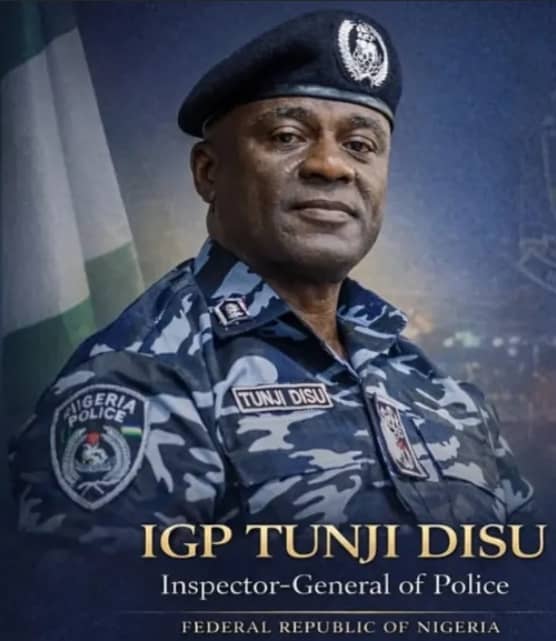
Ajia: Tunji Disu’s Leadership Offers Hope for Tackling Insecurity
By AbdulRahman Obaje
The Dan Amanan Fune Emirate of Yobe State and Nwanne Ukwu Di Na Mba of Amaba-Ukwu Item in Abia State, Alhaji Ibrahim Mohammed Ajia, Ph.D, has congratulated the newly appointed Inspector-General of Police, Tunji Disu, describing his appointment as well deserved and timely for Nigeria’s security challenges.
js">
Ajia also commended President Bola Ahmed Tinubu for what he called a bold and thoughtful decision in appointing a highly experienced and celebrated police officer to lead the nation’s police force.
In a statement signed by his Director of Communications, Mallam Abdulrahman Aliagan, and made available to journalists in Abuja on Monday , Ajia praised Disu’s impressive educational background, professional training and operational experience, noting that Nigeria and Nigerians are fortunate to have him at the helm of the Nigeria Police Force at this critical time.
According to Ajia, the new IGP has built a reputation for professionalism, discipline and dedication to duty, qualities he said are necessary to reposition the police and strengthen internal security across the country.
He noted that the appointment has raised renewed hope that the country can decisively confront insecurity, insurgency, kidnapping and banditry if the police leadership fully deploys its experience, training and operational capacity.
Ajia, a celebrated retired Police Officer, however, advised the new police chief to prioritise the welfare and concerns of officers and men particularly the rank and file who carry out the bulk of policing duties across the country. He stressed that listening to their “yearnings and cries” would significantly improve their morale and operational effectiveness.
He urged the new IGP to see to the end of final exit from the Pencom system to an improved police pension system . Also to address structural imbalances within the force, particularly the growing disparity between senior officers and the rank-and-file personnel who are responsible for frontline policing.
According to him, the police system must return to a proper pyramidal structure that allows for balanced growth, professionalism and efficiency.
The security expert further called for the recruitment of more rank-and-file officers to strengthen community-level policing, noting that the current structure has too many officers in higher ranks while the operational base remains understaffed. He encouraged the new police boss to ensure that recruitment becomes a real and transparent exercise rather than routine announcements.
On welfare, Ajia urged the police leadership to work towards the realignment of police salaries with those of other internal security agencies. He recalled that approval had been granted during the administration of president Goodluck Jonathan but requires only full implementation.
He also advised the new IGP to work closely with the Nigeria Police Trust Fund to ensure that projects and interventions are based strictly on the operational needs assessment of the force . According to him, the National Assembly should also strengthen the legal framework guiding the Trust Fund so that it functions purely as a professional support institution rather than a political structure.
Fune Emirate title holder emphasised that with the establishment of the Trust Fund, funding for policing in Nigeria should no longer be a major challenge if properly managed.
Speaking on insecurity, he expressed confidence that Nigeria can significantly reduce insurgency, kidnapping and banditry if the police rise fully to the responsibility of internal security. He urged Disu to deploy his experience, networks and training to confront criminality decisively.
He also recommended the establishment of a special force counter-terrorism unit within the police, stressing that the Nigeria Police already possesses a model that can be strengthened into an effective national response unit for violent crimes
Ajia concluded that Nigerians are optimistic about the future of policing under Disu’s leadership and expressed confidence that with courage, strategic reforms and commitment to officers’ welfare, the new Inspector-General of police will leave a lasting legacy in the nation’s security system.
Author Profile

Latest entries
 PoliticsMarch 5, 2026Ajia Congratulates Kwara APC Exco , Gov. AbdulRaham Others Over Successful State Congress
 NewsMarch 3, 2026Ajia: Tunji Disu’s Leadership Offers Hope for Tackling Insecurity
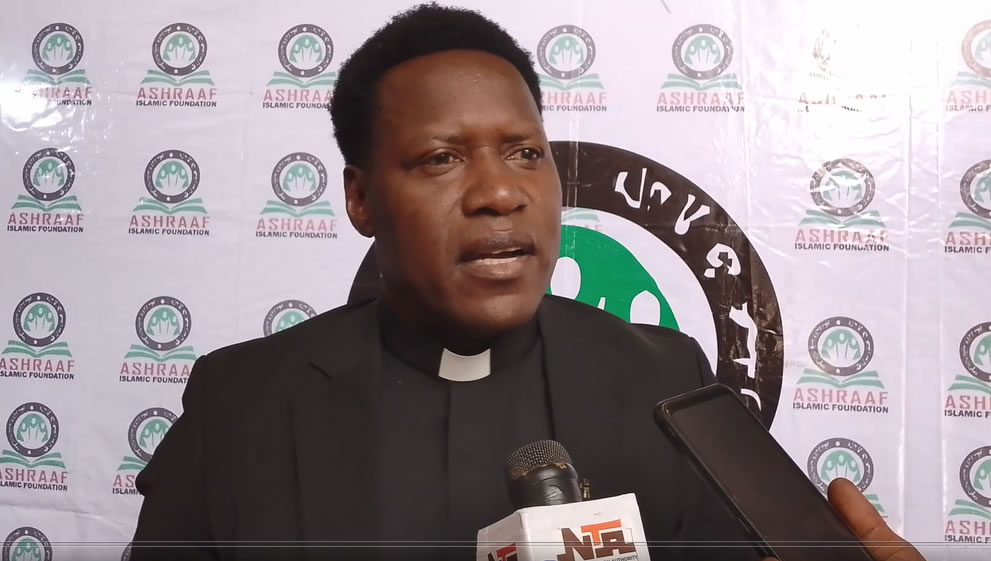 NewsMarch 3, 2026Rev. Fr. Barkindo of the Kukah Centres highlights 2 points to tackle insecurity, at the Ashraaf Islamic Foundation Centre Ramadan Lecture
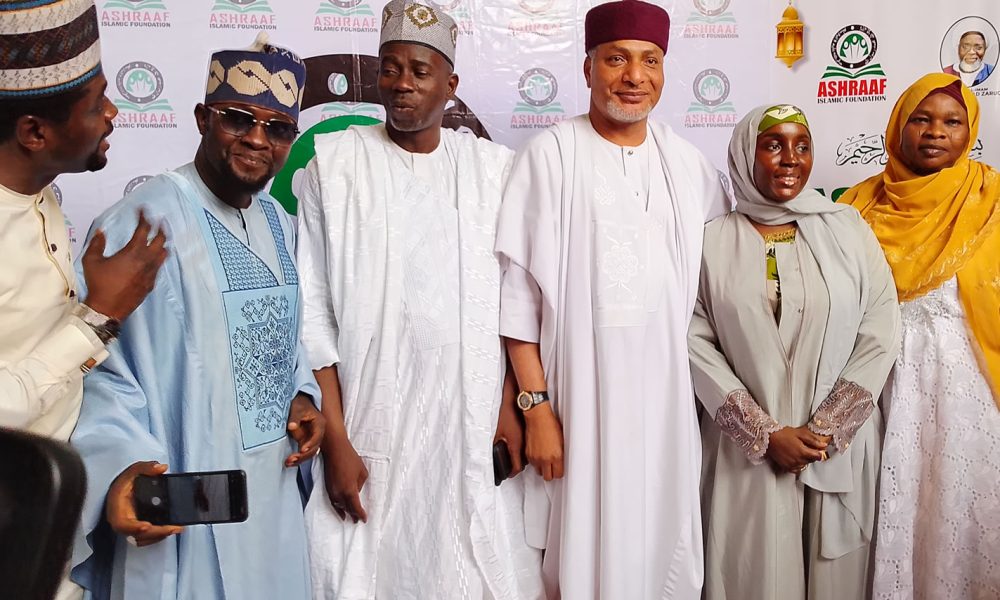 NewsMarch 3, 2026Ashraaf Islamic Foundation Tackles Insecurity with 9th Annual Ramadan Lecture
News
Rev. Fr. Barkindo of the Kukah Centres highlights 2 points to tackle insecurity, at the Ashraaf Islamic Foundation Centre Ramadan Lecture
By AbdulRahman Obaje
The Rev. Fr. Atta Barkindo, Executive Director of The Kukah Centre (TKC), and Head of Secretariat for the National Peace Committee has identified two cogent points to tackle insecurity in Nigeria.
adsbygoogle || []).push({});
He revealed this during the 9th Annual Ramadan Lecture and Prayer for the Nation, presented by Ashraaf Islamic Foundation in Abuja, Nigeria.
While answering questions from journalists at the event, Rev Fr. Barkindo highlights misrepresentation of religion as the first problem.
He said, “I think for me, the first thing is to understand where is this problem coming from? Number one, we cannot keep denying that this thing has nothing to do with Islam or has nothing to do with Christianity. I think if you make this denial, you have not understand.
“If you have ten children and one of them becomes a thief, are you saying that that thief is no longer your child, is your child.”
“So, the first thing is that people are exploiting religion, they are misrepresenting religion and we need to get religious leader who understand the situation, who have the influence, the respect in order to proffer solutions and to help us to stop the exploitation and the misrepresentation of religion.
He further revealed that education is the second key element in the equation.
“And the second element for me actually is education. People are really not very educated and it is difficult for you to practice democracy in a context of illiteracy. So there has to be proper education that can offer jobs, meaningful jobs to people. And I think once people have this job they are likely going to leave atrocities and concentrate on their work.”, he continued.
While reacting to questions on why he is part of Muslim gathering, he said, “God is God, where are the human beings trying to make distinction, God has absolutely no problem.”
“The Christians are fasting, Muslims are fasting, there is nothing wrong for me to come and grow from the Islamic perspective. If I get to heaven and there is no Christianity, I have Islam, I will enter heaven; If I get to heaven and there is no Islam, I have Christianity, I will enter heaven; so, I am pretty very much okay with it.”
“My biggest interest was actually to look at the Islamic jurisprudence, either supporting or making illegitimate terrorist activities in this country. Does Islam support terrorism through jihad or does Islam prohibit terrorism and condemn jihad rather than personal effort and I think for me this is really an interesting aspect and I think this will afford the government in developing some very strong strategic policies recommendation from lectures of this nature.”
“To see how they can work with religious leaders particularly Islamic groups in supporting the justice system, the judicial processes that will hold perpetrators of atrocities accountable.”
“And at the same time, what sort of mediation, conflict resolution, reconciliation platform can communities create in their local area in order to mitigate the violence across this country.”
“We don’t have to wait for another country to come into Nigeria and tell us what is happening. We can all see for ourselves. It’s not Christians, it’s not Muslims, Nigerians are dying literally from every part of this country; in Sokoto, in Zamfara, in Katsina, in Benue, in Plateau, in Adamawa, Christians, Muslims, atheist; at the end of the day, Nigerians are dying.”
“And I think for me we should look at it from that perspective. Death is about Christians or Muslims. It is about the fact that Nigerian citizens are being killed and what can we do to stop the killing together?”.
The Ashraaf Islamic Foundation is always striving to tackle the socio-economic problem bedeviling the nation with its Annual Ramadan Lecture and Maolid Nabiyy. This year edition of the Annual Ramadan Lecture had gathered notable Nigerians focusing on the Islamic perspective on banditry and terrorism with theme “Faith & Justice, The Islamic Judicial Perspective on Terrorism, and Banditry in Nigeria.”
Author Profile
Latest entries
PoliticsMarch 5, 2026Ajia Congratulates Kwara APC Exco , Gov. AbdulRaham Others Over Successful State CongressNewsMarch 3, 2026Ajia: Tunji Disu’s Leadership Offers Hope for Tackling InsecurityNewsMarch 3, 2026Rev. Fr. Barkindo of the Kukah Centres highlights 2 points to tackle insecurity, at the Ashraaf Islamic Foundation Centre Ramadan LectureNewsMarch 3, 2026Ashraaf Islamic Foundation Tackles Insecurity with 9th Annual Ramadan Lecture
News
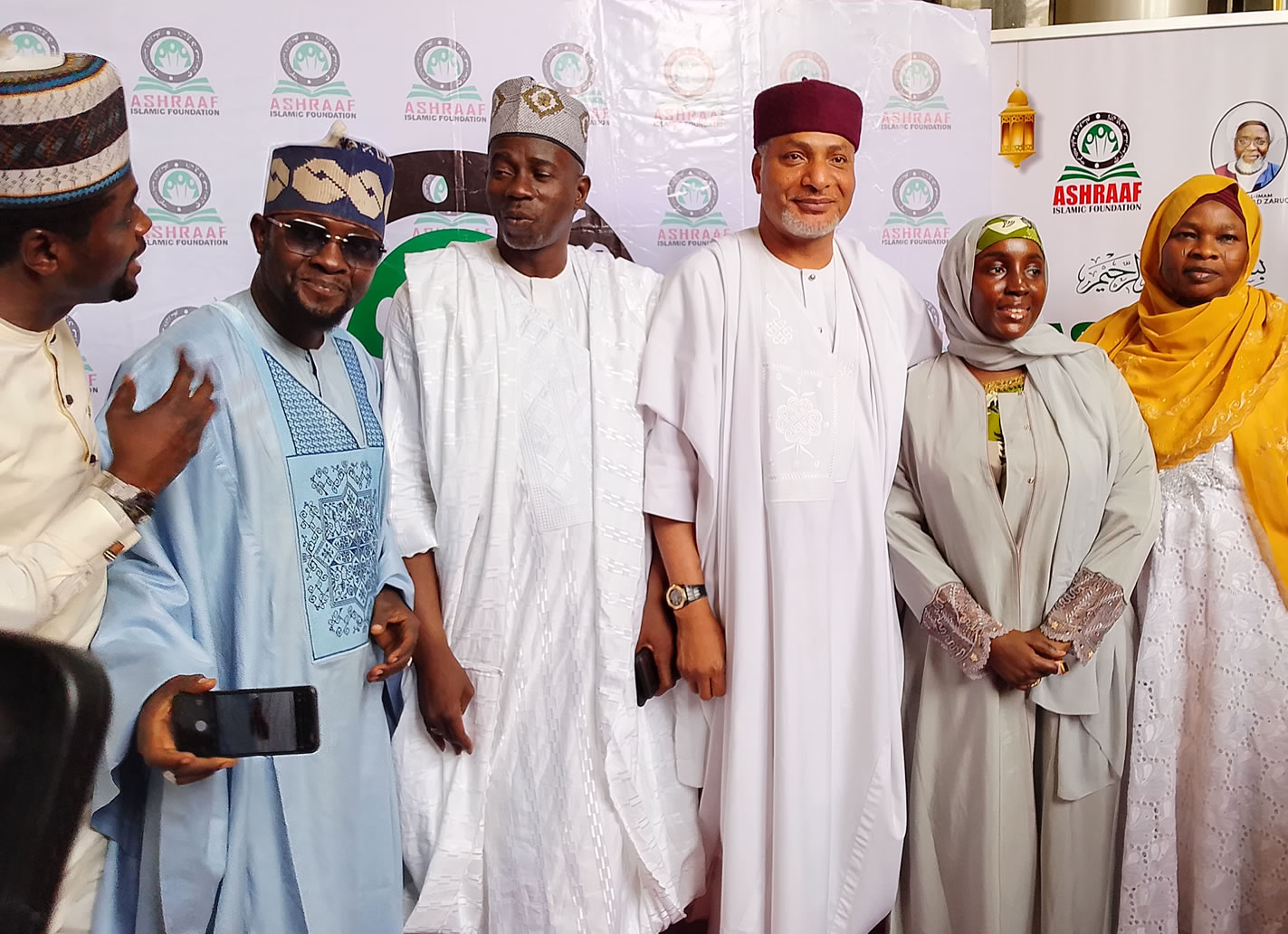
Ashraaf Islamic Foundation Tackles Insecurity with 9th Annual Ramadan Lecture
By AbdulRahman Obaje
Many people, especially Nigerians were not happy when on October 31st, 2025, the United States of America led by Donald Trump had again designated Nigeria a country of particular Concern (CPC), citing severe systemic and ongoing violation of religious freedom.
adsbygoogle || []).push({});
googlesyndication.com/pagead/js/adsbygoogle.js">
This is because Nigeria insiders know that impact of insecurity in Nigeria does not only affect a particular religion or sect or tribe or state as claimed by outsiders. The version of insecurity that Nigeria as a nation is currently experiencing has recorded significant blow to properties and loss of lives to Christians, Muslims, traditionalists and atheists alike; from the northern, southern, eastern, western and even the middle-belt parts of the country. So, concluding that a particular religion, sect or tribe is being targeted at might revealed that such does not actually understand the true nature of insecurity in Nigeria.
Notable among those that truly understand the real calculus of insecurity in Nigeria is the Founder/Chairman, Ashraaf Islamic Foundation, Imam (Dr) Sharafudeen Abdulsalam Aliagan. So, it is not surprising that the 9th edition of Ashraaf Islamic Foundation’s Annual Ramadan Lecture and Prayer for The Nation focused on assisting the government in tackling insecurity by bringing stakeholders together under one roof of discussion so as to channel a course of action for the nation.
This year Ramadan Lecture which theme is “Faith & Justice, The Islamic Judicial Perspective on Terrorism, and Banditry in Nigeria” gathered stakeholders from across the board; the judiciary, the executive and the legislative arms of government; religious leaders, politicians, business moguls among other notable Nigerians.
Those that speak with journalists among guest speakers at the event expressed enthusiasm hoping that outcome of the event will boost the fight against terrorism and banditry in no small measure.
Salisu Abubakar representing the grand cardy of the sharia court of appeal of FCT, Abuja while interacting with journalists at the event said, “the grand cardy had wanted to attend however, other engagement prevented him from doing so. And he sends his appreciation and congratulations to the organizer, Ashraaf Islamic Foundation, especially for coming up with a very timely topic on the issue of Islamic judicial perspective on terrorism and banditry in Nigeria.”
“This topic could not have come at a better time than now especially considering what the country is with lately presenting, Nigeria has been designated as a country of a particular concern by the United State of America.”, he continued.
“It is our belief that Islam has provided solution and prescription on how to fight terrorism and banditry. Allah clearly says in the Holy Quran in chapter 5, verse 33 on how bandits and terrorists should be dealt with. Incidentally and fortunately the terrorism prohibition acts in Nigeria has borrowed a leaf from most of the punishment prescribed in the Quran. So, what is left is the will to prosecute bandits and terrorists.”
“All hands must be on deck, the judiciary, the executive and the legislature to see to the end of banditry and terrorism in Nigeria.”, he charges.
“Fortunately, the organizer is able to empanel the right stakeholders to this program, the representative of Mr. president, the person of honourable minister of state for health and social welfare was here; a senator of the federal republic of Nigeria is here and the judiciary is represented by us.”
“So, all the three arms of government are here and we hope that this program will come up with solutions on how to implement the laws that we already have; both in the Quran and the Nigeria constitution and other relevant legislation
Also, a security expert and politician, Dr. Muhammad Ibrahim Ajia commending the organizer of the Annual Ramadan Lecture event while emphasizing its importance to the modern-day challenges bedeviling us as a nation said, “I must say to you that this Ramadan Lecture is a very unique one, the topic borders about typical issue that is confronting our nation.”
“The guest lecturers and all the speakers are looking at the perspective on how to assist the country in tackling the problems of insurgence, kidnapping and all sort of senseless killing that is going on across Nigeria. And from here today, we are going to deduce that if you go back to faith, if you go back to Islamic perspective on dealing with high level of crime, I can tell you the society will be free of such heinous crimes.”
While proffering solutions to the insecurity, Rev. Fr. Atta Barkindo, Executive Director of the Kukah Centre (TKC), and Head of Secretariat for the national Peace Committee highlights two cogent points as a take-home if we must get it right about the insecurity.
Fr. Barkindo said, “I think for me, the first thing is to understand where is this problem coming from? Number one, we cannot keep denying that this thing has nothing to do with Islam or has nothing to do with Christianity. I think if you make this denial, you have not understand.
“if you have ten children and one of them becomes a thief, are you saying that that thief is no longer your child, is your child.”
“So, the first thing is that people are exploiting religion, they are misrepresenting religion and we need to get religious leader who understand the situation, who have the influence, the respect in order to proffer solutions and to help us to stop the exploitation and the misrepresentation of religion.
“And the second element for me actually is education. People are really not very educated and it is difficult for you to practice democracy in a context of illiteracy. So there has to be proper education that can offer jobs, meaningful jobs to people. And I think once people have this job, they are likely going to leave atrocities and concentrate on their work.”
All hands must be on deck so as to see to the end of banditry and terrorism in Nigeria.
Imam Aliagan, the visionary founder of Ashraaf Islamic Foundation, has continuously worked towards educating and awakening the consciousness of Muslims and non-Muslims alike on topical issues of national concern. For years, his efforts have been showcased during the Annual celebration of his Foundation’s Maolid Nabiyy and Special Ramadan lectures and prayers.
Author Profile
Latest entries
PoliticsMarch 5, 2026Ajia Congratulates Kwara APC Exco , Gov. AbdulRaham Others Over Successful State CongressNewsMarch 3, 2026Ajia: Tunji Disu’s Leadership Offers Hope for Tackling InsecurityNewsMarch 3, 2026Rev. Fr. Barkindo of the Kukah Centres highlights 2 points to tackle insecurity, at the Ashraaf Islamic Foundation Centre Ramadan LectureNewsMarch 3, 2026Ashraaf Islamic Foundation Tackles Insecurity with 9th Annual Ramadan Lecture