
Religious
Faith Must Shape Nigeria’s Renewal, Says CSN Secretary General in New Year Message
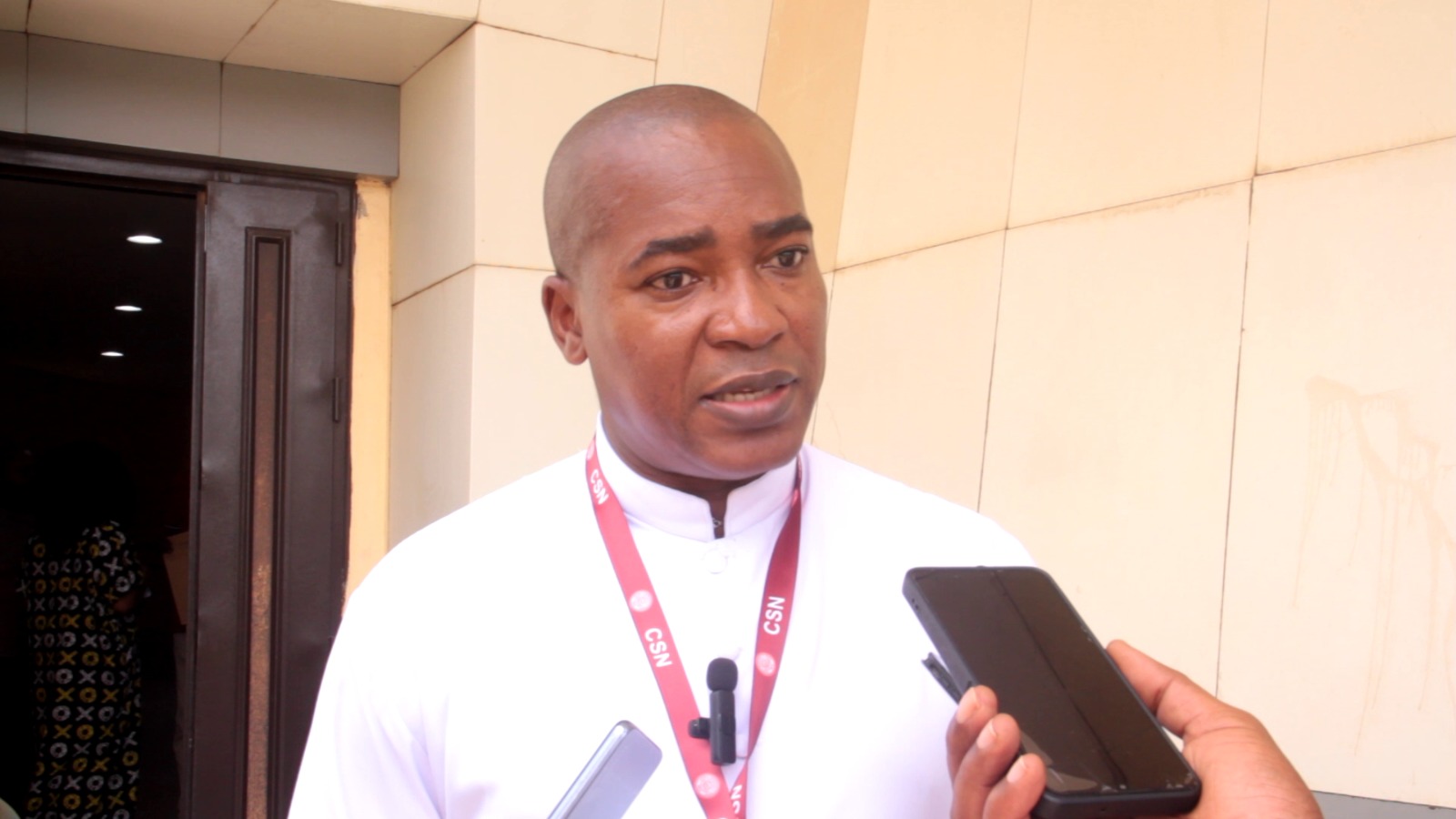
By Abah Anthony John
The Secretary General of the Catholic Secretariat of Nigeria (CSN), Rev. Fr. Michael Banjo, has called on Nigerians to allow their faith shape personal conduct, civic responsibility, and national renewal, stressing that genuine transformation of the country must begin with renewed consciences rooted in God. js">
In his New Year message titled “Faith at the Service of the Nation”, released on January 1, 2026, Fr. Banjo reflected on the Christian understanding of time, describing it not merely as a sequence of days but as “the sacred space in which God acts for our salvation.”
He reminded Nigerians that through the Incarnation, when Christ entered human history, time itself was redeemed and given meaning.“Whatever resolutions we may make at the beginning of this year, the most fundamental must be the resolve never to live our time without God at its centre,” he said, noting that time “only finds its meaning when it is lived with God within it.”
The Catholic priest explained that Christmas fundamentally changed humanity’s identity, moving believers “from slavery to sonship.”
According to him, through Christ’s life, death and resurrection, Christians became sons and daughters of God, a new identity that carries concrete responsibilities in daily life.
“Faith that does not shape life has not yet been fully received,” he said.
Fr. Banjo emphasized that living as children of God requires courage and responsibility, especially in challenging times.
He said this identity demands a life free from fear and panic, grounded in the assurance of God’s abiding presence.
“The child of God lives without panic, because God is never absent,” he noted, urging Nigerians to recognize one another as brothers and sisters and to reject divisions based on tribe, religion or social status.
He also underscored the importance of family life, describing marriage as “a covenant of love and fidelity” marked by patience, forgiveness and mutual respect.
According to him, giving God a place in daily life through prayer, charity, honest work and care for family is essential, because divine sonship “is not an idea to admire, but a life to be lived.”
Turning to national life, the CSN Secretary General said the identity of Nigerians as children of God places a moral obligation on them as citizens.
He stressed that loving Nigeria goes beyond criticizing its failures and requires personal commitment to what is right.
“Nations are renewed when consciences are renewed,” he said, adding that renewal does not begin only in government offices but in the daily choices of ordinary citizens.
Fr. Banjo called for honesty, fairness and respect in the use of public resources, warning that the abuse of roads, schools, hospitals and public utilities reflects a deeper neglect of conscience.
“What we destroy in public space reveals what we neglect in conscience,” he said.
He also urged Nigerians to prepare responsibly for the 2027 general elections, advising citizens to make choices guided by truth, conscience and the common good rather than by money, ethnic loyalty or divisive rhetoric.
He challenged public servants to reject bribery and abuse of office, while calling on traders, artisans and workers to act with integrity, reminding them that their labour is ultimately offered to God.
Highlighting the role of families and education, Fr. Banjo described the family as the “basic building block of society,” noting that the strength of a nation is shaped in the quality of its homes.
He urged parents and teachers to see their role as a “sacred trust,” forming consciences through faith, discipline, honesty and hard work. Quoting Proverbs 22:6, he said proper formation of children quietly but decisively shapes the future of society.
He paid special attention to young people, warning that youth is not merely preparation for the future but a decisive moment of responsibility.
He urged them to choose discipline over recklessness and to reject drugs, crime and other destructive paths that promise quick freedom but end in loss. “A disciplined youth is a nation’s quiet revolution,” he said.
Acknowledging Nigeria’s difficulties in the past year, including economic hardship, insecurity and social tension, Fr. Banjo said the New Year itself is a sign of hope.
However, he cautioned that such hope must be active and responsible. “Hope becomes credible when it is translated into responsibility,” he said.
He concluded by praying for God’s strength and guidance, expressing confidence that if Nigerians live authentically as sons and daughters of God, the New Year can become “a turning point in the renewal of our nation,” marked by justice, peace and hope.
Author Profile

Latest entries
 PoliticsMarch 5, 2026Ajia Congratulates Kwara APC Exco , Gov. AbdulRaham Others Over Successful State Congress
 NewsMarch 3, 2026Ajia: Tunji Disu’s Leadership Offers Hope for Tackling Insecurity
 NewsMarch 3, 2026Rev. Fr. Barkindo of the Kukah Centres highlights 2 points to tackle insecurity, at the Ashraaf Islamic Foundation Centre Ramadan Lecture
 NewsMarch 3, 2026Ashraaf Islamic Foundation Tackles Insecurity with 9th Annual Ramadan Lecture

News
Gov Ododo Reaffirms Commitment To Religious Harmony, Peace, Unity
From Joseph Amedu, Lokoja
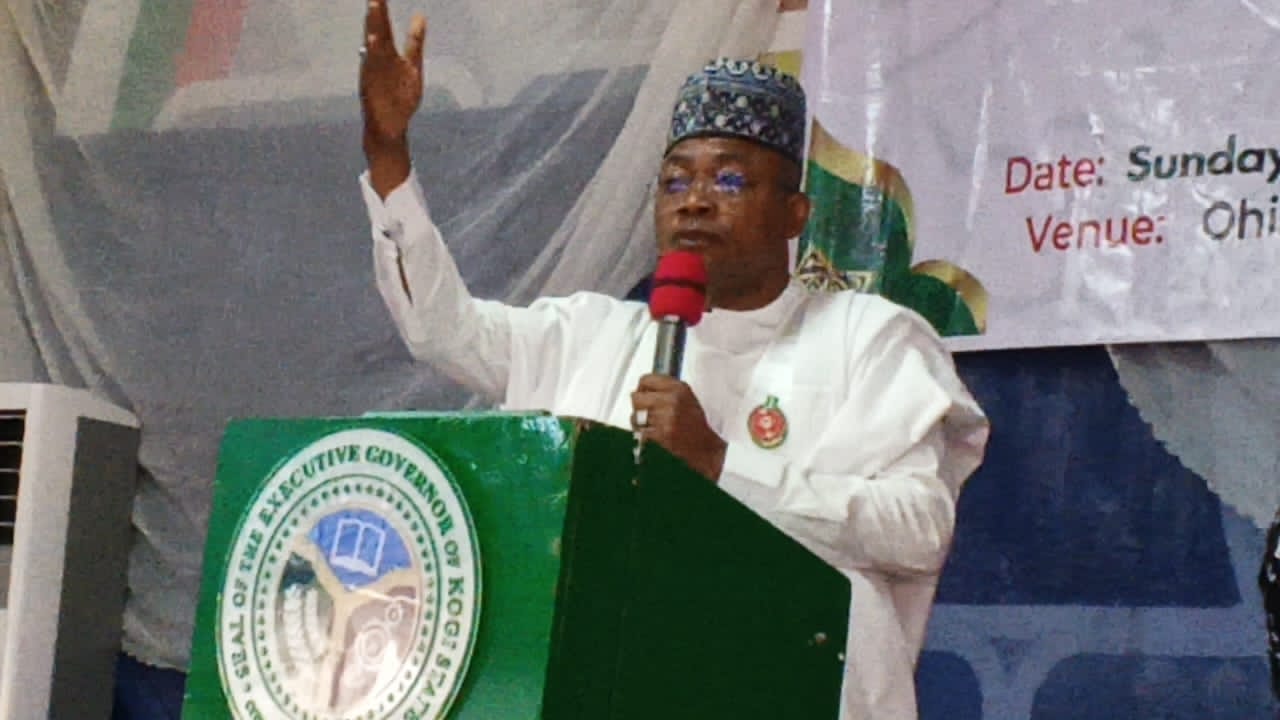
Kogi State Governor, Alhaji Ahmed Usman Ododo, has reaffirmed his administration’s unwavering commitment to fostering peace, unity, and mutual coexistence across the three senatorial districts of the state. adsbygoogle || []).push({}); js">
The Governor gave the assurance while addressing participants at a One-Day Peace Conference organized by the Ebira Muslims Peace Initiative in Okene.
The conference, themed “Essence of Peace and Unity Among the Muslim Ummah,” was held at Ohinoyi’s Palace in Okene Local Government Area.
The meeting brought together Islamic scholars, community leaders, youth groups, and stakeholders from across Kogi State to deliberate on peaceful coexistence and collective responsibility in strengthening societal harmony.
Governor Ododo commended the organizers for championing a platform that reinforces unity within the Muslim Ummah while also fostering tolerance across ethnic and religious divides.
He emphasized that sustainable development is impossible without peace, stating that Kogi State has earned recognition as a model of peaceful coexistence through the mutual efforts of citizens and the government’s proactive peace-building strategies.
He noted that No society grows in an environment of hatred and division. Peace is the foundation on which we can build prosperity, and unity is the bond that keeps us together as one people.
He further highlighted the role of government and religious leadership in securing long-term peace, noting that security is not achieved by force alone but through deliberate relationship-building and inclusive engagement.
“Our major responsibility is to provide security for our people, and in providing that security you must ensure unity of the land. One of the ways of guaranteeing peace and unity is by deploying non-kinetic methods of resolving issues,” he said.
“Today we have come to meet with our people and the Islamic leaders to engage them constructively on the need for us to give peace a chance, and hence the unity of our state, our land, and our people, so that we can all sleep with our two eyes closed.”
“I have just finished a meeting with all Islamic Scholars in Ebiraland and the Kogi Central Senatorial District, of course, we are working on that of the West and the East, then the Christian and Traditional aspect as well. To ensure peace, you must engage all critical stakeholders, and the Chief Imams, Sheikhs, and Ustaz are leaders the people believe in Islam, so we must work with them.”
“We are happy that we are all ready to give peace a chance in Kogi State.”
Earlier in his goodwill message, Chairman of the Ebira Muslims Peace Initiative Committee, Ustaz Ismail Obosi Suleiman, stressed the importance of unity among various Islamic sects across Ebiraland. He emphasized that while disagreements are natural, hostility is a choice, citing Qur’an 3:103: “Hold fast, all together, to the rope of Allah, and do not be divided.”
Suleiman called for inter-sect dialogue, focus on shared values, and rejection of political manipulation that seeks to worsen divisions. He urged religious leaders to model respectful engagement and promote authentic Islamic teachings to help dispel misconceptions among followers.
He reaffirmed that peace remains the foundation for a prosperous Ebiraland and called on all groups to work collectively toward sustaining unity.
The One-Day Peace Conference concluded with a renewed commitment by Islamic scholars, government representatives, and community stakeholders to strengthen peaceful coexistence and ensure that Kogi State continues to thrive as a united society.
Other dignitaries who shared their views on peaceful coexistence are the Ohinoyi of Ebira Land, His Royal Majesty Alh Ahmed Tijani Muhammed Anaje and the provost of National Defence College Professor Adam Okene Ahmed
Author Profile
Latest entries
PoliticsMarch 5, 2026Ajia Congratulates Kwara APC Exco , Gov. AbdulRaham Others Over Successful State CongressNewsMarch 3, 2026Ajia: Tunji Disu’s Leadership Offers Hope for Tackling InsecurityNewsMarch 3, 2026Rev. Fr. Barkindo of the Kukah Centres highlights 2 points to tackle insecurity, at the Ashraaf Islamic Foundation Centre Ramadan LectureNewsMarch 3, 2026Ashraaf Islamic Foundation Tackles Insecurity with 9th Annual Ramadan Lecture
News
Yuletide: Oruma Calls on Christian Faithfulls to Dedicate the Season to Prayers for Nigeria
By AbdulRahman Obaje
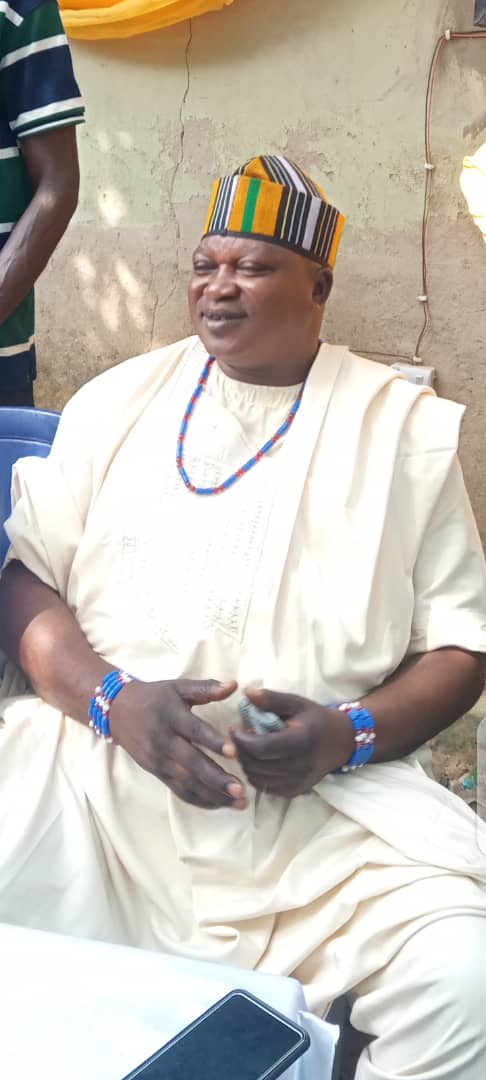
The National President Igala Centre for Development Advocate, Prince Musa Oruma calls on Igala Sons and daughters to inclulcate love and unity as a recipe for progress of Igala Nations while dedicate this festivity period to prayer for meaningful progress in Igala Nation, and Nigeria as a whole. adsbygoogle || []).push({});
Oruma made the call in a Christmas greetings message he personally signed and circulated.
He admonished especially the Christian faithful to dedicate the season to prayers for Nigeria and Nigerians, asking God Almighty to intervene positively in the affairs of the nation and to grant the country lasting peace and stability in the face of insecurity.
He further told Christians to also remember our leaders at all levels in their prayers, seeking divine guidance, wisdom, and courage to enable them to govern with fairness, compassion, and a sincere commitment to national unity and development.
Oruma wished Christians in Kogi State, Nigeiria and across the world a joyous Christmas celebration while praying that the season would bring renewed hope, strong faith, peace and abundant blessings to families nationwide.
Author Profile
- Prince Abdulrahman Obaje is a Media, Information and Computer Technology Consultant. A quintessential Journalist, online marketer, social media strategist, Mathematician and Computer Scientist is based in Abuja, Nigeria. He is the Founder and the Publisher of The Informavores!. You can reach me on +234 805 939 5252 or send i-witness report directly to me on news@informavores.com.ng.
Latest entries
- PoliticsMarch 5, 2026Ajia Congratulates Kwara APC Exco , Gov. AbdulRaham Others Over Successful State Congress
- NewsMarch 3, 2026Ajia: Tunji Disu’s Leadership Offers Hope for Tackling Insecurity
- NewsMarch 3, 2026Rev. Fr. Barkindo of the Kukah Centres highlights 2 points to tackle insecurity, at the Ashraaf Islamic Foundation Centre Ramadan Lecture
- NewsMarch 3, 2026Ashraaf Islamic Foundation Tackles Insecurity with 9th Annual Ramadan Lecture
Religious
Beyond the CPC Label: Faith Leaders, Civil Society Chart a United Path for Nigeria’s Religious Freedom and Global Standing
By Abdulrahman Aliagan
Faith and Freedom Africa (FFA) has taken a decisive step in shaping Nigeria’s response to its designation as a Country of Particular Concern (CPC) by the United States, convening a high-level Leaders Strategic Engagement in Abuja to confront the issue with clarity, depth, and national purpose. js">
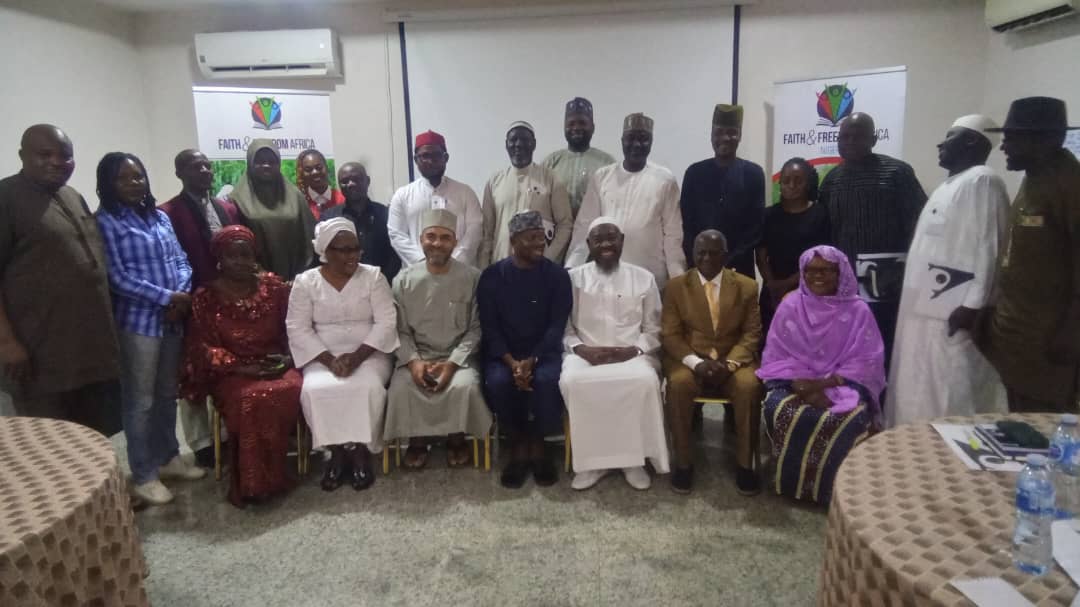
The engagement, held on 11 December 2025 at Hawthorn Suites Hotel, Garki, brought together senior religious leaders, civil society actors, policy experts, women and youth representatives, and key influencers to interrogate the implications of the designation and outline a strategic national response anchored on unity, evidence-based advocacy, institutional reform, and responsible leadership.
Opening the engagement, Faith and Freedom Africa’s Country Representative, Mr. Felix Joseph Samari, delivered an extensive and in-depth address that set the tone for the entire discussion. He made it clear that the gathering was neither a forum for denial nor an emotional reaction to external pressure, but a deliberate leadership intervention aimed at understanding the CPC designation in its proper technical, legal, and diplomatic context.
Mr. Samari explained that the CPC framework derives from the United States’ International Religious Freedom Act of 1998, which mandates the U.S. government to identify countries where violations of Freedom of Religion or Belief (FoRB) are considered systemic, ongoing, and egregious.
He outlined the multi-layered designation process, noting that it draws from reports by U.S. embassies, submissions from religious and civil society actors, and assessments by the U.S. Commission on International Religious Freedom (USCIRF), which then makes recommendations to the U.S. Department of State for final executive action.
According to him, Nigeria’s greatest weakness in responding to the CPC designation lies not only in security challenges, but in the absence of credible, structured, and nationally owned data on FoRB violations.
He warned that Nigeria risks losing control of its narrative when sensitive issues such as religious freedom and insecurity are left entirely in the hands of external actors who may lack access to local data, historical context, and lived community experiences.
During a technical session he facilitated, Mr. Samari further broadened participants’ understanding of what constitutes FoRB violations, stressing that religious freedom concerns extend far beyond mass killings and headline-grabbing attacks.
He explained that FoRB violations also include everyday experiences such as denial of access to worship spaces, discrimination in schools and workplaces, harassment of students and civil servants, selective enforcement of regulations, and restrictions on religious practices during periods of insecurity.
FFA Country Representative noted that attacks on communities during religious festivals—even when motivated primarily by criminal or economic interests—still amount to FoRB violations because they directly prevent individuals from exercising their right to worship freely and safely. Participants were reminded that the absence of accessible reporting channels and institutional focal points for victims, particularly women, children, students, and public-sector workers, has allowed many violations to remain undocumented, thereby weakening Nigeria’s advocacy position internationally.
Mr. Samari emphasized that Nigeria’s CPC designation is not without precedent, recalling that the country was similarly designated in 2020 with little public awareness or structured domestic engagement. He argued that the current moment should therefore be used as an opportunity to build credible monitoring systems, strengthen institutions, and engage international partners with evidence rather than emotion.
In a goodwill message, the former Chief Imam of the Apo Legislative Quarters Mosque, Abuja, Sheikh Muhammad Nuru Khalid, lauded Faith and Freedom Africa for convening what he described as a timely and courageous platform for honest national reflection. He commended the organization’s focus on Freedom of Religion or Belief as a shared civic value rather than a divisive religious weapon.
Sheikh Khalid observed that the renewed attention surrounding Nigeria’s CPC designation has generated intense reactions, misinformation, and polarized narratives across the country. He cautioned against allowing emotions, conspiracy theories, or sectarian sentiments to dominate public discourse, warning that such responses ultimately undermine national unity and credibility.
He further stressed that without reliable, locally generated data and inclusive dialogue, Nigeria would continue to struggle to present a nuanced picture of its complex security, communal, and governance challenges—challenges that are often oversimplified internationally as purely religious conflicts. He urged religious leaders across faith traditions to support initiatives that promote truth, balance, and justice.
The second major presentation, delivered by a renowned Nigerian Islamic scholar, educator, and peacebuilder, Sheikh Muhammad Nurudeen Lemu, shifted the focus from diagnosis to responsibility and strategic advocacy. Drawing on his extensive work in interfaith dialogue, peacebuilding, and Shariʿah Intelligence, he challenged Nigerians to critically interrogate the narratives they project about themselves, both locally and internationally.
He warned that many violent conflicts in Nigeria are rooted in injustice, poverty, frustration, weak institutions, and impunity long before they are framed along religious or ethnic lines. Allowing injustice to persist unchecked, he argued, creates a fertile environment for violence and manipulation.
Stressing that justice is a shared moral foundation across all faith traditions, Sheikh Lemu called on religious leaders and civil society actors to move beyond condemnation and adopt proactive strategies that promote love, social cohesion, early intervention, accountability, and credible mediation mechanisms.
He further cautioned that Nigeria’s projected population growth demands urgent, forward-looking policies to address exclusion, inequality, and youth frustration, warning that failure to do so could escalate existing tensions into widespread instability.
A high-level roundtable discussion examined the broader diplomatic, security, and reputational consequences of Nigeria’s CPC designation. Participants acknowledged that the label affects Nigeria’s global image, international partnerships, development assistance, security cooperation, and even the everyday experiences of Nigerians abroad, including heightened scrutiny at international borders.
While these implications were regarded as serious, the discussion also framed the CPC designation as an opportunity—if properly managed—to initiate reforms, strengthen institutions, improve data credibility, and engage the international community from a position of transparency and confidence rather than defensiveness.
Goodwill messages from invited stakeholders reinforced calls for responsible leadership, civic maturity, and collective ownership of peace.
A representative of the Muslim Youth Council of Nigeria lamented the declining quality of public discourse, urging Nigerians—especially young people—to reject violence and inflammatory rhetoric, noting that crises ultimately harm all communities regardless of faith or ethnicity.
Imam Haroun Ahmed Ezeh, one of the three Imams of the National Mosque, Abuja, highlighted the shared responsibilities of government and citizens in addressing insecurity and religious freedom concerns. He pointed to delays in diplomatic appointments and institutional coordination that have weakened Nigeria’s international voice, urging honest engagement with national challenges without wishing the country harm.
From the Christian perspective, Reverend Godwin commended Faith and Freedom Africa for creating a platform for honest and inclusive engagement.
He argued that Nigeria has failed to tell its own story effectively, allowing damaging narratives to gain global traction. While rejecting the tendency to label criminal violence as inherently religious, he cautioned against branding terrorists by faith and called on religious leaders to be more consistent and vocal in condemning violence.
Representing women’s voices, Hajia Fatima Isah Ndako of the Federation of Muslim Women’s Associations in Nigeria (FOMWAN), Abuja, reflected on earlier periods of peaceful coexistence, attributing present tensions largely to political manipulation, poverty, and ignorance of authentic religious teachings. She called for sustained dialogue, women-led peace initiatives, and community education to rebuild trust.
From a humanist perspective, Ebeben Joy, Coordinator of the Humanist Association of Nigeria in the Federal Capital Territory (FCT), linked the CPC debate to deep-rooted social polarization. She advocated for education reforms that promote critical thinking, shared civic values, and respect for human dignity beyond religious boundaries.
By the close of the engagement, participants agreed that Nigeria’s CPC designation should not be met with hostility, denial, or conspiracy narratives, but with introspection, data-driven advocacy, and coordinated national action. There was broad consensus on the urgent need for independent mechanisms to measure FoRB and human rights conditions, stronger community-level monitoring and reporting structures, sustained interfaith collaboration, public education, and constructive engagement with government institutions at all levels.
In his closing remarks, Archbishop Joe Jatau Yari, former Executive Secretary of the Kaduna State Christian Pilgrims Board, commended the depth of dialogue and the spirit of mutual respect that characterized the engagement. He urged participants to translate conversations into sustained action, emphasizing that peace, justice, and religious freedom are collective responsibilities that require courage, consistency, and national unity.
Faith and Freedom Africa positioned the engagement as part of a longer national journey toward reform, social cohesion, and credible international engagement, reaffirming that Nigeria’s CPC challenge—if approached strategically—can be transformed into an opportunity to strengthen justice, security, freedom of religion or belief, and Nigeria’s global standing for the benefit of all citizens.
Author Profile
Latest entries
PoliticsMarch 5, 2026Ajia Congratulates Kwara APC Exco , Gov. AbdulRaham Others Over Successful State CongressNewsMarch 3, 2026Ajia: Tunji Disu’s Leadership Offers Hope for Tackling InsecurityNewsMarch 3, 2026Rev. Fr. Barkindo of the Kukah Centres highlights 2 points to tackle insecurity, at the Ashraaf Islamic Foundation Centre Ramadan LectureNewsMarch 3, 2026Ashraaf Islamic Foundation Tackles Insecurity with 9th Annual Ramadan Lecture