
News
Shocking!: 30% of men not biological father of children

According to a forensic geneticist, Dr. Abiodun Salami, 30 per cent of fathers are unknowingly nurturing and investing in children who are not biologically theirs.
Salami, who is also the Chief Medical Director, DNA Centre, Lagos, revealed that 50 per cent of the all paternity tests carried out in his laboratory came out negative and mostly affected were first born children.

He said, “Several surveys have shown that approximately three men in 10 are living under the deception that they are the fathers of another man’s children and with advances in genetic testing, they are more likely than ever to find out the shocking truth. Half of the paternity disputes and tests we carried out in two years showed that the fathers were not biologically related to their children especially when the dispute arose on paternity of first born children.
“We have seen cases of paternity disputes where even the two men claiming paternity to a child are excluded as the biological fathers from test results leaving the mother to look elsewhere for the child’s biological father. I have witnessed shocking cases where men discover that three or four children out of five they had were not fathered by them.”
Salami attributed the increase in paternity disputes and deceptions to infidelity, adultery and increase in sexual recklessness among Nigerian couples.
“This percentage is increasing because of sexual recklessness. Recent trends in sexual health especially in Nigeria suggest that unprotected sex and multiple partners’ relationships are a common occurrence. Another issue is poor family planning among women. Most first born pregnancies are still unplanned.
“I have seen and discussed with women who for one reason or other decide in their own wisdom to give another man’s child to their husbands without the husband’s knowledge.
“As a geneticist, I deal on a daily basis with the fall-out of adultery and other manifestations of selfish behaviour of spouses to their partners. Reproductive deception is morally similar to rape,” he said.
Naturally, when a case of paternity dispute arises in a family, relatives, husbands are quick to accuse the woman. It is assumed that a mother should be able to accurately disclose who the biological father of her child is.
However, Salami noted that only a DNA test could be used to confirm who fathered a child.
According to him, more babies are increasingly being switched without their mothers’ knowledge by nurses, birth attendants and health workers in hospitals.
He noted that baby switches were happening at a disturbing rate in Nigerian hospitals and the geneticist attributed these mix-ups to avoidable errors or malfeasance.
Salami condemned the use of corresponding ID bracelets between mothers and their babies, the most prevalent method in Nigerian hospitals ,which he said, often lead to mix-ups since such bracelets could fall off babies’ ankles or wrists and lead to nurses misreading infants to mothers’ bracelet information.
Apart from the ID mix-ups, he said bed mix-ups by health workers often happen especially in general wards especially after babies have been removed for bathing or treatment.
Salami, sharing an experience said, “I witnessed a case where a friend gave birth to a child and I went to visit, only for the father who was present at the delivery of the baby to come back to the hospital in the evening to say, to the surprise of everyone present that the baby the hospital presented was not his baby because his baby was born with dreadlocks just like him.
“He had to escort the doctors to identify his baby inside one of the cribs. This happened right inside one of the biggest and well known hospitals in Ikeja, Lagos.
“In the light of some of these shortcomings, we encourage maternal DNA testing because if we exclude her, we have established a case of infidelity against her, whereas her baby was switched at the hospital.”
He also urged mothers who doubt or suspect that their babies have been switched to voice their concerns as such cases could be investigated and documented for future references.
“Many people get home and look at a child and wonder if they brought home the right baby. In some reported cases, mothers have voiced their concerns while at the hospital, but did not get the chance to find out the truth until years later through DNA tests.
“To an ordinary person, this may look rare or even sound strange as most cases of babies switched at birth are either undocumented or unknown,” Salami added.
However, as beneficial as paternity DNA testing is, the importance of the DNA testing is still unpopular and often times regarded as irrelevant in Nigeria.
Salami said that most Nigerians often use physical resemblance to fathers as a test of paternity.
“Unfortunately, Nigerians still use physical attributes to determine the paternity of a child. We have seen numerous cases where a child resembles a father, but accurate DNA test results show that such child and father are not related.
“Determination of paternity using physical attributes has led to a situation where illegitimate children have caused untold hardships to families,” he explained.
Shedding more light on the importance of the test as a means of identification, a haematologist with the Lagos University Teaching Hospital, Idi-Araba, who pleaded an anonymity because he is not the hospital’s official spokesperson, called on government to provide DNA testing and banking (storing) facilities.
He said with these facilities, families could still make DNA verification after parties involved are dead.
Olowoshelu said a sample of the deceased tissues that had been stored could be used and if no biological samples from the alleged father are available, grand parentage testing could be a viable option.
“ If one or both paternal grandparents are unavailable for testing, other family relationship tests–such as genetic reconstructions and siblings’ tests, using the deceased brothers or sisters may be performed to indirectly determine a child’s paternity,” he said.
Earlier, Salami stated that poor DNA profiling and documentation due to lack of facilities and personnel had made this procedure a luxury to many Nigerians. He noted that such stored samples could help solve legal and financial disputes.
“Nigerians must take DNA testing and profiling and banking seriously. There are different reasons to establish paternity including the need to lay claims to a financial support.
“Government must provide DNA testing facilities such that we can have reference DNA for individuals should their remains need to be identified especially for those in high-risk employment such as the military, police, pilots, air hostesses and even those that fly the Nigerian airspace on regular basis.
“We can bank their DNA as a reference in cases of future paternity tests should some parties contest or make claims on inheritances that are not theirs,” he said.
Source: Punch
News
NIGERIA AT 66: INDEPENDENCE MUST MEAN FREEDOM FROM IMPUNITY, INSECURITY AND THE CULTURE OF SILENCE
As Nigeria marks 66 years of independence and 27 years of uninterrupted constitutional democracy, the Nigerian Guild of Investigative Journalists (NGIJ) joins millions of Nigerians at home and abroad in reflecting on the country’s journey, honouring the sacrifices of its founding fathers and renewing our collective commitment to building a nation where freedom, justice, accountability and equal opportunity are realities for all.
The struggle for independence was driven by the desire of a people to determine their destiny, govern themselves and build a society founded on dignity, justice and shared prosperity. Sixty-six years later, however, our celebration must go beyond ceremonial speeches, patriotic displays and reflections on history. We must confront a more fundamental question: What does independence mean to the ordinary Nigerian struggling to feed a family, secure decent employment, access quality healthcare, move safely from one community to another and live with dignity?
For us at NGIJ, celebrating Nigeria must never mean pretending that Nigerians are not hurting. Across the country, households continue to grapple with the rising costs of food, transportation, housing, energy and other essentials. Although recent economic indicators point to some moderation in headline inflation, the reality for many families remains difficult, with food prices and the general cost of living continuing to exert pressure on household incomes.
These realities deserve honest acknowledgement, responsive leadership and practical solutions. Economic reforms must ultimately translate into improved living conditions, expanded opportunities, productive enterprises and measurable relief for ordinary citizens. We acknowledge progress where it is measurable, but we must never confuse reform with the final destination. The true test of economic recovery is not merely what the figures indicate, but how significantly it improves the lives of Nigerians.
Equally important is the question of national security. Kidnapping, terrorism, banditry, communal violence, oil theft and other forms of criminality continue to threaten lives, livelihoods and the stability of communities. While recognising the efforts and operational successes of our security agencies, we believe that sustained vigilance, stronger institutions, intelligence-driven operations and effective community engagement remain essential to addressing these challenges.
Every Nigerian deserves the freedom to live, work, farm, travel, worship and pursue legitimate aspirations without fear. Security is not a privilege to be enjoyed by a few; it is a fundamental responsibility of the state and an essential condition for national development.
Beyond political independence, Nigeria must pursue institutional independence from impunity, corruption, institutional failure and the culture of silence. Independence must be matched by transparency, accountability, respect for the rule of law and responsible management of public resources.
Public office is a trust, not a personal entitlement. Those entrusted with public responsibilities must remain answerable to the people, while public institutions must operate with integrity, efficiency and respect for citizens’ rights. Accountability should not be mistaken for hostility, just as constructive criticism should not be treated as an attack on government. Rather, both are essential ingredients of democratic governance.
This is where the responsibility of investigative journalism becomes particularly important. As an organisation committed to investigative and public-interest journalism, NGIJ recognises that the media must remain a credible watchdog of society.
Investigative journalists are not enemies of government. They are partners in the pursuit of transparency, good governance and national development. Governments deserve recognition when they deliver measurable results, but they must equally be prepared to answer difficult questions when public interest is affected.
We believe that a society that welcomes scrutiny strengthens its institutions, while one that suppresses questions weakens public confidence. Our responsibility is to follow the evidence, uncover facts, expose wrongdoing, amplify the voices of the underserved and ensure that issues affecting citizens are brought to public attention. We shall continue to discharge this responsibility without fear, favour or political allegiance.
However, the responsibility for strengthening journalism does not rest with government alone. Journalists must also hold themselves to the highest standards of professional conduct. The urgency of public-interest reporting must never become an excuse for carelessness, misinformation or sensationalism.
We therefore urge media practitioners to verify before publishing, investigate before accusing, distinguish established facts from allegations, protect confidential sources and resist political manipulation. The profession must increasingly embrace data, technology and innovative investigative methods while remaining conscious of national security and the potential consequences of irresponsible reporting.
National security considerations must not become a blanket justification for suppressing legitimate journalism, just as press freedom must not be used to justify the publication of unverified or harmful information. Professional independence demands both courage and responsibility.
We are equally concerned about the place of young Nigerians in the country’s development. A nation cannot fully realise its potential when millions of its young people feel excluded from economic opportunities, meaningful participation and leadership.
Our young people must be seen beyond their value as voters, campaign mobilisers or instruments of political calculations. They are innovators, entrepreneurs, professionals, creatives and potential leaders whose contributions are indispensable to national progress.
We call for sustained investment in education, vocational and digital skills, entrepreneurship, technology, creative industries, productive employment and leadership development. Nigeria must create an environment where talent is rewarded, enterprise is encouraged and young people can build sustainable futures without having to abandon their dreams or leave the country in search of opportunities.
We must also make national unity practical rather than rhetorical. Nigeria’s strength lies in the diversity of its peoples, cultures, languages, faiths and experiences. That diversity must become an asset for development, not an instrument for division.
We urge political, religious, traditional and community leaders, as well as citizens across the country, to promote mutual respect, tolerance, peaceful coexistence and a shared sense of responsibility. Our differences should enrich our national identity rather than undermine our collective aspirations.
As we reflect on the country’s journey, we recognise that nation-building is an ongoing process. It requires honest assessments of our challenges, recognition of genuine achievements, willingness to correct failures and the courage to pursue necessary reforms. No administration or institution has a monopoly on national progress, and no citizen should be excluded from the responsibility of building a better Nigeria.
As the Nigerian Guild of Investigative Journalists begins another chapter under its current leadership, we reaffirm our commitment to building an institution that is professionally strong, ethically grounded, independent and relevant to Nigeria’s democratic and developmental aspirations.
Under the collective leadership of the National President, Mallam Abdulrahman Aliagan, and the National Secretary, Rowland Shuwa, NGIJ will continue to strengthen investigative journalism, promote professional excellence, defend the public interest and contribute meaningfully to national conversations through credible, evidence-based reporting.
Our leadership philosophy remains simple: Don’t Start Again. Build Forward.
This philosophy extends beyond the Guild. Nigeria, too, must build forward. We must build on our successes, learn from our experiences, correct our failures, confront our challenges and strengthen the institutions required to secure a more prosperous and equitable future.
As we celebrate 66 years of independence, we call on every Nigerian to remain hopeful, engaged and committed to the collective task of nation-building. We owe it to the sacrifices of our founding fathers, the aspirations of present generations and the dreams of those yet unborn to create a country where freedom is meaningful, justice is accessible, leadership is accountable and opportunity is not determined by privilege.
Happy 66th Independence Anniversary, Nigeria!
Mallam Abdulrahman Aliagan
National President
Nigerian Guild of Investigative Journalists (NGIJ)
Rowland Shuwa
National Secretary
Nigerian Guild of Investigative Journalists (NGIJ)
News
FG Charges New NFAN Leadership on Unity, Transparency and Accountability
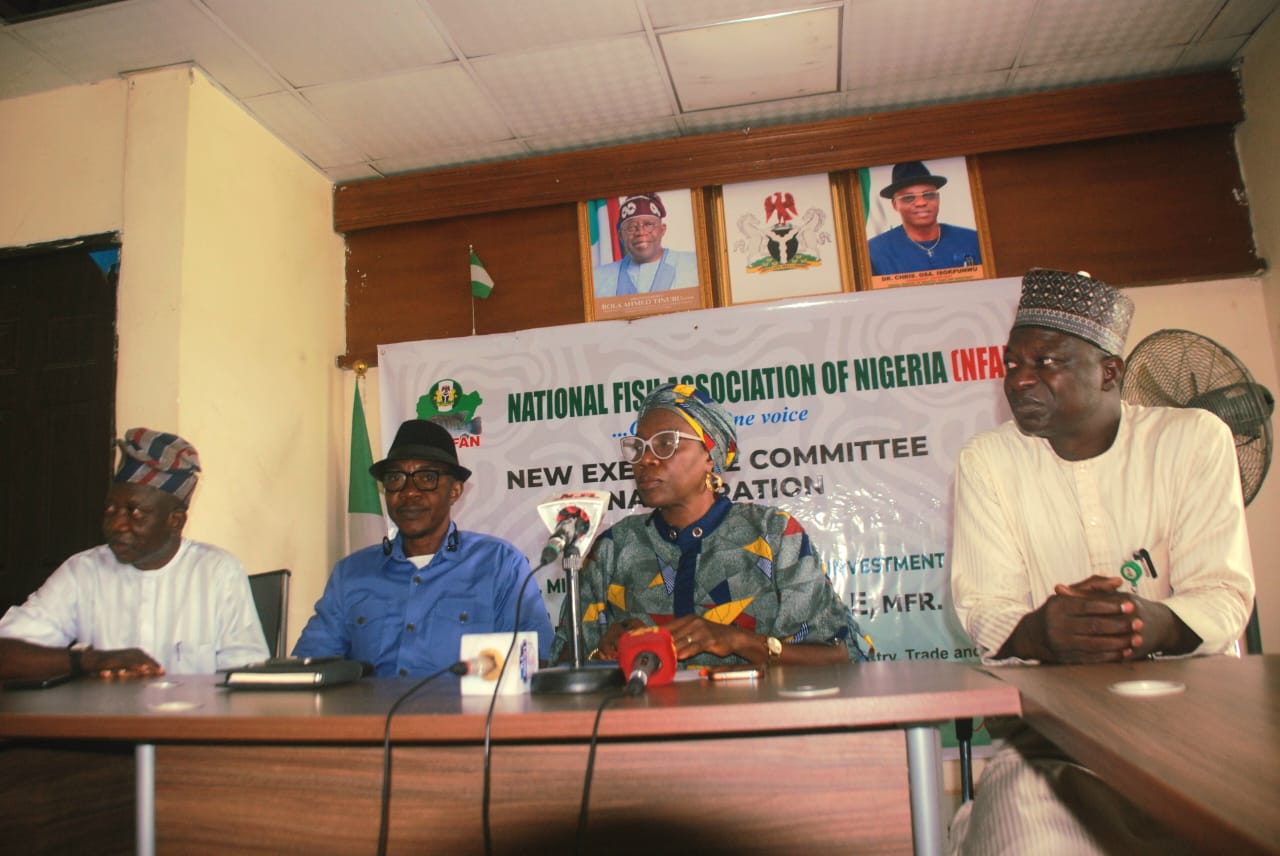
The Federal Government has charged the newly elected Executive of the National Fish Association of Nigeria (NFAN) to promote unity, transparency, accountability and inclusiveness in running the affairs of the association. adsbygoogle || []).push({});
The Director of Commodities and Export Department, Federal Ministry of Industry, Trade and Investment, Mr Usman Bokani, gave the charge in Abuja during the formal presentation of the newly elected executives of the association, led by its President, Dr. Ladan Aliyu, to the Ministry following its recently conducted election.
Mr. Bokani welcomed the new executives and commended the association for conducting a free, fair and credible election, which led to their emergence, describing it as a demonstration of commitment to responsible leadership and democratic principles.
The Director, represented by a Deputy Director in the department, Mrs. Felicia Udeh, reminded the executives that their election was both an honour and a responsibility, stressing that they must put in their best to come up with ideas that would move the country and the association forward.
“I encourage you all to promote unity, transparency, accountability and inclusiveness to ensure that the interest of the wider membership remains central to your activities. So that it will not be between some few people. Let it be a wide range, holistic, that is when you can move forward.
“Because one thing we are trying to avoid is litigations. We’ve seen so many associations at the end of the day, they end up in litigation because they are not agreeing. It’s either the Exco is not carrying the member or the Excos have divisions among them.
“And we have been preaching so hard that we don’t want such to come up again. So that is why we are telling you here that you have to work as a family. If you have agreed to come together as an association, you should also agree to work holistically.”
The President of the National Fish Association of Nigeria (NFAN), Dr. Ladan Aliyu, thanked the Ministry and other stakeholders for their support, saying that the inauguration marked a significant milestone in uniting stakeholders to promote sustainable development of fishery and aquaculture in Nigeria.
“As we begin this new chapter, let us remain committed to unity, professionalism, collaboration and the advancement of the fishery sector. Together we can create greater opportunities for our members, improve fish production, strengthen livelihoods and contribute meaningfully to Nigeria’s food security and economic development.”
Dr. Aliyu called on members to embrace the spirit of “One Fish, One Voice” to improve fish production, strengthen livelihoods and contribute to Nigeria’s food security and economic development.
On the high cost of fish in the market, the President attributed the development to the depreciation of the naira and dependence on importation.
Dr. Aliyu explained that imported fish, including Titus, Mackerel and Sardine, are bought with dollars like petrol, adding that the fall in the value of the naira had forced marketers to increase prices.
He explained that Nigeria requires about three million metric tonnes of fish annually, but currently produces less than a quarter of that, with importation covering only half of the shortfall, leaving a significant gap.
“Actually, we have to come together as a formidable and sustainable cooperative society. When we do that, we train the farmers, we make sure that the government comes in as a partner, to help with other input that we require and the policies that we need for the fish. That will help in improving the production.”
Also, the Deputy President of the association, Mr. Adewale Adeogun, said the rise in the price of Titus is a global phenomenon and not peculiar to Nigeria, noting that world prices are skyrocketing. He expressed optimism that government policies would help bring down prices.
The representative of the Federation of Agricultural Commodity Associations of Nigeria (FACAN), Pastor Isaac Ojonugwa, congratulated the new executives and pledged its support, urging them to work with their predecessors and link members along the value chain for the growth of the sector.
News
Text Of Independence Day Address By President Bola Ahmed Tinubu, With The Theme, From Reforms To Prosperity
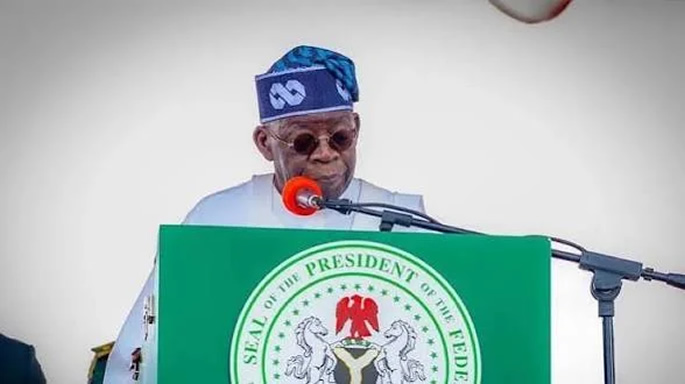
My fellow Nigerians,
Sixty-six years ago today, our flag was raised, for the first time, over a free and sovereign nation. Since then, we have journeyed together as one nation, bound by our collective trust in the great promise of Nigeria: that a country of our size, our bountiful resources, our cultural diversity and, above all, our extraordinary people can build a giant in Africa; that in this blessed and fertile land we can build a united, strong and prosperous nation; a land of regional authority and global consequence.
Our journey has not always been easy. In truth, it has generally been too hard for too many. We have known moments of great hope and periods of profound disappointment. We have endured war, military rule, economic crises, insecurity and political upheaval. Yet through it all, Nigeria, with the indomitable spirit of its people, has endured.
It has endured through the efforts of the farmer who rises before dawn to work his land. The trader who opens her shop each morning, hopeful for a productive day. The teacher who believes in the children entrusted to her care and the young entrepreneur who refuses to surrender ambition to circumstance. We are grateful for the men and women of our Armed Forces and security services who place themselves in harm’s way so that the rest of us may live in peace.
Through every difficulty, generations of Nigerians have continued to believe in one thing: that this country of ours will be better.
This faith, which sustains us all, is the inheritance of independence. Our founding fathers did not struggle merely for a flag, an anthem or a place among the nations of the world. Independence carried a larger promise: that Nigerians would have the freedom to shape their own destiny and build a nation capable of providing opportunity, dignity and a better life for its people. Sixty-six years later, Almighty God has made it our responsibility to deliver that promise.
Today, as we celebrate our independence, we must speak honestly about the journey so far, the choices we made, and the country we are determined to build from here.
For too long, the promise of Nigeria was undermined by choices that postponed difficult decisions and allowed deep economic distortions to grow.
By 2023, poverty was rising, and hope was nearly gone. The country’s situation was darker than ever. We had no choice but to act.
Nigeria was like a sick patient who receives the terrible news that he has cancer. His doctor explains that the treatment will be difficult and painful, but that it offers a strong prospect of recovery. The patient has a choice. He can begin treatment, endure its discomfort and fight the disease. Or he can ask only for morphine, dull the pain and leave the cancer to spread.
For too long, Nigeria’s leaders chose morphine while praying for a miracle that never came.
They focused on symptoms while allowing the disease to take hold deep within the fabric of our society. We spent enormous sums sustaining inefficient arrangements that were never intended to last. We hid from difficult truths and passed the consequences from one generation to the next.
When this Administration assumed office, we resolved to do things differently. We chose to excise the cancer. The reforms that followed were difficult. The side effects were real. Yet, we must never confuse the medicine with the disease.
Our reforms did not create the weaknesses in our economy. They confronted them. Now, as certain influential but regressive voices would have us abandon the treatment and return ourselves to the abuse of addictive subsidies, we must resist their siren song. We must remember why we began this journey and how far we have already come.
Three and a half years later, the evidence that Nigeria’s economic outlook has improved is undeniable. Our economy has grown by over 4 per cent this year. Both oil and non-oil sectors have contributed to the renewed period of stable growth.
Oil theft is down. Inflation has fallen substantially from its peak. Our foreign reserves have been rebuilt, our foreign exchange market has stabilised, and in 2025 this country recorded its highest revenue from non-oil exports in its history, exceeding $6 billion. This is real money being made by real Nigerian businesses.
These are not idle claims. International observers, journalists, NGOs and multilateral institutions can see the change. Each has concluded that our reforms have strengthened Nigeria’s economic stability and resilience. The private sector has long since delivered its verdict, and foreign direct investment continues to rise each year.
My fellow Nigerians, we have reached a turning point.
The emergency treatment is over. The foundation has been repaired. The central economic task before us has changed. For three years, our overriding purpose was to correct our nation’s course.
Now, our purpose is simple: shared and widespread prosperity.
When I speak of prosperity, I do not speak merely of a larger economy, abstract numbers or better statistics. I mean something much more personal.
I mean a Nigeria in which the farmer can cultivate his land safely, produce more at lower cost, and earn a decent return for his labour. A Nigeria in which factories have reliable power, businesses can obtain credit, and young people can find productive work. A Nigeria in which food and transportation are affordable, education is within reach, and hard-working families can look towards the future with confidence.
This is the promise we must now fulfil.
Our priority is to bring down the cost of living. We will achieve this by lowering the cost of producing and moving the things Nigerians consume.
We have the land and people to feed ourselves. My government is therefore focused on expanding mechanised irrigation and dry-season farming, improving access to seeds and fertiliser, holistically increasing mechanisation, and investing in storage and transportation. We are building and completing the roads, railways and ports that connect farms and factories to markets.
Our logic is simple. When a farmer produces more cheaply, when fewer crops are lost between the farm and the market, when a manufacturer spends less on electricity, when a truck reaches its destination faster, and when the business environment fosters fair competition, all those savings will ultimately find their way into the price of goods in the market.
But prosperity requires more than cheaper goods. It requires productive work.
Nigeria is a young country. Millions of young Nigerians enter adulthood every year with talent, energy and ambition. Our responsibility is to ensure that this great demographic strength becomes an engine of production rather than a source of despair.
We are therefore placing jobs, enterprise, and industrial growth at the heart of our government’s policies.
We will use our gas to power new industries. We will support businesses that work to bring factories back to life in our great industrial centres. We will expand digital connectivity into communities that have waited too long to participate in the modern economy. We will invest in the skills employers demand and support Nigerian businesses with the infrastructure and finance they need to grow.
I want to see more Nigerians making things. I want to see more Nigerian farms feeding our cities and supplying our factories. I want to see Nigerian businesses selling Nigerian goods to the whole world. I want young Nigerians building unicorns and creating opportunities for others here at home.
I am also conscious that millions of our fellow citizens cannot wait for tomorrow. Some Nigerian families still struggle today for the next meal, the next school fee, the next medical bill, or simply enough money to get to work. Their circumstances did not begin with the reforms of the last three years. Their struggle is the accumulated consequence of decades of low productivity, inadequate infrastructure, insufficient opportunity and institutions that too often failed those who needed them most.
We cannot erase in four years what accumulated over generations. But we can change its course. We can build an economy that steadily lifts people out of poverty while ensuring that those who remain vulnerable are not abandoned along the way.
That is why we are strengthening direct support for the poorest households and improving the National Social Register so that assistance reaches those who genuinely need it.
It is why the Nigerian Education Loan Fund is ensuring that the child of a low-income family need not surrender the dream of higher education simply because his parents cannot afford the fees.
It is why CREDICORP is giving working Nigerians access to consumer credit, allowing people to acquire vehicles, solar systems, digital devices and other essential assets without first having to accumulate years of savings.
That is why, working with our states and local governments, we will continue to strengthen primary healthcare, basic education, and the essential public services poorer Nigerians depend on most. Since 2023, we have paid salaries and pensions on time and in full. We have reformed the national pension program to benefit retirees and the vulnerable.
These programmes are not substitutes for prosperity. They are a bridge to aid our nation’s citizens on their path towards it. Our objective is not to manage poverty more efficiently.
We will defeat it.
It will take time. It will require discipline. It will require sustained growth year after year and the creation of millions of productive opportunities across our country.
But for the first time in decades, we embark on this task from a position of strength; with an economy whose fundamental direction has been corrected. We confronted the difficult choices we faced and have laid the foundations for lasting prosperity. Rather than fail the promise of a better future for our children, the time has come for us to build that future.
The age of reform has done its work. Now begins the age of prosperity. An age in which the promise of this great nation must finally become the lived experience of Nigerians from all walks of life.
We have travelled through difficult years together. We have made hard decisions together. And now, still together, we must build the country those decisions have made possible.
I believe deeply in what lies ahead.
I believe in the millions of ordinary men and women whose work, courage and determination have always been the true strength of our country. The road ahead will still demand much from us. But we now travel it with firm footing, a clear direction, and renewed hope in our collective future.
Nigeria has corrected its course. We have passed through our own Red Sea. This is not the time to look back. Let us go forward together, with faith in ourselves, faith in our country, and faith that the sacrifices we have made will yield their reward.
The Promised Land before us is a Nigeria of abundance and opportunity; a nation where prosperity is broadly shared, where every child can dream beyond the circumstances of his birth, and where our country’s immense promise is finally reflected in the lives of our people.
Our destination is in sight. Our foundations are strong. Our direction is clear. So let us go forward. No looking back.
Happy Independence Day, my fellow Nigerians. God bless you all, and God bless the Federal Republic of Nigeria.
Bola Ahmed Tinubu, GCFR
President and Commander-in-Chief of the Armed Forces of the Federal Republic of Nigeria
-
 Entertainments4 years ago
Nollywood Produces 541 Movies in 2022 First Quarter – NFVCB
-
 News7 years ago
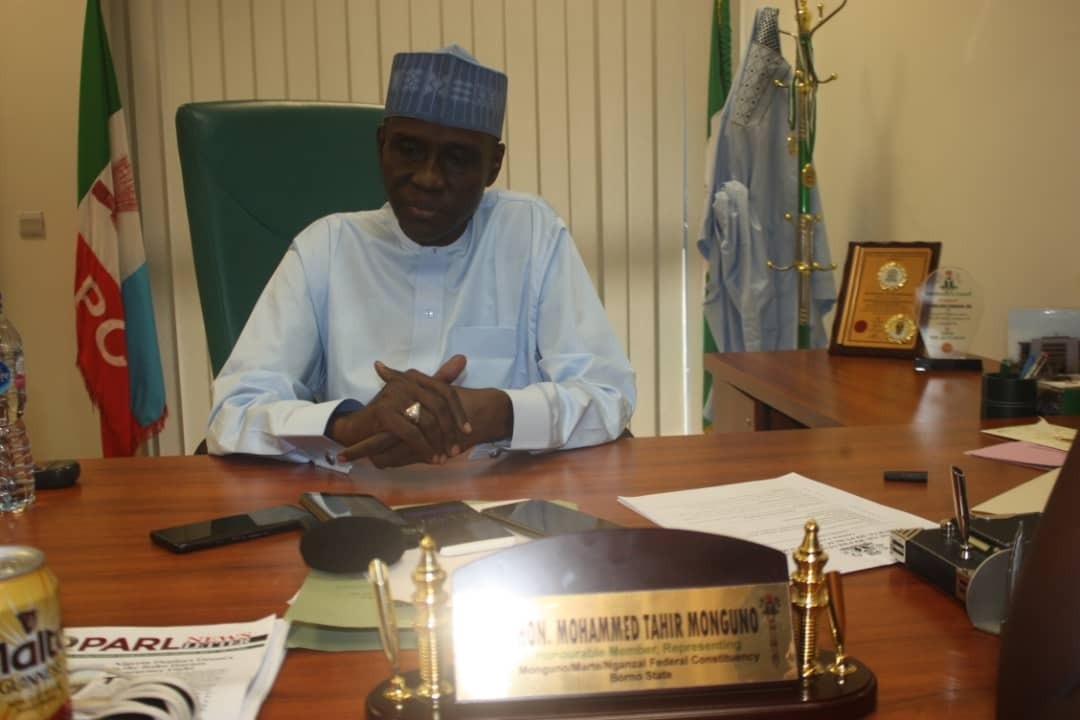
I will Maintain High Decorum – Hon Monguno
-
 News5 years ago
2021 Ethics And Integrity Compliance Scorecard Of MDAs: ICPC Scores Censors Board High
-

 Business and Economy4 years ago
Non-interest TAJBank Reports 433% PBT in 2021 Financial Year
-
 Entertainments7 years ago
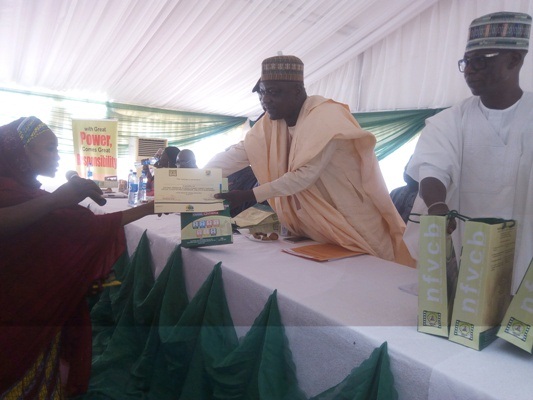
Censors Board Trains, Gives Grant to 100 Youths in Nasarawa State
-
 News4 years ago
ICDA North Central: Prince Oruma Sues for Igala Unity
-
 AWF7 years ago
AWF to Feature Adedokun, Kawu and Okah-Donli for April Guest Writer Session
-
 News3 years ago
Full List of The New Ministers and Their Portfolio