
Religious
Ashraaf Islamic Foundation Greets Ummah, Calls for Global Peace as New Hijrah Year Begins
By Abdulrahman Obaje
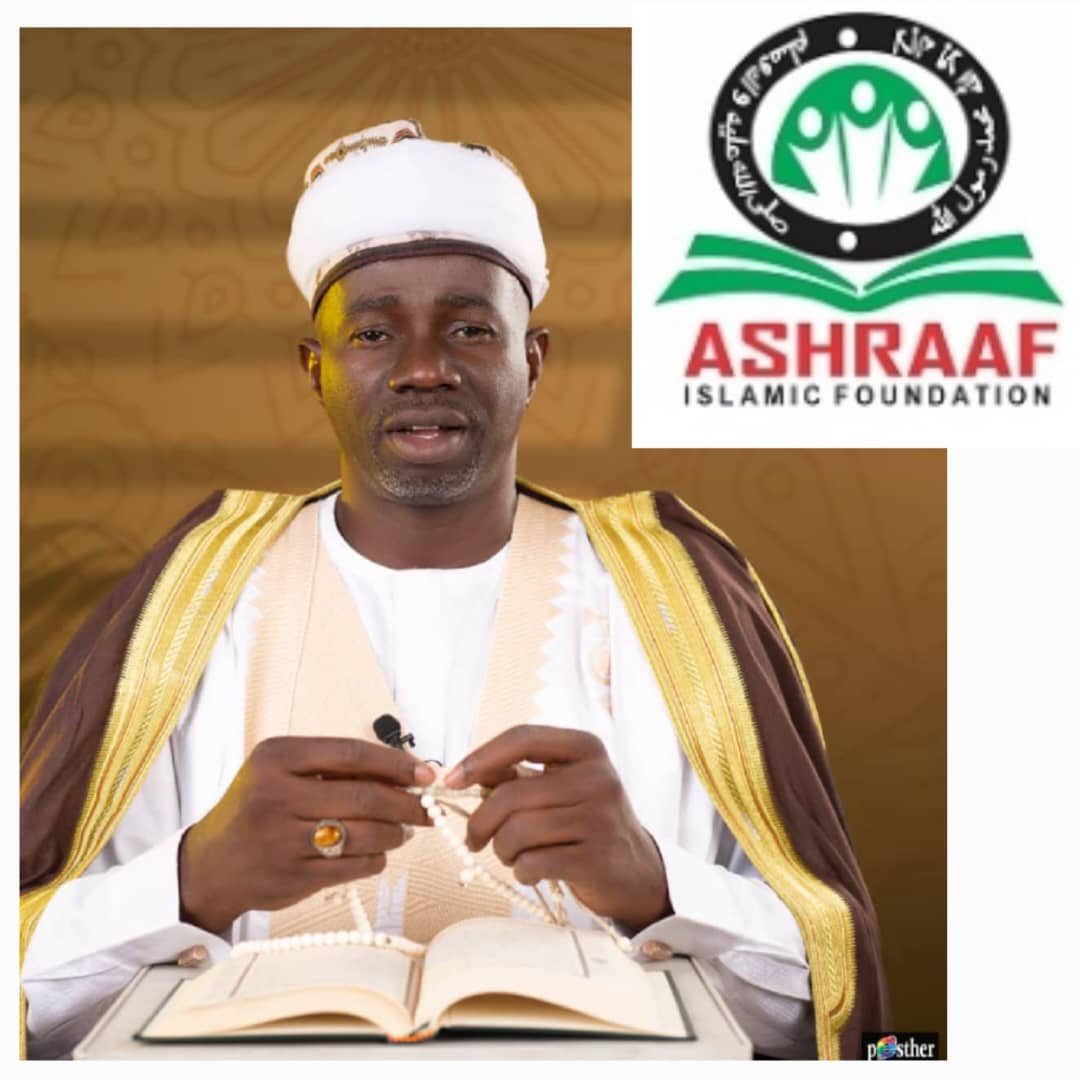
The Ashraaf Islamic Foundation has extended warm felicitations to the Muslim Ummah across the globe as the Islamic New Year, 1447 AH, begins with the sighting of the 1st of Muharram. adsbygoogle || []).push({});

In a statement issued by the Foundation’s Director of Communications and Information, Malam Abdulrahman Aliagan, on behalf of the spiritual leader, Imam (Dr.) Sharafudeen Abdulsalam Aliagan, the organisation urged Muslims worldwide to embrace the spiritual and moral essence of the Hijrah season — peace, patience, unity, and renewed faith.
The Foundation noted that the 1st of Muharram is not only the beginning of the Islamic calendar but also one of the four sacred months declared by Allah in the Qur’an (Surah At-Tawbah 9:36), which states: “The number of months according to Allah is twelve, as ordained on the day He created the heavens and the earth. Out of these twelve, four are considered sacred, and this is the correct and upright religion. Muslims are instructed not to wrong themselves during these months…”
According to the statement, the month of Muharram presents a unique opportunity for the global Muslim community to reflect, repent, and rededicate themselves to the path of righteousness.
“This New Year is not just a time for celebration; it is a moment for deep reflection, renewed commitment to faith, and fervent prayer,” the statement read.
The Foundation used the occasion to call for a ceasefire and peaceful resolution in areas currently ravaged by conflict, particularly the ongoing war between the Republic of Iran and the State of Israel. It appealed to global leaders to adopt peaceful dialogue and diplomatic engagement instead of further violence and bloodshed.
“The bloodshed, displacement, and trauma of innocent civilians must come to an end,” it stated, while also highlighting crises in Palestine, Sudan, Yemen, and parts of the Sahel region. “There will be peace!” as declared in Qur’an 36:58 (Salāmun qawlan min Rabbir-Raḥīm).
Turning attention to Nigeria, the Ashraaf Islamic Foundation expressed concern over the country’s persistent socioeconomic and political challenges, praying for divine intervention in national affairs. The Foundation offered heartfelt prayers for the well-being of Nigeria and the generality of Muslims across the world.
The statement prayed for God to “shower His mercy upon our nation, grant our leaders wisdom, sincerity, and fear of God, and lead us as a people to the Promised Land of justice, prosperity, and security.”
The Foundation expressed hope that the new Hijrah year would mark a new chapter in the country’s development, unity, and leadership direction.
The Foundation further emphasized the need for unity among Muslims globally, irrespective of sectarian or ethnic differences, quoting the Qur’an (21:92): “Indeed, this Ummah of yours is one Ummah, and I am your Lord, so worship Me.”
Ashraaf called on the global Ummah to rekindle the true spirit of Hijrah by leaving behind disunity, hatred, and materialism, and instead embracing mutual compassion, spiritual growth, and communal development.
Reflecting on the historic migration of the Prophet Muhammad (SAW), the Foundation identified three key virtues that defined the success of the Hijrah: Faith, Patience, and Sacrifice. These enduring qualities, it said, are timeless tools that every Muslim can emulate to achieve success in all areas of life.
As the year 1447 AH begins, the Foundation prayed for a year filled with peace, barakah (blessings), and steadfast Iman (faith), asking Allah to protect the Ummah and guide humanity on the straight path.
“Taqabbalallahu minna wa minkum. Happy New Hijrah Year – 1447 AH.”
Author Profile

Latest entries
 OpinionDecember 10, 2025LIES VS FACTS: Revisiting The Aregbesola Years In Osun
 Business and EconomyDecember 9, 2025KGIRS Sensitizes Stakeholders On Implementation Of New Nigeria Tax Act, 2025
 NewsDecember 9, 2025Insecurity: Ododo Briefs President Tinubu On Proactive Measures Put In Place
 NewsDecember 9, 2025Kogi State Intercept Child Trafficking
Religious
Strengthening the Bonds of Faith and Freedom: How Nigeria’s Religious Leaders Are Advancing the Right to Believe
By Abdulrahman Aliagan,
In a nation as diverse as Nigeria, where faith influences daily life, community identity, and national politics, ensuring that every person can freely believe — or choose not to — is more than a constitutional promise. adsbygoogle || []).push({}); com/pagead/js/adsbygoogle.js">
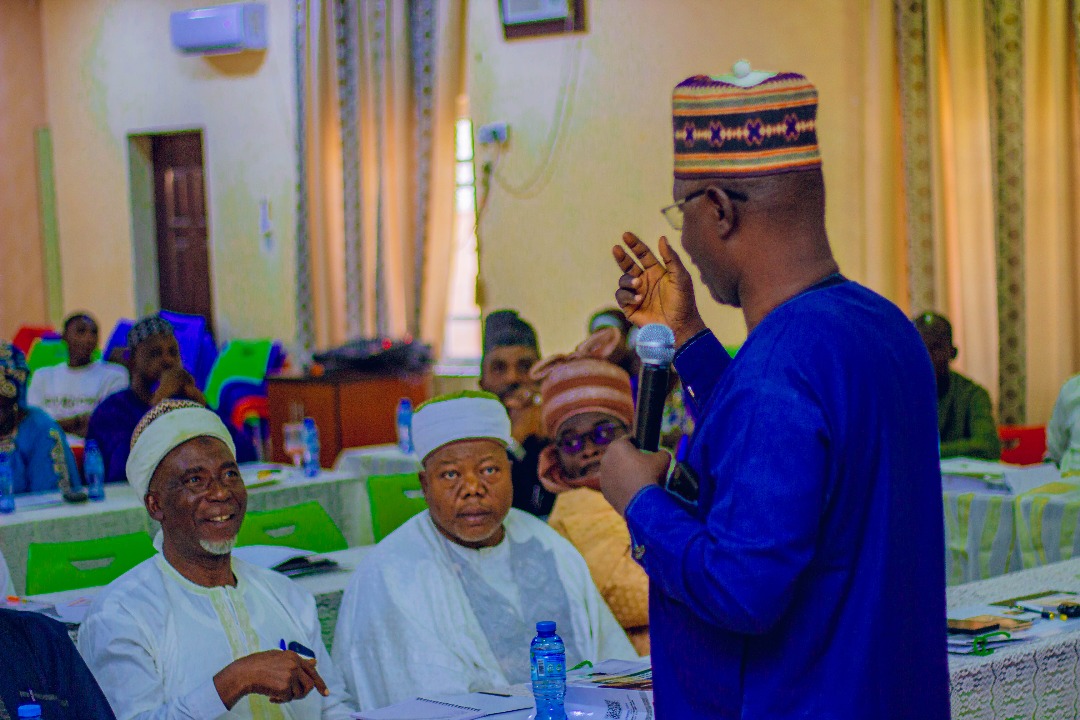
This effort reached another milestone in Gombe recently, where Faith and Freedom Africa hosted a Town Hall Meeting bringing together 46 carefully selected voices from across the society.
Government representatives sat alongside legal practitioners; imams and pastors shared reflections with traditional rulers, women advocates, and youth activists — all united by a shared commitment to build a more peaceful Nigeria.
Welcoming participants, the Country Representative of Faith and Freedom Africa, Felix Samari, delivered a resonant message: FoRB is not a privilege that may be extended to a few, but an inherent, non-negotiable right accorded to every citizen. Rooted in international treaties, reinforced by regional frameworks, and enshrined in Section 38 of the Nigerian Constitution, the right protects individuals in matters of conscience, worship, and belief — shielding them against discrimination, intimidation, or coercion.
Samari reminded the audience that when this right flourishes, communities prosper, trust expands, and societies advance. But when it is suppressed, the outcomes are clear and dangerous — divisions deepen, anxieties rise, and people become vulnerable to manipulation by those who exploit faith for political gain. The gathering, he said, was not merely another seminar, but a civic responsibility: to learn, to question, and to act in defense of every citizen’s humanity.
The Gombe Town Hall Meeting unfolded as part of a broader national project undertaken by Faith and Freedom Africa — a movement sweeping across different geopolitical zones. Before arriving in Gombe, the organisation convened influential engagements in Jalingo, Kaduna, and Makurdi, where community leaders and grassroots actors grappled with real challenges threatening religious harmony. Earlier this year in Abuja, Christian and Muslim leaders held joint forums at the National Mosque and the National Ecumenical Centre — two symbolic structures that reflect the soul of Nigeria. Those gatherings cemented the notion that the endurance of the nation’s unity rests heavily on how its faith communities relate with one another.
Discussions in Gombe exposed ongoing tensions that still linger at the grassroots level. Participants spoke of the subtle rise of mistrust between religious neighbours, misinformation amplified through social spaces, and the careless use of inflammatory rhetoric by individuals claiming leadership roles. The consensus across denominations was clear: peace cannot survive where voices of intolerance are left unchecked.
Throughout the session, one key theme persisted — the moral authority of religious and traditional leaders. Faith shapes behaviour. Sermons influence attitudes. Leaders who preach peace serve as anchors of stability in times of uncertainty, while those who weaponize belief can trigger unrest with a single message. The meeting therefore challenged clerics and community figures to guide their followers toward moderation, respect, and a humanity-first mindset. Homes, schools, and pulpits must become spaces where diversity is embraced — not feared.
Participants also emphasized that knowledge gained at the Town Hall must not remain confined to conference halls. They pledged to take the message into classrooms, marketplaces, neighbourhood associations, and rural communities that rarely feature in elite policy debates but carry the weight of Nigeria’s peace on their shoulders. Real change, they agreed, must begin where tensions are born — at the grassroots.
Amid these commitments, a strong call was issued to government. Peace requires institutional protection. When FoRB violations occur — whether through unequal access to rights, harassment, or discrimination — the state must act swiftly and fairly. Leaders insisted that government at all tiers must do more to uphold the constitution, guarantee safety for all religious groups, and actively prevent the escalation of disputes that could threaten stability.
For Faith and Freedom Africa, the work is far from done. The organisation reaffirmed its mission to nurture a culture where people of every creed or conviction enjoy dignity, justice, and respect. Its programming continues to expand, building bridges where suspicion once stood and deepening dialogue among communities that too often speak past each other.
In a country where belief is deeply personal yet inherently communal, Freedom of Religion or Belief is more than a human rights principle — it is a peace strategy. And as this movement gains momentum from the streets of Gombe to the halls of national power in Abuja, one truth becomes increasingly evident: Nigeria’s future depends on how well its people learn to live together, believe freely, and protect the rights that bind them as one nation under God — and under law.
Faith and Freedom Africa’s journey continues. And with each conversation, each community meeting, and each commitment to harmony, Nigeria takes one step closer to becoming not only a land of many faiths — but a home where every belief can thrive
Author Profile
Latest entries
OpinionDecember 10, 2025LIES VS FACTS: Revisiting The Aregbesola Years In OsunBusiness and EconomyDecember 9, 2025KGIRS Sensitizes Stakeholders On Implementation Of New Nigeria Tax Act, 2025NewsDecember 9, 2025Insecurity: Ododo Briefs President Tinubu On Proactive Measures Put In PlaceNewsDecember 9, 2025Kogi State Intercept Child Trafficking
Religious
Muslim Leaders Rally for Stronger Protection of Religious Freedom in Nigeria
…As National Conference Calls for Unity, Peace and Interfaith Cooperation
By Abdulrahman Aliagan, Abuja
With concerns mounting over divisive rhetoric and intolerance across the country, Nigeria’s leading Muslim clerics, scholars, and traditional rulers have renewed calls for stronger protection of religious freedom, insisting that peace, dialogue and mutual respect must remain central to the nation’s unity.
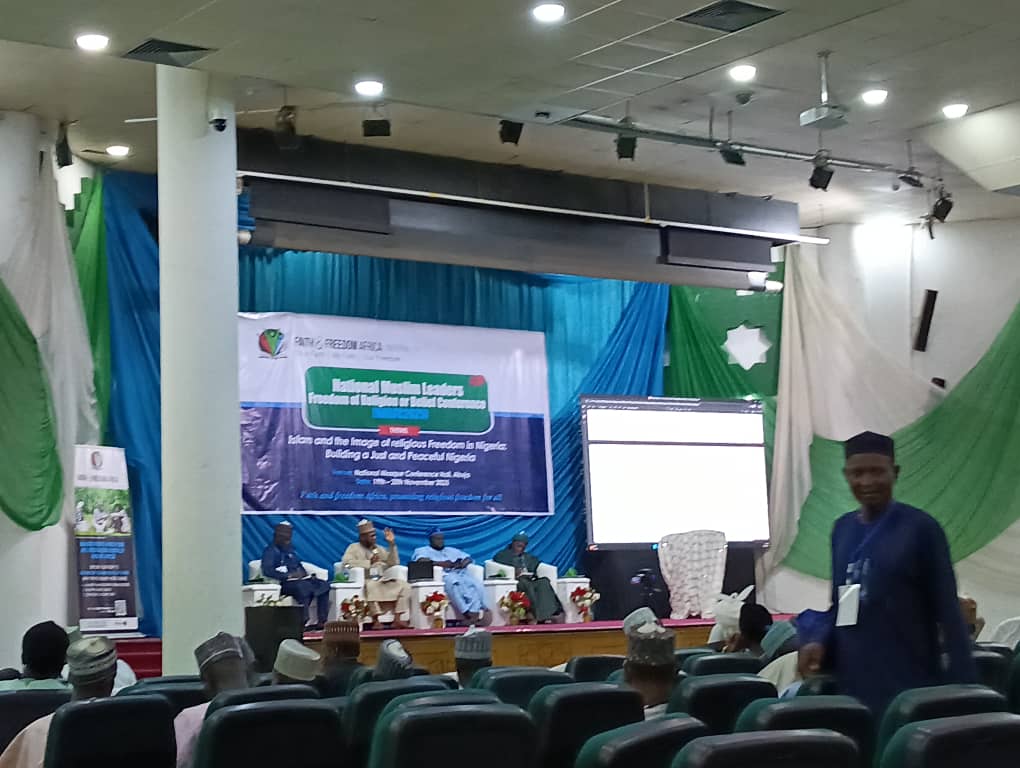
That message reverberated strongly at the National Muslim Leaders Conference on Freedom of Religion or Belief (FoRB), held at the National Mosque Conference Hall in Abuja. The two-day forum, organised by Faith and Freedom Africa (FFA), focused on the theme: “Islam and the Image of Religious Freedom in Nigeria: Building a Just and Peaceful Nation.” The gathering brought together top Muslim voices — chief imams, academics, community leaders, and policy influencers — all working to strengthen Nigeria’s commitment to protecting FoRB as guaranteed under Section 38 of the 1999 Constitution.
One of the Chief Imams of the National Mosque, Prof. Muhammad Adam, described Nigeria’s religious and ethnic diversity as a blessing that must be jealously protected. “Peace is a red line; without it, we cannot progress as a nation,” he said. “God in His infinite mercy created Nigerians in different tribes, ethnicities, and religions — and placed us together. We must maintain peace and protect our unity.” He warned that the tragic experience of the Rwandan genocide should always remind Nigerians never to allow external influences or internal hatred to drive the nation toward disaster.
Felix Joseph Samari, the Country Representative of Faith and Freedom Africa emphasized that FoRB is not about favouring any religion, but about protecting human dignity.
“FoRB does not protect a religion — it protects human beings,” he said. “Every person has the right to believe, worship, or not believe — alone or collectively — without harassment.”
He urged Nigerian Muslims to take leadership in shaping the country’s local narrative on FoRB rather than allowing outsiders to define it.
According to Samari, “Just about two months ago, I stood before Christian leaders at the National Christian Centre here in Abuja for a similar engagement. On that day, I mentioned that our next step would be to convene our Muslim leaders for a conversation on the same essential subject, Freedom of Religion or belief. Today, by the grace of God, that they as come. I am grateful to God and deeply honoured that we gathered as partners I. A movement committed to building a peaceful, just, and harmonious nation where everyone can practice their faith freely without fear.
He stated further, “The National Muslim Leaders Conference is holding g at a time when Nigeria is undergoing intense conversation about the right to religious freedom. For us at Faith and Freedom Africa, this is not a new concern. What feels new today are the emerging narrative and dimensions surrounding FoRB in our country. This shift are not because religious leaders have been silent, but perhaps because as a nation, we have not insisted strongly enough on a shared, sincere and well defined National agenda for freedom of religion or belief. And indeed, it is you our esteemed religious leaders that hold the moral authority to champion this agenda.
Speakers rooted their messages in the Qur’an, noting Islam’s clear stance on peaceful coexistence and the absence of compulsion in matters of faith. Guest lecturer, Prof. Ahmad Bello Dogarawa, a Professor in the department of Accounting, Ahmadu Bello University, (ABU), Zaria noted that the work of a cleric is to guide society with wisdom, not to promote hate or violence.
“Inflammatory preaching has no place in Islam. A cleric’s mission is to guide — not incite hatred,” he stressed.
Governance expert, Dogarawa reminded participants that Nigeria’s global reputation depends on how well its people treat one another.
“Nigeria is our only homeland — we must demonstrate unity, patriotism and tolerance,” he said.
Another respected interfaith advocate, Imam Dr. Muhammad Nurayn Ashafa, a Co-founder of the Interfaith Mediation Center (IMC), Kaduna,p and the founder of Ashafa Relief Foundation, both of which focus on peace building, Interfaith dialogue and community development who drew from the Prophet Muhammad’s example of kindness to neighbours and cooperation with non-Muslims, explaining that Muslims today must revive those values to reduce rising suspicion between faith communities.
Navy Captain (Imam) Gidado Taofiq, Chief Imam of the Defence Headquarters, warned against branding crimes with religious labels. “Crime has no religion. You cannot say ‘Islamic terrorism’ or ‘Islamic banditry.’ Terrorism is terrorism, banditry is banditry,” he stated firmly.
He urged Nigeria’s media industry to desist from sensational reporting capable of provoking conflict, and supported the establishment of a Ministry of Religious Affairs to help regulate preaching nationwide and promote harmony.
Historian and senior scholar, Prof. Sani Umar of the Department of History and Diplomatic Studies, University of Abuja, presented a paper titled “Freedom of Religion or Belief: Imperative for Peace and Development,” where he linked FoRB directly to national growth.
According to him, “No development can take place where fear, injustice, or discrimination thrives,” he insisted.
“Freedom of religion is essential for national stability and prosperity.” His submission drew strong applause.
Other speakers strengthened the discourse from different perspectives. Mallam Abdullazeez Shittu of the University of Abuja noted that peace has become the world’s most expensive commodity, warning that the absence of FoRB accelerates global conflict.
Mallam Hassan Buniyadi of JIBWIS, FCT, condemned parents who bring children into the world without taking responsibility for their upbringing — a trend he said fuels societal ignorance and extremism.
Participants such as Mallam Sulaiman Shuaibu of Arewa Forum Kaduna, and Malam Yusuf Sherifudeen of Abubakar Audu University, Kogi State, praised Faith and Freedom Africa for spearheading a movement that they believe will drastically reduce religious tensions and empower believers to practice their faith confidently.
Imam Tahir Baba Ibrahim, who represented the Kaduna State Bureau of Religious Affairs, endorsed the call for a federal Ministry of Religious Affairs, noting that a structured coordination of religious activities could prevent crises.
Traditional rulers also pledged commitment to FoRB advocacy. The Emir of Kaura-Namoda, Alhaji Sanusi Muhammad, emphasized that cultural leaders must protect diversity and equal rights among adherents of all faiths, cautioning that removing religious education from schools would only fuel extremism.
The Emir of Gwargada in Kuje Area Council commended FFA for its peace-building efforts and declared his full support going forward.
In his goodwill message, the Etsu Nupe congratulated the organisers for convening the conference at a critical moment in Nigeria’s history. He urged them to scale the engagement by taking similar sensitization events to states and local government areas nationwide.
Meanwhile, Waziri Kebbi advised that the communiqué from the conference be submitted to state governors, with strategic plans for government involvement in promoting peaceful coexistence and FoRB compliance.
The conference also reviewed the progress Faith and Freedom Africa has made in FoRB advocacy over the years. Aside from Abuja, the organisation has successfully implemented community engagement activities in Jalingo, Taraba State, and Makurdi, Benue State — initiatives that have boosted trust, reduced fear and improved knowledge about freedom of religion among grassroots populations.
Looking ahead, participants were informed of a landmark Joint Muslim–Christian Leaders Conference scheduled for the first quarter of 2026 — a major step designed to consolidate progress, strengthen interfaith networks, and ensure that no Nigerian is intimidated or harassed for their faith identity.
As the event drew to a close, Dr. Shehu Usman, Assistant Imam of the National Mosque, offered special prayers for Nigeria’s peace and unity, while representatives from women and youth faith organisations — including Hajia Muheebat Abdulrasaq from FOMWAN — reaffirmed their dedication to promoting tolerance through community initiatives.
The overarching message from the gathering was clear and compelling: Nigeria’s diversity is a gift from God; religious freedom is a non-negotiable human right; peace is the foundation of worship; and unity is the true expression of faith.
The Abuja conference — built on scholarship, dialogue, and shared patriotic conviction — marks a significant stride toward a nation where every Nigerian can worship freely, build trust with neighbours of different beliefs, and contribute together to peace and progress.
Author Profile
Latest entries
OpinionDecember 10, 2025LIES VS FACTS: Revisiting The Aregbesola Years In OsunBusiness and EconomyDecember 9, 2025KGIRS Sensitizes Stakeholders On Implementation Of New Nigeria Tax Act, 2025NewsDecember 9, 2025Insecurity: Ododo Briefs President Tinubu On Proactive Measures Put In PlaceNewsDecember 9, 2025Kogi State Intercept Child Trafficking
Religious
Faith and Freedom Africa Holds Town Hall Meeting in Makurdi, Calls for Deeper Understanding of Constitutional Rights to Freedom of Religion
By AbdulRahman Obaje
Makurdi, Benue State — Concerned about the religious undertones of Nigeria’s security challenges, Faith and Freedom Africa (FFA) has renewed calls for respect and protection of every citizen’s right to freedom of religion, as enshrined in Section 38 of the Nigerian Constitution. adsbygoogle || []).push({});
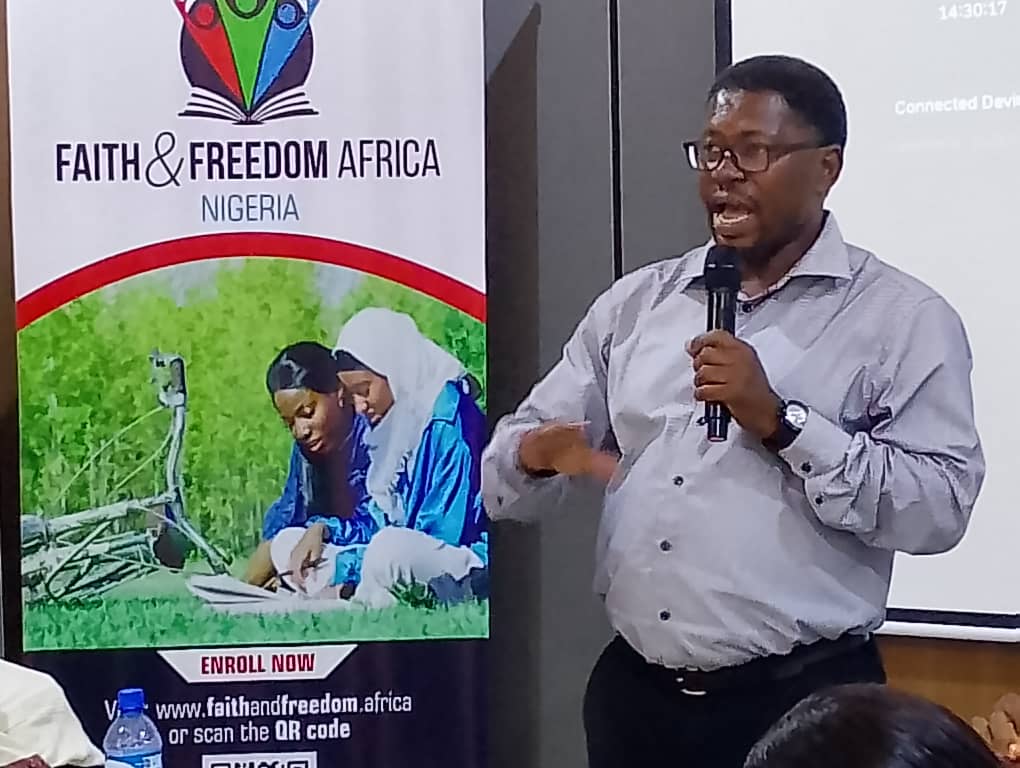
Speaking at a one-day colloquium held on Wednesday at Batoha Hotel, Makurdi, FFA Country Coordinator Felix Samari questioned the Nigerian government’s recognition of only Christianity and Islam, lamenting that adherents of African Traditional Religion (ATR) are often treated as “second-class citizens.”
“With Freedom of Religion or Belief (FoRB) advocacy, we are not only speaking for Christians and Muslims but also for practitioners of African traditional religions and even atheists,” Samari said. “Every citizen deserves equal respect and the freedom to worship — or not worship — without discrimination.”
Themed Freedom of Religious Beliefs (FoRB), the event brought together religious leaders, activists, and community members to discuss religious tolerance and inclusion.
A participant and atheist, Mr. Terna Sam-Kange, decried discrimination against non-adherents of Christianity and Islam, calling for “a more open-minded Nigeria where religious belief or lack of it does not determine one’s access to opportunities.”
Similarly, Ms. Doosuur Sue, a practitioner of African Traditional Religion, lamented the exclusion of ATR adherents from government recognition and benefits. “We are Nigerians too and should have equal opportunities and privileges like every other citizen,” she said.
FoRB trainer Dr. Longji Dambok criticized the government’s practice of funding only Christian and Muslim pilgrims’ boards, describing it as “discriminatory and unhealthy for national unity.” He called for reorientation and enlightenment campaigns to foster mutual respect and understanding in Nigeria’s culturally diverse society.
The FFA Town Hall Meeting is part of ongoing efforts to promote peace, religious tolerance, and the recognition of constitutional rights in communities across Nigeria.
Author Profile
Latest entries
OpinionDecember 10, 2025LIES VS FACTS: Revisiting The Aregbesola Years In OsunBusiness and EconomyDecember 9, 2025KGIRS Sensitizes Stakeholders On Implementation Of New Nigeria Tax Act, 2025NewsDecember 9, 2025Insecurity: Ododo Briefs President Tinubu On Proactive Measures Put In PlaceNewsDecember 9, 2025Kogi State Intercept Child Trafficking