
Religious
Bridging Divides: Stakeholders Unite to Tackle Religious Intolerance in Nigeria
Abdulrahman Aliagan,
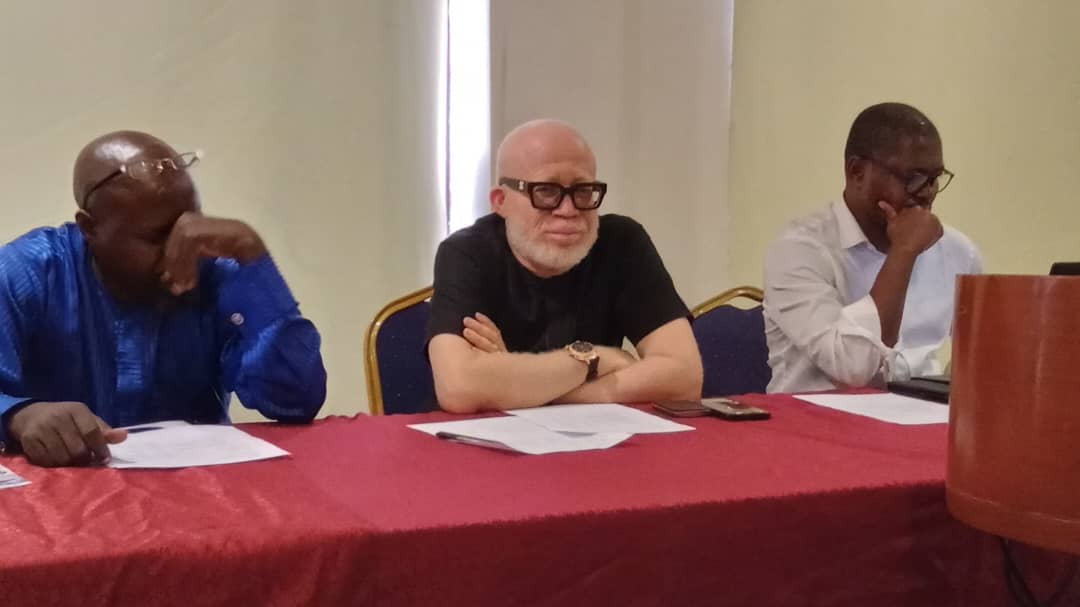
On January 25, 2025, religious leaders, journalists, scholars, and advocates gathered at the Hawthorn Hotel and Suites in Abuja to address one of Nigeria’s most pressing challenges—religious intolerance. adsbygoogle || []).push({}); js">

Mrs. Elizabeth Duile, who facilitated the introductions, welcomed the 11 attendees to the gathering. Mr. Samari’s opening remarks set the tone, emphasizing the urgent need to address religious intolerance—a crisis that has deepened divisions, fueled violence, and eroded trust across communities in Nigeria. He outlined six critical goals for the meeting, leadership engagement roles, lending voices to promote FoRB, policy formulation inclusive of FoRB principles, Interfaith collaboration, building trust across religious and ethnic divides, and peacebuilding initiatives.
“The essence of this meeting,” Mr. Samari remarked, “is to achieve peace and ensure that every Nigerian practices their religion and beliefs without fear of intimidation.”
Several speakers provided insights into the root causes and solutions to religious intolerance in Nigeria.
Dr. Suleiman Bagerei, a lecturer from Lapai University, delved into defining religious intolerance, underscoring the need to identify what constitutes such intolerance. He highlighted its damaging effects on societal cohesion.
Malam Abdulrahman Aliagan, journalist and National President of the Nigerian Guild of Investigative Journalists, NGIJ traced the origins of religious divisions to colonial-era policies, particularly the indirect rule system. He criticized politicians for exploiting religious differences for political gain and reminisced about Nigeria’s harmonious past.
“In the 80s,” he said, “religious intolerance was almost nonexistent. We lived together, ate together, and played together, irrespective of our beliefs.”
Mal. Habeebu Ibrahim, a staff member of the National Mosque, spoke on the discrimination that pervades contemporary Nigeria, emphasizing how ignorance and stereotypes about other religions perpetuate mistrust.
He pointed out how religious symbols in estates, such as mosques or churches, often reflect the developer’s faith, furthering divisions.
Mrs. Rosita Chinyere addressed how ethnic identity intertwined with religion exacerbates conflicts over resources, land, and power. She emphasized the role of parents in teaching tolerance to children.
Dr. (Mrs) Inya Ode echoed this sentiment, highlighting the multiplier effect of positive family values on society.
Dr. Longi Danbok identified socioeconomic imbalances as a root cause of religious intolerance, arguing that poverty and unemployment create frustrations that extremists exploit.
Mr. Lisam Manji Lawan called out weak law enforcement and judicial processes, which allow perpetrators of religious violence to act with impunity. “Offenders should be treated as criminals,” he declared.
Barrister Rex Erameh, the Abuja Chapter’s Chairman of the Albino Foundation, citing Section 38 of Nigeria’s 1999 Constitution, underscored the constitutional guarantee of religious freedom. He stressed the need for policies that ensure equal treatment of all religious groups and uphold the constitutional prohibition of a state religion.
Mal. Alkasim Muhammed Zangina proposed a holistic approach to addressing religious intolerance, urging the political class to adopt strategic frameworks.
After robust deliberations, the participants reached a consensus on actionable steps to curb religious intolerance and promote freedom of religion and belief:
1. Promoting Interfaith Dialogue: Building understanding and respect through conversations among religious leaders and communities.
2. Educational Reform: Incorporating teachings on religious tolerance and peaceful coexistence in school curricula.
3. Rule of Law: Ensuring justice for perpetrators of religious violence to deter future incidents.
4. Addressing Socioeconomic Inequalities: Reducing poverty and unemployment to mitigate frustration and prevent exploitation by extremists.
5. Media Sensitization: Leveraging media platforms to promote tolerance and discourage biased portrayals of religious groups.
6. Empowering Religious Leaders: Training leaders to preach unity and discourage divisive rhetoric.
7. Grassroots Engagement: Establishing community peace committees to mediate conflicts.
Additionally, measures to bolster FoRB included creating inclusive policies, celebrating diversity, and fostering international partnerships to support advocacy programs.
A key moment during the meeting was the screening of Unusual Partners, a documentary highlighting the impact of FoRB initiatives in Kaduna State. The film illustrated how interfaith collaboration can bridge divides and promote peace.
Mr. Felix Samari unveiled a proposal to establish the Nigerian Forum for Religious Freedom Advocacy (NicFORM). The platform will focus on awareness campaigns, legal advocacy, and fostering partnerships to strengthen FoRB in Nigeria.
The meeting concluded with a dinner, allowing participants to network and reflect on the discussions. The conveners and attendees expressed optimism that the strategies outlined would lay the groundwork for a more peaceful and tolerant Nigeria.
As Nigeria grapples with the challenges of religious intolerance, this Strategic Roundtable Meeting serves as a beacon of hope, demonstrating that dialogue, education, and collaboration are powerful tools for building a unified and prosperous society.
Author Profile

Latest entries
 ReligiousDecember 11, 2025Peace Across Faiths: Minna Town Hall Strengthens Nigeria’s Commitment to Religious Freedom
 OpinionDecember 10, 2025LIES VS FACTS: Revisiting The Aregbesola Years In Osun
 Business and EconomyDecember 9, 2025KGIRS Sensitizes Stakeholders On Implementation Of New Nigeria Tax Act, 2025
 NewsDecember 9, 2025Insecurity: Ododo Briefs President Tinubu On Proactive Measures Put In Place


Religious
Peace Across Faiths: Minna Town Hall Strengthens Nigeria’s Commitment to Religious Freedom
By Abdulrahman Aliagan, Abuja
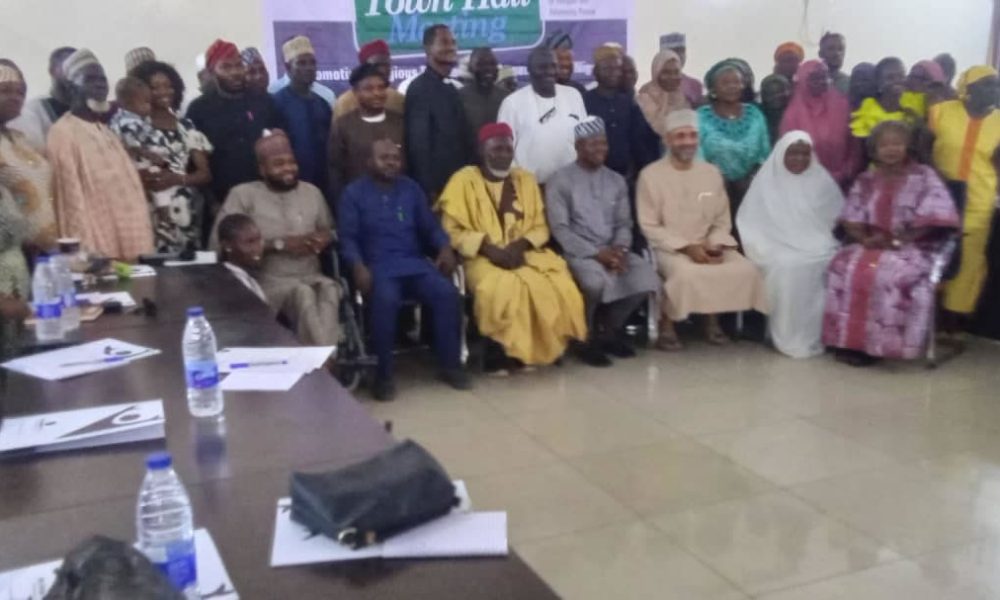
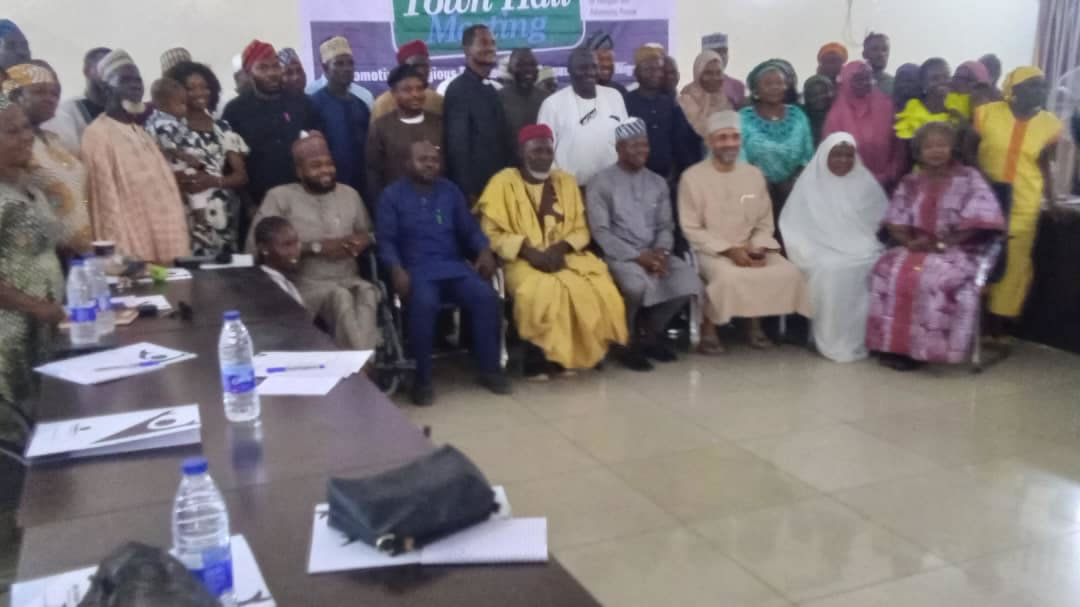
Faith and Freedom Africa extended its nationwide advocacy for peaceful coexistence to Minna, Niger State, on Saturday, December 4, 2025, where religious leaders, scholars, civil society actors, women groups, and community influencers gathered at Haske Luxury Hotel for a town hall meeting on the theme “Promoting Religious Freedom as a Human Right in Nigeria.
The meeting began on an informal yet reflective note when a participant recalled a widespread perception: religious leaders often sit harmoniously at national events but return to their communities divided. Changing that narrative, organisers said, lies at the heart of Faith and Freedom Africa’s mandate. The organisation seeks to “bring hearts together,” strengthen coexistence, and dismantle entrenched stereotypes that impede mutual understanding across faiths.
Faith and Freedom Africa’s Country Representative, Mr. Felix Joseph Samari, led the conversation with a compelling reminder that understanding religious freedom must go beyond theory. He highlighted two responsibilities for contemporary society: creating a future where peaceful coexistence becomes a legacy, and strengthening public understanding of the constitutional and moral foundations of Freedom of Religion or Belief (FoRB).
He restated that religious freedom is protected by Section 38 of Nigeria’s 1999 Constitution, Article 18 of the Universal Declaration of Human Rights, the International Covenant on Civil and Political Rights, and the African Charter on Human and People’s Rights. “These instruments guarantee every individual the right to adopt, practice, change, or manifest their religion without fear of persecution,” Samari emphasised. The real challenge, he said, lies not in the absence of laws but in the public’s limited understanding of these rights and how they apply in everyday life. “Freedom of religion does not protect any particular faith. It protects people. It is a human right, not a religious privilege.”
Participants acknowledged Niger State’s long-standing reputation as a hub of spiritual, cultural, and political influence. With vibrant Muslim and Christian communities, the state was described by organisers as a “power state”—a region whose history of coexistence positions it to shape national conversations on tolerance. Samari noted that Niger’s demographic realities make it a natural space for dialogue: “If we understand our differences and recognize each other’s uniqueness, we can take the best from every group.”
A major highlight of the town hall was the presentation by renowned Islamic scholar, Sheikh Nurudeen Lemu, who offered deep reflections on genuine tolerance. He stressed that Nigeria’s diversity is not a burden but a divine design that becomes an asset only when mutual respect is embedded in the culture. According to him, tolerance is not about pretending differences do not exist but about acknowledging them with maturity, honesty, and fairness. He condemned stereotyping based on religious identity, describing it as a dangerous seed that often germinates into hatred and violence.
“Religion only becomes a source of conflict when people manipulate it for domination or self-interest,” Sheikh Lemu said. “True faith inspires goodness, not aggression. When people understand and practice justice, fairness, and the principle of ‘live and let live,’ they strengthen the moral foundations of society.”
The interactive session, moderated by Dr. Loungi, allowed participants to share practical experiences of coexistence. Many narrated real-life situations that reflected how peace thrives quietly in many neighbourhoods.
One participant recounted the story of a Christian mother who consulted a Muslim family friend when her son considered converting to Islam. Rather than taking advantage of the situation, the Muslim family encouraged patience, dialogue, and mutual respect—allowing the young man to make an informed decision free from coercion.
Another testimony came from the Federation of Muslim Women in Nigeria (FOMWAN)—represented at the event by Aisha Lemu, Hauwa Kulu Abdullahi, and Aishat Suleiman—who narrated how the organisation helped two Christian children who had dropped out of school for financial reasons. FOMWAN ensured their return to school, asking nothing in return and making clear that humanitarian service transcends religious boundaries.
Representatives from Women in Politics, including Dr. Hamzat Adebowale of Ibrahim Badamasi Babangida University, Lapai, also participated in the deliberations. Delegates from WORICAN, including Mrs. Anabueze Ismail Nwafor, Esther (Treasurer), and Mrs. Grace, as well as OAIC representatives Mrs. Elizabeth Oyerinde and Rachel Akangbe, contributed meaningful insights into community-level coexistence challenges and opportunities.
A powerful goodwill message came from human rights activist and Director of the National Human Rights Commission (NHRC) in Niger State, Dr. Nuhu Muhammad. He praised the organisers for creating an inclusive platform and emphasised that human rights and religion are not in conflict.
“As a human rights defender, I celebrate this space where people of different faiths come together in the spirit of peace, respect, and shared humanity,” he said. “Our various religions teach compassion, justice, and dignity—values at the heart of human rights. When we stand together across faith lines, we send a powerful message that unity is stronger than division. May this program inspire us to build communities where everyone is safe, respected, and valued. May peace be upon us all.”
In a segment on cultural and human diversity, Samari reminded participants that differences are part of human design, noting that even children from the same parents have unique identities. Recognising diversity, he said, allows societies to harness the strengths of all groups. He added that violations of religious freedom often stem from ignorance rather than malice and can occur not only between religions but also within the same religion across denominations or sects. This, he argued, reinforces the universality of FoRB and its importance for national development.
Unlike typical interfaith engagements that focus mainly on elites, Faith and Freedom Africa’s town hall deliberately centred everyday community voices—women, youth, neighbourhood leaders, and local influencers. “You are the ones who interact with people daily,” a facilitator said. “You see what happens in homes, markets, neighbourhoods, and schools. You are the real drivers of coexistence.”
At the close of the meeting, Rev. Emmanuel Gabriel read the communiqué for adoption and delivered the final remarks, commending participants for their sincerity and commitment to peace.
As the town hall meeting was moderated by Dr Longji Dambok concluded, participants reaffirmed their dedication to promoting religious freedom, strengthening community bonds, and ensuring that all Nigerians—regardless of faith—can live, worship, and thrive without fear. “If we fail to appreciate the uniqueness of others, we miss the benefits that diversity brings,” one speaker remarked. “But if we embrace our differences, Nigeria will be happier, stronger, and better for future generations.”
The Minna Town Hall ended with a shared pledge to continue spreading the message of peace and defending the dignity and rights of all citizens, inspiring hope that Nigeria can rise above its divisions and model coexistence for the world.
Author Profile
Latest entries
ReligiousDecember 11, 2025Peace Across Faiths: Minna Town Hall Strengthens Nigeria’s Commitment to Religious FreedomOpinionDecember 10, 2025LIES VS FACTS: Revisiting The Aregbesola Years In OsunBusiness and EconomyDecember 9, 2025KGIRS Sensitizes Stakeholders On Implementation Of New Nigeria Tax Act, 2025NewsDecember 9, 2025Insecurity: Ododo Briefs President Tinubu On Proactive Measures Put In Place
Religious
Strengthening the Bonds of Faith and Freedom: How Nigeria’s Religious Leaders Are Advancing the Right to Believe
By Abdulrahman Aliagan,
In a nation as diverse as Nigeria, where faith influences daily life, community identity, and national politics, ensuring that every person can freely believe — or choose not to — is more than a constitutional promise. adsbygoogle || []).push({}); com/pagead/js/adsbygoogle.js">
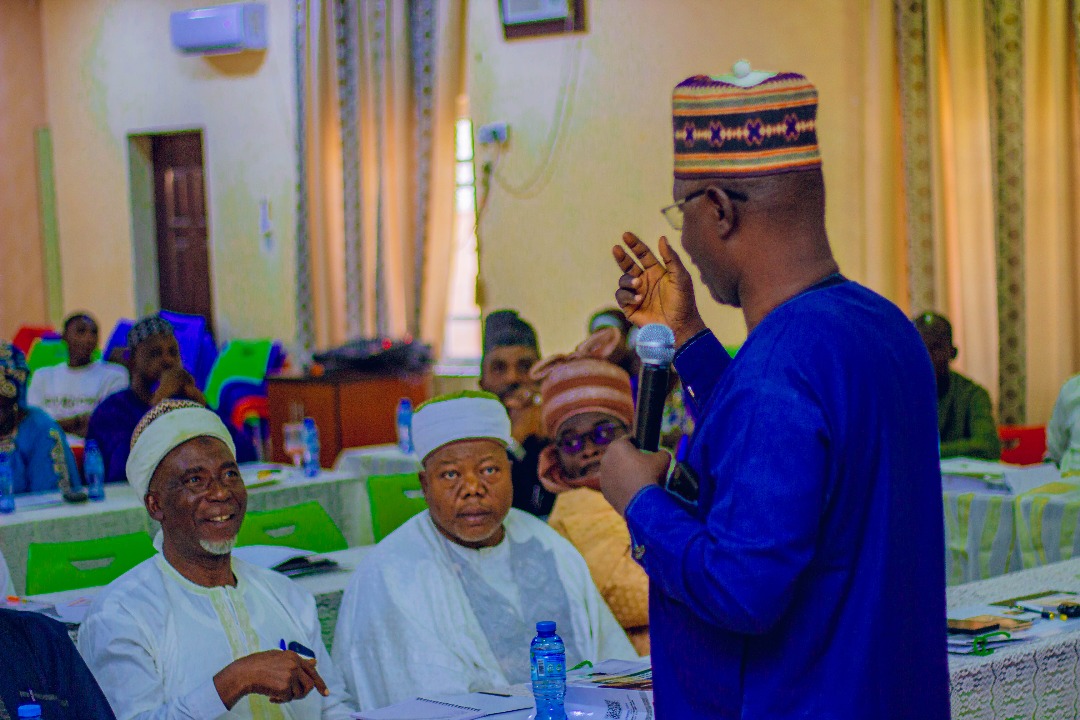
This effort reached another milestone in Gombe recently, where Faith and Freedom Africa hosted a Town Hall Meeting bringing together 46 carefully selected voices from across the society.
Government representatives sat alongside legal practitioners; imams and pastors shared reflections with traditional rulers, women advocates, and youth activists — all united by a shared commitment to build a more peaceful Nigeria.
Welcoming participants, the Country Representative of Faith and Freedom Africa, Felix Samari, delivered a resonant message: FoRB is not a privilege that may be extended to a few, but an inherent, non-negotiable right accorded to every citizen. Rooted in international treaties, reinforced by regional frameworks, and enshrined in Section 38 of the Nigerian Constitution, the right protects individuals in matters of conscience, worship, and belief — shielding them against discrimination, intimidation, or coercion.
Samari reminded the audience that when this right flourishes, communities prosper, trust expands, and societies advance. But when it is suppressed, the outcomes are clear and dangerous — divisions deepen, anxieties rise, and people become vulnerable to manipulation by those who exploit faith for political gain. The gathering, he said, was not merely another seminar, but a civic responsibility: to learn, to question, and to act in defense of every citizen’s humanity.
The Gombe Town Hall Meeting unfolded as part of a broader national project undertaken by Faith and Freedom Africa — a movement sweeping across different geopolitical zones. Before arriving in Gombe, the organisation convened influential engagements in Jalingo, Kaduna, and Makurdi, where community leaders and grassroots actors grappled with real challenges threatening religious harmony. Earlier this year in Abuja, Christian and Muslim leaders held joint forums at the National Mosque and the National Ecumenical Centre — two symbolic structures that reflect the soul of Nigeria. Those gatherings cemented the notion that the endurance of the nation’s unity rests heavily on how its faith communities relate with one another.
Discussions in Gombe exposed ongoing tensions that still linger at the grassroots level. Participants spoke of the subtle rise of mistrust between religious neighbours, misinformation amplified through social spaces, and the careless use of inflammatory rhetoric by individuals claiming leadership roles. The consensus across denominations was clear: peace cannot survive where voices of intolerance are left unchecked.
Throughout the session, one key theme persisted — the moral authority of religious and traditional leaders. Faith shapes behaviour. Sermons influence attitudes. Leaders who preach peace serve as anchors of stability in times of uncertainty, while those who weaponize belief can trigger unrest with a single message. The meeting therefore challenged clerics and community figures to guide their followers toward moderation, respect, and a humanity-first mindset. Homes, schools, and pulpits must become spaces where diversity is embraced — not feared.
Participants also emphasized that knowledge gained at the Town Hall must not remain confined to conference halls. They pledged to take the message into classrooms, marketplaces, neighbourhood associations, and rural communities that rarely feature in elite policy debates but carry the weight of Nigeria’s peace on their shoulders. Real change, they agreed, must begin where tensions are born — at the grassroots.
Amid these commitments, a strong call was issued to government. Peace requires institutional protection. When FoRB violations occur — whether through unequal access to rights, harassment, or discrimination — the state must act swiftly and fairly. Leaders insisted that government at all tiers must do more to uphold the constitution, guarantee safety for all religious groups, and actively prevent the escalation of disputes that could threaten stability.
For Faith and Freedom Africa, the work is far from done. The organisation reaffirmed its mission to nurture a culture where people of every creed or conviction enjoy dignity, justice, and respect. Its programming continues to expand, building bridges where suspicion once stood and deepening dialogue among communities that too often speak past each other.
In a country where belief is deeply personal yet inherently communal, Freedom of Religion or Belief is more than a human rights principle — it is a peace strategy. And as this movement gains momentum from the streets of Gombe to the halls of national power in Abuja, one truth becomes increasingly evident: Nigeria’s future depends on how well its people learn to live together, believe freely, and protect the rights that bind them as one nation under God — and under law.
Faith and Freedom Africa’s journey continues. And with each conversation, each community meeting, and each commitment to harmony, Nigeria takes one step closer to becoming not only a land of many faiths — but a home where every belief can thrive
Author Profile
Latest entries
ReligiousDecember 11, 2025Peace Across Faiths: Minna Town Hall Strengthens Nigeria’s Commitment to Religious FreedomOpinionDecember 10, 2025LIES VS FACTS: Revisiting The Aregbesola Years In OsunBusiness and EconomyDecember 9, 2025KGIRS Sensitizes Stakeholders On Implementation Of New Nigeria Tax Act, 2025NewsDecember 9, 2025Insecurity: Ododo Briefs President Tinubu On Proactive Measures Put In Place
Religious
Muslim Leaders Rally for Stronger Protection of Religious Freedom in Nigeria
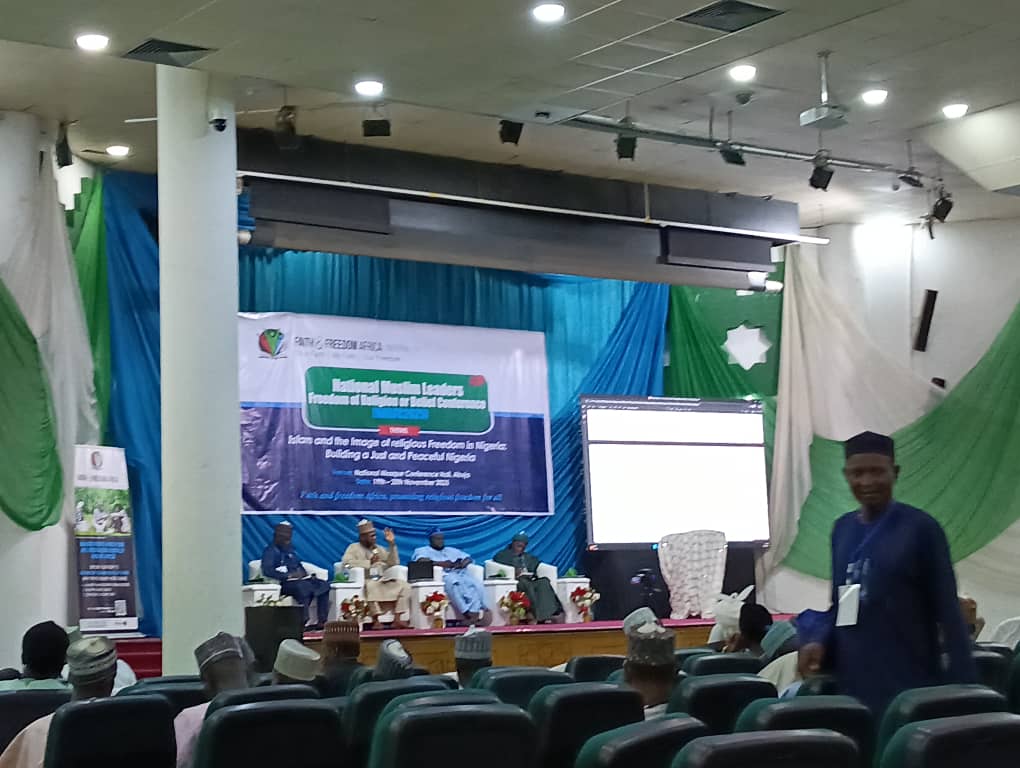
…As National Conference Calls for Unity, Peace and Interfaith Cooperation
By Abdulrahman Aliagan, Abuja
With concerns mounting over divisive rhetoric and intolerance across the country, Nigeria’s leading Muslim clerics, scholars, and traditional rulers have renewed calls for stronger protection of religious freedom, insisting that peace, dialogue and mutual respect must remain central to the nation’s unity.
That message reverberated strongly at the National Muslim Leaders Conference on Freedom of Religion or Belief (FoRB), held at the National Mosque Conference Hall in Abuja. The two-day forum, organised by Faith and Freedom Africa (FFA), focused on the theme: “Islam and the Image of Religious Freedom in Nigeria: Building a Just and Peaceful Nation.” The gathering brought together top Muslim voices — chief imams, academics, community leaders, and policy influencers — all working to strengthen Nigeria’s commitment to protecting FoRB as guaranteed under Section 38 of the 1999 Constitution.
One of the Chief Imams of the National Mosque, Prof. Muhammad Adam, described Nigeria’s religious and ethnic diversity as a blessing that must be jealously protected. “Peace is a red line; without it, we cannot progress as a nation,” he said. “God in His infinite mercy created Nigerians in different tribes, ethnicities, and religions — and placed us together. We must maintain peace and protect our unity.” He warned that the tragic experience of the Rwandan genocide should always remind Nigerians never to allow external influences or internal hatred to drive the nation toward disaster.
Felix Joseph Samari, the Country Representative of Faith and Freedom Africa emphasized that FoRB is not about favouring any religion, but about protecting human dignity.
“FoRB does not protect a religion — it protects human beings,” he said. “Every person has the right to believe, worship, or not believe — alone or collectively — without harassment.”
He urged Nigerian Muslims to take leadership in shaping the country’s local narrative on FoRB rather than allowing outsiders to define it.
According to Samari, “Just about two months ago, I stood before Christian leaders at the National Christian Centre here in Abuja for a similar engagement. On that day, I mentioned that our next step would be to convene our Muslim leaders for a conversation on the same essential subject, Freedom of Religion or belief. Today, by the grace of God, that they as come. I am grateful to God and deeply honoured that we gathered as partners I. A movement committed to building a peaceful, just, and harmonious nation where everyone can practice their faith freely without fear.
He stated further, “The National Muslim Leaders Conference is holding g at a time when Nigeria is undergoing intense conversation about the right to religious freedom. For us at Faith and Freedom Africa, this is not a new concern. What feels new today are the emerging narrative and dimensions surrounding FoRB in our country. This shift are not because religious leaders have been silent, but perhaps because as a nation, we have not insisted strongly enough on a shared, sincere and well defined National agenda for freedom of religion or belief. And indeed, it is you our esteemed religious leaders that hold the moral authority to champion this agenda.
Speakers rooted their messages in the Qur’an, noting Islam’s clear stance on peaceful coexistence and the absence of compulsion in matters of faith. Guest lecturer, Prof. Ahmad Bello Dogarawa, a Professor in the department of Accounting, Ahmadu Bello University, (ABU), Zaria noted that the work of a cleric is to guide society with wisdom, not to promote hate or violence.
“Inflammatory preaching has no place in Islam. A cleric’s mission is to guide — not incite hatred,” he stressed.
Governance expert, Dogarawa reminded participants that Nigeria’s global reputation depends on how well its people treat one another.
“Nigeria is our only homeland — we must demonstrate unity, patriotism and tolerance,” he said.
Another respected interfaith advocate, Imam Dr. Muhammad Nurayn Ashafa, a Co-founder of the Interfaith Mediation Center (IMC), Kaduna,p and the founder of Ashafa Relief Foundation, both of which focus on peace building, Interfaith dialogue and community development who drew from the Prophet Muhammad’s example of kindness to neighbours and cooperation with non-Muslims, explaining that Muslims today must revive those values to reduce rising suspicion between faith communities.
Navy Captain (Imam) Gidado Taofiq, Chief Imam of the Defence Headquarters, warned against branding crimes with religious labels. “Crime has no religion. You cannot say ‘Islamic terrorism’ or ‘Islamic banditry.’ Terrorism is terrorism, banditry is banditry,” he stated firmly.
He urged Nigeria’s media industry to desist from sensational reporting capable of provoking conflict, and supported the establishment of a Ministry of Religious Affairs to help regulate preaching nationwide and promote harmony.
Historian and senior scholar, Prof. Sani Umar of the Department of History and Diplomatic Studies, University of Abuja, presented a paper titled “Freedom of Religion or Belief: Imperative for Peace and Development,” where he linked FoRB directly to national growth.
According to him, “No development can take place where fear, injustice, or discrimination thrives,” he insisted.
“Freedom of religion is essential for national stability and prosperity.” His submission drew strong applause.
Other speakers strengthened the discourse from different perspectives. Mallam Abdullazeez Shittu of the University of Abuja noted that peace has become the world’s most expensive commodity, warning that the absence of FoRB accelerates global conflict.
Mallam Hassan Buniyadi of JIBWIS, FCT, condemned parents who bring children into the world without taking responsibility for their upbringing — a trend he said fuels societal ignorance and extremism.
Participants such as Mallam Sulaiman Shuaibu of Arewa Forum Kaduna, and Malam Yusuf Sherifudeen of Abubakar Audu University, Kogi State, praised Faith and Freedom Africa for spearheading a movement that they believe will drastically reduce religious tensions and empower believers to practice their faith confidently.
Imam Tahir Baba Ibrahim, who represented the Kaduna State Bureau of Religious Affairs, endorsed the call for a federal Ministry of Religious Affairs, noting that a structured coordination of religious activities could prevent crises.
Traditional rulers also pledged commitment to FoRB advocacy. The Emir of Kaura-Namoda, Alhaji Sanusi Muhammad, emphasized that cultural leaders must protect diversity and equal rights among adherents of all faiths, cautioning that removing religious education from schools would only fuel extremism.
The Emir of Gwargada in Kuje Area Council commended FFA for its peace-building efforts and declared his full support going forward.
In his goodwill message, the Etsu Nupe congratulated the organisers for convening the conference at a critical moment in Nigeria’s history. He urged them to scale the engagement by taking similar sensitization events to states and local government areas nationwide.
Meanwhile, Waziri Kebbi advised that the communiqué from the conference be submitted to state governors, with strategic plans for government involvement in promoting peaceful coexistence and FoRB compliance.
The conference also reviewed the progress Faith and Freedom Africa has made in FoRB advocacy over the years. Aside from Abuja, the organisation has successfully implemented community engagement activities in Jalingo, Taraba State, and Makurdi, Benue State — initiatives that have boosted trust, reduced fear and improved knowledge about freedom of religion among grassroots populations.
Looking ahead, participants were informed of a landmark Joint Muslim–Christian Leaders Conference scheduled for the first quarter of 2026 — a major step designed to consolidate progress, strengthen interfaith networks, and ensure that no Nigerian is intimidated or harassed for their faith identity.
As the event drew to a close, Dr. Shehu Usman, Assistant Imam of the National Mosque, offered special prayers for Nigeria’s peace and unity, while representatives from women and youth faith organisations — including Hajia Muheebat Abdulrasaq from FOMWAN — reaffirmed their dedication to promoting tolerance through community initiatives.
The overarching message from the gathering was clear and compelling: Nigeria’s diversity is a gift from God; religious freedom is a non-negotiable human right; peace is the foundation of worship; and unity is the true expression of faith.
The Abuja conference — built on scholarship, dialogue, and shared patriotic conviction — marks a significant stride toward a nation where every Nigerian can worship freely, build trust with neighbours of different beliefs, and contribute together to peace and progress.
Author Profile
Latest entries
ReligiousDecember 11, 2025Peace Across Faiths: Minna Town Hall Strengthens Nigeria’s Commitment to Religious FreedomOpinionDecember 10, 2025LIES VS FACTS: Revisiting The Aregbesola Years In OsunBusiness and EconomyDecember 9, 2025KGIRS Sensitizes Stakeholders On Implementation Of New Nigeria Tax Act, 2025NewsDecember 9, 2025Insecurity: Ododo Briefs President Tinubu On Proactive Measures Put In Place