
Article
The Long Road to Nigeria’s Industrialisation; The Need for Critical Interrogations

The state, the government and its bureaucracy are subjects of diverse discourse in terms of ideological underpinning, policy formations and implementation, politics and the competition between equally diverse status groups for control and domination of political power and access to the commanding height of the national economy. js">

Industrialization is a manifest concept by the bourgeoisies’ capitalist emergent status groups in Europe at the beginning of the industrial revolution. There existed an intrinsic nexus between; capitalism, industrialization and technological innovation. In Africa, the reverse has been the case as the political and economic elite’ comprador bourgeoisies’ lack the discipline of Calvinist Ethics and visionary leadership required to translate concepts into concrete realities for development.
It is against this backdrop that we can properly understand the causes of underdevelopment on the continent of Africa and its concomitant highest proportion of poverty especially in Nigeria the purported giant of Africa. All the past and present superlative development plans since independence are mare theoretical exercise in futility as the state actors and bureaucrats high up in various MDGs are adept at killing or sabotaging the plans before it grows into fruition.
It is at this point of departure that we can begin to interrogate the Why and How the industrial and agricultural revolution envisaged in successive national plans fizzled out into thin air. A recent seminar/ workshop organized by National Automotive Design and Development Council speaks volume to another effort in futility towards industrialization just like many before it. The theme of the seminar workshop focuses on the impact of automotive industry on the economic growth of Nigeria; lessons from China, India and Southeast Asia.
Do the countries on the the African continent and their political elite ever learn lessons? I am compelled to ask this question begging for answer since ever. We are always learning and even very good at it , but hardly put the knowledge into positive use in our countries for change and transformation. We are just too good at the blame game as we trade blames from one successive government to another. As we upgrade from the blame game to outright killing of one another in the name of ethno religious sentiments cloak in politics of identity.
The curses placed on Africans that blind the people from the path that leads to knowledge economy and the prudent management of its resource economy had ever trapped the continent in development deficit. As I continue in search of answers to my questions through critical interrogations, I ask once again: with respect to the focus of the seminar refers to above and other development conversations ever on the front burner of national discourse, where is Africa and her nations among the league of industrialized nations? Why is it that individual Africans and Nigerians specifically in the Diaspora excel in terms of global competence and achievements, but as a people, nations and continent we are backward, underdeveloped and today the world headquarters of global poverty, sickness and miseries?
The reference to Nigeria being cursed as popularly believed by the common man seems more of superstitious belief as there seems no empirical reasons to explain why citizens of a vastly resource rich country like Nigeria should be wallowing in poverty due to low GDP, unemployment, poverty and deplorable infrastructure deficits. The reasons mostly and often given by critics and public affairs analysts are replete with wide scale corruption in government’s MDGs and among state actors. Corruption in public offices percolates into private offices through bribery in time of contract awards and procurements. Corruption was the keyword in the coup speech that sacked the First republic government in Nigeria. It was a mere 10% back then compare to its geometric leap and bound through successive governments in Nigeria.
Each time the military junta used this keyword to justify why The Saviour on the Horse back must be given legitimacy by the civilians they extent the frontiers of corruption to an all time high proportion. This is evidence in the profligacy of public monies on White Elephant such as the many abandoned steel mills and complex, refineries, petro chemical industries, automobile assemblies and many other basic requisites manufacturing industries that were a initial shot at industrialization. Those in authority recklessly abandoned all these across the country without remorse over the time. Return to civil rule which allowed civilians to practice democracy neither offered any panacea nor assurance of correction of the junta misadventure into politics.
Rather, when Nigeria returned to democracy, public corporations and industries were hurriedly privatized and sold to companies without technical competence but had politician agents on ground to vouch for it. This shenanigan alliance made a bad situation worse. The realities on ground today are due to the action and inaction of past state actors. Nigerians blaze the trail across the world but back home, there are disunited by primordial sentiments, mutual suspicions with strong ethno religious underpinnings and corruption. Today, the mistakes of the past continues to hunt the present as the government and state actors keep doing things in the same old ways and expecting change.
Nigeria and her citizens are global laughing stocks around the world in recent times and until now as the live witness to the dehumanizing condition of Nigerians on a desperate journey across the Mediterranean and the desert. A survey conducted by the US -based research firm Pew Research Centre revealed that ; “ in Nigeria, Africa most populated nation, nearly half ( 45% ) of adults say they plan to move to another country within five years, by far the highest share among twelve countries surveyed across four countries in Africa. Those who dare to stay back amidst equally dehumanizing high level of killings, crime and terrorism are trapped in poverty while politicians and state actors subject them to their drama of the absurd. Agitations are rife before and after what happened in February 2019 called elections that we still hear echoes of gunshots and the sorrowful cries of the bereaved. The one Nigeria slogan to some of these people remains the biggest clog in the wheel of progress leading to industrialization.
Many others within the camp of the discontents advocate restructuring even if the entity must remain as one after more than a century, that tinkering with the present political structure would not be a bad idea for a revolutionary change. They strongly believed that it is time for a clear departure from the norm to break even with the past. If we cast our minds back to the recent electioneering campaigns in the build up to the general elections, the upstart political parties and its candidate outperformed the mainstream old parties and its equally tired and analog candidates
. To get out of this neck of dead wood, the Not Too Young to Run who are emasculated or compromised should used the next three years to re strategize for 2023 as the world is already leaving Nigerian youths behind in terms of national leadership positions in the 21st century. If the youth of every nation provides the active productive energy and action to preserve it, then the onus is on them to rescue Nigeria from the looming disintegration, anarchy and war as Nigerians Live Matter even when the government fails in its own part of the Social Contract.
My trajectory and position in this piece echoes United States Counsel General’s admonition to Nigerian youths recently at the three day Young African Leaders Initiative Techcamp Reconnect Workshop in Lagos state. He told the young Nigerians that the real solution to Africa’s problems could best be developed by Africans. He further noted that, finding sustainable solutions to these identified problems have been hampered by corruption, absence or misallocation of resources and gross mismanagement.
Hence,
the onus incumbent on the youths is to think out of the box on how
best to expand their space in the political arena. A herculean task
it seems, but every generation must brace up to the challenges of its
time. The challenges before the Nigerian youths today is enormous,
but the first and most important step is to articulate altruistic
agenda and present to the people holistic pragmatic alternative
solutions to address the pressing issues facing the Nigerian state
and the government.
Author Profile
He is also the National Convenor Generation for Change Africa Initiative GFCAI. He can be reached via: onwaters2011@gmail.com
Latest entries
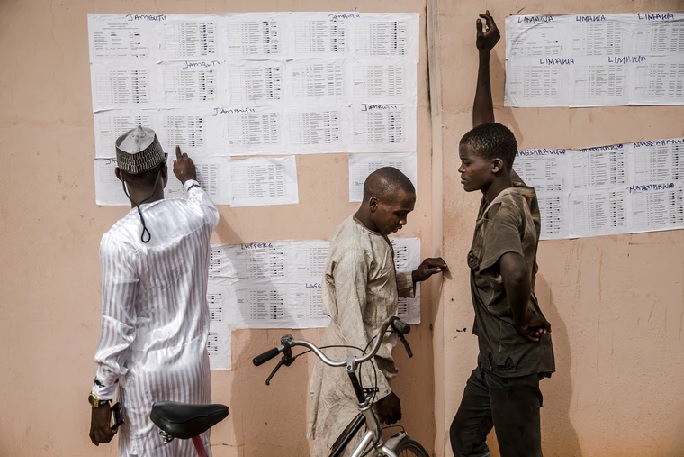 ArticleOctober 2, 2019The Travesty of Democracy through Sham Elections in a Rogue State: A Ride towards Anomie
 ArticleAugust 7, 2019The Press Cannot Be The Watchdog Of Society Without Vibrant Investigative Journalism
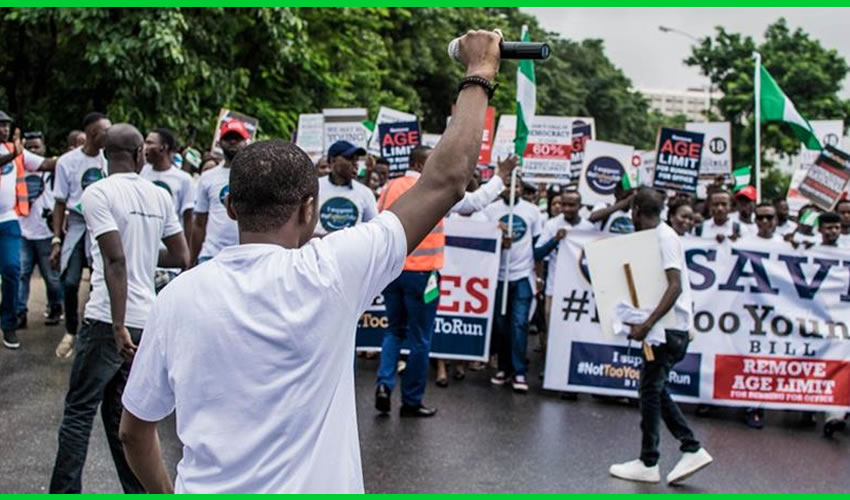 ArticleApril 16, 2019The Nigerian Youths and The Challenges Of Generation Gap; A Call To Action
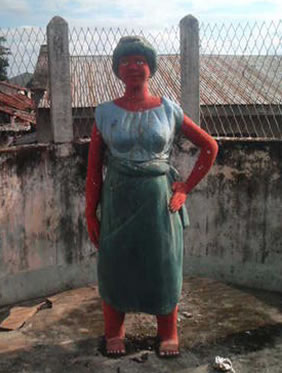 OpinionApril 16, 2019The Making of Heroes, Saints and Martyres; The Point of Departure in Deconstructing the Inikpi Legend of Igala Land
Article
As FCC Under Omidiran Sets to Restore Fairness, Balance and National Unity
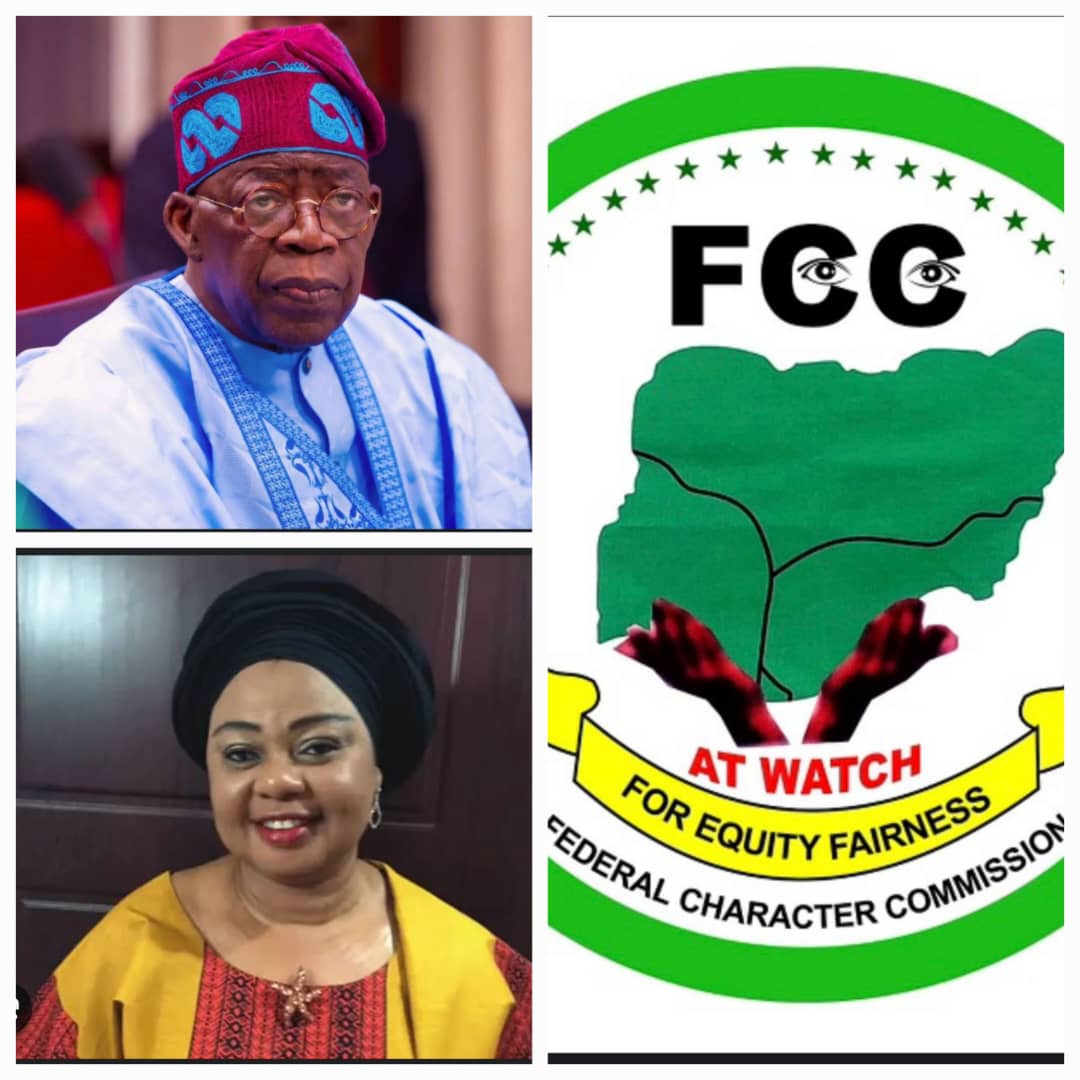
————From dormancy to destiny, the Renewed Hope Agenda finds its moral compass in fairness, inclusion, and credible leadership under Hon. Ayo Hulayat Omidiran.
When President Bola Ahmed Tinubu appointed Hon.
adsbygoogle || []).push({});
For years, the FCC wrestled with bureaucratic inertia and dwindling public trust. It existed in structure but struggled in spirit. Nigerians watched with delight yesterday October 14 as the Senate President, Godswill Akpabio read a letter from President Bola Tinubu requesting the senate to confirm Omidiran and 38 other commissioners. The needed confirmation serves as part of statutory requirements of the commission. With Omidiran’s pragmatic, purpose-driven leadership — and guided by President Tinubu’s Renewed Hope Agenda — the Commission will once again find its voice and vision.
With service driven 37 Commissioners drawn from every state and the FCT, the FCC will no longer be a dormant establishment; it will become a living conscience of equity, balance, and opportunity — a true reflection of Nigeria’s diversity and promise.
THE WOMAN REDEFINING FEDERAL CHARACTER
Hon. Ayo Hulayat Omidiran stands at the intersection of integrity, intelligence, and inclusivity — a rare blend of competence and compassion. Twice elected to the House of Representatives (2011–2019), she earned national acclaim for her people-centered approach: delivering potable water, quality healthcare, scholarships, and empowerment programs that restored dignity to countless families.
Her politics is not one of noise, but of nurture; not of entitlement, but of empathy. Guided by the enduring principles of Chief Obafemi Awolowo, Omidiran sees leadership as a moral obligation — “to feel the people’s pain and respond with purpose.”
Her story extends beyond politics. She made history as the first Nigerian woman to serve on the FIFA Women’s World Cup Organizing Committee, and as founder of Omidiran Babes FC, she built a generation of women who rose from obscurity to global recognition through sports. That same spirit of mentorship, teamwork, and excellence now defines her stewardship of the FCC.
Omidiran will lead not as a ruler, but as a reformer — building a team bound by trust, discipline, and shared vision. Under her watch, the FCC will no longer be an idle bureaucracy but a coalition of conscience — a collective mindset committed to making equity not an exception, but a standard.
RENEWED HOPE IN ACTION: OMIDIRAN’S BLUEPRINT FOR EQUITY
Under Omidiran’s visionary direction, the FCC is expected to transform into a model of transparency, digital efficiency, and moral accountability. With her commissioners she will introduce systems that prioritize merit, inclusion, and measurable impact, making the Commission a true guardian of justice in public service distribution.
Her guiding philosophy is clear and compelling:
“Fairness is not favoritism; it is balance.”
Every appointment, employment, and resource allocation must reflect both Nigeria’s federal diversity and her meritocratic spirit. In Omidiran’s FCC, representation will not be about tokenism — it is about trust. And every decision carries the weight of national responsibility.
This is the living embodiment of President Tinubu’s Renewed Hope Agenda — a Nigeria rebuilt on fairness, inclusion, and credible leaders.
THE TEAM THAT MIRRORS NIGERIA’S UNITY IN DIVERSITY
Behind Omidiran stands a remarkable assembly of leaders — 37 Commissioners, each bringing integrity, intellect, and innovation from their respective states. They represent Nigeria’s mosaic of culture, competence, and conviction.
Together, they form a “coalition of conscience and competence”, a team designed not to preserve the old order, but to pioneer a new era of equitable governance.
From policy thinkers to administrators, human rights advocates to professionals, the Omidiran-led Commission embodies the Renewed Hope dream in motion — transforming ideals into institutions.
NORTHWEST: EXPERIENCE, STATESMANSHIP, AND STRUCTURAL DEPTH
Hon. Lawan Ya’u Roni (Jigawa State) stands as a pillar of institutional memory. With over 30 years of governance experience — from serving as Commissioner to Secretary to the State Government and Acting Governor — Roni brings tested wisdom to policy formulation and intergovernmental relations.
His mandate in Policy Coordination and Intergovernmental Synergy ensures that federal appointments and initiatives align seamlessly with state realities. His insight and steadiness anchor the FCC’s evolving reform structure, driving unity through understanding.
SOUTHWEST: PROFESSIONALISM, DISCIPLINE, AND ADMINISTRATIVE EXCELLENCE
Hon. AbdulWasiu Kayode Bawa-Allah (Lagos State) is the archetype of administrative discipline. Having served as Chief of Staff to a Senator and Minister, and as a corporate executive in the U.S., he brings global precision to national service.
As head of Operational Efficiency and Ethics Oversight, Bawa-Allah is setting a new standard for institutional accountability. His leadership ensures that the FCC’s internal mechanisms reflect transparency, order, and ethical governance — making the Commission a model for other federal agencies.
SOUTHEAST: STRATEGIC THINKING, COORDINATION AND DIGITAL REFORM
Hon. Peter Eze (Enugu State) brings a refreshing blend of strategic intellect, youthful energy and innovation. An economist and policy strategist with international exposure, and a key contributor to the Tinubu/Shettima Presidential Campaign Council, Eze understands both leadership dynamics and national governance architecture.
Tasked with Research, Strategy, and Public Communication, he will spearhead the digital modernization of the FCC — ensuring transparency, data integrity, and accessible public information . His nomination signals a new generation of technocratic leadership, where ideas and integrity merge to serve the nation. Eze’s experience in public and private sector and commitment to FCC’s principles and objectives bodes well for the success of the commission
NORTHEAST: RESILIENCE, ADVOCACY, AND THE POWER OF INCLUSION
Mrs. Bema Olvadi Madayi (Adamawa State) embodies the courage and tenacity of the Northeast. A seasoned banker, policy advocate, and community mobilizer, she has spent decades empowering women and youth in post-conflict communities.
She oversees Community Engagement and Gender Equity Initiatives, ensuring fairness transcends paper policy to touch real lives. Her approach is practical — equity that educates, empowers, and elevates. She represents the Renewed Hope spirit of rebuilding people, not just systems.
SOUTH-SOUTH: SERVICE, LEGISLATION, AND HUMANITARIAN IMPACT
Hon. Chief ( Barr) Lovette Ederin Idisi
exemplifies selfless service. A lawyer by profession and legislator with years of community impact, he has championed rural healthcare, education, and youth empowerment.
He leads Humanitarian Affairs and Social Impact, ensuring that fairness extends beyond employment into wellbeing. His model is fairness with a human face — a governance of compassion consistent with the Renewed Hope philosophy.
NORTH CENTRAL: BALANCE, VISION, AND SOCIAL COHESION
Hon. Halima Ahmadu Jabiru (Nasarawa State) combines administrative rigor with social empathy. Her extensive background in land administration, welfare coordination, and governance reform makes her a dependable voice for balanced development.
As head of Institutional Development and Social Cohesion Programs, she is driving equitable access to federal opportunities across the North Central region — ensuring that fairness is not abstract, but tangible. Her leadership bridges the gap between policy and people.
ONE COMMISSION, ONE NATION, ONE DESTINY
Under Hon. Ayo Hulayat Omidiran, the Federal Character Commission will no longer be bureaucratic relic; it will become the nation’s moral compass. Each Commissioner is not merely a representative of a state, but a custodian of the Nigerian dream — a dream where justice and opportunity are evenly shared.
Together, they personify the spirit of Renewed Hope — the belief that governance must mirror the nation’s diversity while uniting it under a common purpose. From Abuja to the remotest local council, their collective mandate is to ensure that no citizen is invisible, and no community is forgotten.
OUR VERDICT: THE FCC REBORN, NIGERIA REAWAKENED
The Federal Character Commission, once seen as dormant, has found its pulse again — firm, fair, and forward-looking.
Under Omidiran, it will no longer be an institution of routine; it is a movement of renewal — restoring confidence, credibility, and national cohesion.
With this credible and competent team of Commissioners, fairness is no longer a promise — it is policy; inclusion is no longer aspiration — it is action.
In the rebirth of the FCC, Nigeria rediscovers her essence — a nation bound not by tribe or tongue, but by trust, transparency, and shared destiny.
Written by Dr George Allwell , a Public Affairs Analyst and Promoter of good governance in Nigeria
October 15,2025
Author Profile

Latest entries
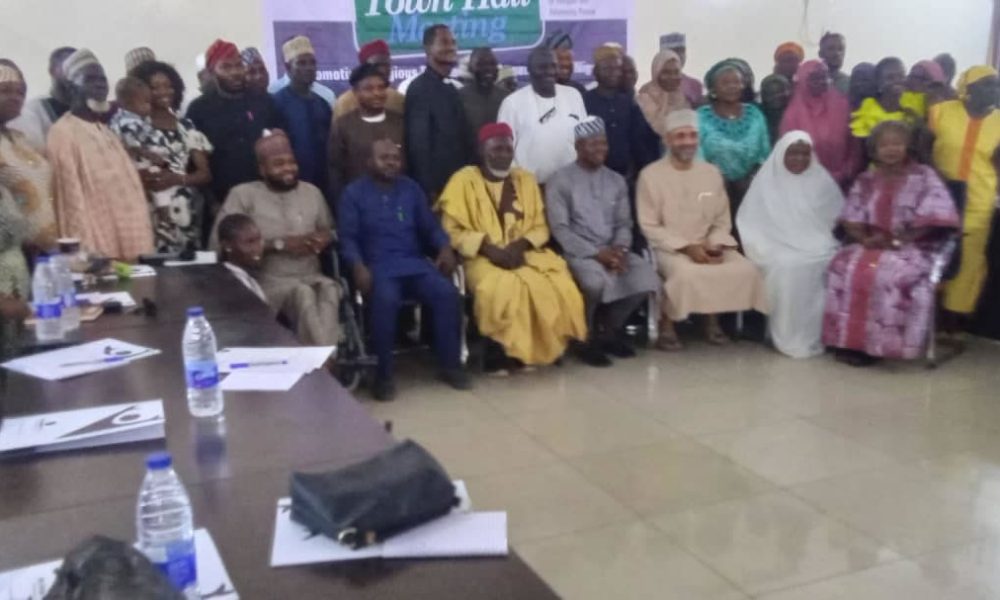 ReligiousDecember 11, 2025Peace Across Faiths: Minna Town Hall Strengthens Nigeria’s Commitment to Religious Freedom
 OpinionDecember 10, 2025LIES VS FACTS: Revisiting The Aregbesola Years In Osun
 Business and EconomyDecember 9, 2025KGIRS Sensitizes Stakeholders On Implementation Of New Nigeria Tax Act, 2025
 NewsDecember 9, 2025Insecurity: Ododo Briefs President Tinubu On Proactive Measures Put In Place
Article
The Craft of Creative Writing: From Shoot to Branches

By Emman Usman Shehu
“Always resist the urge to start with too many characters; even a plant begins as a shoot before developing its peculiar branches.” This insightful observation, seemingly simple, offers a profound metaphor for the craft of creative writing.
adsbygoogle || []).push({});
googlesyndication.com/pagead/js/adsbygoogle.js">
The initial “shoot” in creative writing represents the foundational element of a story. This could be a single character with a clear desire, a specific setting that sparks imagination, or a central premise that demands exploration. Rushing to introduce a multitude of characters, elaborate backstories, or convoluted plotlines at the outset can overwhelm both the writer and the reader. It’s akin to planting a sapling with too many branches already attached; the roots haven’t had time to establish, and the structure lacks inherent strength. A strong beginning, therefore, often focuses on establishing one or two key elements, allowing them to take root in the reader’s mind.
As the narrative progresses, the “shoot” begins to develop its “peculiar branches.” These branches are the secondary characters, the subplots, the thematic explorations, and the intricate details that enrich the story. Just as a plant’s branches grow in unique patterns, shaped by its environment and genetic code, a story’s elements should emerge naturally from its core. A new character might be introduced because their presence is necessary to challenge the protagonist or reveal a new facet of the central conflict. A subplot might sprout to deepen the thematic resonance or provide a moment of respite before a major turning point. This organic development ensures that every element serves a purpose, contributing to the overall strength and coherence of the narrative.
Moreover, the metaphor extends to the concept of revision and growth. A gardener doesn’t simply plant a seed and leave it; they nurture it, prune it, and guide its growth. Similarly, a writer’s first draft is rarely the final product. It’s the initial shoot, often raw and unrefined. Through subsequent revisions, the writer prunes away unnecessary elements, strengthens weak connections, and encourages the healthy development of the story’s branches. This iterative process allows the narrative to mature, its complexities to deepen, and its peculiar beauty to fully emerge.
In essence, the wisdom of starting small is about embracing the power of organic growth. It’s about trusting the narrative to reveal itself, character by character, plot point by plot point, rather than forcing a predetermined, overstuffed structure. By allowing the story to develop its branches naturally from a strong, central shoot, writers can cultivate narratives that are not only intricate and engaging but also deeply rooted and enduring.
*Shehu is the author of four poetry collections, Questions for Big Brother, Open Sesame, Icarus Rising and The River Never Returns. He is currently working on a poetry collection, a collection of short stories, and a collection of plays. He is also co-founder of the Abuja Writers Forum (AWF).
Author Profile
Latest entries
ReligiousDecember 11, 2025Peace Across Faiths: Minna Town Hall Strengthens Nigeria’s Commitment to Religious FreedomOpinionDecember 10, 2025LIES VS FACTS: Revisiting The Aregbesola Years In OsunBusiness and EconomyDecember 9, 2025KGIRS Sensitizes Stakeholders On Implementation Of New Nigeria Tax Act, 2025NewsDecember 9, 2025Insecurity: Ododo Briefs President Tinubu On Proactive Measures Put In Place
Article
Ajia: The Bridge-Builder Turbaned as Dan Amanar Fune Emirate
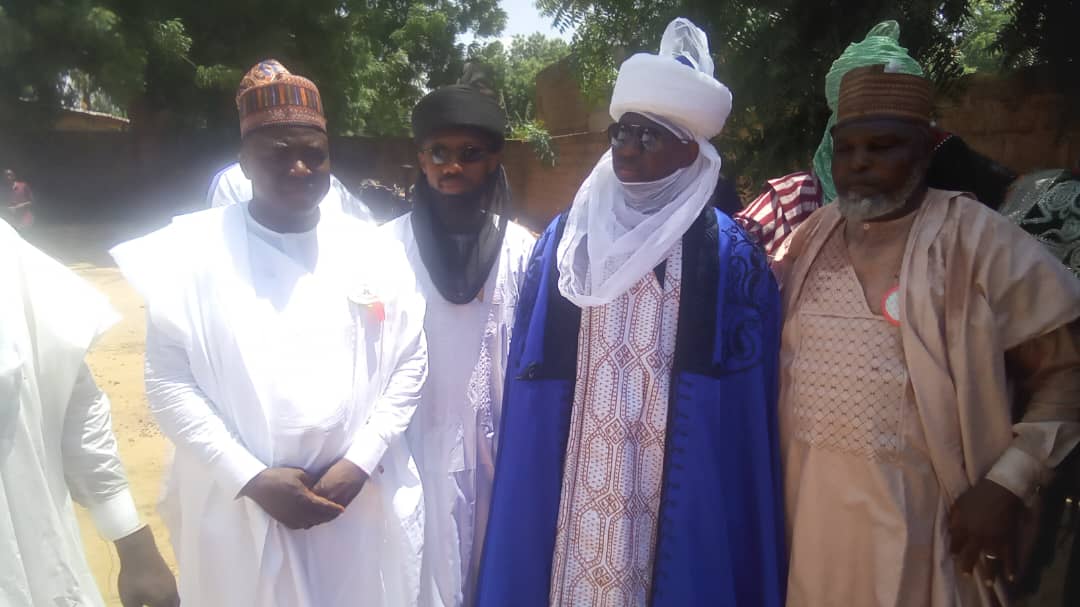
By Abdulrahman Aliagan, reporting from Damagum, Yobe State
In a rare blend of honour, tradition, and national recognition, Alhaji Ibrahim Mohammed Ajia, a distinguished son of Ilorin in Kwara State, was turbaned as Dan Amanar (Custodian of Trust) of Fune Emirate in a grand ceremony held at the Emir’s Palace in Damagum, headquarters of Fune Local Government Area, Yobe State, on Saturday, June 28, 2025.
The colourful occasion, which also marked the 25th coronation anniversary of His Royal Highness, Alhaji Dr. Saleh Ibn Uthman, Emir of Fune, was attended by royal fathers from across Northern Nigeria, political leaders, captains of industry, and hundreds of admirers from Ilorin, Abuja, and Damagum.
Alhaji Ibrahim Ajia is not just a politician or businessman—he is a patriotic Nigerian whose footprints in public service, security, philanthropy, and community development have made significant impacts nationwide. Born in Magaji Ngeri ward, Ilorin West Local Government Area of Kwara State, Ajia’s life journey is that of relentless pursuit of excellence and unwavering commitment to the Nigerian project.
From humble beginnings at ECWA Primary School in Ilorin and later Government Secondary School Kawo, Kaduna, Ajia pursued academic excellence with deep passion. Though he initially gained admission to study Economics at Ahmadu Bello University, Zaria, his desire to serve Nigeria led him to the Nigeria Police Academy, Wudil, where he was commissioned as an Inspector of Police in 2004.
Ajia later earned a B.Sc. in Sociology from the University of Abuja and a Master’s Degree in Peace Studies and Conflict Resolution from the National Open University of Nigeria. He also obtained a Certificate in Public Leadership and Policy from the School of Politics, Policy and Governance (SPPG), Abuja.
As a young, vibrant, and intelligent officer, Ajia served in various sensitive capacities in the Nigeria Police Force, including as:
ADC to the Secretary to the Government of the Federation (SGF), Senator Anyim Pius Anyim, GCON, Security Aide to the late Governor of Yobe State, Senator Mamman B. Ali, Chief Security Officer to Governor Hassan Dankwambo of Gombe State, Police Public Relations Officer, FCT Command and 2IC, Yenagoa Area Command, Bayelsa State.
He also trained in several advanced security and leadership courses across Egypt, Italy, the UK, and Nigeria, including combating organised crime and high-risk operations. These experiences sharpened his understanding of national security and human management, building his reputation as a trusted, tested, and efficient.
Upon retiring from active service in 2017, Ajia transitioned into politics and entrepreneurship, but his core passion remained human development. Through his MAI Foundation, he has provided succour to thousands of Nigerians—orphans, widows, students, farmers, and small-scale business owners—across Kwara State and other parts of the country.
The foundation has carried out impactful interventions in education, health, youth and women empowerment, rural infrastructure, and skills acquisition. Whether it is donating medical equipment to rural hospitals, providing scholarships to indigent students, drilling boreholes, or equipping young people with vocational tools, Ajia has consistently used his resources to uplift the underserved and vulnerable.
This was one of the key reasons behind his recent honour by the Fune Emirate, which described him as “a trustworthy, honest, reliable, and dependable personality who has written his name in gold.”
To be turbaned as Dan Amanar Fune is not merely ceremonial; it signifies a deep trust and a sacred responsibility. For the Emir of Fune, Ajia represents those rare Nigerians who transcend tribal and religious lines, working selflessly for unity and progress.
Speaking after his turbaning, Ajia expressed gratitude to the Emir and the people of Fune for the honour. He promised not to relent:
*This is not just a title; it is a sacred trust. I will continue to work for the good of the Emirate, Yobe State, and our great country, Nigeria. This recognition has rekindled my commitment to serve humanity even more.”
Indeed, for nearly two decades, Ajia has maintained a close relationship with the Fune Emirate, dating back to his days as the Security Aide to the late Governor Mamman B. Ali. That relationship, built on mutual respect, trust, and shared goals, has now matured into formal recognition by the traditional institution.
Aside from his security background and philanthropic work, Ajia is also a farmer, businessman, and President/CEO of FUNAB Group of Companies, a conglomerate involved in construction, retail, hospitality, and cleaning services.
In 2019, he contested for the PDP gubernatorial ticket in Kwara State. In 2023, he ran for the House of Representatives seat for Asa/Ilorin West Federal Constituency. Beyond the ballot, Ajia has remained a passionate voice for inclusive governance, social equity, and national cohesion.
His track record, humility, and passion for development make him one of the shining stars of the younger generation of Nigerian leaders.
That a man from Ilorin, Kwara State, would be so recognised and turbaned with a traditional title in faraway Fune Emirate, Yobe State, is both a celebration. It is a celebration of how character, service, and loyalty can gain national recognition.
Ajia has done much, not only for Kwara but for Nigeria. From Ilorin to Abuja, Damagum to Bayelsa, his legacy continues to expand. His recent turbaning should serve as a call to action for his native Emirate to also recognise his efforts, and further encourage other indigenes to serve with integrity, humility, and purpose.
In the words of one observer at the event, “Ajia may have received the title of Dan Amana in the North-East, but his loyalty and service began from home. Ilorin must not be the last to honour him.”
With his head held high and heart full of gratitude, Alhaji Ibrahim Mohammed Ajia has shown that true service transcends geography—and those who serve selflessly will always be seen, celebrated, and remembered.
Author Profile
Latest entries
ReligiousDecember 11, 2025Peace Across Faiths: Minna Town Hall Strengthens Nigeria’s Commitment to Religious FreedomOpinionDecember 10, 2025LIES VS FACTS: Revisiting The Aregbesola Years In OsunBusiness and EconomyDecember 9, 2025KGIRS Sensitizes Stakeholders On Implementation Of New Nigeria Tax Act, 2025NewsDecember 9, 2025Insecurity: Ododo Briefs President Tinubu On Proactive Measures Put In Place